
 (bottom of page)




CafeSaxophone Forum
Beginner Saxes Yamaha YTS280 v Trevor James EVO (Tenor)
Hi everyone,
I'm completely new to the world of making music—I've never played a saxophone or any other instrument before! However, I've always loved the sound of the Tenor Saxophone.
I definitely lean toward the darker tones you hear in Soul and R&B, rather than the brighter, lighter sounds.
Right now, I'm trying to choose my first horn and I'm drawn between two options:
Yamaha YTS-280: This seems to be the gold standard for beginners. It gets excellent reviews everywhere, comes with a great warranty, and has a really solid repair network.
Trevor James EVO: This one is catching my ear because it's described as having that darker sound I’m naturally drawn to. However, it doesn't seem to have as many reviews, the warranty is weaker, and the repair network seems a bit more complicated here in the UK.
I'd love to hear of any experiences of these two horns. Specifically, I'm wondering whether the EVO would be a suitable student horn, and whether the EVO would benefit from adding a Yamaha 4C mouthpiece right out of the box.
Thanks in advance and I appreciate any thoughts!
I'm completely new to the world of making music—I've never played a saxophone or any other instrument before! However, I've always loved the sound of the Tenor Saxophone.
I definitely lean toward the darker tones you hear in Soul and R&B, rather than the brighter, lighter sounds.
Right now, I'm trying to choose my first horn and I'm drawn between two options:
Yamaha YTS-280: This seems to be the gold standard for beginners. It gets excellent reviews everywhere, comes with a great warranty, and has a really solid repair network.
Trevor James EVO: This one is catching my ear because it's described as having that darker sound I’m naturally drawn to. However, it doesn't seem to have as many reviews, the warranty is weaker, and the repair network seems a bit more complicated here in the UK.
I'd love to hear of any experiences of these two horns. Specifically, I'm wondering whether the EVO would be a suitable student horn, and whether the EVO would benefit from adding a Yamaha 4C mouthpiece right out of the box.
Thanks in advance and I appreciate any thoughts!
12 Replies
·
98 views

Tone or Sound embrochure position with recessed jaw
my jaw is slightly recessed, not too bad but it is not even with my upper lip
i can still get an alright sound but should i be purposefully putting my lower lip foward in order to compensate for this?
i find forcing the lower lip further foward does make the reed feel like its more free, and easier to get altissimo notes. but long term it feels a bit uncomfortable and unnatural so i find myself subconsciously putting my lower lip further back over time
i can still get an alright sound but should i be purposefully putting my lower lip foward in order to compensate for this?
i find forcing the lower lip further foward does make the reed feel like its more free, and easier to get altissimo notes. but long term it feels a bit uncomfortable and unnatural so i find myself subconsciously putting my lower lip further back over time
7 Replies
·
182 views
Tone or Sound subtone
is subtone supposed to be achieved by moving the bottom lip lower on the reed to dampen the sound? or is it achieved by just lowering/widening the airstream and keeping the embrochure the same?
found you can achieve a subtone by doing both but am not sure if one or the other is better, or if they can both be done interchangably. also i find doing the former (dampening the reed by moving the bottom of the lip lower on the reed) makes the sound slightly more thin and muffled than doing the latter variation of subtone.
found you can achieve a subtone by doing both but am not sure if one or the other is better, or if they can both be done interchangably. also i find doing the former (dampening the reed by moving the bottom of the lip lower on the reed) makes the sound slightly more thin and muffled than doing the latter variation of subtone.
3 Replies
·
84 views
Tech/maintenance Abalone key pearls
Needed to order from Amazon so I added a set of these to see what they're like: Bnineteenteam Key Buttons for Alto Sax, 9pcs Sax Abalone Shell Key Buttons Saxophone Key Button for soprano, alto and tenor saxophones : Amazon.co.uk: Books
Not expecting much. Most of the "real shell" pearls I've looked at seem to be covered in acrylic which means they're no different than a plastic key surely?
Anyway... for a fiver it's worth a go. Let you know what they're like once they arrive.
Not expecting much. Most of the "real shell" pearls I've looked at seem to be covered in acrylic which means they're no different than a plastic key surely?
Anyway... for a fiver it's worth a go. Let you know what they're like once they arrive.
93 Replies
·
7132 views


Miscellaneous Motorbikes
Señor Pig,
Would like to know more about this bike/side car.
More pics?
Thanks.
Might make a side car for the kids and grandkids, for the '79 XT500, if they buy a ranch/farm in the Rockies.
Off road only.
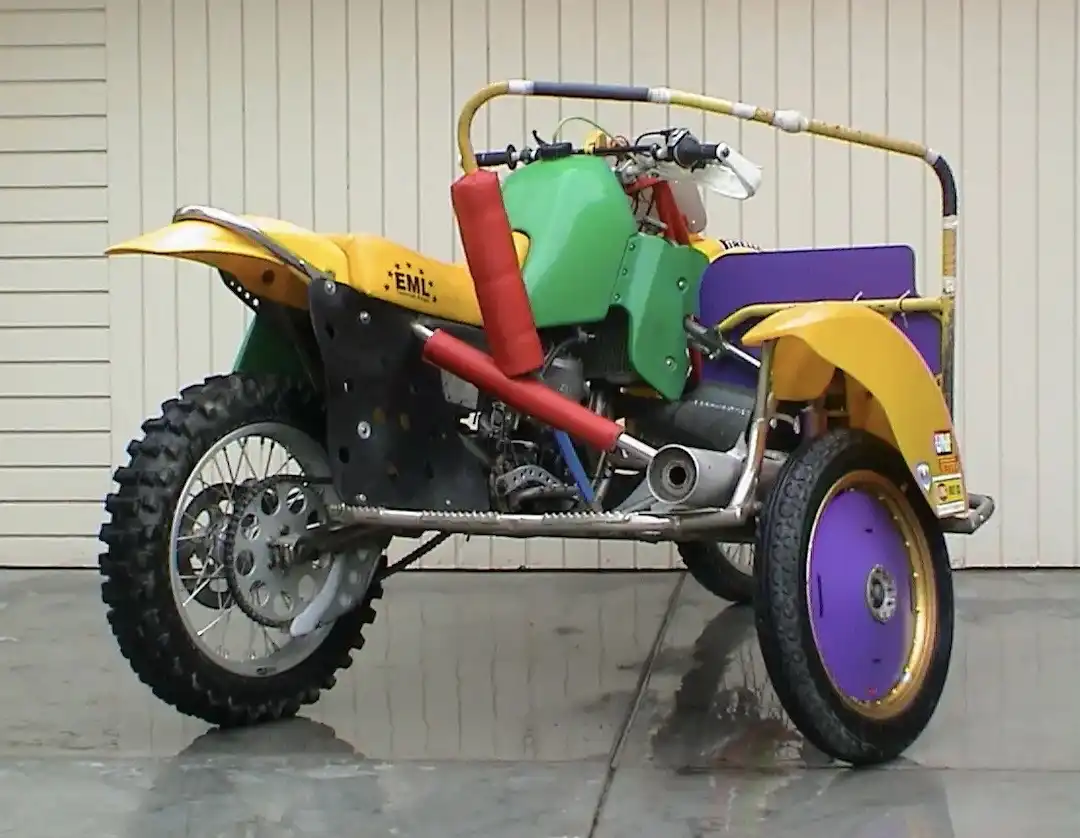
Would like to know more about this bike/side car.
More pics?
Thanks.
Might make a side car for the kids and grandkids, for the '79 XT500, if they buy a ranch/farm in the Rockies.
Off road only.
32 Replies
·
452 views

Saxophones Saxophones, rarely discussed
Everybody knows the nice horns that get talked about all the time (Selmer, Martin, Yamaha, etc). Then there are the good instruments less talked about but I would say still fairly well known (a Yamaha Vito stencil for example).
How about a topic for those worthy saxophones (I'll leave the definition of worthy alone for now) that are rarely discussed?
Yesterday I 'discovered' the F.E. Olds Super:
Obviously beauty is in the eye of the beholder but I have to say that is a very cool looking alto! With an interesting story as well, that you can find if you dig a bit here or at the other forum.
So, what other models might fit the topic?
How about a topic for those worthy saxophones (I'll leave the definition of worthy alone for now) that are rarely discussed?
Yesterday I 'discovered' the F.E. Olds Super:
Obviously beauty is in the eye of the beholder but I have to say that is a very cool looking alto! With an interesting story as well, that you can find if you dig a bit here or at the other forum.
So, what other models might fit the topic?
124 Replies
·
1987 views
Saxophones Carrying a tenor on a (motor)bike?
I'm thinking of acquiring a secondhand Suzuki Van Van and learning to ride over the summer, the idea being that it will be fun, and more economical than my 4x4 for going to work and other short journeys, when the weather is reasonable. But on quite a few of those journeys I am accompanied by my tenor.
Anyone carry one on a bike, and got any advice please?
Anyone carry one on a bike, and got any advice please?
779 Replies
·
84678 views
Tech/maintenance Just a general question to sax maintainers and repairers
Hi, and many thanks to any members who respond!
My question is whether I should give my Tenor Sax a complete overhaul (very probably!) and if so, whether I should look for a sax repairer who has specific knowledge, skills and reputation of overhauling 'vintage saxophones'.
TBH, I've asked questions on this topic to 'Google AI' and I've got some valuable responses. For example, the difference between 'regular sax maintenance' and 'complete overhauls'. Down to which local 'repairers' would be best qualified to overhaul my specific sax and the questions that I should ask them beforehand! All based on my specific Tenor sax model and year. Another 'Google AI' conclusion was that - on average - periodic 'minor sax maintenance' should be done every 1-2 years. And a 'major overhaul' might be needed every 5-10 years. My sax has had neither in 20 years!
So what I would like from experienced. informed and human sax repairers are their opinions on the answers that I got from Google AI based on the 'background 'below.
Background
I bought my 1961 'Buffet Crampon Super Dynaction' Tenor Sax about 20 years ago. At that time, it had been thoroughly 'checked out' and played easily in comparison to other 'vintage saxes' that I tried out. In the 20 years since, I've had a few minor 'playing problems' quickly inspected and fixed' by my local 'clarinet/sax' lady. Usually free of charge. But in these 20 years, my sax has never had 'periodic maintenance' or 'overhauls'
Lately (for the past 6 months or more), I've been really struggling to play my sax. With certain notes (G/G# in the higher octave) 'squeaking'. In my local sax lady's opinion (within 5 minutes) she said that the 2 octave keys worked fine mechanically. So that any 'squeaks' were probably due to my 'embouchure'. Which hasn't changed in many years.
A new Tenor Sax player recently joined my Big Band. He had sax that looked to me 'unusual'. I asked him what it what it was and said it was a John Packer JP042 Bb Tenor. He explained that it was a 'temporary sax' while he was getting his Yamaha 'restored'. He added that he wasn't yet sure which one he'd stick with. With his permission I briefly tried out his sax with my mpc and reed. TBH the 'playability' of his (new) sax with mine was a huge difference between day (his) and night (mine)!
Yes I fully realize that the 'ergonomics' of saxes has moved on significantly between 1961 and the first mention of the John Packer JP042 on the cafe in 2011.
I 'Googled (AI)' my problem and it's advice (with recommendations) was to have my Tenor Sax refurbished (overhauled) by someone who has the 'credibility' of restoring 'vintage' (1961) saxes.
My question is whether I should give my Tenor Sax a complete overhaul (very probably!) and if so, whether I should look for a sax repairer who has specific knowledge, skills and reputation of overhauling 'vintage saxophones'.
TBH, I've asked questions on this topic to 'Google AI' and I've got some valuable responses. For example, the difference between 'regular sax maintenance' and 'complete overhauls'. Down to which local 'repairers' would be best qualified to overhaul my specific sax and the questions that I should ask them beforehand! All based on my specific Tenor sax model and year. Another 'Google AI' conclusion was that - on average - periodic 'minor sax maintenance' should be done every 1-2 years. And a 'major overhaul' might be needed every 5-10 years. My sax has had neither in 20 years!
So what I would like from experienced. informed and human sax repairers are their opinions on the answers that I got from Google AI based on the 'background 'below.
Background
I bought my 1961 'Buffet Crampon Super Dynaction' Tenor Sax about 20 years ago. At that time, it had been thoroughly 'checked out' and played easily in comparison to other 'vintage saxes' that I tried out. In the 20 years since, I've had a few minor 'playing problems' quickly inspected and fixed' by my local 'clarinet/sax' lady. Usually free of charge. But in these 20 years, my sax has never had 'periodic maintenance' or 'overhauls'
Lately (for the past 6 months or more), I've been really struggling to play my sax. With certain notes (G/G# in the higher octave) 'squeaking'. In my local sax lady's opinion (within 5 minutes) she said that the 2 octave keys worked fine mechanically. So that any 'squeaks' were probably due to my 'embouchure'. Which hasn't changed in many years.
A new Tenor Sax player recently joined my Big Band. He had sax that looked to me 'unusual'. I asked him what it what it was and said it was a John Packer JP042 Bb Tenor. He explained that it was a 'temporary sax' while he was getting his Yamaha 'restored'. He added that he wasn't yet sure which one he'd stick with. With his permission I briefly tried out his sax with my mpc and reed. TBH the 'playability' of his (new) sax with mine was a huge difference between day (his) and night (mine)!
Yes I fully realize that the 'ergonomics' of saxes has moved on significantly between 1961 and the first mention of the John Packer JP042 on the cafe in 2011.
I 'Googled (AI)' my problem and it's advice (with recommendations) was to have my Tenor Sax refurbished (overhauled) by someone who has the 'credibility' of restoring 'vintage' (1961) saxes.
40 Replies
·
800 views

Misc instruments What other instrument could you just not...
... get along with?
Lots of folks double or dabble; but have you ever fancied adding an instrument but just could not come to terms with it (or them)?
Myself, I fancy a blues harp/mouth organ. I just don't get it. Luckily, trying costs little in that case.
«this thread brought to you by the Department of Idle curiosity »
Lots of folks double or dabble; but have you ever fancied adding an instrument but just could not come to terms with it (or them)?
Myself, I fancy a blues harp/mouth organ. I just don't get it. Luckily, trying costs little in that case.
«this thread brought to you by the Department of Idle curiosity »
35 Replies
·
753 views
Saxophones C Melody Saxophones
I've been interested in C Melody saxes, for a while.
Apparently, they were quite common in the 1920s-30s, and the general concensus seems to be that the designs got better as time went on. Earlier models were often made in High Pitch (a tuning system that predates using A=440Hz), and should be avoided, unless you want to accompany a Highland bagpipe player.
From what little research I've done, it seems Conn made some of the better sounding ones, and their later models were improvements over the earlier ones. The ones with a "straight" neck, similar to an alto, are supposed to be good. Personally, I don't really like the S shaped neck on a tenor.
Anyway, here's one I've asked about recently. I've posted a couple of these pictures in Ads's review discussion thread of the Sakkusu C Melody sax, but here's all I have.
This is a 1924/1925 Conn C Melody, currently for sale at the Trevor Jones shop in Bristol. It's in low pitch, has had a partial repad, and is ready to play.

Bristol is a bit far for me to visit so I asked if they could send me photos, particularly of the hand positions, because the ergonomics are a bit different on these old saxes, and C melody saxes in particular.

Ermm... there seems to be a 2 file upload limit. Hopefully, that's per post

The thumb rest is apparently soldered on, so can't be adjusted easily, but the position looks good for reaching the right side trill keys (Bb/C/high E). This seems to be an issue on the Sakkusu / Thoman C Melody (see https://cafesaxophone.com/threads/sakkusu-c-melody-saxophone-review.13705/Ads's Sakkusu C Melody review[/URL])
The "L" stamped below the serial number indicates it's built for "Low" pitch - i.e. designed for modern A=440Hz tuning. I've read different accounts of what was meant by High Pitch (and maybe there was more than one definition), but the consensus seems to be it was at least A=450Hz, or A=453Hz - kind of between semitones, in modern tuning, and too far out to compensate for by positioning the mouthpiece differently etc.
It's important to check for that when buying any brass or woodwind instrument from that period. I think military bands kept it going for a while longer, in Britain. Scottish bagpipe and Irish/Scottish Bb flute players tend to still use it, as I understand it. It's certainly the normal tuning for 5 or 6 key Bb flutes.
Apparently, they were quite common in the 1920s-30s, and the general concensus seems to be that the designs got better as time went on. Earlier models were often made in High Pitch (a tuning system that predates using A=440Hz), and should be avoided, unless you want to accompany a Highland bagpipe player.
From what little research I've done, it seems Conn made some of the better sounding ones, and their later models were improvements over the earlier ones. The ones with a "straight" neck, similar to an alto, are supposed to be good. Personally, I don't really like the S shaped neck on a tenor.
Anyway, here's one I've asked about recently. I've posted a couple of these pictures in Ads's review discussion thread of the Sakkusu C Melody sax, but here's all I have.
This is a 1924/1925 Conn C Melody, currently for sale at the Trevor Jones shop in Bristol. It's in low pitch, has had a partial repad, and is ready to play.
Bristol is a bit far for me to visit so I asked if they could send me photos, particularly of the hand positions, because the ergonomics are a bit different on these old saxes, and C melody saxes in particular.
Ermm... there seems to be a 2 file upload limit. Hopefully, that's per post
The thumb rest is apparently soldered on, so can't be adjusted easily, but the position looks good for reaching the right side trill keys (Bb/C/high E). This seems to be an issue on the Sakkusu / Thoman C Melody (see https://cafesaxophone.com/threads/sakkusu-c-melody-saxophone-review.13705/Ads's Sakkusu C Melody review[/URL])
The "L" stamped below the serial number indicates it's built for "Low" pitch - i.e. designed for modern A=440Hz tuning. I've read different accounts of what was meant by High Pitch (and maybe there was more than one definition), but the consensus seems to be it was at least A=450Hz, or A=453Hz - kind of between semitones, in modern tuning, and too far out to compensate for by positioning the mouthpiece differently etc.
It's important to check for that when buying any brass or woodwind instrument from that period. I think military bands kept it going for a while longer, in Britain. Scottish bagpipe and Irish/Scottish Bb flute players tend to still use it, as I understand it. It's certainly the normal tuning for 5 or 6 key Bb flutes.
685 Replies
·
74492 views
Introduction hello
hey, ive been playing saxophone for roughly 13 years since i was 10 but got more serious in highschool specifically i play jazz and blues on tenor and soprano saxophone
joined this forum mainly to ask questions about technique
im looking to develop a warm and thick sound without sounding muffled or thin on the high notes, i really dislike when high notes sound thin on saxophone.
some saxophonists i enjoy listening to are king curtis, stanely turrnetine, johnny griffin, sal nistico, branford marsalis, lester young, james carter, eddie lockjaw davis, lee konitz, and charlie parker, but i listen to all sorts of musicians
joined this forum mainly to ask questions about technique
im looking to develop a warm and thick sound without sounding muffled or thin on the high notes, i really dislike when high notes sound thin on saxophone.
some saxophonists i enjoy listening to are king curtis, stanely turrnetine, johnny griffin, sal nistico, branford marsalis, lester young, james carter, eddie lockjaw davis, lee konitz, and charlie parker, but i listen to all sorts of musicians
13 Replies
·
237 views

Saxophones Selmer Supreme alto (quick look)
Had a client bring two Selmer altos in yesterday - a Ref.54 for a service and a brand new solid silver Supreme.
First time I've had my hands on one.
It only came in for a quick tweak - so no time to run up a proper review, but I did notice a couple of things.
First up - the client brought it in because there was a problem when moving from low B to low Bb; a break in the transition.
This turned out to be a badly adjusted link between the low B and the low C#. In fact it wasn't really adjusted at all - so that when his finger rolled down onto the Bb touchpiece and just caught the C# touchpiece on the way, the C# would open about 3mm. That's plenty enough to knock out the low B.
And there was this:
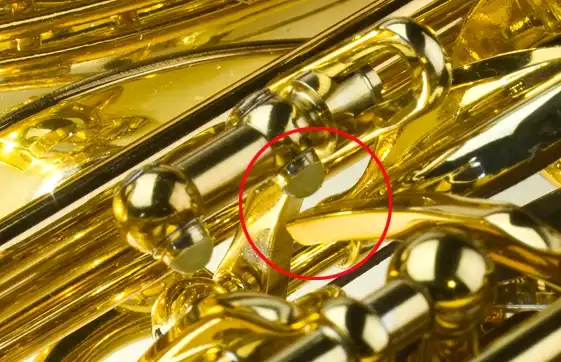
This is the Bis Bb/G# adjuster bar. Take a look at that gap between the Bis Bb arm and the adjuster above it. In horn terms it's miles away.
The adjuster is actually set right in terms of its ability to close the Bis Bb - so you can't screw the adjuster in to take up the play. What this means is that the lower stack is set substantially higher than the upper.
I had a quick peek at the toneholes. Selmer are traditionally pretty good at getting the toneholes level, but I was rather disappointed with the low C on this horn:
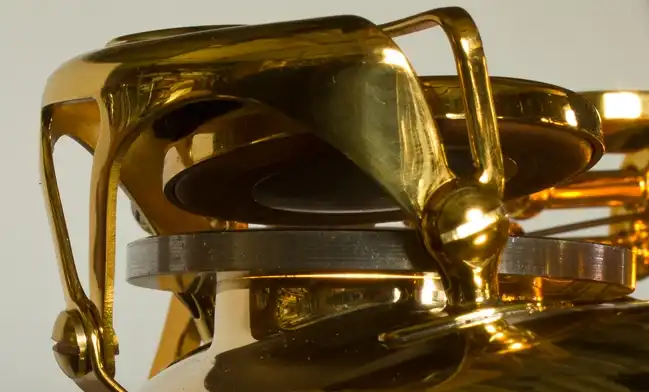
I compared it with the Ref.54 - which still wasn't perfect but was rather flatter.
So, not a great start for the Supreme. It comes in at an eye-watering price, and for that kind of money I want all the boxes ticked...and then some. So I'd expect the out-of-box setup to be spot on and rather more precision when it comes to the toneholes. Y'know, a bit like a top-end Yani.
And then I had a blow on the Supreme.
I was expecting a 'Woah!' moment - and I got one...but not the one I wanted.
It prompted me to go back and forth between the Supreme and the Ref.54. The Ref is exactly what you'd expect from a Selmer. Nicely balanced, a 'big' sound with that characteristic Selmer mid-range oomph, slightly resistant but nonetheless punchy - with a wide spread of sound.
The Supreme felt very closed in, like it was keeping the sound huddled around itself. And where was the punch and clarity?
It had a sort of Paul Desmond thing going on...that sort of laid back, soft kind of approach. That's fine...if you can turn it on and off at will but it kind of comes stamped into the horn.
That really surprised me because it's dramatically different from the Ref - so-much-so that I had to put a light down the Supreme to see if there was a problem with one of the pads (nothing major...slight leak on the A, which didn't change the tone when corrected).
I can't say it's a conclusive impression because it's just that horn - but even accounting for variations between seemingly identical horns it seems a bit extreme.
I'm hoping the client is going to book the Supreme in for a proper setup once I've serviced the Ref - at which point I can do a proper run-down on it and see what's what.
First time I've had my hands on one.
It only came in for a quick tweak - so no time to run up a proper review, but I did notice a couple of things.
First up - the client brought it in because there was a problem when moving from low B to low Bb; a break in the transition.
This turned out to be a badly adjusted link between the low B and the low C#. In fact it wasn't really adjusted at all - so that when his finger rolled down onto the Bb touchpiece and just caught the C# touchpiece on the way, the C# would open about 3mm. That's plenty enough to knock out the low B.
And there was this:
This is the Bis Bb/G# adjuster bar. Take a look at that gap between the Bis Bb arm and the adjuster above it. In horn terms it's miles away.
The adjuster is actually set right in terms of its ability to close the Bis Bb - so you can't screw the adjuster in to take up the play. What this means is that the lower stack is set substantially higher than the upper.
I had a quick peek at the toneholes. Selmer are traditionally pretty good at getting the toneholes level, but I was rather disappointed with the low C on this horn:
I compared it with the Ref.54 - which still wasn't perfect but was rather flatter.
So, not a great start for the Supreme. It comes in at an eye-watering price, and for that kind of money I want all the boxes ticked...and then some. So I'd expect the out-of-box setup to be spot on and rather more precision when it comes to the toneholes. Y'know, a bit like a top-end Yani.
And then I had a blow on the Supreme.
I was expecting a 'Woah!' moment - and I got one...but not the one I wanted.
It prompted me to go back and forth between the Supreme and the Ref.54. The Ref is exactly what you'd expect from a Selmer. Nicely balanced, a 'big' sound with that characteristic Selmer mid-range oomph, slightly resistant but nonetheless punchy - with a wide spread of sound.
The Supreme felt very closed in, like it was keeping the sound huddled around itself. And where was the punch and clarity?
It had a sort of Paul Desmond thing going on...that sort of laid back, soft kind of approach. That's fine...if you can turn it on and off at will but it kind of comes stamped into the horn.
That really surprised me because it's dramatically different from the Ref - so-much-so that I had to put a light down the Supreme to see if there was a problem with one of the pads (nothing major...slight leak on the A, which didn't change the tone when corrected).
I can't say it's a conclusive impression because it's just that horn - but even accounting for variations between seemingly identical horns it seems a bit extreme.
I'm hoping the client is going to book the Supreme in for a proper setup once I've serviced the Ref - at which point I can do a proper run-down on it and see what's what.
89 Replies
·
2714 views

Blog Mike's musings
Inspired by @Tenor Viols musings, I decided to create my own thread. Focused on my new 'journey' from Big Band music into the world of rock/pop music.. Not only the very different style of music but (for me) also the very different world of amplification, different mpc's, etc,
I
For the 1st 3 weeks, things started off really well! I was enthusiastic and so were the band. I was less enthusiastic on the 4th week when the nominal 'band leader' returned from a vacation, brought a ton of equipment along with him and basically drowned other members out.
During the 4th rehearsal (always on a Saturday), I noticed that my right hand felt a bit 'odd' but OK. That night, the pain in my right hand kept me awake. The day after (following internet advice) , I applied a bandage and ice. My guess is that I injured my hand during a "Fitness Session' the previous Friday. Since then , I haven't been able to play sax🙁. But I have been able to listen to some tracks that I've been asked to play🙂. Not exactly (no-one in the band does) but 'sufficiently recognisable'.

I
For the 1st 3 weeks, things started off really well! I was enthusiastic and so were the band. I was less enthusiastic on the 4th week when the nominal 'band leader' returned from a vacation, brought a ton of equipment along with him and basically drowned other members out.
During the 4th rehearsal (always on a Saturday), I noticed that my right hand felt a bit 'odd' but OK. That night, the pain in my right hand kept me awake. The day after (following internet advice) , I applied a bandage and ice. My guess is that I injured my hand during a "Fitness Session' the previous Friday. Since then , I haven't been able to play sax🙁. But I have been able to listen to some tracks that I've been asked to play🙂. Not exactly (no-one in the band does) but 'sufficiently recognisable'.
275 Replies
·
19326 views


Cafe Moderator
Café Supporter
Miscellaneous Daily Check In
Good morning,
We thought it might be good to have a thread where you can just come and say hi, tell us what you are doing today, have a moan, share an idea that you wouldn't necessarily start a thread for ( we can always create a new thread from posts here if it became a substantial discussion).
It doesn't have to be sax related🙂
Basically an easy way to connect on a daily basis.
So to kick us off, I am writing this whilst prepping a casserole for the slo cooker as I am playing sax today with café sax and need a quick easy tea when I get home.
I am still suffering with a cough which will impact my playing today and I am worried as we are playing our first care home gig next Sunday!!
Have a lovely Sunday
Jx
We thought it might be good to have a thread where you can just come and say hi, tell us what you are doing today, have a moan, share an idea that you wouldn't necessarily start a thread for ( we can always create a new thread from posts here if it became a substantial discussion).
It doesn't have to be sax related🙂
Basically an easy way to connect on a daily basis.
So to kick us off, I am writing this whilst prepping a casserole for the slo cooker as I am playing sax today with café sax and need a quick easy tea when I get home.
I am still suffering with a cough which will impact my playing today and I am worried as we are playing our first care home gig next Sunday!!
Have a lovely Sunday
Jx
2866 Replies
·
87219 views


Cafe Moderator
Commercial
The myth (or is it?)
Some context for my new found wisdom:
A customer asked about ordering a tenor PPT with a tip opening of 150 thou, a gobsmacking number 12 facing. The Hooliganissimo model. But, like me, he assumed that the baffle ought to be higher to compensate for the wider tip. He assumed that relative to the wide tip, the baffle was effectively lower and so would need to be made higher to compensate as he wanted it to be no less bright than his 130 and 140 PPTs.So I discussed this with the expert Ed (Dr) Pillinger who makes the mouthpieces and his advice to not make the baffle higher was quite a revelation.
The theory that busts the myth
As some of you may know, Dr Pillinger's original doctorate research into embouchure and oral cavity involved the use of an artificial embouchure. The artificial embouchure had a simulation of a person's lower jaw and lip which could be gradually tightened against the reed as air was pushed through (by a pump) to simulate the player blowing into the mouthpiece.
His apparatus had a simulation of the inside of a player's mouth that could be increased and decreased in volume and was designed to measure whether or not the oral cavity size made a difference. But he also made an interesting discovery about jaw tightness.
What he found was that as the air blew and he tightened the embouchure there was a fixed and measurable point at which the reed started to vibrate and sound started to be generated. So he could keep the mechanical embouchure at this point, remove the mouthpiece and measure exactly how "bent" the reed needed to be (amount of deflection) before making a sound. He was surprised to fine that (even with a relatively wide mouthpiece), the reed needed to bent a very large amount.
So this suggests that the wide tip opening effectively becomes much much smaller than we might imagine, hence the relative distance between the baffle and reed on a very wide tip may be about the same as it is on a medium tip opening. The point of a baffle is to accelerate the airstream and so this is likely to be similar whether it is a medium or wide tip.
Put it another way: on a very wide tip you need to apply more pressure in order to bend the reed up enough to get a sound to generate, and this effectievly closes the tip opening. But I also take into account that I find wider tips more versatile anyway.
However the difference may become audible once you get down to smaller sizes. For example I have noticed that although there is very little if any difference in brightness between an 9* and 11, there is quite a marked difference in tone between an 8* and a 7* - the 7* being not insignificantly brighter - especially when pushed.
So I had always thought that to get the best sound from a high baffle you needed a wide tip. But that is only part of the story.
18 Replies
·
248 views


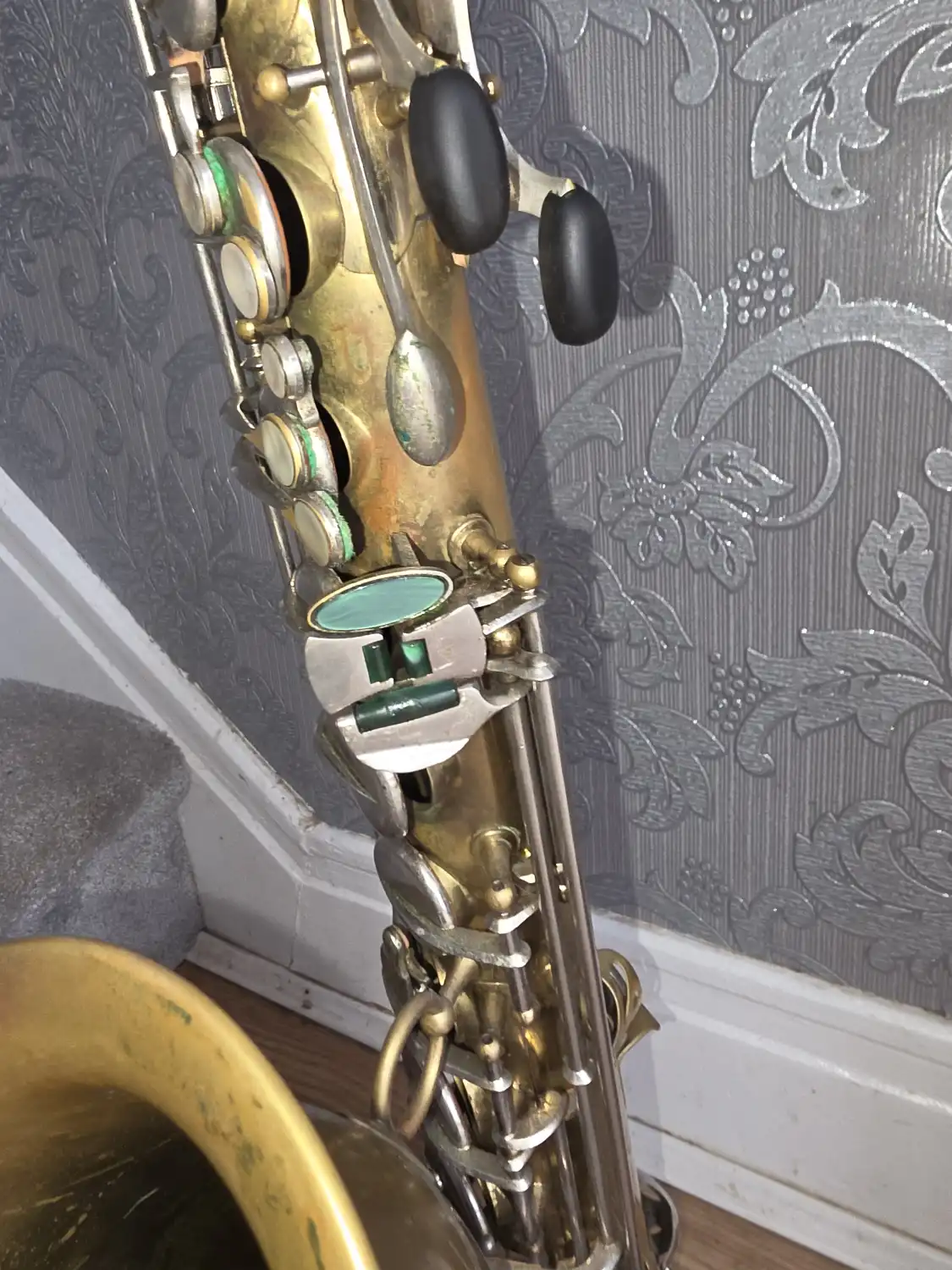
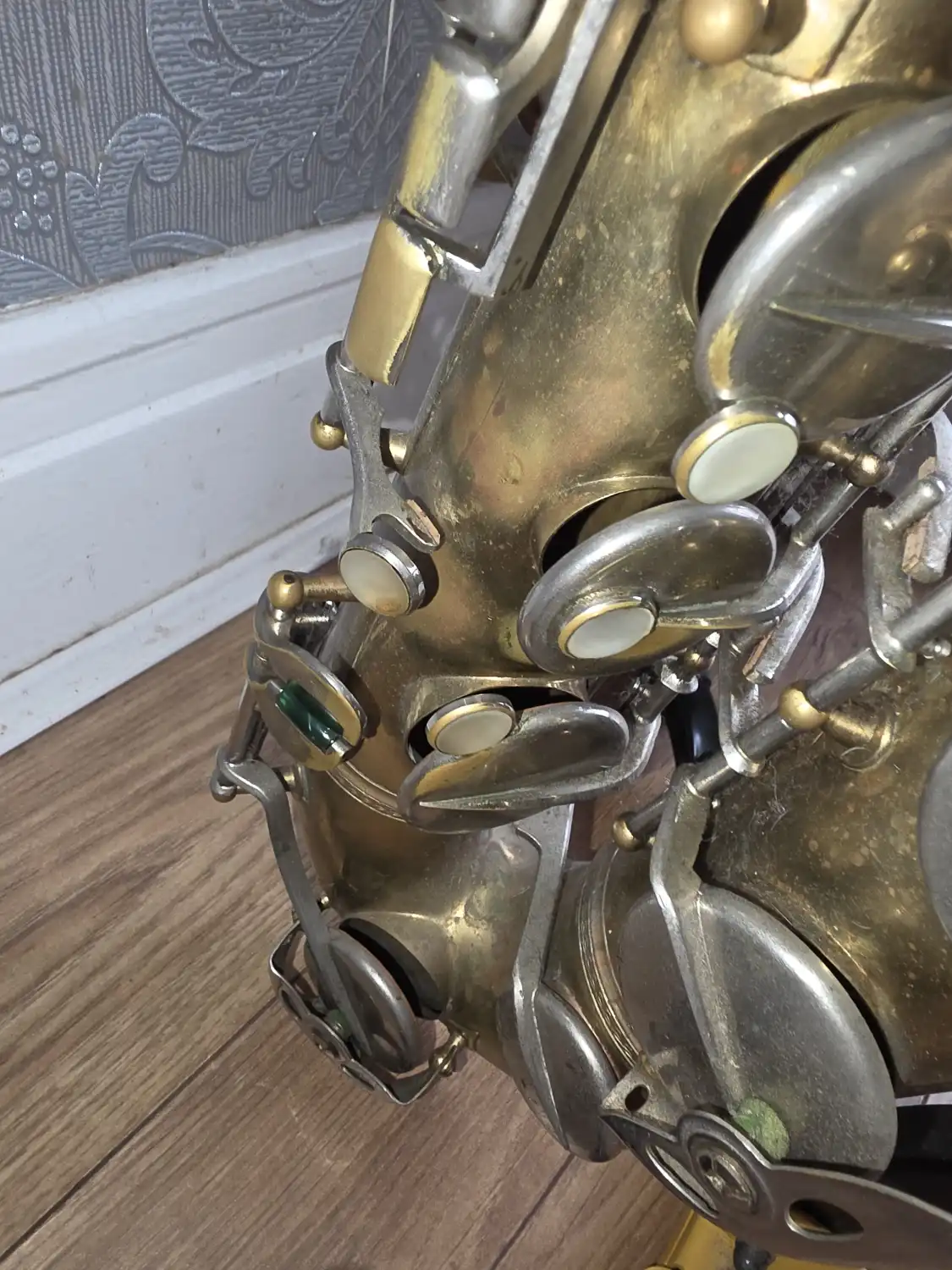
**Rare 1956 Ida Maria Grassi “Jade Roller” Vintage Tenor Saxophone**
For sale is a **1956 Ida Maria Grassi Jade Roller tenor saxophone**, a fantastic example of a vintage Italian-made saxophone with plenty of character and history.
I am selling as I have been keeping it as my back up horn for a few years and it's a real shame that it isn't being played and appreciated.
This is a genuine **1950s Grassi Jade Roller**, and is an excellent opportunity for a player or collector looking for something a little different from the more commonly seen American vintage saxophones.
Instrument Details
Maker: Ida Maria Grassi
Model: Jade Roller
Instrument: Tenor Saxophone
Year: 1956
Country: Italy
Finish: Vintage matt finish patina
Condition: Well cared for
Playing condition: Full working order and plays great
Case: Black hard case
The saxophone has been very well looked after and professionally serviced over the years by Bob Whitaker at Curly Woodwind.
It is in full working order and plays very well, making this not just an interesting collector's piece but a genuine vintage player's instrument.
Vintage Character
The Jade Roller has the distinctive look and character associated with early Ida Maria Grassi saxophones. The matt vintage lacquer gives the instrument a particularly attractive, understated appearance, while its age and Italian manufacture make it an interesting addition to any saxophone collection.
A great instrument for:
* Jazz players
* Blues players
* Rock and Roll players
* Big Band players
* Vintage saxophone enthusiasts
* Collectors of Italian saxophones
* Players looking for a distinctive alternative to the usual vintage American brands
**Price: £1,250**
Located in liverpool L16.
Viewing and playing welcome by
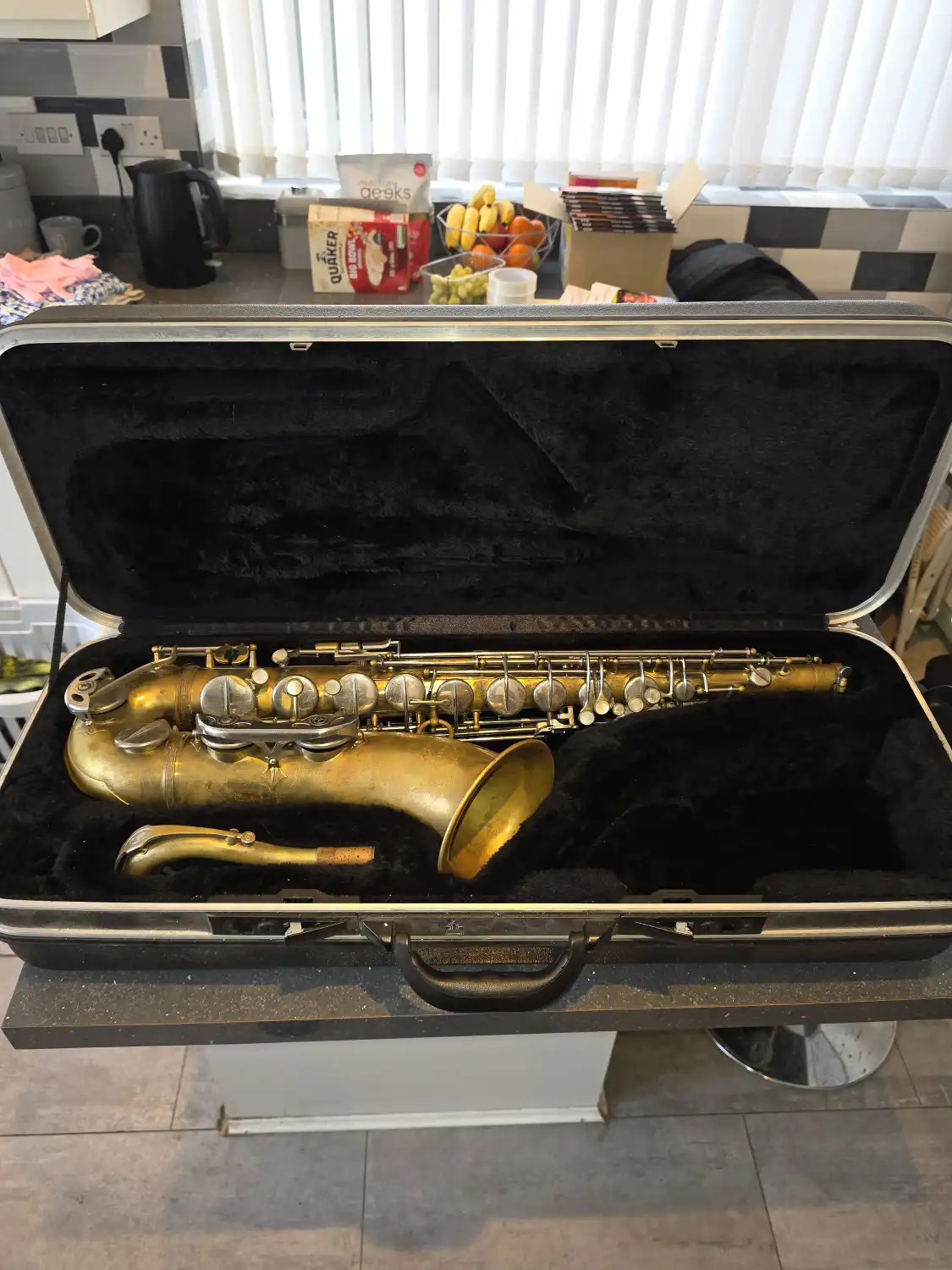
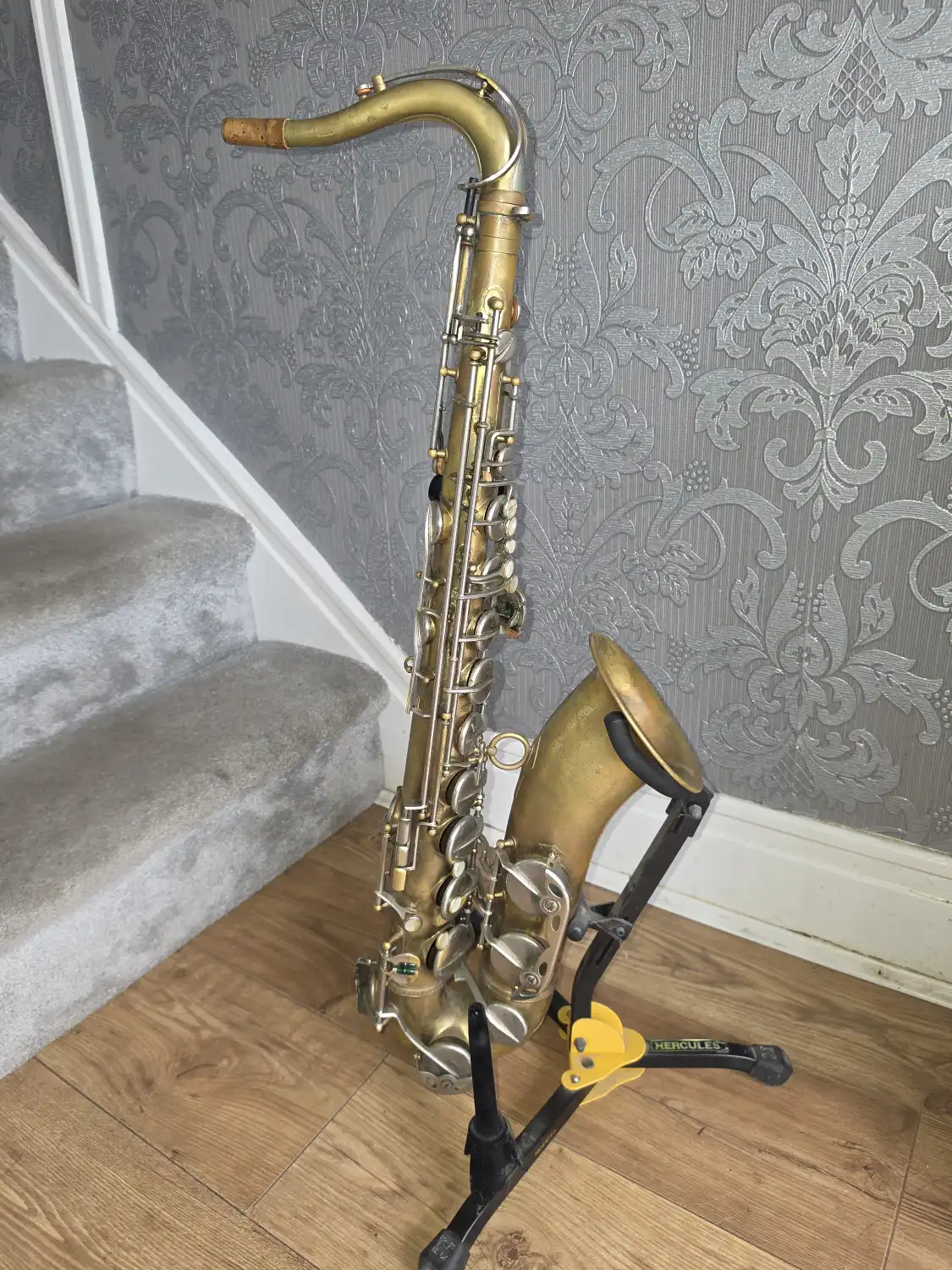
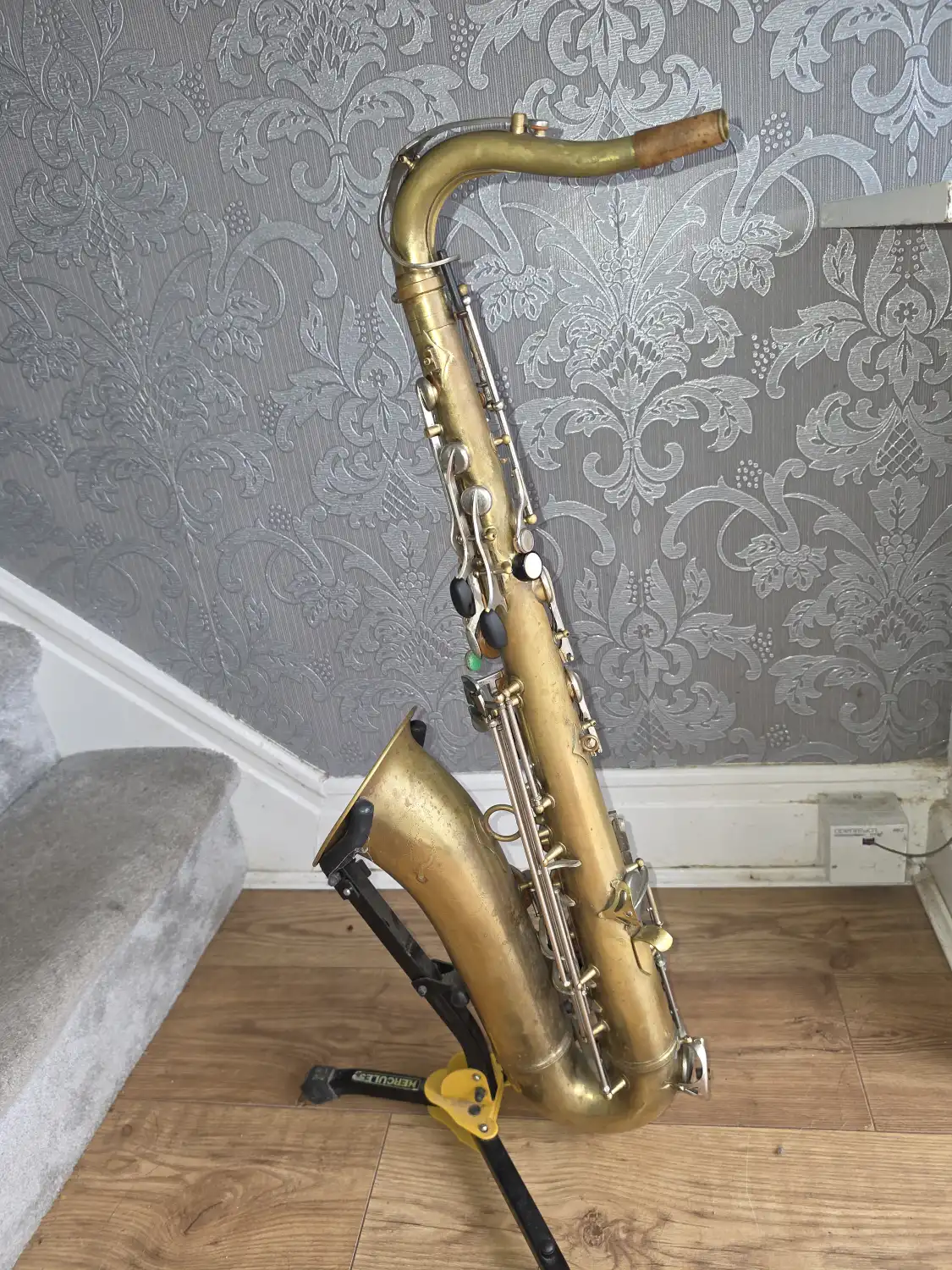
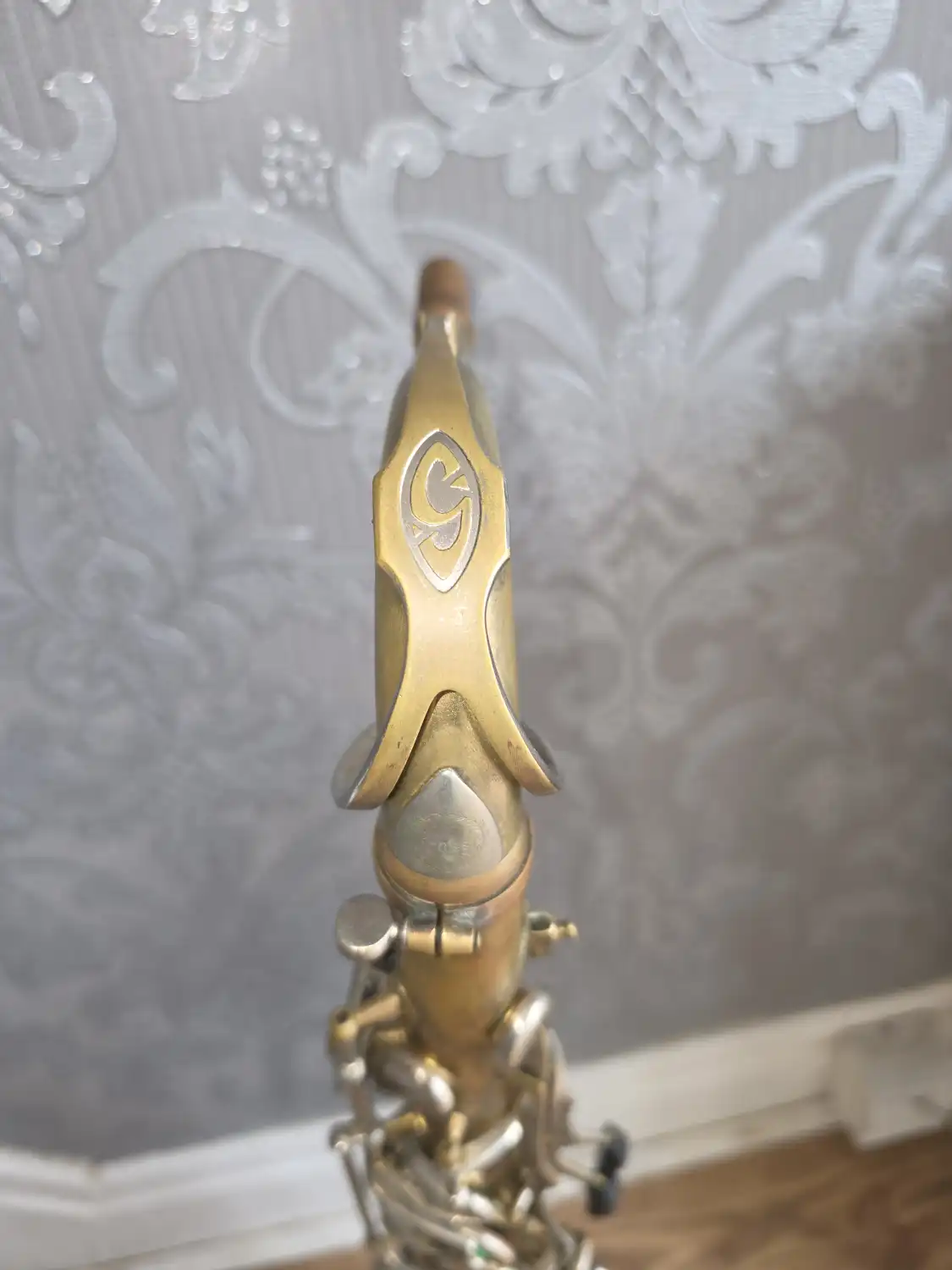
 arrangement.
**Please message for further photographs, information or to arrange a viewing.**
Collection only, due to the rare nature of this horn I will not post in case of damage, these are rare horns and finding them is getting more difficult all the time.
For sale is a **1956 Ida Maria Grassi Jade Roller tenor saxophone**, a fantastic example of a vintage Italian-made saxophone with plenty of character and history.
I am selling as I have been keeping it as my back up horn for a few years and it's a real shame that it isn't being played and appreciated.
This is a genuine **1950s Grassi Jade Roller**, and is an excellent opportunity for a player or collector looking for something a little different from the more commonly seen American vintage saxophones.
Instrument Details
Maker: Ida Maria Grassi
Model: Jade Roller
Instrument: Tenor Saxophone
Year: 1956
Country: Italy
Finish: Vintage matt finish patina
Condition: Well cared for
Playing condition: Full working order and plays great
Case: Black hard case
The saxophone has been very well looked after and professionally serviced over the years by Bob Whitaker at Curly Woodwind.
It is in full working order and plays very well, making this not just an interesting collector's piece but a genuine vintage player's instrument.
Vintage Character
The Jade Roller has the distinctive look and character associated with early Ida Maria Grassi saxophones. The matt vintage lacquer gives the instrument a particularly attractive, understated appearance, while its age and Italian manufacture make it an interesting addition to any saxophone collection.
A great instrument for:
* Jazz players
* Blues players
* Rock and Roll players
* Big Band players
* Vintage saxophone enthusiasts
* Collectors of Italian saxophones
* Players looking for a distinctive alternative to the usual vintage American brands
**Price: £1,250**
Located in liverpool L16.
Viewing and playing welcome by
**Please message for further photographs, information or to arrange a viewing.**
Collection only, due to the rare nature of this horn I will not post in case of damage, these are rare horns and finding them is getting more difficult all the time.
0 Replies
·
46 views
Try our new Social Feeds
Look out for the navigation icon: . You can now set default social feed view (nested & infinte scroll) in your account preferences.You can easily switch to regular forum view any time.


Member Blogs (currently active)
-

-
 Saxophones Pork Tales: Saxophone Repair DIY Adventures.
- Started by PigSquealer
- Replies: 1K
-

Trending


Popular Discussions on the Café
-
 Saxophones Carrying a tenor on a (motor)bike?
- Started by Jay
- Replies: 779
-
 Saxophones C Melody Saxophones
- Started by Andy Hornblower
- Replies: 685
-
 Saxophones How will Tariffs affect Sax Prices?
- Started by Ivan
- Replies: 465
-

-
 Playing the saxophone The Cafe Trio grown to Octet down to Sextet
- Started by trimmy
- Replies: 844
-
 Great Players Who sparked your love of Sax music
- Started by jools
- Replies: 619
-
 Playing the saxophone Learn to play by ear or by reading music
- Started by Taz
- Replies: 1K
-
 Tech/maintenance My new "DIY" pads...
- Started by DavidUK
- Replies: 393
-
 Theory & Impro Do we really need theory?
- Started by jbtsax
- Replies: 497
-
Misc Reviews Yamaha YDS-150 Wind Synth
- Started by Acc6441
- Replies: 301
-
 Playing the saxophone Learning to Read v Playing by ear
- Started by BigMartin
- Replies: 505
Featured Classifieds
Latest Song of the Month
-
-
 SOTM SotM September 2026 - Autumn Leaves
- Started by mrblackbat
- Replies: 23
-

-

-
 SOTM SOTM June 2026 "And You Just Smile" (from ear to ear- training)
- Started by LostCircuits
- Replies: 11
-
SOTM SOTM May 2026 - Always Remember Us This Way
- Started by MikeMorrell
- Replies: 39
-
 SOTM SOTM April 2026 - Freedom Jazz Dance
- Started by rhysonsax
- Replies: 14
-
SOTM SOTM and PETE (Play by Ear Training Exercise)
- Started by Wade Cornell
- Replies: 16
-
SOTM SOTM Feb 2026 - On Green Dolphin Street
- Started by mrblackbat
- Replies: 44
-
 SOTM SOTM January 2026: Our Love Is Here to Stay
- Started by GCinCT
- Replies: 46
-
SOTM SOTM December 2025: Wexford Carol
- Started by MikeMorrell
- Replies: 37
-
 SOTM SOTM November 2025 - Red Baron
- Started by sax panther
- Replies: 36