
 (bottom of page)




CafeSaxophone Forum

Cafe Moderator
Commercial
Recording Starting out with Reverb & Compression
Reverb
Why reverb?
There are two main reasons you might add reverb:- As an effect to make the music sound "subjectively" better. In this case you, or the audience, hear the reverb as something that can add more life or sparkle to the sound. It is easy to overdo this effect and swamp the recording. This is often the case with beginners, but also we old pros can sometimes be guilty, especially if we just got a new reverb unit or plugin and go a bit overboard.
- As a way to make a dry recording sound more realistic. If your recording room is very dry, or the instruments/voice are recorded very close, it can sound a bit odd because our ears are used to hearing the ambience of a room.
- A combination of the two.
Setting up on busses
First of all this assumes that you want to have the same type of reverb on all your intruments. If not, then you might as well just use separate reverb plugin on each channel’s inserts.
However very often to get a mix hanging together nicely then you do want the same reverb or combination on all or many of the instruments in your mix.
After all, the point of adding reverb often is that you are making an instrument or voice sound like it is in a room with its natural ambience. So it makes sense they are all in the same room.
What I do is put one reverb on a separate “bus” in Logic Pro. This is not the same as a channel, because a channel can only have MIDI or audio as an input source. A bus is similar, but its input signal can be any audio “routed” from the sends of any of your channels.
The reverb on this bus is set to 100% wet, so it’s only reverb (no dry signal).
The outputs of all the channels are set to go to your main mix.
The output of the reverb bus is also set to the main mix, so the dry signals from all the channels meet up with the reverb output of the bus and get mixed together.
As the sends from the channel strips send a dry signal to the reverb it’s very easy to send different amounts from different channels to the same reverb. You may want a very slight touch of reverb on a piano, but a bit more on a vocal, so you just send more to the vocal via the bus send. And when you change the reverb type on the bus, it applies to every instrument that is sending there.

Reverb on buses
In the example above the Audio and instrument track each have a rotary send output in addition to the main outputs to the stereo mix. These go to the room and plate reverbs on the busses 1 & 2 which in turn send the ("wet") signal via their main outputs to add to the stereo mix.
The way I work I often have two reverbs as I mentioned earlier, and so I have two busses and two sends on each channel. Bus 1 is a short room (about 0.9 with a slight predelay) and bus 2 is the longer hall or plate reverb. Send 1 on each channel goes to bus 1 and I usually have all of them sending at least a little bit. This is especially useful when using MIDI samples to combine with an instrument or vocal recorded in a room, as you can get the very dry MIDI sounding more like it’s “in the room” with the real instruments.
Then I add the bigger reverb as desired. Again the send control is all I need to determine how much, no need to open the plugin and dick with the settings.
Logic template - 2 reverb busses
Reverb tips:
- It can often work well to add a short (0.7 – 1.2 sec) room ambience to dry electronic signals (e.g. synth modules, D.l.’d guitar) .This simulates (to a limited extent) the effect of recording in a room. You can then add a longer reverb (e.g. 2 secs and upwards) as necessary for effect. This also works on close miked acoustic signals. This method gives your mix a lot of life without using too much reverb (a fault of many “home demos”). My autoload file has a short room set up on bus return 1 and a longer reverb on return 2.
- If you want reverb without making a voice or instrument sound to distant, give it some predelay (50-70 milliseconds). This simulates the effect of sitting close to a stage and hearing the signal first then the reverb from the back, as opposed to sitting far away from the stage and hearing the reverb and signal at the same time.
- To simulate distance set the predelay to very short. This simulates sitting at the back of a hall and hearing the sound from the stage almost at the same time as the echo from the back wall. Sounds from further away will often send less bright than close sounds, so it can help to filter or EQ some top off.
Audio Compression
Basics
The aim of a compressor in recording is to reduce the range of dynamics of an audio signal. (Don’t confuse this with file compression, which is used to make a computer file smaller). Any parts of the signal louder than a certain THRESHOLD are reduced. The amount of reduction is relative to the level of the signal and expressed as a RATIO. If the ratio is set at 2:1 the signal above the threshold is reduced to half its original, if the ratio is set to 5:1 the signal above the threshold is reduced to one fifth of its original.(NB if the ratio is set as high as possible, usually infinity:1, the signal above the threshold is reduced to practically the same as the threshold and is referred to as LIMITING.

In this graph a 45o
line represents equal input and output levels, ie no compression (1:1) ratio.
The amount of compression is based on a relationship between the threshold and the ratio. Low thresholds and high ratios give you more gain reduction, i.e. more compression, but neither threshold nor ratio on their own will determine the amount of gain reduction. You can achieve the same gain reduction by a high ratio and a high threshold as you can with a low ratio and a low threshold:

As you can see from the above, the amount of compression with 7:1 ratio and high threshold can be similar to the amount of compression with a 2:1 ratio and lower threshold, and is actually the same at one point. Whether to use high ratios or low threshold or both is a subjective decision and usually based on trial and error and taste.
This is not the end of the story. Usually the point of compressing a signal is to get the whole signal louder. Most compressors have a gain reduction meter. Sometimes there is a switch to change an input gain meter into a gain reduction (GR) meter. You can tell from this how much compression has been applied. Having reduced the loud bits by a certain amount, you can then adjust the gain make up by the same amount. This effectively brings the loud bits back to their original level, but at the same time brings the quiet bits up to a level higher than they were originally, with the end result of reduced dynamic range and higher overall average level. (Many software compressors can do this automatically)
Why Compress?
A wide dynamic range is often ideal in a live acoustic performance, however recording and broadcast media generally have limitations. Peaks of audio need to be below the level at which distortion occurs. The grooves of a vinyl record can only cope with so much level until the needle jumps. Digital media only allow levels up to 0dB. Analogue tape causes distortion when the level is too high. With very dynamic music, once the peak level is set at a practical maximum, the low levels may well be close to the level of unwanted noise, e.g. tape hiss, vinyl surface noise, background sounds. Many radio stations compress the output signal as very quiet passages of classical or acoustic music can become totally inaudible on car radios that have to compete with the car’s engine noise and the sounds of other traffic.- Compressing a final mix will make it louder, and therefore possibly sound better when compared with less compressed tracks, e.g. on radio or on compilation albums.
- It can be useful to compress single tracks of a multitrack recording to avoid quiet words of a vocal, or quiet notes of a solo instrument getting swamped by the backing.
- A combination of compression and automatic gain make-up on instruments with a natural decay will create a sustained sound.
Hard or Soft?
In the graphs above, compression occurs exactly as the signal hits the threshold. Some compressors gradually apply compression as the signal approaches and after it has crossed the threshold. This is often described as soft knee compression. The graph can be seen as the thigh, knee and calf of a leg:
Speed
There are often two more controls on a compressor, ATTACK and RELEASE. The speed at which the level decreases as the signal crosses the threshold is determined by the Attack control, and the speed at which the level increases after the signal drops below the threshold is determined by the Release control.A fast attack means that the full amount of compression kicks in almost immediately. I found this can sometimes cause distortion or have an adverse effect on the tone of an instrument or the amount of punch, especially bass drums. The best settings are found by trial and error, but a good starting point is a mediumish 100ms. With a slower attack, the compression gradually kicks in.
The next two pictures show what happens when a signal is is passed through the digital compressor in Apple Logic Pro, with a threshold of -10dB and a ratio of 2:1. The signal starts just below the threshold at -11dB, then suddenly goes up to 0dB and back again.(A) shows the signal with no compression. (B) shows the same signal when compressed with attack of 200ms and release of 500ms.
(a) No compression:

(b) With compression:

Exampes of different compressions on a saxophone
Tips & Hints
- Start with a ratio of between 2:1 and 7:1, medium-fast attack and medium release then gradually lower the threshold until you get gain reduction of about 5 dB. You can then set the output gain make up to compensate, eg if your gain reduction is 5 dB, set the gain make up the same to bring the peak level back to its original. Then gradually speed up attack until it gets noticeable and back it off slightly.
- Listen carefully. Compression can affect the timbre of an instrument, either because of the inherent sound of the compressor, or because the peaks of an instrument may have a different tone to the troughs, so reduction in level of the peaks relative to the troughs changes the overall tone. This can be especially true when applying fast compression to instruments with broad vibrato.
- Be careful when compressing an entire mix. Very often in pop music there is a bass line which is generally constant in level. If there are sudden very loud peaks such as brass stabs, the compressor will lower the whole track at that point, with the result that although you may get an overall levelling of dynamics and increased loudness, the bass line will dip at this point and lose its flow. This is sometimes called pumping. This problem can be overcome by using a multiband compressor, which splits the signal into different frequency ranges, and compresses them individually. In the above case the brass stab would be compressed, but the lower frequencies can pass through a lower band of the compressor with no or very little compression. It is usually best to mix a track with no, or very gentle, compression, then apply compression at a later stage (final mastering).
- If you are using compression on a vocalist, ask them not to back off the microphone for loud bits. Singers often do this when singing live, but usually a constant distance from the microphone is better in a studio. If they suddenly back off, the vocal sound will suddenly get more ambient which may not be good if you want an “in your face” sound. A good compressor will cope with a large range of dynamics without changing the sound drastically.
27 Replies
·
24030 views


Saxophones C Melody Saxophones
I've been interested in C Melody saxes, for a while.
Apparently, they were quite common in the 1920s-30s, and the general concensus seems to be that the designs got better as time went on. Earlier models were often made in High Pitch (a tuning system that predates using A=440Hz), and should be avoided, unless you want to accompany a Highland bagpipe player.
From what little research I've done, it seems Conn made some of the better sounding ones, and their later models were improvements over the earlier ones. The ones with a "straight" neck, similar to an alto, are supposed to be good. Personally, I don't really like the S shaped neck on a tenor.
Anyway, here's one I've asked about recently. I've posted a couple of these pictures in Ads's review discussion thread of the Sakkusu C Melody sax, but here's all I have.
This is a 1924/1925 Conn C Melody, currently for sale at the Trevor Jones shop in Bristol. It's in low pitch, has had a partial repad, and is ready to play.

Bristol is a bit far for me to visit so I asked if they could send me photos, particularly of the hand positions, because the ergonomics are a bit different on these old saxes, and C melody saxes in particular.

Ermm... there seems to be a 2 file upload limit. Hopefully, that's per post

The thumb rest is apparently soldered on, so can't be adjusted easily, but the position looks good for reaching the right side trill keys (Bb/C/high E). This seems to be an issue on the Sakkusu / Thoman C Melody (see https://cafesaxophone.com/threads/sakkusu-c-melody-saxophone-review.13705/Ads's Sakkusu C Melody review[/URL])
The "L" stamped below the serial number indicates it's built for "Low" pitch - i.e. designed for modern A=440Hz tuning. I've read different accounts of what was meant by High Pitch (and maybe there was more than one definition), but the consensus seems to be it was at least A=450Hz, or A=453Hz - kind of between semitones, in modern tuning, and too far out to compensate for by positioning the mouthpiece differently etc.
It's important to check for that when buying any brass or woodwind instrument from that period. I think military bands kept it going for a while longer, in Britain. Scottish bagpipe and Irish/Scottish Bb flute players tend to still use it, as I understand it. It's certainly the normal tuning for 5 or 6 key Bb flutes.
Apparently, they were quite common in the 1920s-30s, and the general concensus seems to be that the designs got better as time went on. Earlier models were often made in High Pitch (a tuning system that predates using A=440Hz), and should be avoided, unless you want to accompany a Highland bagpipe player.
From what little research I've done, it seems Conn made some of the better sounding ones, and their later models were improvements over the earlier ones. The ones with a "straight" neck, similar to an alto, are supposed to be good. Personally, I don't really like the S shaped neck on a tenor.
Anyway, here's one I've asked about recently. I've posted a couple of these pictures in Ads's review discussion thread of the Sakkusu C Melody sax, but here's all I have.
This is a 1924/1925 Conn C Melody, currently for sale at the Trevor Jones shop in Bristol. It's in low pitch, has had a partial repad, and is ready to play.
Bristol is a bit far for me to visit so I asked if they could send me photos, particularly of the hand positions, because the ergonomics are a bit different on these old saxes, and C melody saxes in particular.
Ermm... there seems to be a 2 file upload limit. Hopefully, that's per post
The thumb rest is apparently soldered on, so can't be adjusted easily, but the position looks good for reaching the right side trill keys (Bb/C/high E). This seems to be an issue on the Sakkusu / Thoman C Melody (see https://cafesaxophone.com/threads/sakkusu-c-melody-saxophone-review.13705/Ads's Sakkusu C Melody review[/URL])
The "L" stamped below the serial number indicates it's built for "Low" pitch - i.e. designed for modern A=440Hz tuning. I've read different accounts of what was meant by High Pitch (and maybe there was more than one definition), but the consensus seems to be it was at least A=450Hz, or A=453Hz - kind of between semitones, in modern tuning, and too far out to compensate for by positioning the mouthpiece differently etc.
It's important to check for that when buying any brass or woodwind instrument from that period. I think military bands kept it going for a while longer, in Britain. Scottish bagpipe and Irish/Scottish Bb flute players tend to still use it, as I understand it. It's certainly the normal tuning for 5 or 6 key Bb flutes.
577 Replies
·
71133 views
Miscellaneous US/UK linguistics - different words and spelling
Prompted by an hilarious joke I made at jbtsax's expense I was thinking about US spelling vs UK
To me the US seems to have gone the way of phonetic spelling with certain words; plough is plow, humour is humor, tumour is tumor, potato is tomato (I think I'm right)
So....
What happened to route? The spelling stayed the same but instead the pronunciation changed
Why?
To me the US seems to have gone the way of phonetic spelling with certain words; plough is plow, humour is humor, tumour is tumor, potato is tomato (I think I'm right)
So....
What happened to route? The spelling stayed the same but instead the pronunciation changed
Why?
159 Replies
·
8519 views

Saxophones Pork Tales: Saxophone Repair DIY Adventures.
Tales from a pig that likes to stick his nose into everything.
Paint that S. How difficult could it be ?

1) Search the net.
2) Find the color.
3) Order color.
4) Study task on University of YouTube, aka; For destruction by DYI presented by pro tech.


Do the cleaning & prep.

Paint and cleanup / detail the edges with hard cotton swabs. Sounds easy……

Yeah tha guy Matt makes it look easy.
Anyone remember your first experience cooking bacon crispy while still in the frying pan !
Paint that S. How difficult could it be ?
1) Search the net.
2) Find the color.
3) Order color.
4) Study task on University of YouTube, aka; For destruction by DYI presented by pro tech.
Do the cleaning & prep.
Paint and cleanup / detail the edges with hard cotton swabs. Sounds easy……
Yeah tha guy Matt makes it look easy.
Anyone remember your first experience cooking bacon crispy while still in the frying pan !
1020 Replies
·
56828 views


Saxophone beginners If you had to do it all again
Evening all.
I'm returning to playing the sax after nearly 25 years, used to play alto (played in various bands, gigs in pubs, clubs, fesitvals, weddings & wakes, recorded some albums). I've only gone and bought myself a tenor off of ebay by accident and i'm planning to do some practice, mostly so I can get some half decent sounding brass parts down on my computer based deep house noodling.
When i started learning (early 90s) I taught myself, never had a lesson and subsequently developed a load of bad habits. These days there's something called youtube and it's full ofAI slop tutorials for people to learn off so I've had a look around.
I'm planning on focussing on my embechoure first (long notes, stupid face exercises), intonation then finger placement (always moved my fingers too much and hit the pads too hard).
So my question is, if you had to do it all again - how would you go about it, what would you concentrate on?
Coke Escovado - I wouldn't change a thing
I'm returning to playing the sax after nearly 25 years, used to play alto (played in various bands, gigs in pubs, clubs, fesitvals, weddings & wakes, recorded some albums). I've only gone and bought myself a tenor off of ebay by accident and i'm planning to do some practice, mostly so I can get some half decent sounding brass parts down on my computer based deep house noodling.
When i started learning (early 90s) I taught myself, never had a lesson and subsequently developed a load of bad habits. These days there's something called youtube and it's full of
I'm planning on focussing on my embechoure first (long notes, stupid face exercises), intonation then finger placement (always moved my fingers too much and hit the pads too hard).
So my question is, if you had to do it all again - how would you go about it, what would you concentrate on?
Coke Escovado - I wouldn't change a thing
23 Replies
·
2437 views

Miscellaneous What is “Politics”?
In the current thread on AI, Pete reminded us to keep politics out of the discussion, and to put side queries in another thread. So here is the side query…
When does a discussion become political? If something is an important societal topic (e.g., the state of music education, or the emergence of AI), there are certain to be politicians and government employees involved somehow. (Well, maybe not in music education, more’s the pity.) I’d like some clarity and perhaps a discussion on where the line is.
Case in point - government involvement in and support of health care. In most of the developed world, this is a non-issue. In the USA it’s a political hot potato. But this topic is important culturally and socially. Studies on strategies for extending lifespan. What tests to get, and where and how to get them. Seeking advice on a particular health condition. Etc. Here in the US, this can stray very easily into political waters - because of the various money, power and philosophical opinions around the subject.
So if I say “I think taxpayer funds should be used to provide a sensible baseline of health care support for everyone”, is that political? Or do I have to add something about a particular politician, or perhaps discuss specific legislation, to make it cross the line? “Joe Blow is an idiot because he thinks Medicare should be cancelled.”
I ask because topics like AI and healthcare affect us all, both as musicians and as humans in society. (Also as saxophonists, because some AI systems seem to think one needs 7 or 8 fingers per hand to play one!)
In the current discussion of AI, which is important IMO, there are obvious cultural and societal implications around the uses of AI. And these very easily stray into discussions of current political topics because various governments and government agencies are actively involved. Some guidelines on where to draw the boundaries of the discussion would be helpful.
When does a discussion become political? If something is an important societal topic (e.g., the state of music education, or the emergence of AI), there are certain to be politicians and government employees involved somehow. (Well, maybe not in music education, more’s the pity.) I’d like some clarity and perhaps a discussion on where the line is.
Case in point - government involvement in and support of health care. In most of the developed world, this is a non-issue. In the USA it’s a political hot potato. But this topic is important culturally and socially. Studies on strategies for extending lifespan. What tests to get, and where and how to get them. Seeking advice on a particular health condition. Etc. Here in the US, this can stray very easily into political waters - because of the various money, power and philosophical opinions around the subject.
So if I say “I think taxpayer funds should be used to provide a sensible baseline of health care support for everyone”, is that political? Or do I have to add something about a particular politician, or perhaps discuss specific legislation, to make it cross the line? “Joe Blow is an idiot because he thinks Medicare should be cancelled.”
I ask because topics like AI and healthcare affect us all, both as musicians and as humans in society. (Also as saxophonists, because some AI systems seem to think one needs 7 or 8 fingers per hand to play one!)
In the current discussion of AI, which is important IMO, there are obvious cultural and societal implications around the uses of AI. And these very easily stray into discussions of current political topics because various governments and government agencies are actively involved. Some guidelines on where to draw the boundaries of the discussion would be helpful.
35 Replies
·
550 views


Animals Show us your Wildlife
Inspired by the convolution of the Show us your pet and Help a Hedgehog threads...
Here's one from another thread;
Red Squirrel
(They exist in Norway)

Here's one from another thread;
Red Squirrel
(They exist in Norway)
872 Replies
·
41269 views

Cafe Moderator
Café Supporter
Miscellaneous Daily Check In
Good morning,
We thought it might be good to have a thread where you can just come and say hi, tell us what you are doing today, have a moan, share an idea that you wouldn't necessarily start a thread for ( we can always create a new thread from posts here if it became a substantial discussion).
It doesn't have to be sax related🙂
Basically an easy way to connect on a daily basis.
So to kick us off, I am writing this whilst prepping a casserole for the slo cooker as I am playing sax today with café sax and need a quick easy tea when I get home.
I am still suffering with a cough which will impact my playing today and I am worried as we are playing our first care home gig next Sunday!!
Have a lovely Sunday
Jx
We thought it might be good to have a thread where you can just come and say hi, tell us what you are doing today, have a moan, share an idea that you wouldn't necessarily start a thread for ( we can always create a new thread from posts here if it became a substantial discussion).
It doesn't have to be sax related🙂
Basically an easy way to connect on a daily basis.
So to kick us off, I am writing this whilst prepping a casserole for the slo cooker as I am playing sax today with café sax and need a quick easy tea when I get home.
I am still suffering with a cough which will impact my playing today and I am worried as we are playing our first care home gig next Sunday!!
Have a lovely Sunday
Jx
2799 Replies
·
80806 views


The dates have been announced for the 2027 International Saxophone Symposium hosted by the Navy Band at George Mason University: January 8-9.
Plan your trip now if you're coming from afar.
Plan your trip now if you're coming from afar.
18 Replies
·
689 views
Saxophones Windcraft WAS-110 Alto
Me again !!
I have been offered the above complete with mouthpiece, care kit, strap, and case, for £215 (+ p&p) - wondering if this is a good deal?
@Steve Howard reviewed one of them some time ago and gave it a reasonably good review at the time - are they still worth picking up or would a Jupiter or Antigua Winds be a better option (for a beginner)?
Any thoughts / comments appreciated......
Thanks
I have been offered the above complete with mouthpiece, care kit, strap, and case, for £215 (+ p&p) - wondering if this is a good deal?
@Steve Howard reviewed one of them some time ago and gave it a reasonably good review at the time - are they still worth picking up or would a Jupiter or Antigua Winds be a better option (for a beginner)?
Any thoughts / comments appreciated......
Thanks
48 Replies
·
4582 views
Cafe Moderator
Commercial
Miscellaneous Do you have a “pet peeve”
And care to share it with us?
176 Replies
·
9287 views

Mouthpieces Jody jazz DV Chicago tenor.
Anyone using one on tenor? What are your impressions and thoughts? Cheers!
8 Replies
·
182 views
Blog Tenor Viol's musings
OK. I've thought about doing this for a while - setting up a general thread for me to post in, rather than necessarily creating a separate new thread every time for relatively minor matters, or discussion of how things are going etc.
So, the first item is my FB page got me with an Amazon advert and I seem to have ordered a jazz theory book... It will get delivered to the Amazon lockers at work on Monday
Tomorrow is a Café Trio/Quartet...Septet day where @trimmy is going to demonstrate ascending chromatic scales in augmented fourths, and descending in diminished fifths... 😀
Yesterday was a wind band concert in Maghull. There were about 85 of us playing. We had a contrabassoon in the band...

So, the first item is my FB page got me with an Amazon advert and I seem to have ordered a jazz theory book... It will get delivered to the Amazon lockers at work on Monday
Tomorrow is a Café Trio/Quartet...Septet day where @trimmy is going to demonstrate ascending chromatic scales in augmented fourths, and descending in diminished fifths... 😀
Yesterday was a wind band concert in Maghull. There were about 85 of us playing. We had a contrabassoon in the band...
1918 Replies
·
109606 views
Playing the saxophone Falling from Altisimo A? (and falls in general)
In an arrangement of Oye Como Va, by Johnny Ferreira we have
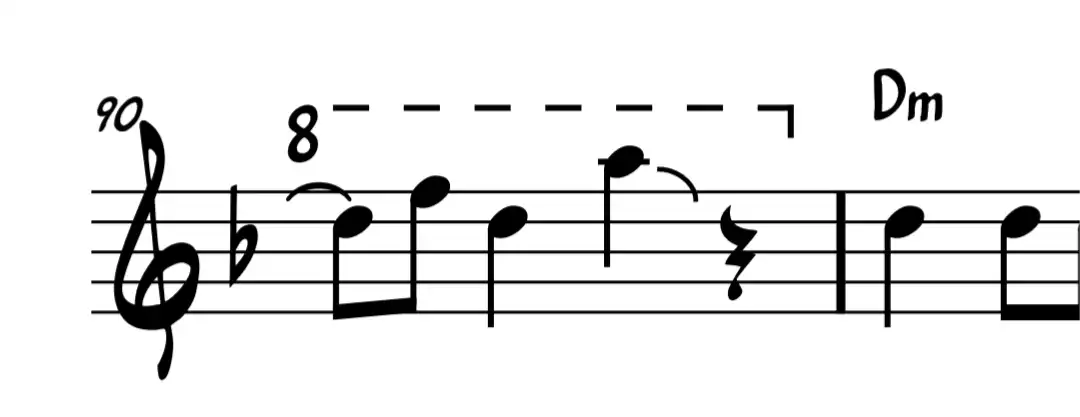
DFDFDFA on the second register, then at the top.
I'm just about stable on D to altisimo A - good exercise for me!
But G is quite far away, fungering wise..
My best alt A is L23+a side key.
How would you approach the fall?
Thanks.
DFDFDFA on the second register, then at the top.
I'm just about stable on D to altisimo A - good exercise for me!
But G is quite far away, fungering wise..
My best alt A is L23+a side key.
How would you approach the fall?
Thanks.
20 Replies
·
249 views
Mouthpiece/Lig FS for sale - Phil-tone Isotope tenor mouthpiece, 8*
for sale - a rare beast, the Phil-tone Isotope. This has been discontinued for a while, it was a collaboration between Phil-tone and Theo Wanne -beautifully made piece as you'd expect. Comes with the original wooden box. Big step baffle so unsurprisingly leans towards the bright side with a clean, modern sound, but I found it to be capable of a bit more warmth and versatility than a guardala for example.
Always used with a patch, I've removed this to give it a clean up for selling and you can see on the photos there's a bit of a colour difference on the beak where the patch has been stuck on. There's also some discolouration on the table which I've shown in the photos below, this was there when I purchased it (I'm not the first owner) but doesn't affect playability - table is flat and rails are unblemished. I've found myself to be more comfortable on rollover baffles, but this needs to be enjoyed by someone instead of sitting on my shelf. UK postage only please.
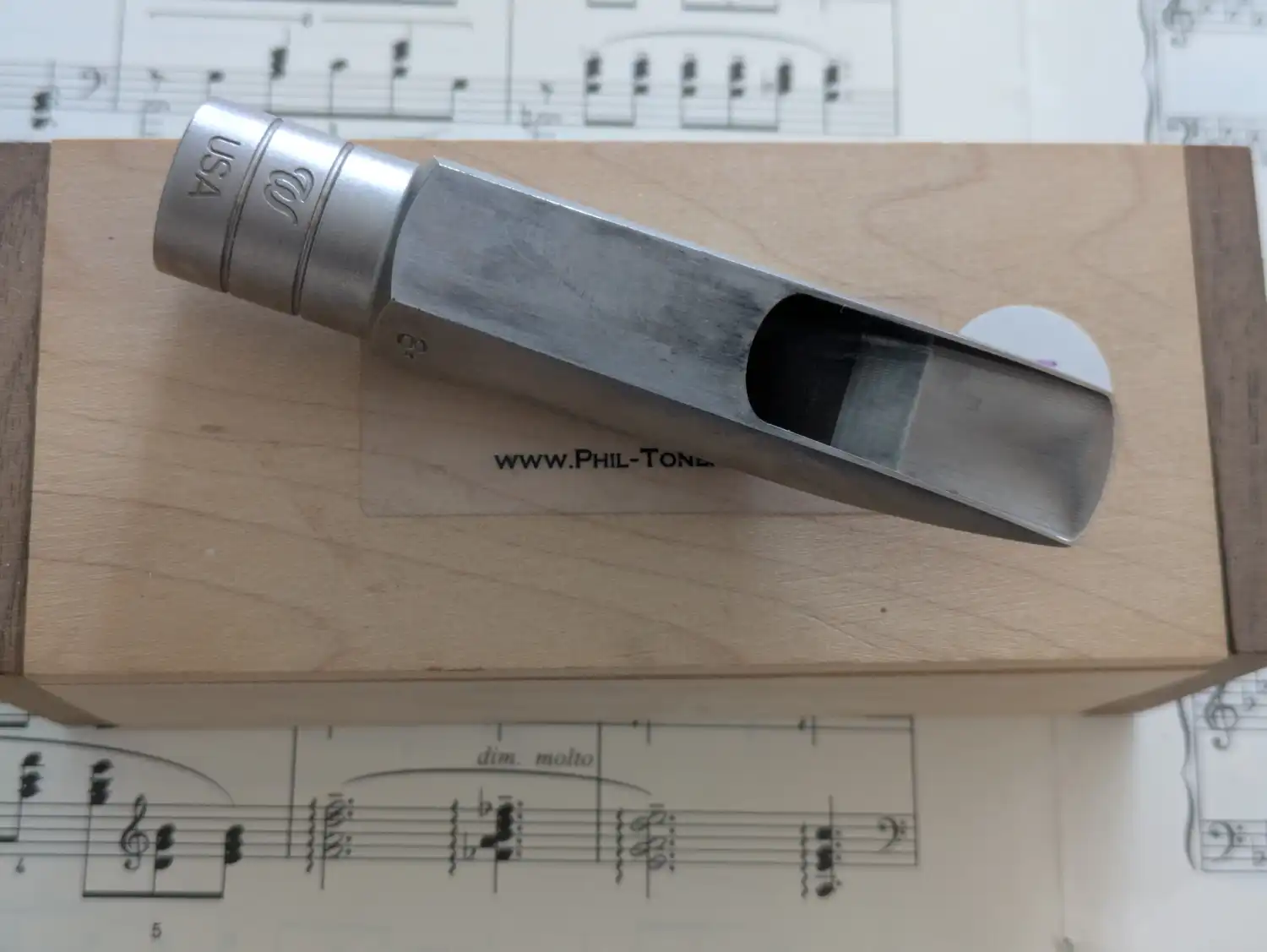


Always used with a patch, I've removed this to give it a clean up for selling and you can see on the photos there's a bit of a colour difference on the beak where the patch has been stuck on. There's also some discolouration on the table which I've shown in the photos below, this was there when I purchased it (I'm not the first owner) but doesn't affect playability - table is flat and rails are unblemished. I've found myself to be more comfortable on rollover baffles, but this needs to be enjoyed by someone instead of sitting on my shelf. UK postage only please.
1 Replies
·
81 views
Mouthpiece/Lig FS for sale - PPT 8* tenor mouthpiece
Selling my PPT tenor mouthpiece, 8* tip opening. Very lightly used, always used a mouthpiece patch but have taken this off to clean it up for sale here. Will be posted with the original packaging and tube. Nice versatile piece, lots of reviews/demos on the site already for you to peruse. UK postage only please. Thanks for looking!


0 Replies
·
89 views
Try our new Social Feeds
Look out for the navigation icon: . You can now set default social feed view (nested & infinte scroll) in your account preferences.You can easily switch to regular forum view any time.


Member Blogs (currently active)
-
 Saxophones Pork Tales: Saxophone Repair DIY Adventures.
- Started by PigSquealer
- Replies: 1K
-

-

-
 Saxophone beginners Come on now, join the band....(Beginners blog)
- Started by cappers
- Replies: 380
Trending


Popular Discussions on the Café
-
 Saxophones C Melody Saxophones
- Started by Andy Hornblower
- Replies: 577
-
 Playing the saxophone The Cafe Trio grown to Octet down to Sextet
- Started by trimmy
- Replies: 844
-
 Saxophones How will Tariffs affect Sax Prices?
- Started by Ivan
- Replies: 462
-
 Great Players Who sparked your love of Sax music
- Started by jools
- Replies: 619
-

-
 Saxophones Carrying a tenor on a (motor)bike?
- Started by Jay
- Replies: 757
-
 Playing the saxophone Learn to play by ear or by reading music
- Started by Taz
- Replies: 1K
-
 Tech/maintenance My new "DIY" pads...
- Started by DavidUK
- Replies: 393
-
 Theory & Impro Do we really need theory?
- Started by jbtsax
- Replies: 497
-
Misc Reviews Yamaha YDS-150 Wind Synth
- Started by Acc6441
- Replies: 301
-
 Playing the saxophone Learning to Read v Playing by ear
- Started by BigMartin
- Replies: 505
Featured Classifieds
Latest Song of the Month
-
 SOTM SotM September 2026 - Autumn Leaves
- Started by mrblackbat
- Replies: 20
-

-

-
 SOTM SOTM June 2026 "And You Just Smile" (from ear to ear- training)
- Started by LostCircuits
- Replies: 11
-
SOTM SOTM May 2026 - Always Remember Us This Way
- Started by MikeMorrell
- Replies: 39
-
 SOTM SOTM April 2026 - Freedom Jazz Dance
- Started by rhysonsax
- Replies: 14
-
SOTM SOTM and PETE (Play by Ear Training Exercise)
- Started by Wade Cornell
- Replies: 16
-
SOTM SOTM Feb 2026 - On Green Dolphin Street
- Started by mrblackbat
- Replies: 44
-
 SOTM SOTM January 2026: Our Love Is Here to Stay
- Started by GCinCT
- Replies: 46
-
SOTM SOTM December 2025: Wexford Carol
- Started by MikeMorrell
- Replies: 37
-
 SOTM SOTM November 2025 - Red Baron
- Started by sax panther
- Replies: 36
-
SOTM October 2025 - SOTM - Autumn In New York
- Started by mrblackbat
- Replies: 63