
• New!

    Try our new Social Feeds, look out for the navigation icon: . You can now set default social feed view in your account preferences.

Misc instruments What other instrument could you just not...

For me, i love weird and old instrument

I begin to play flûte but i didn't like
I begin clarinet and i love that

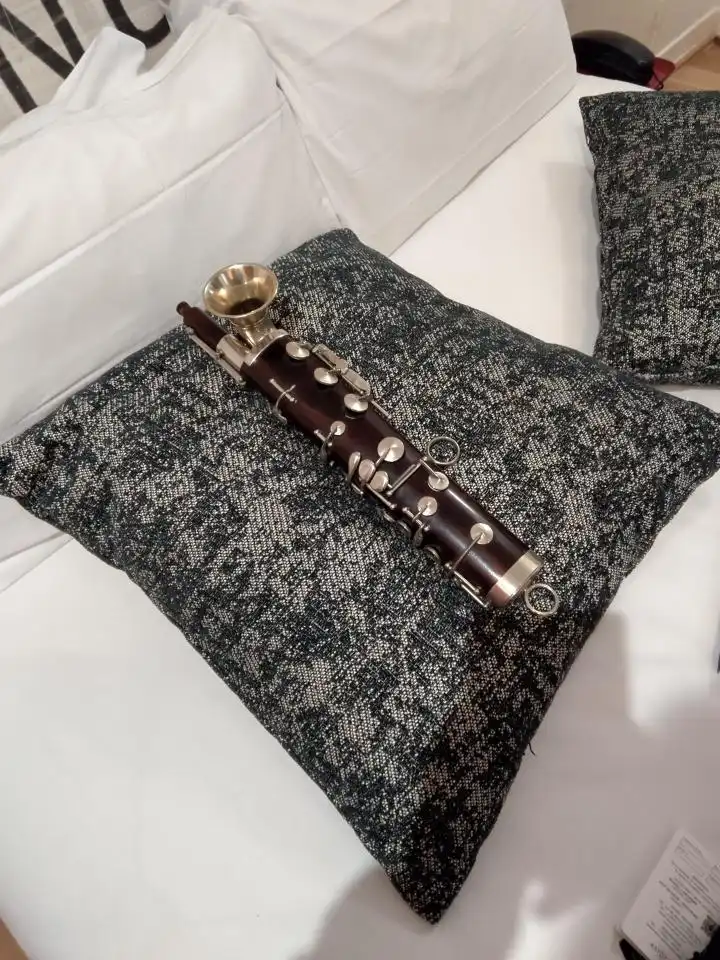
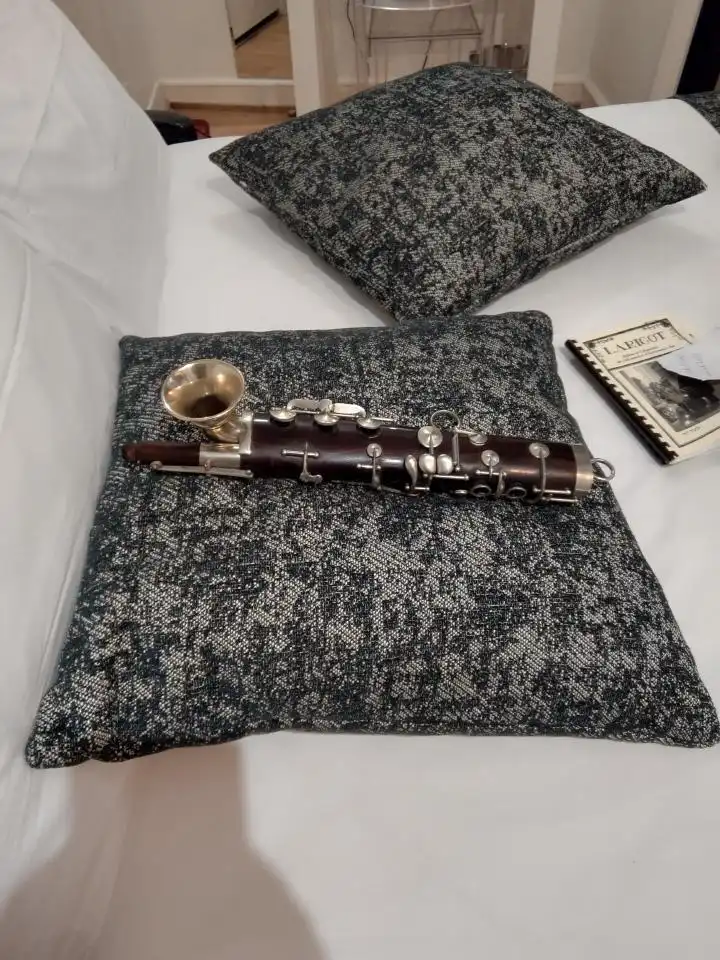
After, i will try octavin but not very good condition to play actually, it will go in reparator for full overhauled
IMG_20250314_201909_801.webp
IMG_20250314_201913_931.webp


The pads are litterally dead.

Now, i loan at my friend (great collector) one rothophone alto to try double Reed and rothophone too, and play sarrusophone later (loan too)

And for many project in double reed why not english horn in the futur, the door are not close

And i will begin tarogato one days, i will pay one, 600€ full restorate but later
 
I own an Irish aluminium Low D whistle made by Cillian O'Briain, lovely whistle but i have never been able to master it, probably down to my lack of commitment on it.
I have a Yamaha Bb recorder that’s a challenge to not run out of air. My recently acquired Clarke D whistle I’m hoping will get me conditioned. Similar breath control. Ocarina has way more resistance. So that didn’t help.
 
I own a Irish aluminium Low D whistle made by Cillian O'Briain, lovely whistle but i have never been able to master it, probably down to my lack of commitment on it.
We did discuss that ages ago on another thread.
I also have a low D whistle and am not inclined to pick it up - where as I noodle on the normal whistles quite often; particularly useful now I joined a choir, if I want to "get" a tune without lugging out the sax.
Yet I can do pipers grip as my low A flute (mansor Nay) requires it... That's lovely to play.
 
Check this out!

If I had another whole life to live, I might become an "ancient instruments" specialist. The sounds are so cool. I guess most of these now-obsolete instruments have serious limitations, like playing wicked out of tune in many keys, or not being fully chromatic, or having very little projection. I note that in the video, there are visible (and audible) a LOT of tuning adjustments on the serpent - and still a few sourish notes. But on the other hand I have to say the combination, octavin and serpent, is a charming sound, very human and natural, in a way that wouldn't be the case for, say, Boehm clarinet and euphonium, although that latter combination would have a rich and beautifully in-tune sound.

View: https://www.youtube.com/watch?v=o6zDwPRQJzM
 
I guess most of these now-obsolete instruments have serious limitations, like playing wicked out of tune in many keys, or not being fully chromatic,
The thing is this whole being "fully chromatic" bad "all keys" things is relatively modern. "Early Music" didn't expect all the notes to be always available.

On the other hand needing a LOT of tuning adjustment means you can wrangle (with half and cross fingering) any note out, given enough skill.
 
flute.

I love flute in jazz and Latin. In all other places I have lived, sax players doubled on it...but oddly not here is SW.....
That's an odd regionalism.

So are all the sax players doubling clarinet, instead?

What about big band charts?

I know that when I moved from north Texas to New England, I found some interesting regionalisms in jazz - first of all, I grew up in the North Texas mold of "chewing the scenery" sax playing - Texas Tenors, all that - so the New England style seemed very quiet and low-energy to me at first. Some variations in common repertoire, less blues influence in New England, I'd say. And then the fingers for keys - everywhere else, up for sharps, down for flats - in New England, it's UP for flats, down for sharps - hilarity ensues when the Texan sits in.

The other thing I found remarkable was about sightreading. Again, I come from north Texas (not the school, the region - but the NTSU ethos is everywhere, and so are the graduates), where "acceptable sightreading" is to be able to read the flyspecks on the wall at MM400. In Texas I was always a "mediocre" sightreader - I can generally get through pretty much any chart at tempo and not totally crater it, but not error free by any means. I moved to N.E. and everyone looked at me like I had three heads when I was able to read down most any chart at sight. "Wow, you can really sightread!"
 
The thing is this whole being "fully chromatic" bad "all keys" things is relatively modern. "Early Music" didn't expect all the notes to be always available.

On the other hand needing a LOT of tuning adjustment means you can wrangle (with half and cross fingering) any note out, given enough skill.
When I first started participating in old time music, I was astonished to find that fiddle players would actually RETUNE for different keys. They put their fingers in one and only one place, and if that's supposed to be F# then they tune the string so it'll be F#, and if it's supposed to be F natural, they retune. This means you'll play an hour in C, then everyone retunes so you can play an hour in D, etc.

Coming from the jazz environment, where "equal facility in all keys" is the expectation, this was a real attitude adjustment.
 
Had a Werewolf movie playing on the TV, while reading the old XT500 manual, where the Gypsy leader played a Nay, or whatever the European version is called.
Painted a wooden knife with
pure silver print, as there was a full moon that night.

IMG_7442.webp
 
That's an odd regionalism.

So are all the sax players doubling clarinet, instead?

What about big band charts?

I know that when I moved from north Texas to New England, I found some interesting regionalisms in jazz - first of all, I grew up in the North Texas mold of "chewing the scenery" sax playing - Texas Tenors, all that - so the New England style seemed very quiet and low-energy to me at first. Some variations in common repertoire, less blues influence in New England, I'd say. And then the fingers for keys - everywhere else, up for sharps, down for flats - in New England, it's UP for flats, down for sharps - hilarity ensues when the Texan sits in.

The other thing I found remarkable was about sightreading. Again, I come from north Texas (not the school, the region - but the NTSU ethos is everywhere, and so are the graduates), where "acceptable sightreading" is to be able to read the flyspecks on the wall at MM400. In Texas I was always a "mediocre" sightreader - I can generally get through pretty much any chart at tempo and not totally crater it, but not error free by any means. I moved to N.E. and everyone looked at me like I had three heads when I was able to read down most any chart at sight. "Wow, you can really sightread!"
It IS very odd. I am still very surprised.

So you'd THINK, well...clarinet would be the double for a tenor player then, right ?

It's not.

The vast majority of sax players here playing on the gigging jazz/pop/contemporary circuit....just double on a second sax....Soprano, Alto. There are a couple of flutists that play classical and non, but they solely play flute and piccolo....

There aren't even Alto players doubling on Bari, or vice versa. Lotsa Alto players, not one doubles Bari. Just two Bari players, post-grad, around. One plays solely Bari, one doubles on clarinet....

The big bands here, when confronted with a clarinet tune, either pull in a clarinetist or they just use soprano sax.

The vast majority of the 'legit' reed players (I.e. classical) just do not cross over to other genres here.

I am still befuddled by this....both flute and clarinet seem like the most obvious doubles....but not here....
 
It IS very odd. I am still very surprised.

So you'd THINK, well...clarinet would be the double for a tenor player then, right ?

It's not.

The vast majority of sax players here playing on the gigging jazz/pop/contemporary circuit....just double on a second sax....Soprano, Alto. There are a couple of flutists that play classical and non, but they solely play flute and piccolo....

There aren't even Alto players doubling on Bari, or vice versa. Lotsa Alto players, not one doubles Bari. Just two Bari players, post-grad, around. One plays solely Bari, one doubles on clarinet....

The big bands here, when confronted with a clarinet tune, either pull in a clarinetist or they just use soprano sax.

The vast majority of the 'legit' reed players (I.e. classical) just do not cross over to other genres here.

I am still befuddled by this....both flute and clarinet seem like the most obvious doubles....but not here....
Well, the whole doubling as expected for saxophone players comes out of big bands and swing. Maybe New Mexico doesn't have the tradition that much of the rest of the country does. I mean, I'm an old guy now, but when I was a young guy, the old guys came out of bands like Les Brown, Jan Savitt, Claude Thornhill, Billy May, the Elgarts, the various permutations of the Dorseys (separately and together), Woody, etc., and all the territory bands that emulated them. So all the old guys played doubles, and then the newer arrangers in the 60s and 70s assumed doubles were present, so they wrote their charts with that expectation (the 60s and 70s charts are where you start to see flutes). Then when this whole population of musicians did small group stuff, they were prepared to bring all the hardware, so if something wanted clarinet, they had it in the car. If something called for flute, the old guy would go get a flute and woodshed it.

I have trouble believing that in the 1920s through 60s that New Mexico didn't have the same cadre of territory bands, playing the same stocks and radio hits as everyone else, and using the same instrumentation as everyone else.

Are the non-doublers tending toward the young, or the old? And are they tending to come out of specific schools that might teach in a certain way?

Now I'm NOT a clarinet doubler - which has kept me out of the musical theater pits, which is probably a good thing. But flute, yes, it's my first woodwind.
 
... get along with?

Lots of folks double or dabble; but have you ever fancied adding an instrument but just could not come to terms with it (or them)?

Myself, I fancy a blues harp/mouth organ. I just don't get it. Luckily, trying costs little in that case.

«this thread brought to you by the Department of Idle curiosity »
I tried to pick up the flute in my 60s. Horrible experience but made much nicer by using a custom McKenna head that Kesler's made available in a sale. Still, I never spent enough time on it to get good enough to gig with. Ended up selling the kit to a pro musician who immediately sold his flute and he still uses mine now. He said sound was amazing and the instrument just spoke to him. So it was me, not the instrument that couldn't make it work.
 

Trending

Forum statistics

Topics
32,287
Messages
576,870
Members
8,093
Latest member
catct
Back
Top Bottom