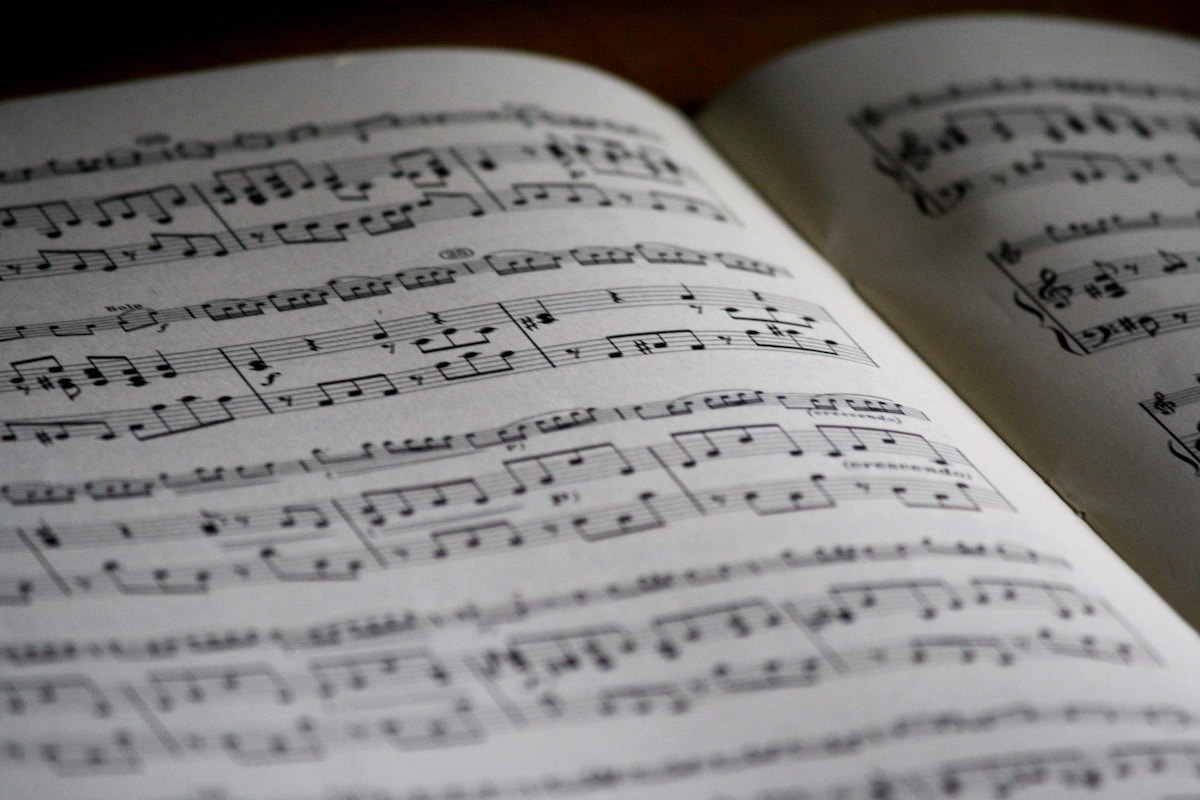
Playing the saxophone counting Rhythm

All types of rhythms and meters are included. You can see the contents here. Please buy a published copy out of respect for the author and publisher. I just provided this link as a way to check it out.
That looks a good book John.

the only thing that jumps out at me is that by page 10, when off beat studies are introduced, it gets too busy/complicated too quickly.

especially given the request of the opening poster here, who is likely not to have come across this stuff before.

I use the Bellson syncopated studies book, which is great, but again, that is not for newcomers to this stuff.

to the opening poster, can you give us more specifics about what your problem area is?
at the moment, we are all giving different solutions,but dont know the real problem !!!

 
Last edited:
That looks a good book John.

the only thing that jumps out at me is that by page 10, when off beat studies are introduced, it gets too busy/complicated too quickly.

especially given the request of the opening poster here, who is likely not to have come across this stuff before.

I still feel that isolating one off beat per bar is the “way in”, and is much more achievable than 4 off beats per bar.

I use the Bellson syncopated studies book, which is great, but again, that is not for newcomers to this stuff.

to the opening poster, can you give us more specifics about what your problem area is?
at the moment, we are all giving different solutions,but dont know the real problem !!!

Trouble is @brianr im not sure myself..lol..its just the counting thing i know quarter notes and eigth notes I was wondering if there was a book that pulls it all togrther.
 
That looks a good book John.

the only thing that jumps out at me is that by page 10, when off beat studies are introduced, it gets too busy/complicated too quickly.

especially given the request of the opening poster here, who is likely not to have come across this stuff before.

I still feel that isolating one off beat per bar is the “way in”, and is much more achievable than 4 off beats per bar.
I get what you are saying. My "mentor" in college taught that for the most part notes are either on the beat or off the beat. All it takes is to be able to tell (visually) which are which. I had good success with beginning students associating down and up beats with toe tapping. I would have them draw downward pointing arrows on the notes (and rests) beginning on the beat, and upward pointing arrows on notes (and rests) on the "up beats". They would first "say" the rhythm while tapping their toe, then play it on their instrument.
 
Trouble is @brianr im not sure myself..lol..its just the counting thing i know quarter notes and eigth notes I was wondering if there was a book that pulls it all togrther.
Then it is very difficult to help on line ( ie not face to face ) sadly.

for example, if you can’t do the undernoted, you are not ready for a book. !!!!!

tap your foot…..count out loud 1234, 1234 , 1234,…….clap any pre determined off beat. ie only one note per bar.

this is very basic, so unless you can do this, accurately and very comfortably, then honestly, you are not ready for a book.

if you can do it, then the book that John suggests above looks very good.
 
Last edited:
You might get on well with the rhythm reading system that was taught by UK saxophonist, writer and teacher Leslie Evans. He, and I'm sure others too, associated a syllable, word, or phrase with all of the commonly occurring musical rhythms and then his pupils would find themselves saying out loud things such as:

Dum-di merrily tickets beautiful mummy-daddy.

@brianr sold some Les Evans lessons on this other thread SOLD - LESLIE EVANS -SAXOPHONE LESSONS - COMPLETE They included Timing Studies and Counting Principles.

I think that others on the forum will have encountered this system and can give more examples.

Rhys
Those Les Evans studies are excellent. Unfortunately they are pretty much unobtainable these days. By the time they're out of copyright they'll have been forgotten. That's a shame. I'd love a copy.
 
What are you saying @eb424 - that you can't feel quavers, semi-quavers, triplets etc against the pulse? If that is the case then I'd work through these lovely book suggestions by everyone WITHOUT your horn. This makes it easier for a start. just vocalise the stuff against either a tapping foot (some people can't co-ordinate it) or finger taps on a table. It's a processing thing not an ability on your instrument so why not remove that added complication. If I took up the guitar I'd have no problems in reading rhythm - executing it on the instrument, yes, but not knowing how it goes.
 
do they include the counting think thats what im having problems with...ok on crotchets and quavers..
Can you explain what you actually mean?

If you have a sheet of music in front of you, and a metronome going, can you tap/clap/play the notes properly in the rhythm indicated (assuming it's not too complicated for your level)?

I mean, "counting" to me means going "one, two, three, four" in time with the music. Are you saying you can't manage that?

I think we need to know what your question is in order to help.
 
OK, I'm going to be the odd advisor out ...again! Rhythm is felt in the body, it's not an intellectual concept that you suddenly "get" by reading a book. In Africa if someone is wanting to become a drummer they must first be a good dancer. Internalization of rhythms is the key. Clapping along , tapping your foot etc. are all part of this. It's about getting the groove the way a dancer does and transferring this to your playing. It's often the subtleties of a rhythm such as where the accents are and slight shifts in timing that make for a groove. It's less about seeing a semi-quaver and interpreting that in a 135 BPM score to be a note that's .23 of a second i length (who thinks like that?). Rhythm is feeling with notation giving you an imperfect way to read what's intended (especially for anything other than most Classical music).

If you've got a track you'd like to play listen, dance, clap, move and feel the rhythm and then apply this to the way you play. We won't watch...promise!
That's part of what Kodàly method is about
 
That's part of what Kodaly method is about
Doesn't surprise me as Kodaly was a pretty amazing composer. He and Bartok (both Hungarians) ran around collecting folk tunes in Eastern Europ to use as part of their compositions. I've got to admit to having a major cringe factor when I hear most orchestras trying to play something like the Háry János suite. This is a perfect example of the written music not conforming to the common accents used in Hungarian music which is syncopated in a manner similar to jazz. Once you've got the feel of it, then you've got it. It doesn't come off the page very well. My father was Hungarian and a pro musician, so I was able to hear and understand this early on. Bartok also wrote a lot of music for students that incorporated his wonderful harmonic ideas. They were both giants of 20th century music but mostly unknown, even by regular concert goers.
 
Doesn't surprise me as Kodaly was a pretty amazing composer. He and Bartok (both Hungarians) ran around collecting folk tunes in Eastern Europ to use as part of their compositions. I've got to admit to having a major cringe factor when I hear most orchestras trying to play something like the Háry János suite. This is a perfect example of the written music not conforming to the common accents used in Hungarian music which is syncopated in a manner similar to jazz. Once you've got the feel of it, then you've got it. It doesn't come off the page very well. My father was Hungarian and a pro musician, so I was able to hear and understand this early on. Bartok also wrote a lot of music for students that incorporated his wonderful harmonic ideas. They were both giants of 20th century music but mostly unknown, even by regular concert goers.
Kodàly devised a methodology for teaching both rhythm and pitch. Most countries have a body which is accredited with the Hungarian authority which trains teachers of Kodàly.

I have several friends who are qualified teachers of it. My sax teacher uses it too.
 
In my experience, learning how to count and accurately play sequences of note values is just a small part of "rhythm". A lot of rhythm cannot be accurately notated---especially in jazz. It has to be felt or "internalized". An example that comes to mind is the Count Basie band playing slightly behind the beat. It sounds so relaxed and easy, but difficult to do. Anyone who has tried to play or teach a band to play Neil Hefti's "Lil' Darlin" knows what I'm referring to.

 
When that tune gets called I always make the same comment: "Hardest damn tune in the book."

The young fire-breathing Berklee and NT grads look at me like I've got two heads, and the old farts all nod and say "Yep, hardest damn tune in the book."

When you think you're far enough behind the beat, you need to lay back some more.
I agree. And you all have to do it together too.
 
In my experience, learning how to count and accurately play sequences of note values is just a small part of "rhythm". A lot of rhythm cannot be accurately notated---especially in jazz. It has to be felt or "internalized". An example that comes to mind is the Count Basie band playing slightly behind the beat. It sounds so relaxed and easy, but difficult to do. Anyone who has tried to play or teach a band to play Neil Hefti's "Lil' Darlin" knows what I'm referring to.

Thanks for reminding me - I have that CD
 
I thought I'd drop this here incase the eb424 isn't totally washed out by this thread.
Quite an interesting comparison of counting approaches.

 
I thought I'd drop this here incase the eb424 isn't totally washed out by this thread.
Quite an interesting comparison of counting approaches.

Being an American music educator I have successfully used the "number system" for many years. The big advantage of that method is that it keeps track of the number of the beat in each measure.
 

Social

New! Social Feeds

Look out for the navigation icon:

Follow CafeSaxophone

Latest Song of the Month

Trending

Forum statistics

Topics
32,080
Messages
578,781
Members
8,137
Latest member
AdrianoHoma
Back
Top Bottom