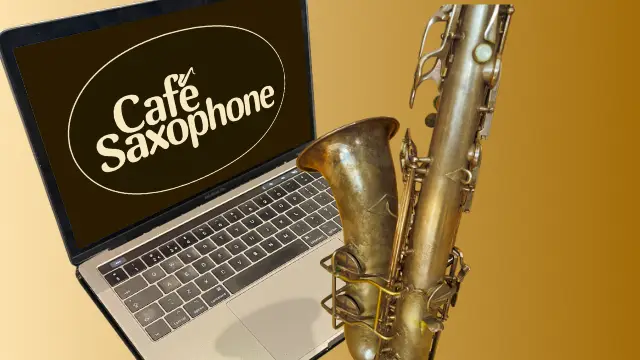



Saxophones Conn 10m.... Could this be the one?

teen37

Member
Messages
168
Location
Dudley, West Mids
So guys😊☺️. I ve recently discussed with some of you, possible upgrades to move on from my Arbiter Pro jazz tenor. I almost went to try out a selmer SA80I but decided against it in the end.

Now, whilst I am not in any rush to move on just yet, I think it is definitely on the cards to happen at some point over the coming months. 😉

I was very drawn to a Selmer initially, but have stumbled across some YouTube videos on the Conn 10m.

Having watched a few comparison videos on Selmer mark VI Vs Conn 10m, (not that I was looking at the Mark VI 😳) I immediately noticed how different the tone was between them. The selmer sound much cleaner, crisper, whereas the Conn was a little warmer, fluffier 😳 (is that sacrilege to use fluffy and Conn in the same sentence?.... 🤔😳🤷)
I thought it would be just that one video so I watched a few others and yeah, it was still "fluffy" ☺️ I really liked the "fluffy" sound.
Someone said it was because they were made during the Swing era and so were more "harmonic" and "softer" built for a more acoustic environment and they blended well in a section with the likes of Buescher's. In context, this made so much sense to me.
Someone commented in my last post that perhaps I didn't really know at this stage what direction I wanted to go in looking for a new/old tenor, they were correct, I didn't know. But now I think I do 💡😳🤔

So... If this is a light bulb moment could y'all please enlighten me as to your opinions and experience with the Conn 10m tenor sax.

Is there a particular year or time period that was better than others to look for?

Any faults to look out for?

Are they harder to blow because they are so old?

What's an average price these sell for?

And really any other areas I've not thought about 🤔☺️
 
Last edited by a moderator:
I've been playing Conn saxophones as my preferred make since 1978.

The 10M is not any harder to play than any other tenor. They key positions are slightly different than the modern "Selmer-derived" layout.

They have a big, husky tone that is characteristic of most of the old American saxophones - Conn, Martin, and King are much in the same category.

A lot of people complain about "ergonomics" of anything that isn't the latest model Yamaha, but it takes a week or so of practicing to accustom your hands to where things are. The Conn tenors have very slick fast keywork. Some people complain a lot about where the strap ring is located; much ado about nothing.

The single biggest potential fault on Conn tenors is that some (MAYBE on the order of 10%????) have an acoustic fault where the low notes (it's worst on low D) have an incurable tendency to "warble" or fluctuate between two nearby frequencies. This can make it very difficult to play softly in that range. This is NOT due to an undiagnosed leak, and while mouthpiece choice can make the tendency worse or better, it's not because of your mouthpiece, nor is it because of "how you blow". It is some kind of manufacturing/design defect. You simply need to test the horn in question, blowing some soft low Ds, to find out. The horns that don't have this issue, don't have it.

Unlike the Conn baritone, the Conn tenor seems pretty adaptable to a variety of mouthpiece design types. I've used everything from a Dukoff to a Selmer C* on mine. Intonation is excellent.

The single biggest thing to consider is condition of the individual horn. The newest 10M is more than 50 years old now; and all during the 1960s 70s and 80s these were considered (incorrectly) as crappy student horns, so a large number of them have been marched in the rain, generally abused, and given the absolute minimum of maintenance and care. Very many of the oldest silver plated horns were sanded down to brass and polished when silver plating went out of fashion.

Prices tend to be highest for pre-war horns with rolled tone holes; then postwar with RTH; then late 40s/early 50s with straight tone holes, then declining from there. I've had both straight and rolled tone holes on my Conns and can't tell a bit of difference in the playing. In the 1950s they fiddled around with the design of the octave key on the neck, which doesn't mean anything; at some point in the 50s they went to nickel plated keys, which devalue the horn but have no functional effect; and sometime in the early 60s (??) they rejiggered the octave mechanism, locating the key on the underside of the neck, for no known reason. I suppose one MIGHT be able to sense the tiniest difference in how the machinery feels, but I rather doubt it.
 
As for when these horns were designed, the basic Selmer tonal concept really comes from the Balanced Action, 1936, which means design work was underway a couple years before that, right at the height of the big band swing era. The Conn tenor acoustic design, I believe, probably dates back to the mid 1920s. Buescher had three different acoustic design generations - the True Tones from the 20s, the Aristocrat from the 30s, and the 400 from the 40s. A great deal has been written and pontificated about how such and such a horn was designed for such and such an application, but unless you have a copy of the actual design brief from the factory in which the tonal design goals for the product were stated, I'd treat all such statements with a block of salt.
 
As for when these horns were designed, the basic Selmer tonal concept really comes from the Balanced Action, 1936, which means design work was underway a couple years before that, right at the height of the big band swing era. The Conn tenor acoustic design, I believe, probably dates back to the mid 1920s. Buescher had three different acoustic design generations - the True Tones from the 20s, the Aristocrat from the 30s, and the 400 from the 40s. A great deal has been written and pontificated about how such and such a horn was designed for such and such an application, but unless you have a copy of the actual design brief from the factory in which the tonal design goals for the product were stated, I'd treat all such statements with a block of salt.
That's a whole load of info, thank you ☺️👍
With regards to the "such & such designed for such & such an application" the guy I was listening to was speaking from his experience having owned minimum of 4 Conns and minimum of 4 Mark VI 's. He had played in sax sections with either/or in and he said there was a definite lack of a certain sound in that swing era music that the Mark VI' s lacked. 🤷
I could hear the difference between the two horns myself and so would have to agree with him in his observation.
Well, if you compare the sound of a saxophone section from 1935 full of Conns, certainly that's the sound you'll associate with the sound of a saxophone section from 1935 full of Conns. That doesn't mean that Conn set out to design in 1920 a horn that would give people in 2020 a sound they associate with a sax section in 1935.

If I put a clarinet section full of Oehlert and Albert players next to a clarinet section full fo Boehm players, they'll sound different, too.

Now if you take the Count Basie sax section of 1935 and the Basie section of 1975, they'll sound quite different, but there was a lot more that changed than just the make of the horns.
 
Time for some counter-perspective then.

Yep, the Conn 6M/10M horns are still popular today. To put that into perspective they rank, at least in terms of what turns up on the workbench in the 'pro horn' category, 4th...after Yamaha/Yanagisawa/Selmer.
Lots of players still using them.
But...not so many working pros. Mostly enthusiasts. Plenty of pro players who express 'an affection' for the M series Conns - but who nonetheless find that modern horns cut the mustard as far as they're concerned.

Chasing a particular sound by chasing a particular horn seldom works out well. It's essentially the last link in the chain - so proceed with caution.

The M series horns are well-built, but their inbuilt foibles require competent servicing, over and above that required for a modern horn. It's not cheap - and if I had a quid for every Conn I'd seen where these fundamentals had been missed I'd be sitting on a rather well-stacked wine cellar.
Did a 6M (transitional) service this week. Can you believe that the last tech that worked on it fitted pads that were at least 1mm too small in diameter?? Yeah, I know, right?? On a tranny Conn!! And they thought that the locking grub screws on the point would actually work. Bless.
I know that means nowt to you - but the client is £350 down on what should have been a £140 service because of those mistakes. Fair do's - get those issues sorted and they won't be recurring problems (point screws aside...that Loctite doesn't last forever) - but unless you know the M series inside out, these are costs that might land on your doorstep from day one.

I disagree with the statement that "the basic Selmer tonal concept really comes from the Balanced Action, 1936" because I'm not a fan of the modern Selmer soundscape...but I do rather like the sound of a good BA/SBA. It's very different to the MkVI and beyond.

And if you're going to go down the rabbit-hole of vintage horns in search of THAT tone, then a Martin should be top of your list. Same old 'vintage' quirks and issues - but (from a purely personal perspective) they kick a Conn into a corner...and then pour its beer over its head. And that's coming from someone who CAN tell the tonal difference between a Yamaha/Yanagisawa/SA80 Selmer.
And there are plenty of other fish in the sea, for less dosh.

If you decide to get your act together and bring your Arbiter in for a shakedown, I'll bring my TJ RAW tenor in - and then you'll get a chance to hear what at really well-balanced modern horn sounds like. And feels like - so bring your mouthpiece.
Oh Stephen.... (Big sigh here)...... I'm Soooo not worthy 🙌🙌🙌

Thanks for the perspective ☺️
I was lured in by the beautiful sounds I was hearing 🤔🤷😉

Yes I'll bring my mouthpiece 😉🤗
 
For me, I'd put Conn, King, Martin and Buescher tonally aside from Selmers. (to me, Conn and Martin are closer to each other and Buescher seems a bit different. It's been so long since I played a King that I can't characterize it tonally.

Conns ARE, mechanically, a bit "string and sealing wax". Martins and Bueschers are fine machinery, and it's been too long since I had a screwdriver on a King for me to say.

I agree with Stephen that chasing tone by chasing horns is probably not the fastest most straightahead path to getting yourself playing comfortably and rebuilding your chops - I suspect that path goes through the horn you already own.
 
A great player sounds great. A great player who is a salesman, sounds great on what he's selling.

You're not a great player yet. You won't sound great on anything yet.

You're buying a conical tube, not a recording of a player who sounds great. You can't buy your sound. You have to earn it.

No matter the horn, I sound like me. You will sound like you.

Get your Arbiter fixed and put some hours in. You've had an offer from a top of the line tech. It'll play great when you get it back.

10m? Do you really need an antique collectors item to learn on? Would you buy a model T to learn to drive? Not the same I know, but... 🙄
 
I agree with Stephen that chasing tone by chasing horns is probably not the fastest most straightahead path to getting yourself playing comfortably and rebuilding your chops...
No, but it nets you a nice collection of horns over the years.:sax:

The most desirable (pre_war/RTH) Artist series Conns will often command utterly unreasonable prices. All of us have seen dealers asking upwards of £4000 for these horns in original lacquer. That's just nuts. I mean, they're cool, but c'mon.

Not that @Stephen Howard needs a second, but I second his above comments regarding Martin. The craftsmanship is absolutely top-notch. They were so confident in their product that every new horn came with a 50 year guarantee. Of course, if you find a manufacturing defect on your Martin in 2026 you're out of luck...but you won't. The only thing that sucks on a Martin is the lacquer.
 
Sorry @teen37, I don’t know if you gig or you play for kicks at home. If you gig, this might have a say in what you go after.

Us non - name players get booked for any type of job, so you need a setup that allows you to be flexible in your sound. Sanborn and Brecker were never top of the list when a Glenn Miller band was being put together, or a tribute to some West Coast style player.

Through technique you can dial up your sound to a pop / smooth genre or dial it back to an old school Miller thing etc. Mostly. If it was a dedicated Miller band then I’m sure the guys would not be playing on a Mk 6 or later, more likely the vintage American horns with some kind of mouthpiece that goes hand in glove.

It’s not the whole story at all, but somewhere down the line it becomes relevant. It’s surprising just how much vibrato style / useage impacts a sound - more than the horn really.

My mate used to play in a 20’s band years ago with Tim Garland. He said that he’d be practicing frantically in a corner in between sets as the music “screwed his sound up”.

So, us mere mortals do need to be sound Chameleons if you want to get out and about and if so; I think that needs to inform your choice.
 
There is no Martin or Yamaha in this equation (or TJ Raw for that matter).
But for what these video's are worth you are getting 3 small differences and a Selmer v Conn.
Still each Selmer and Each Conn will be different. Yanagisawa will be more consistent.
While we are not splitting hairs, Ergo's and condition along with your mouthpiece will outweigh tonal differences more than anything else when you are playing making tone quite a small thing IMO.
Headhones or Earphones will make a difference to your listening experience of this video too.
Jim is quite clever at having a bt of a push towards new horns as a salesman but in general very fair.
View: https://youtu.be/QA76KnBz6D0?si=dIc_zGPheI-DJO20
 
Sorry @teen37, I don’t know if you gig or you play for kicks at home. If you gig, this might have a say in what you go after.

Us non - name players get booked for any type of job, so you need a setup that allows you to be flexible in your sound. Sanborn and Brecker were never top of the list when a Glenn Miller band was being put together, or a tribute to some West Coast style player.

Through technique you can dial up your sound to a pop / smooth genre or dial it back to an old school Miller thing etc. Mostly. If it was a dedicated Miller band then I’m sure the guys would not be playing on a Mk 6 or later, more likely the vintage American horns with some kind of mouthpiece that goes hand in glove.

It’s not the whole story at all, but somewhere down the line it becomes relevant. It’s surprising just how much vibrato style / useage impacts a sound - more than the horn really.

My mate used to play in a 20’s band years ago with Tim Garland. He said that he’d be practicing frantically in a corner in between sets as the music “screwed his sound up”.

So, us mere mortals do need to be sound Chameleons if you want to get out and about and if so; I think that needs to inform your choice.
Thanks Pete, I haven't played a gig for some years and it was reggae style music the band played, which was way out of my comfort zone, not really my style at all and you are totally right about having a struggle to fit "our sound" to certain types of music. My style didn't fit reggae at all so I struggled with the whole set but got through it tolerable OK 🤷
I realise my playing ability needs to improve and I'm working on that, I have gotten a little rusty for sure. And I also realise that any horn is only as good as the player, but I'm also hearing differences in how these horns sound and recognising what sound I prefer to hear myself. I also realise this can change with moupiece and reed choice.

At the moment I'm playing for myself at home but I am trying to wiggle my way in to a couple of bands just to try and keep me on my toes, although I'm not overly keen on the genre of music they play tbh. Maybe I'll start my own band/ practice group 🤔🤷

Anyway, guys, I apologise,.... I feel with my curiosity about certain horns I've opened a can of worms here. Not my intention at all, just voicing my thoughts/questions out loud is all.

I appreciate all your thoughts and advice/experience here 🙏
 
Anyway, guys, I apologise,.... I feel with my curiosity about certain horns I've opened a can of worms here. Not my intention at all, just voicing my thoughts/questions out loud is all.
The Conn 10m was a revelation to me back in the 90s. I had other horns but kept coming back to it so most of my tenor recordings are on the Conn. I rate it as above anything else I have tried which does include Selmer, Yamaha, Yanagisawa and countless others. The only horn I might seriously consider if I was to continue playing is Inderbinen.
 
I've been playing old Selmers, like 70+ year old Mark VI's, for decades. Well, they weren't that old when I first got them, of course! I've heard a lot about how great old 10Ms are, so some years back I sourced one, a 1947 model, among the last with rolled tone holes. I had it completely restored by a wonderful tech (who told me that the rolled tone holes are much more difficult to level). It does sound different from the Selmers, but not all that remarkably so (to me). There are some intonation differences, but nothing drastic. Altissimo speaks the same. It frankly plays really great, but the mechanisms are different. The only ones that really hang me up are the left hand pinky table, it's at a completely different angle. Perhaps I could get used to it, but instead it sits in my closet, which really is a shame, it's just as good a horn as my others, it just doesn't suit what my hands are accustomed to.

Current prices seem to vary from just under $2K to just under $4K. I bought mine as a wreck for $1100 from shopgoodwill.com and spent $1900 on the restoration -- kind of high, but it needed a lot, and they did a wonderful job, put back together with a preservationist's eye. It got quite a bit more than an overhaul. I'm confidant that it plays as new, and it looks pretty good, no re-lacquer. Those prices are from 12-18 months ago for the restoration, maybe 5-6 years ago for the initial purchase.

So I'd say if you can accommodate the mechanisms, you'll save money with an old 10M over many alternatives, and have as good a horn as you can possibly have. As many would note, subjectively saying, maybe the best possible horn.

My observation is that I have a very very strong preference for the old horns. To me, harmonics work much better on them. Modern horns are designed to enhance fundamental tones and tunings of the same, and I find that doing things like using the B key to play G3 (overblowing a 6th), with an optional side Bb as a vent, doesn't work that great on modern horns. Again though, probably something one could get used to, I just haven't tried that hard to join the 21st century in that regard.
 
Had one for a time. Wonderful vintage horns, but they're overvalued and have serious quirks. Not something to really step up to, but they're worth fixing up if someone gives you one. I actually sold mine for a bit more than I bought it for. Overvalued, as I said; which means you're paying a premium for someone else's fantasy.
 
I have some comments, as a Conn artist since 1978:

- I very much disagree with the characterization of the 10M as "like a Model T" for obsolescence. This simply isn't accurate. The "improvements" of the last 80 years or so have not been improvements for all of us. Personally I prefer the keywork of the Conn tenor and its tonal response. A more apt comparison would be a good quality factory made violin of 1880 versus a good quality factory made violing of today. Lots and lots of people are playing on those 1880 fiddles and they're not really giving up anything.

- I very much doubt that tribute bands are using old style instruments in an intention to reproduce the sounds of those bands. I could be proven wrong, but a quick Youtube look at the current "Glenn Miller Orchestra" shows 4 of the 5 saxophonists playing modern horns - the tenor soloist is NOT on a Martin - and what's this about 5 saxes, anyway? Miller almost always had four... The one video of "The New Artie Shaw Orchestra" where I could tell, all five saxophonists were playing modern instruments. I rather suspect the acceptance criterion is whether you can play the style properly, not whether you've got a period instrument.

- Those wee set screws were a solution in search of a problem that didn't exist. The King headless-screw-with-locknut is a far better implementation, but the problem still didn't really exist. For that matter, it seems to me that if you've got enough wear in the pivot sockets of a hinge rod that you've got to be taking up play with the headless screws and set screws, the wear's probably not perfectly round, which implies having to do a bit of dressing on the socket, and by the time you're doing all that, the standard method of just counterboring under the head of a headed screw is probably about as much trouble. All my Conns, I've got the set screws free and working properly, and I give each one a little dot of oil every time I oil the horn; but they're so tiny they get frozen into the posts easily, and it's a real bear to deal with that. So that's where a job could suddenly get more expensive. It's not enough of a reason in my opinion to rule out the Conn, but it IS something you've got to be aware of.

- I don't think you'd ever go far wrong with a Martin Buescher or King, either. As I said earlier, at this point in history the vast majority of concerns have to do with the way the horn's been treated over the last 60-100 years, more so than who originally made it. And once you start diving into these kinds of things, are you going to just arbitrarily rule out Dolnet, SML, Buffet, Beaugnier in all its various stencil names, Holton, York, the various permutations of Boosey and Hawkes, Keilwerth, Kohlert, etc., etc., etc.?

- The real answer, is that if you're going to dive into vintage horns, those which have a different playing character than modern ones, you can do it two ways.

1) Try a WHOLE BUNCH of different horns, keeping track of what kinds of impressions they leave on you, and then end up settling on one. Since few music stores keep a meaningful stock of vintage horns from multiple companies on hand, you may have to enter the dreaded buy-try-sell cycle, which is full of pitfalls.

2) Do like I did; try ONE at a pawn shop, decide "well, this is a heck of a lot better than what I've been playing, I can tell that even at a primitive level of skill", buy it, and then just fill out the family with more horns from the same maker. Sadly, this scenario is probably gone some decades ago. Heck, that first Conn alto came with a Selmer Soloist C* in the case; my first Conn tenor came with a Selmer Soloist C* AND a Meyer 8 in the case (that Meyer, that I got in the case in 1978, is still my primary tenor sax mouthpiece!).
 
@turf3 as far as I'm aware, although pawn shops still sort of exist here in the UK, they rarely have saxophones of any real value, maybe cheap Chinese student models occasionally.... I can't really remember seeing a pawn shop for probably at least the last couple decades other than cash converters and such, but they don't really have instruments very often, maybe guitars, the odd violin etc... so that's not really an avenue open to trying out used horns here 🤷
 
- Those wee set screws were a solution in search of a problem that didn't exist. The King headless-screw-with-locknut is a far better implementation, but the problem still didn't really exist. For that matter, it seems to me that if you've got enough wear in the pivot sockets of a hinge rod that you've got to be taking up play with the headless screws and set screws, the wear's probably not perfectly round, which implies having to do a bit of dressing on the socket, and by the time you're doing all that, the standard method of just counterboring under the head of a headed screw is probably about as much trouble. All my Conns, I've got the set screws free and working properly, and I give each one a little dot of oil every time I oil the horn; but they're so tiny they get frozen into the posts easily, and it's a real bear to deal with that. So that's where a job could suddenly get more expensive. It's not enough of a reason in my opinion to rule out the Conn, but it IS something you've got to be aware of.
A problem that doesn't exist?
A headless screw provides for a means of constant adjustment, but the perennial problem is how to ensure they stay put. Yamaha pretty much solved that with the tiny nylon insert that slots into the thread. Later iterations of the theme used a nylon collar.
These days we have efficient threadlocking solutions, which largely makes grub screws and locknuts obsolete. But as I have a large stock of those grub screws I always ensure that every Conn that leaves the workshop has a full - and working - set of them. Even the ones on the bell key guard.
Eppelsheim favoured the locking nuts - which I always felt was a quirky choice, as they do require something of a knack to predict where the screw is going to end up when the nut is tightened.

As for frozen grub screws - you can either use Loctite 222 on them (which even though quite weak will usually require some heat to the pillar to free them) or you can melt some beeswax along with a little gear oil to form a stiff paste. Poke some of that into the screw hole before fitting the screw and they'll be very unlikely to freeze.

Out-of-round sockets aren't too much of a problem as long as the wear isn't significant (which is why keeping on top of it pays off in the long run) - and such a problem exists on all types of point screws (and rod screws). Proper tapered points handle it much better than parallel or pseudo types because they're largely self-centring.
The wear doesn't have to be significant in order for it to affect how the horn plays given that a thou's discrepancy at the pad face constitutes a leak. But much more than that, the feel and response of the whole horn goes up a notch when everything's nice and snug. In fact it's pretty much the first thing a client comments on when they pick up their horn after a major service...and that's before they even blow it.
 

Similar threads... or are they? Maybe not but they could be worth reading anyway 😀

New! Social Feeds

Look out for the navigation icon:

Follow CafeSaxophone

Trending

Latest Song of the Month

Forum statistics

Topics
32,028
Messages
576,557
Members
8,103
Latest member
Commonqueen
Back
Top Bottom