

 (bottom of page)






-
NON-Routine maintenance
Forum may experience some downtime today any time after 14:00 BST (or 06:00 PDT 09:00 EDT). This is due to critical PHP vulnerabilities that may be affecting the majority of websites worldwide.
The downtime may be any time up until the release and implementation of a PHP patch to fix the issue which is now scheduled so should not be down for long.
Update: this is currently being patched as we speak. There may be a short outage when the server is rebooted.
Please don't panic - just take deeep breaths or go and practice.
CafeSaxophone Forum
Playing the saxophone Bass sax - reading tuba and bass parts
It's been pretty quiet on the bass sax front over here, so I thought I'd share how I learned this new skill to open up more bass sax playing opportunities for myself. Please feel free to share your own experiences and advice here as well.
I've been playing bass sax for a few years now, mostly in a small trad jazz band where I improvise the bass lines 100% from the written chord symbols, mostly two-beat lines (root and fifth) plus some Rollini-style embellishments. But a local 10 piece trad jazz band needed someone to replace their tuba player and asked if I could do it on bass sax. I really couldn't. But I really wanted to. So I said yes and went about figuring out how to pull it off. Since this band used entirely written charts with no chord symbols, I had no choice but to learn to read the tuba/bass violin parts and play them on bass sax. Luckily I had 6 months before our first gig. Turns out I needed every bit of that to climb the mountain ahead of me.
First I had to decide how I was going to approach this problem. I could learn to read the bass clef parts as-is, then transpose each note up a step on the fly. Or I could read the bass parts as-is and just learn a new set of fingerings, i.e., read and F, finger a G and think of the new note as an F. Or I could treat it like learning an entirely new clef, Alto clef, so the note I read matched the fingerings I already knew. Since I already had a little bass clef reading skill from playing piano and tuba years back, I opted for the first approach - read as-is and transpose up a step.
My bass clef reading skills weren't all that great to begin with. So I spent the first month with flash cards until I could read the bass clef notes instantly and reliably. Next, I had to tackle the transposition. I did this with the sax, fingering the note that was one step higher than I was reading. This process took me a solid two months to get reasonably fast and mistake-free. I spent the subsequent three months reading every tuba/trombone part I could find. Unfortunately the band leader would only share a few actual bass parts with me ahead of time. The rest I'd be sight reading at the gig.
One wrinkle I only learned once I started reading lots of different parts is that tuba and bass violin parts aren't the same. Bass violin parts are written an octave higher than they sound. So I had to read up high, and play down an octave. Tuba parts are written as they sound. So they're written lower on the staff and don't have to be taken up an octave. My main difficulty was not being great at reading the higher ledger lines. Otherwise, it wasn't too terrible going from one type of part to another.
Finally, D-day came, and the first gig was upon me. Most of the tunes had fairly simple written two-beat bass lines. A few had quarter note walking lines, but at pretty brisk tempos. I'd say I did ok, at least well enough to get asked back for the next gig. At least now I have all the parts which I can practice on my own. It's still a work in progress as my old brain doesn't retain as much or work as fast as it used to.
6 Replies
·
113 views


Saxophones Pork Tales: Saxophone Repair DIY Adventures.
Tales from a pig that likes to stick his nose into everything.
Paint that S. How difficult could it be ?

1) Search the net.
2) Find the color.
3) Order color.
4) Study task on University of YouTube, aka; For destruction by DYI presented by pro tech.


Do the cleaning & prep.

Paint and cleanup / detail the edges with hard cotton swabs. Sounds easy……

Yeah tha guy Matt makes it look easy.
Anyone remember your first experience cooking bacon crispy while still in the frying pan !
Paint that S. How difficult could it be ?
1) Search the net.
2) Find the color.
3) Order color.
4) Study task on University of YouTube, aka; For destruction by DYI presented by pro tech.
Do the cleaning & prep.
Paint and cleanup / detail the edges with hard cotton swabs. Sounds easy……
Yeah tha guy Matt makes it look easy.
Anyone remember your first experience cooking bacon crispy while still in the frying pan !
1159 Replies
·
65829 views


Tech/maintenance Making parts you can’t find.
Missing parts are often a pain to find. Making a new part can be done. Cost, more than a thick combo pizza & pitcher of beer.
It’s all starts with the phone call… “ I didn’t notice that missing on the Goodwill auction pictures “ .

With no carcass horn to pick at…. its time to just make one.
A section of chopstick for size and bit of cork to check fit.
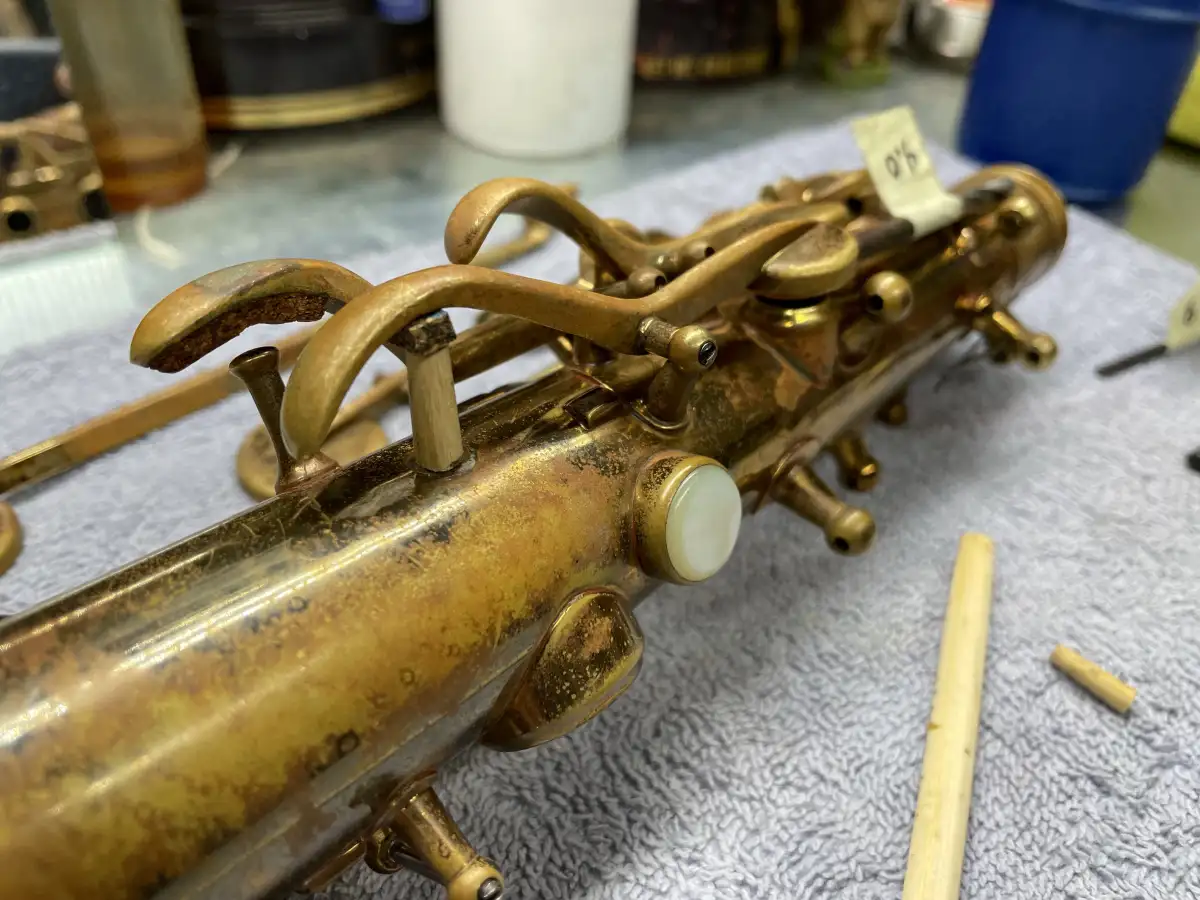
It’s all starts with the phone call… “ I didn’t notice that missing on the Goodwill auction pictures “ .
With no carcass horn to pick at…. its time to just make one.
A section of chopstick for size and bit of cork to check fit.
102 Replies
·
7848 views

Introduction New member. Doubler.
Howdy doo. I use the name Grumpikins online and try to keep my personal info mostly private. I am a Tuba player who often plays other instruments as needed by the groups I play with. I originally went to college to be a music teacher but life had other plans for me. There is an abundance of very good tuba players where I live so I often find myself filling other roles. Saxophone is one area we have frequently been short. When I was in school everyone said saxophone would be the most difficult instrument to learn. I didn't find it difficult at all and really enjoyed it. So here i am looking for advice from experienced players.
13 Replies
·
255 views
Tech/maintenance I have no words...
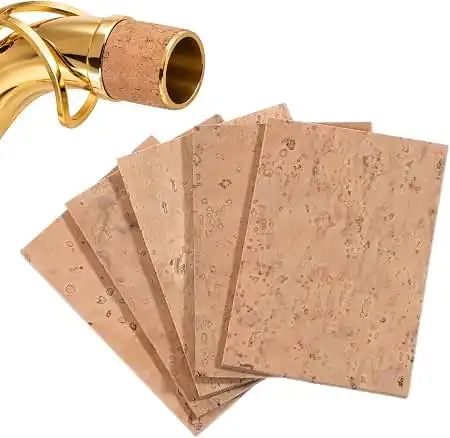
I saw this when shopping for neck cork on Amazon. How does this even happen? Somebody had to go out of their way to do that.
62 Replies
·
3797 views

Miscellaneous SF Bay Area, December 10-16th, anyone ?
Hi All,
Just booked my hello trip to my daughter in San Francisco, December 10th to 16th.
I've been there only once so far, 2 years ago.
Would be cool to meet with any of you living in that area.
Including a visit to some jazzy place, like the Keys or Yoshi's.
Or whatever you know, better than me anyway.
If you wan't me to bring some chocolate or who knows, a Swiss watch, ....
8 Replies
·
170 views

Cafe Moderator
Café Supporter
Miscellaneous Daily Check In
Good morning,
We thought it might be good to have a thread where you can just come and say hi, tell us what you are doing today, have a moan, share an idea that you wouldn't necessarily start a thread for ( we can always create a new thread from posts here if it became a substantial discussion).
It doesn't have to be sax related🙂
Basically an easy way to connect on a daily basis.
So to kick us off, I am writing this whilst prepping a casserole for the slo cooker as I am playing sax today with café sax and need a quick easy tea when I get home.
I am still suffering with a cough which will impact my playing today and I am worried as we are playing our first care home gig next Sunday!!
Have a lovely Sunday
Jx
2886 Replies
·
90411 views


Cafe Moderator
Commercial
Playing the saxophone What does professional musician mean?
I think this is the basis for an interesting discussion/debate.
My take is that a professional is someone who makes a living from playing. No other work. So in that case a couple of bucks or free meal is not it.
And of course there is semi-pro
100 Replies
·
3334 views

So y'all, not sure if this is covered somewhere, but I was playing my mediocre Arbiter Pro Jazz tenor last night and I'm sort of growing into my new Otto Link Tone edge mouthpiece nicely...... I think.... 🤔🤷
Anyway, I woke up this morning with this question on my mind.
Can a mediocre sax like my Arbiter, be made/tweaked into a much better "not mediocre" horn? 🤔
I mean, I have very little experience playing other horns so I'm not sure that I would recognize all the little nuances you guys go on about.... Would I?
Y'all talk about keyword ergonomics and tone and intonation. I'm presuming I would hear the last two, but obviously that can be vastly altered with mouthpiece and Reed choice.
Would I really feel and hear a difference if I got my "mediocre" Taiwanese horn tweaked to within an inch of its life?
I think this has popped into my head because I've been looking to upgrade my "mediocre" horn and I've been wondering if I would really tell the difference if I played a selmer or yani or Trevor James for instance.
This is off the back of watching a guy on YouTube comparing his very cheaply purchased Yamaha tenor sax to his mark VI, he played them along side each other on the same song and I'm not kidding, there was absolutely no difference.... None whatsoever. 😳 If I wasn't watching the switch I wouldn't have known he was playing two different horns.
So..... Back to the question..... Is it possible?.... More importantly... Is it worth it?..... What would such an overhaul cost these days?..... Ballpark figure?.... The cheaply purchased Yamaha was bought blind off ebay during covid for £400 and he took it to his long time technician for a complete overhaul and it cost £230. Still a cheap horn!
There aren't any music shops local for me to go try figure this out by playing a bunch of horns. Looking at used horns is overwhelming as I've previously mentioned to you guys in other posts about not really knowing overly much about it all and I can only compare anything what I'm currently playing myself.
I look forward to hearing what y'all think about this guys 🤔☺️
Ps. Sorry guys just realised I've posted this under mouthpieces and I don't know how to change it to something more appropriate 🙄
82 Replies
·
866 views
Theory & Impro Do we really need theory?
I don't disagree that learning to play by listening is important, but it must be accompanied with musical literacy and an understanding of what one is playing by rote learning.
All great "art" whether it is music, visual art, dance, or poetry can be experienced and as human beings we can be moved by those experiences. However to fully understand that art it needs to be broken down into its elements and undergo some type of analysis. The basic elements of music are Melody, Harmony, Rhythm, Dynamics, Timbre, Texture, and Form. To me it is that understanding that completes the experience of being moved by a piece of music or a particular performance. With that understanding I can communicate with others about my experience and I can look for those same elements in other pieces I hear for the first time.
500 Replies
·
64877 views

Blog Mike's musings
Inspired by @Tenor Viols musings, I decided to create my own thread. Focused on my new 'journey' from Big Band music into the world of rock/pop music.. Not only the very different style of music but (for me) also the very different world of amplification, different mpc's, etc,
I
For the 1st 3 weeks, things started off really well! I was enthusiastic and so were the band. I was less enthusiastic on the 4th week when the nominal 'band leader' returned from a vacation, brought a ton of equipment along with him and basically drowned other members out.
During the 4th rehearsal (always on a Saturday), I noticed that my right hand felt a bit 'odd' but OK. That night, the pain in my right hand kept me awake. The day after (following internet advice) , I applied a bandage and ice. My guess is that I injured my hand during a "Fitness Session' the previous Friday. Since then , I haven't been able to play sax🙁. But I have been able to listen to some tracks that I've been asked to play🙂. Not exactly (no-one in the band does) but 'sufficiently recognisable'.
288 Replies
·
20577 views
Saxophones What to avoid?
New here, first question?
I'm a tuba player, looking to find a saxophone(s) for occasional doubling. I took a saxophone class when I was in school 20+ years ago. Went very well, really enjoyed it. I play in a group that is frequently short on saxophones and abundant with tubas so I can fill in where needed.
My question isn't what horns should I look for, but what i horns i should avoid. There's always those certain ones that are no good all around.
I'm looking for dirt cheap used instruments. I really like old instruments. I'm very good at repairing things and I work in a machine shop with access to all the toys. Thank you
33 Replies
·
536 views

Misc instruments "I can't sing" - course; very nervous
I feel so brave!
A eCircular came round advertising an "I can't sign", 10 week course, (state sponsored, non commercial); and I thought "that's me"...
People often say sing this or that, it'll improve playing and I'm sure that's true. And I try and it's horid. I don't have a desire to sing, but I do see it improving musicianship in many ways... So... Singed-up!
I'm nervous because 1. I hate class work. And 2. It's in Norwegian and I'm not sure my norsk is good enough. 3. My speaking voice is around C2 (base?) and sounds weird to me... I can't imagine it being a pleasant sing.
Maybe it'll improve my ability to growl?
109 Replies
·
16605 views
Playing the saxophone Falling from Altisimo A? (and falls in general)
In an arrangement of Oye Como Va, by Johnny Ferreira we have
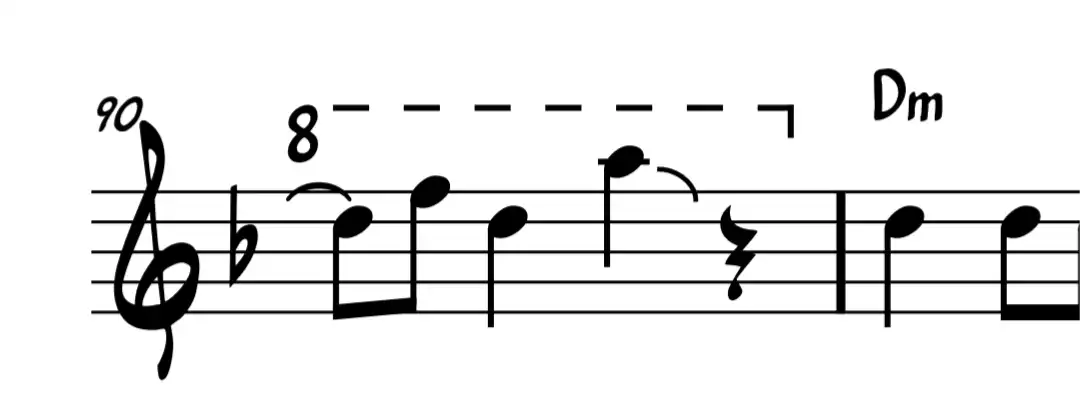
DFDFDFA on the second register, then at the top.
I'm just about stable on D to altisimo A - good exercise for me!
But G is quite far away, fungering wise..
My best alt A is L23+a side key.
How would you approach the fall?
Thanks.
DFDFDFA on the second register, then at the top.
I'm just about stable on D to altisimo A - good exercise for me!
But G is quite far away, fungering wise..
My best alt A is L23+a side key.
How would you approach the fall?
Thanks.
22 Replies
·
716 views
Cafe Moderator
Commercial
test
2 Replies
·
200 views
Saxophone beginners Tenor altissimo advice
On alto, I can easily play altissimo G without issues. For G# and A, I might still need a few tries, but can still get it to sound eventually.
But on tenor, I can't even get the G to sound. I hear that A is often easier than G, but I can't get A either (though I am doubting the claim, since G was easier for me on the alto).
I can't even slur up from F# to G.
My front F mechanism is adjusted to close a little more than the "default" middle setting. It used to be closed even more, but I opened it slightly (but still less than the middle default) because I found that it affects the tone of the E/F/F#. I'm only mentioning this because I hear the front F mechanism can help with altissimo notes... though I feel as if my settings (whether very closed or slightly closed) didn't affect it much.
My main "foundation" practice routine for altissimo has been overtone practice with the low B♭ fingering. I have been able to get the 1st, 2nd and 3rd overtones, but so far I haven't been able to get the 4th overtone yet. I wonder if this is what's holding me back? Should I just keep at it until I can somehow get the 4th overtone... or am I missing some other crucial practice method that helps with altissimo?
24 Replies
·
2576 views
New! Social Feeds
Look out for the navigation icon:Follow CafeSaxophone
Foroverse

Youtube

Bluesky

Facebook

Member Blogs (currently active)
-
 Saxophones Pork Tales: Saxophone Repair DIY Adventures.
- Started by PigSquealer
- Replies: 1K
-

-

Trending


Popular Discussions on the Café
-
 Theory & Impro Do we really need theory?
- Started by jbtsax
- Replies: 500
-
 Saxophones C Melody Saxophones
- Started by Andy Hornblower
- Replies: 697
-
 Saxophones Carrying a tenor on a (motor)bike?
- Started by Jay
- Replies: 779
-
 Saxophones How will Tariffs affect Sax Prices?
- Started by Ivan
- Replies: 465
-

-
 Playing the saxophone The Cafe Trio grown to Octet down to Sextet
- Started by trimmy
- Replies: 844
-
 Great Players Who sparked your love of Sax music
- Started by jools
- Replies: 619
-
 Playing the saxophone Learn to play by ear or by reading music
- Started by Taz
- Replies: 1K
-
 Tech/maintenance My new "DIY" pads...
- Started by DavidUK
- Replies: 393
-
Misc Reviews Yamaha YDS-150 Wind Synth
- Started by Acc6441
- Replies: 301
-
 Playing the saxophone Learning to Read v Playing by ear
- Started by BigMartin
- Replies: 505
Featured Classifieds
Latest Song of the Month
-
-
 SOTM SotM September 2026 - Autumn Leaves
- Started by mrblackbat
- Replies: 27
-

-

-
 SOTM SOTM June 2026 "And You Just Smile" (from ear to ear- training)
- Started by LostCircuits
- Replies: 11
-
SOTM SOTM May 2026 - Always Remember Us This Way
- Started by MikeMorrell
- Replies: 39
-
 SOTM SOTM April 2026 - Freedom Jazz Dance
- Started by rhysonsax
- Replies: 14
-
SOTM SOTM and PETE (Play by Ear Training Exercise)
- Started by Wade Cornell
- Replies: 16
-
SOTM SOTM Feb 2026 - On Green Dolphin Street
- Started by mrblackbat
- Replies: 44
-
 SOTM SOTM January 2026: Our Love Is Here to Stay
- Started by GCinCT
- Replies: 46
-
SOTM SOTM December 2025: Wexford Carol
- Started by MikeMorrell
- Replies: 37
-
 SOTM SOTM November 2025 - Red Baron
- Started by sax panther
- Replies: 36