

Tech/maintenance Re-lacquer - yes or no?

There is another option for when a vintage instrument has lost much of its lacquer and looks ugly. The remaining lacquer can be removed---often by boiling without the use of harsh chemicals. Then the keys and body can be given a "scratch brush" finish. It can either be done by hand or with a satin metal finishing wheel under low power. Once the metal is given its satin finish and cleaned, it is then given a coat of carnauba wax to protect the finish and slow the oxidation process.

Below are some photos of the process and the resulting finish on a Mark VI tenor and bari.

Keyfinish001.jpg


Low C key before.

Keyfinish002.jpg


Low C key after. The process took about 3 minutes by hand to achieve the brushed "satin" finish.
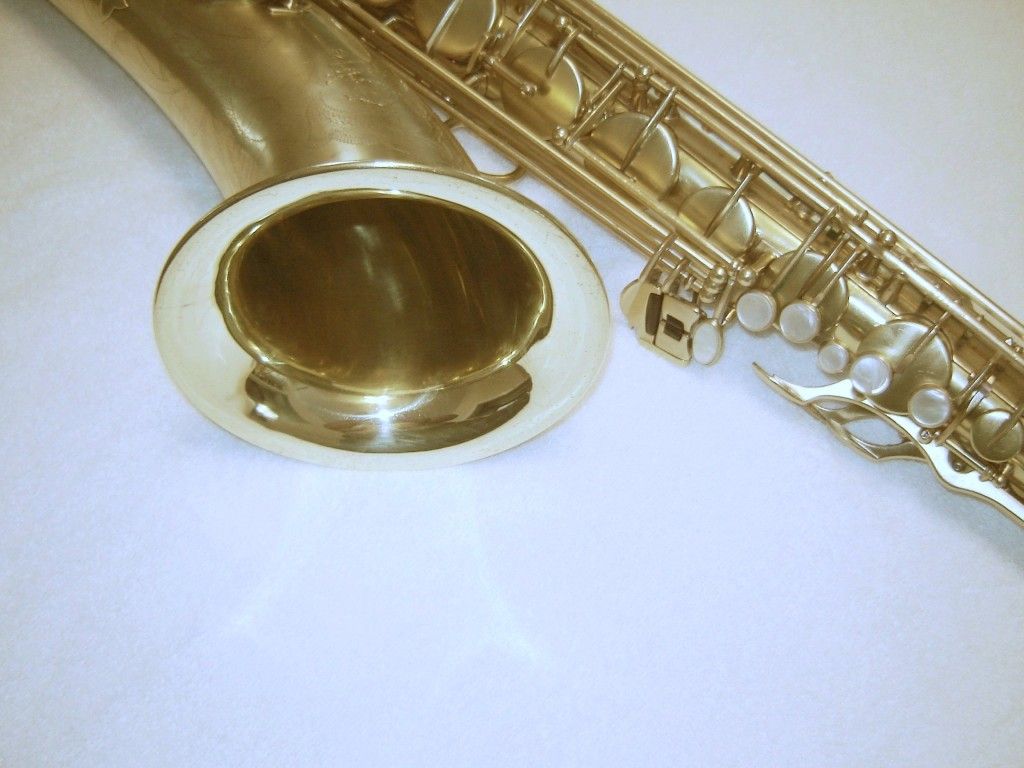
DSC02669-1.jpg


This is a Mark VI that I overhauled for a customer who wanted this finish. The inside of the bell is left shiny.

MarkVIBari001.jpg


This is a school Mark VI bari that I restored for a local music store to resell. As you can imagine there was a lot of dent work involved. There are those who believe that these instruments would be worth more had I left the partial original lacquer and tarnished brass in tact. Obviously I don't share that point of view.
 
They look beautiful. I might have to get myself a huge pot to boil my sax in. And as the mouthpiece is plastic, I probably don't even need to remove it first πŸ™‚
 
Last edited by a moderator:
They look beautiful. I might have to get myself a huge pot to boil my sax in. And as the mouthpiece is plastic, I probably don't even need to remove it first πŸ™‚


You can use an old 19kg Propane Gas Cylinder and grind the top off. IMPORTANT. Before you start grinding, fill the cyl. With water. I achieved this by first drilling a hole at the top of the cyl. Then fed a hose into the hole. Perfect size for an Alto.
being metal it can be used to boil. Although the same can be achieved with a plastic container, and using an element, similar to the one in your electric jug.
 
There is another option for when a vintage instrument has lost much of its lacquer and looks ugly. The remaining lacquer can be removed---often by boiling without the use of harsh chemicals. Then the keys and body can be given a "scratch brush" finish. It can either be done by hand or with a satin metal finishing wheel under low power. Once the metal is given its satin finish and cleaned, it is then given a coat of carnauba wax to protect the finish and slow the oxidation process.

Below are some photos of the process and the resulting finish on a Mark VI tenor and bari.

Keyfinish001.jpg


Low C key before.

Keyfinish002.jpg


Low C key after. The process took about 3 minutes by hand to achieve the brushed "satin" finish.

DSC02669-1.jpg


This is a Mark VI that I overhauled for a customer who wanted this finish. The inside of the bell is left shiny.

MarkVIBari001.jpg


This is a school Mark VI bari that I restored for a local music store to resell. As you can imagine there was a lot of dent work involved. There are those who believe that these instruments would be worth more had I left the partial original lacquer and tarnished brass in tact. Obviously I don't share that point of view.

Beautiful.!!!!!
 
Sorry Jamesmac about my sarky remark about my brother in laws hair in ref to colour 16 you obviously know what your doing bari looks great by the way. I'm really making a right hash of this post JTBSAX knows what he's doing. Still can't wait to see pictures Jamesmac.
 
Last edited by a moderator:
You can use an old 19kg Propane Gas Cylinder and grind the top off. IMPORTANT. Before you start grinding, fill the cyl. With water. I achieved this by first drilling a hole at the top ...

Glad you qualified that suggestion. I could see the BBC News being full of reports of unexplained explosions and a shortage of saxophone players πŸ™‚
 
Sorry Jamesmac about my sarky remark about my brother in laws hair in ref to colour 16 you obviously know what your doing bari looks great by the way. I'm really making a right hash of this post JTBSAX knows what he's doing. Still can't wait to see pictures Jamesmac.

Im waiting for spring to arrive, as I will be doing this outside. BTW. These chemicals are used by Jewelers every day.
 
Thanks jbtsax for those great pics of some gorgeous saxes could you show what a satin finishing wheel is and how big it is, can you achieve this finish with the sax assembled or does it need to be dismantled to reach between the bell and the body,could a similar finish be achieved by using fine gauge wire wool or would this be a no no on a sax
 
You can use an old 19kg Propane Gas Cylinder and grind the top off. IMPORTANT. Before you start grinding, fill the cyl. With water. I achieved this by first drilling a hole at the top of the cyl. Then fed a hose into the hole. Perfect size for an Alto.
being metal it can be used to boil. Although the same can be achieved with a plastic container, and using an element, similar to the one in your electric jug.

I'm sorry to have to say this but I would have thought that drilling a hole in a partially filled gas bottle might be just as dangerous as setting about it with a grinder ....John
 
I'm sorry to have to say this but I would have thought that drilling a hole in a partially filled gas bottle might be just as dangerous as setting about it with a grinder ....John
Would totally agree John, just don't mess with those things! besides they are someone elses property! you only pay for the gas, not the bottle!
 

Similar threads... or are they? Maybe not but they could be worth reading anyway πŸ˜€

Social

New! Social Feeds

Look out for the navigation icon:

Follow CafeSaxophone

Latest Song of the Month

Trending

Forum statistics

Topics
32,081
Messages
578,809
Members
8,139
Latest member
Gary Boudreau2
Back
Top Bottom
