Saxophones Laquer n sound

I think we need to get Pete's old sparring partner Phil Barone on board as he makes identical sax's in various laquer finishes as well as bare brass and copper, i'm sure he will be able to put this one to bed for once and for all.....
 
Phil Barone has said many times that materials and coatings make no difference, he says that because he has commissioned (he says ) a scientist to do experiments for him with the mouthpieces
 
And, as I wrote earlier, no two saxes can be made 'identical'..... they may be made by machines, but they are assembled and set-up by humans!
If it were physically possible to lacquer/de-lacquer/plate the same saxophone....without taking it apart.... then such a test might be possible!
But you cannot, of course, transform a bronze sax into a brass/silver/plastic sax!
 
Last edited by a moderator:
well, recently on SOTW someone got a Yamaha delacquered without delacquering the keys (yes it might be argued that dismounting and remounting the keys has an influence on the way it plays , of course ) , I think that you could set up perfectly an instrument before dismounting it to delacquer it, after delacquering only the body, the same tech could set it up to the (approximately, yes) same specs and you could do sound spectrum measurements and audio tests (recordings and listening tests ) before and after by the same instrument.

All test have to be blind.
 
Go back to your (church) bell, do the same with the bell. Is the bell still playing. No it isn't.


Go back to your saxophone and go to play you saxophone in a room where there is a drum (not a snare drum), play the saxophone. Does the drum vibrate? Yes it does. Does it actually produce an audible sound? No it doesn't or a very faint one (but a drum is not a saxophone)

Your saxophone vibrates and it does vibrate like everything vibrates when exposed to sound, passively, regardless whether the sound is produced within or without itself , of course you hear a piano resonating or a guitar because the sound boards of these instruments are amplifying even the minute passive vibrations of their strings but that is not the case of a saxophone.

Hi Milandro

Now Just to leave the ringing of a bell to one side...because I don't think that any one person that has posted on this tread so far has even remotely suggested that there sax may ring like a bell ! ? !

Pete has declared that he thinks and feels that there is no vibration of the actual body of a Sax.
Where as you on the other hand think that there is vibration in the body of the sax ...But it is what you refer to as (Passive Vibration) hmmm !

O.k, for now, lets go with your passive vibration for a minute. Would there be more passive vibration in the body of sax made out of Thin brass ...and there for less vibration in one that is made out of thick brass ???
 
The reference tho the bell was an easy way to exemplify how and why the idea might have been taken its form and it servers the purpose of explaining that an object might actively vibrate and produce a sound (a bell) , passively vibrate and produce no sound (a saxophone) or passively vibrate and produce a sound (an acoustic guitar or a piano).

Whatever kind of sympathetic vibration or resonance http://en.wikipedia.org/wiki/Sympathetic_resonance a saxophone or any of its parts might or might not have (and the bell is the part that has the least things attached to it therefore the one which more likely vibrates with the highest energy ) none would contribute to create any sound whatsoever.

I have interesting news , you , along with anything else including the air in a room where one plays a saxophone also vibrate but you don't necessarily emit any sound (a thin crystal glass might resonate audibly for example)


It is possible to measure and indeed it has been done so the wall vibrations of a flute (in flutes made of different materials , flutes are not normally lacquered) and it was impossible bot experimentally or by the audience or the flute players to detect any difference among the several flutes (the fact that these were flutes has no real bearing on the proposed theory which is that the vibration of the woodwind which contains the vibrating air column don't affect the sound ) with different thickness or material.

So, even if the wall vibrations vibrate at different rates their passive and sympathetic resonance doesn't affect the sound produced.

 
WOW, LOADS more science on this never ending topic but I STILL THINK THEY VIBRATE,I STILL THINK UL HORNS AND SILVER PLATED HORNS HAVE THERE OWN THING GOING ON AND GUESS WHAT THATS ALL THAT MATTERS,ME,ME AND EVEN MORE ME.Yes its great to discuss this but i could not be a***d to try and tell people there wrong and throw loads of wacky science at them,each to his own.I find sax's with no ribs,just posts on them have a different vibe to horns with rib plates on them also.I like unfiled compared to filed,i like trying loads of ligs also,why again,as i find sound differences in all these and a nobel prize winner could tell me i was wrong but i dont care,its my horns,my cash,my choice,my likes and did i mention its about ME,ME,ME AND EVEN MORE ME.
 
The reference tho the bell was an easy way to exemplify how and why the idea might have been taken its form and it servers the purpose of explaining that an object might actively vibrate and produce a sound (a bell) , passively vibrate and produce no sound (a saxophone) or passively vibrate and produce a sound (an acoustic guitar or a piano).

Whatever kind of sympathetic vibration or resonance http://en.wikipedia.org/wiki/Sympathetic_resonance a saxophone or any of its parts might or might not have (and the bell is the part that has the least things attached to it therefore the one which more likely vibrates with the highest energy ) none would contribute to create any sound whatsoever.

I have interesting news , you , along with anything else including the air in a room where one plays a saxophone also vibrate but you don't necessarily emit any sound (a thin crystal glass might resonate audibly for example)


It is possible to measure and indeed it has been done so the wall vibrations of a flute (in flutes made of different materials , flutes are not normally lacquered) and it was impossible bot experimentally or by the audience or the flute players to detect any difference among the several flutes (the fact that these were flutes has no real bearing on the proposed theory which is that the vibration of the woodwind which contains the vibrating air column don't affect the sound ) with different thickness or material.

So, even if the wall vibrations vibrate at different rates their passive and sympathetic resonance doesn't affect the sound produced.


?:confused:? Was that a Yes or No?:confused:?
 
I think what happens is this...first of all when we blow through the mouthpiece and the reed vibrates, so does your bottom lip as it's picking the reed vibrations up (oviously) BUT the rest of the sax is insulated from the mouthpiece with the neck cork so the body of the sax cant resonate so it's got to be the air column that resonates, another thing to considder is the neck, apart from the mouthpiece the neck is the one thing that has the biggest influance as to how the sax sounds, consequently various aftermarket necks make a given sax sound very different...how? by changing the pattern of air flow before it enters the main body of the sax.

A quite simple way to test this theory would be to play the sax and then using a helper get them to hold on to the sax at various points whilst you play, and note any varyations in the sound, if nothing changes it's the air column and not the sax itself that resonates....case closed!

On the other hand if you take a Trumpet for example with the mouthpiece inserted directly into the body of the instrument and without a reed i think in this case yes the whole instrument resonates...again Trumpet players could use the "hold on to" test to prove or disprove this.
 
?:confused:? Was that a Yes or No?:confused:?

whether the walls vibrate more or less because of their thickness or the material they are made of it is irrelevant to sound emission for the sake of argument they might vibrate more if they are thinner if their section stays the same and the material is the same but this has got nothing to do with sound emission.

Incidentally trumpets as all brass instruments have different acoustics than woodwinds.....
 
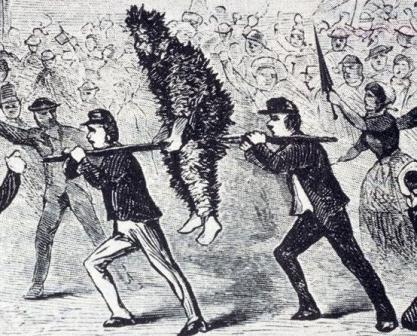
need bitumen and feathers

tar_feathers.jpg
 
well, recently on SOTW someone got a Yamaha delacquered without delacquering the keys (yes it might be argued that dismounting and remounting the keys has an influence on the way it plays , of course ) , I think that you could set up perfectly an instrument before dismounting it to delacquer it, after delacquering only the body, the same tech could set it up to the (approximately, yes) same specs and you could do sound spectrum measurements and audio tests (recordings and listening tests ) before and after by the same instrument.


I had a horn relacquered once, It was a very shoddy job and all the lacquer fell off within a few days, so that horn was delacquered without dismantling or changing anything about the action. Of course, there was no difference in sound.
 
the walls of the saxophone do passively vibrate but their vibration is insignificant in terms of influence on sound because is too little to produce what in brass instruments (with an oval section) is called coupling , coupling doesn't happen in any wooodwind
 
the walls of the saxophone do passively vibrate but their vibration is insignificant in terms of influence on sound because is too little to produce what in brass instruments (with an oval section) is called coupling , coupling doesn't happen in any wooodwind

This is debatable. Scientific arguments about the effect of sax material on sound are based on the assumtpion that the body is heavy/hard enough enough to not deform/affect the sound. It's cler this sin't the case, and a vibrating surface affect the reflections of the sound waves inside the sax. So although I'd accept that sounds given off by the body are negligible(but likely audible to some players), I keep an open mind about the effects inside the sax on the main air column/sound. Naturally a good coat of lacquer will affect the way the whole body vibrates (I'd expect it to damp the vibrations slightly), and so would the addition of plating. There's also the fact that overbuffing (e.g. during a relacquer) is generally considered to affect the sax's sound adversely because it thins the metal... And this is by the same people (usually) who argue that finish doesn't affect the sound.

One also has to consider flutes - why is it that flutes made by Louis Lot are so highly prized for their sound? Like old Stradivarius made violins, there's no clear reason, but many theories, one of the strongest being that the manufacturing processes hardened the silver and enhanced the tube resonances.

In a similar vein what makes Pete's new tenor so special - is it bore differences, or is it the hammered, manual construction that in many ways mimics Louis Lot's flute making process? Does Paul's Red Brass version sound different to Pete's Bronze one? If so is it because of the different metals? or just minor manufacturing differences? And what makes Inderbinen saxes so special(apart from the price)? What makes Mark VIs sound so special? Why can't we reproduce it today?

We also need to remember that individual's hearing ability varies greatly. And is affected by age, exposure to noise, disesase..... And many sax players spend a lot fo time damaging their ears by playing in loud bands.... So subjective assessments based on personal experience are not necessarily valid.

I've an open mind. I'd like to see proper empirical results, not arguments based on assumptions/guess work/gut feelings. I don't see any reason why this can't be done in a uni lab - IF one can demonstrate a repeatable performance by the players involved, which would, to my mind, be the biggest variable (assuming air temp, humidity, air pressure, can be controlled or accounted for).

Design and execution of such an experiment would be good for all concerned. And we can finally stop the discussions. But one thing's for sure, even with clear empirical evidence, there'll be an element that rejects it because it doesn't fit their preconceived ideas....
 

Similar threads... or are they? Maybe not but they could be worth reading anyway 😀

Social

New! Social Feeds

Look out for the navigation icon:

Follow CafeSaxophone

Latest Song of the Month

Trending

Forum statistics

Topics
32,072
Messages
578,576
Members
8,133
Latest member
walthang
Back
Top Bottom