

• New!

    Try our new Social Feeds, look out for the navigation icon: . You can now set default social feed view in your account preferences.

Miscellaneous Advice on radiator valves

Pete Thomas

Well-Known Member
Cafe Moderator
Commercial
Messages
23,435
Location
London
Level
Retired professional
This may be a good question for @eb424

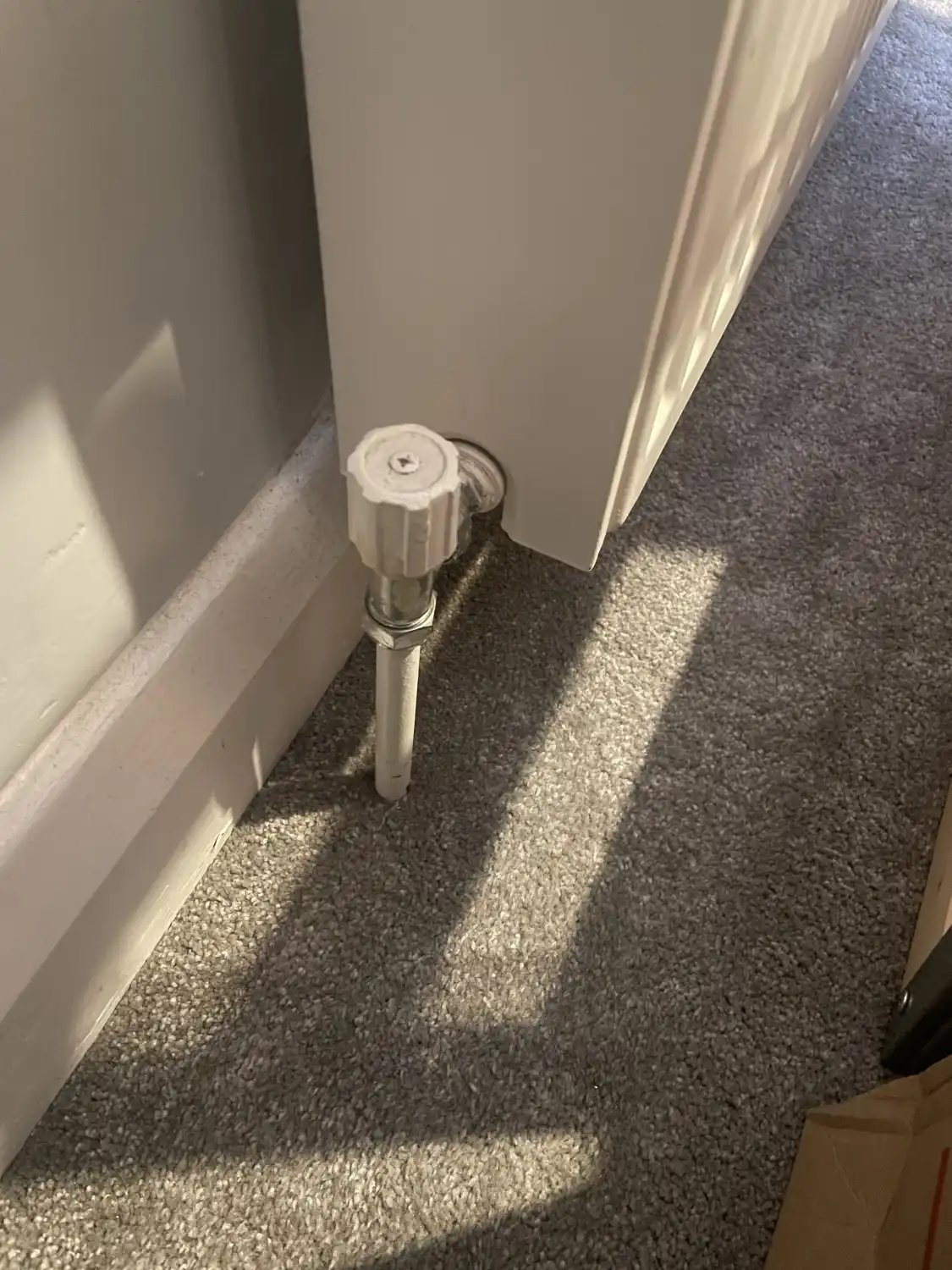
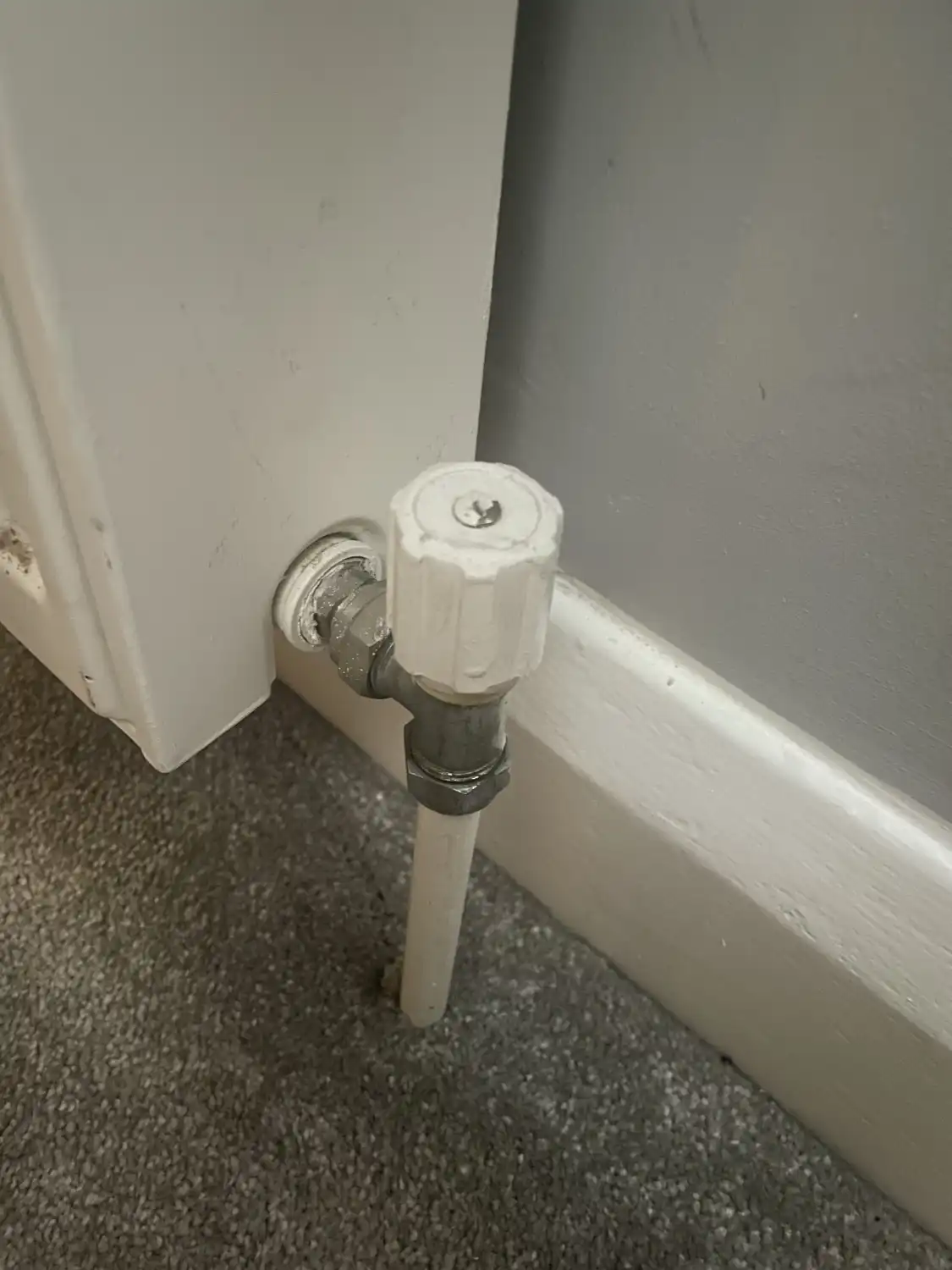
Having just moved into a new house in London, I find some of the radiators have no TRV, but I want to either turn down or turn off the radiators in a couple of rooms. In my previous house they were all TRVs except the one in the hall (which the plumber told me not to touch)

Here the valve at each end look identical, so I don't (yet) know which is inlet and outlet. (I will be turning all off and on a gain to see which end gets hot first).

So my questions are

If I turn a valve down does it matter which end (inlet or outlet) and is it OK to turn either end off completely (will be keeping the door of that room closed ?
IMG_7624.webp
IMG_7625.webp
 
I can find the inlet once it’s cooled down and I turn on again. But my understanding is one end has a lock shield valve, used for balancing the system and once set properly should remain, and the valve on the other end is for controlling that specific radiator. So ideally I need to identify which is which.
 
Hi @Pete Thomas. Ideally there should be TRVs on all rads apart from the one that is in the same room as your room thermostat. The valves in the picture are wheelhead valves as oppossed to TRVs. As stated it doesnt matter which you turn of either the one on the Flow ( pipe gets hot first) or the return. Why do you want to turn the rad of in the winter? I ask as you can control the heat output of the rad in the same way as a trv..It would /may be better to have it on the lowest temp as it will protect against damp and mould. Turn one side off and open until warm...
 
I can find the inlet once it’s cooled down and I turn on again. But my understanding is one end has a lock shield valve, used for balancing the system and once set properly should remain, and the valve on the other end is for controlling that specific radiator. So ideally I need to identify which is which.
Ideally re balancing...but you can balance on that valve
 
With the covers off, the valve at each end look identical:


IMG_7626.webp


Hoever only the one on the outlet actually turns easily, so @eb424 does that men thats the one I should turn to either make it less or or shut off completely?

I'm not going to get any work done just yet as the whole system is likely to need an overhaul as we are going to replace the combi boiler and do some remodelling.
 
With the covers off, the valve at each end look identical:


View attachment 31101

Hoever only the one on the outlet actually turns easily, so @eb424 does that men thats the one I should turn to either make it less or or shut off completely?

I'm not going to get any work done just yet as the whole system is likely to need an overhaul as we are going to replace the combi boiler and do some remodelling.
Ok so inside the cap there should be a square that fits over the valve part in the middle..The other one sound as if it is either locked down in which case the rad should be off. Or fully open in which case the rad is on. It doesnt matter if you shut of the one that turns easily. Like stopcocks its best to open fully and turn back a bit ( 1/8th of a turn) to prevent the valve become stuck. If your replacing it's not important but if you have a small adjustable spanner and a can of wd40 it's worth freeing up the valve. Is the one in the pic closed ?
 
It doesn't really matter which valve you replace with a TRV. Yes, it's nice to have all the TRVs on the inlet but it doesn't actually make any difference. There will be no flow through the radiator whether it's blocked at the inlet or the outlet.

Depending on the size of the house, balancing can be something of an art form, even with a laser thermometer, so...

The easiest way to work out which is the inlet and which is the outlet - the inlet tail pipe should be slightly hotter than the outlet, or, one tail pipe will heat up before the other.
 
With the covers off, the valve at each end look identical:


View attachment 31101

Hoever only the one on the outlet actually turns easily, so @eb424 does that men thats the one I should turn to either make it less or or shut off completely?

I'm not going to get any work done just yet as the whole system is likely to need an overhaul as we are going to replace the combi boiler and do some remodelling.
The rads look like the modern type would defo reccommend a vaillant combi..You may just need to upgrade the boiler and replace the trvs and lockshields. On the trvs you can remove the head, it's a dry pocket, inside theres a pin and these get stuck. If you have rads that aren't getting hot it's probably this..or air...
 
I'm not replacing any with a TRV for a while, I was just wondering if it's OK for now to turn off one of the valves, and if so does actually matter which one.

Seeing as tyhe only one that actually turns without brute force I'm hoping it's the oulet. Is that OK?

Yes, the old boiler will be replaced, not yet sure what with but probably a Vaillant heat pump
 
It doesn't really matter which valve you replace with a TRV. Yes, it's nice to have all the TRVs on the inlet but it doesn't actually make any difference. There will be no flow through the radiator whether it's blocked at the inlet or the outlet.

Depending on the size of the house, balancing can be something of an art form, even with a laser thermometer, so...

The easiest way to work out which is the inlet and which is the outlet - the inlet tail pipe should be slightly hotter than the outlet, or, one tail pipe will heat up before the other.
Good shout..as long as they are bi directional 😵 Most are now but have had a problem with Danfoss valves that have an arrow in the head and will only go on the flow....( PS hope the emoji is appropriate re humour lol)
 
I'm not replacing any with a TRV for a while, I was just wondering if it's OK for now to turn off one of the valves, and if so does actually matter which one.

Seeing as tyhe only one that actually turns without brute force I'm hoping it's the oulet. Is that OK?

Yes, the old boiler will be replaced, not yet sure what with but probably a Vaillant heat pump
No thats fine just turn the easy one off...Best to have a wee bit of warmth tho re above the fabrication of the building and prevention of damp and mould....
 
Best to have a wee bit of warmth tho
Done

But I’ve just heard that phase one of remodelling may involve just moving one radiator anyway, if you know of a reliable and reasonably priced plumber or heating engineer in this area SE26 please let me know.
 
Ill keep my ears out how far is sutton? Also not sure if you need special rads for heatpumps..
It's not Sutton it's Forest Hill near Sydenham.

No you don't need special rads for heatpumps, just a bit bigger than you would need for a combi as the water needs to run at a lower temperature for best best efficiency. In this case the rad has been approved by the installer as being suitable either for gas combi or heat pump so it just needs moving from one side of the room to the other. which I presume is reasonably easy as it's conventional (not T & G) floor boards and justs run inline to the opposite wall where it needs moving.
 
It's not Sutton it's Forest Hill near Sydenham.

No you don't need special rads for heatpumps, just a bit bigger than you would need for a combi as the water needs to run at a lower temperature for best best efficiency. In this case the rad has been approved by the installer as being suitable either for gas combi or heat pump so it just needs moving from one side of the room to the other. which I presume is reasonably easy as it's conventional (not T & G) floor boards and justs run inline to the opposite wall where it needs moving.
I know someone in sutton. Just depends how far it is from you. Sounds a simple enough job..wish i was closer..
 
While on the subject.
I have a thermostat sensor in the living room with two radiators with no TRVs and then all the other rooms have a radiator with a TRV.
I assume that as soon as the living room reaches the temperature as set on the control panel in the kitchen then the system stops circulating hot water regardless of whether the other rooms have reached the temperature of their TRVs.
Is that right?
 

Similar threads... or are they? Maybe not but they could be worth reading anyway 😀

Trending

Forum statistics

Topics
32,299
Messages
577,249
Members
8,097
Latest member
calebwhitmore
Back
Top Bottom

