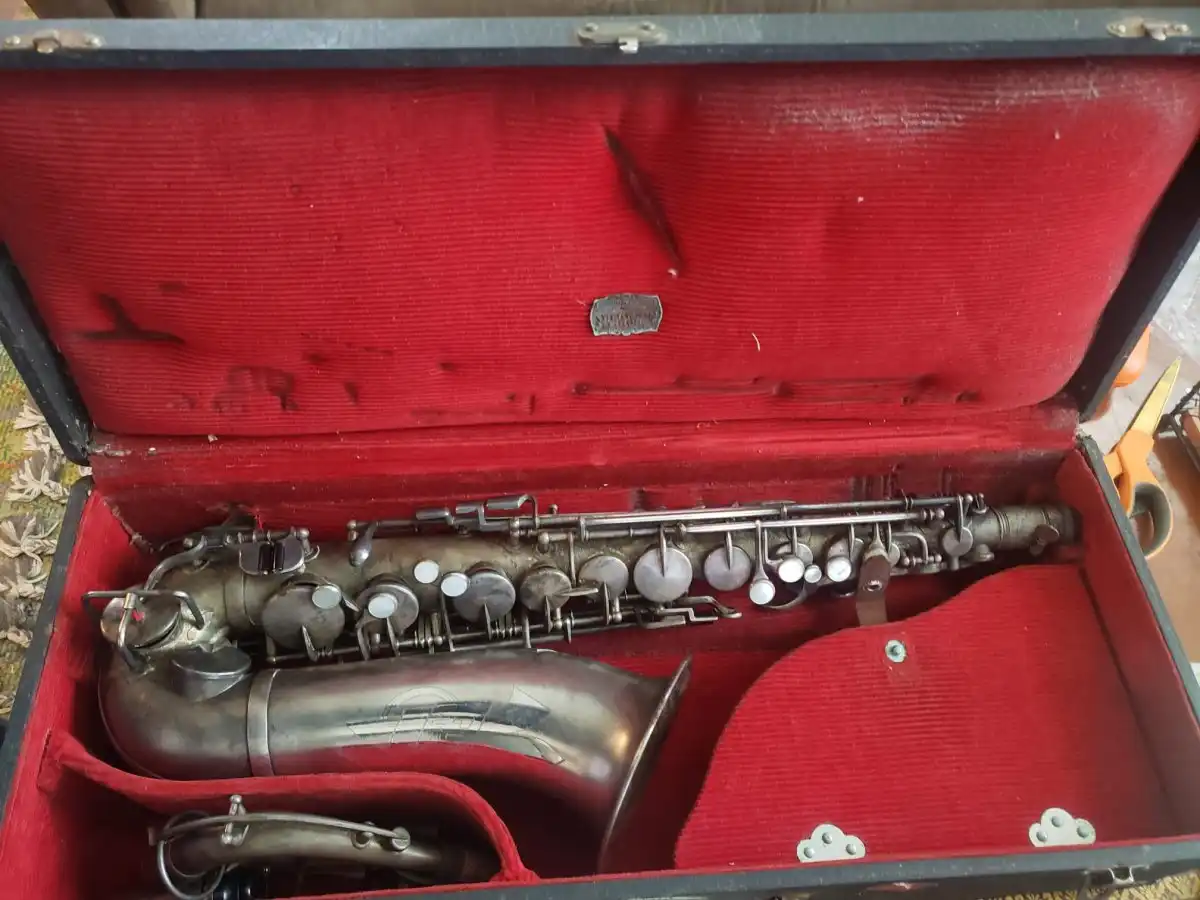
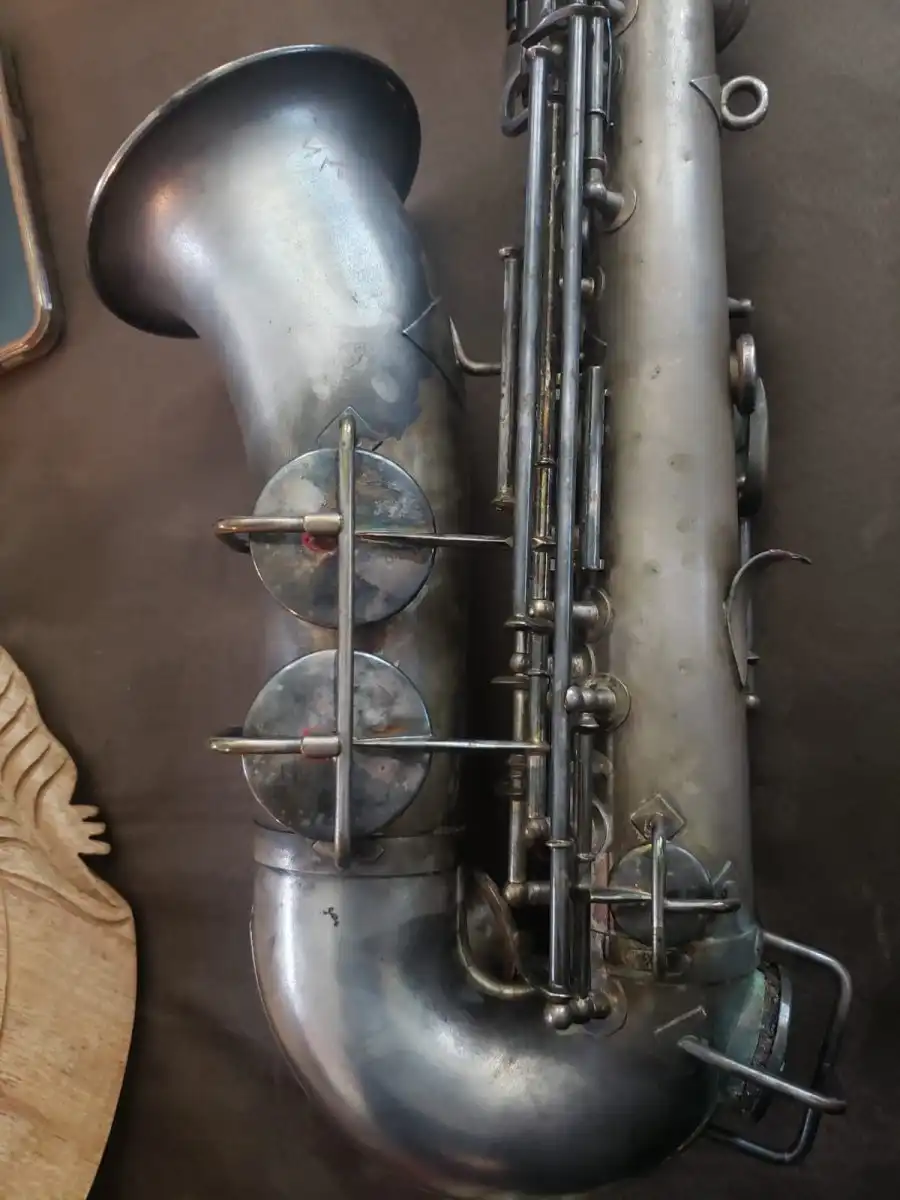
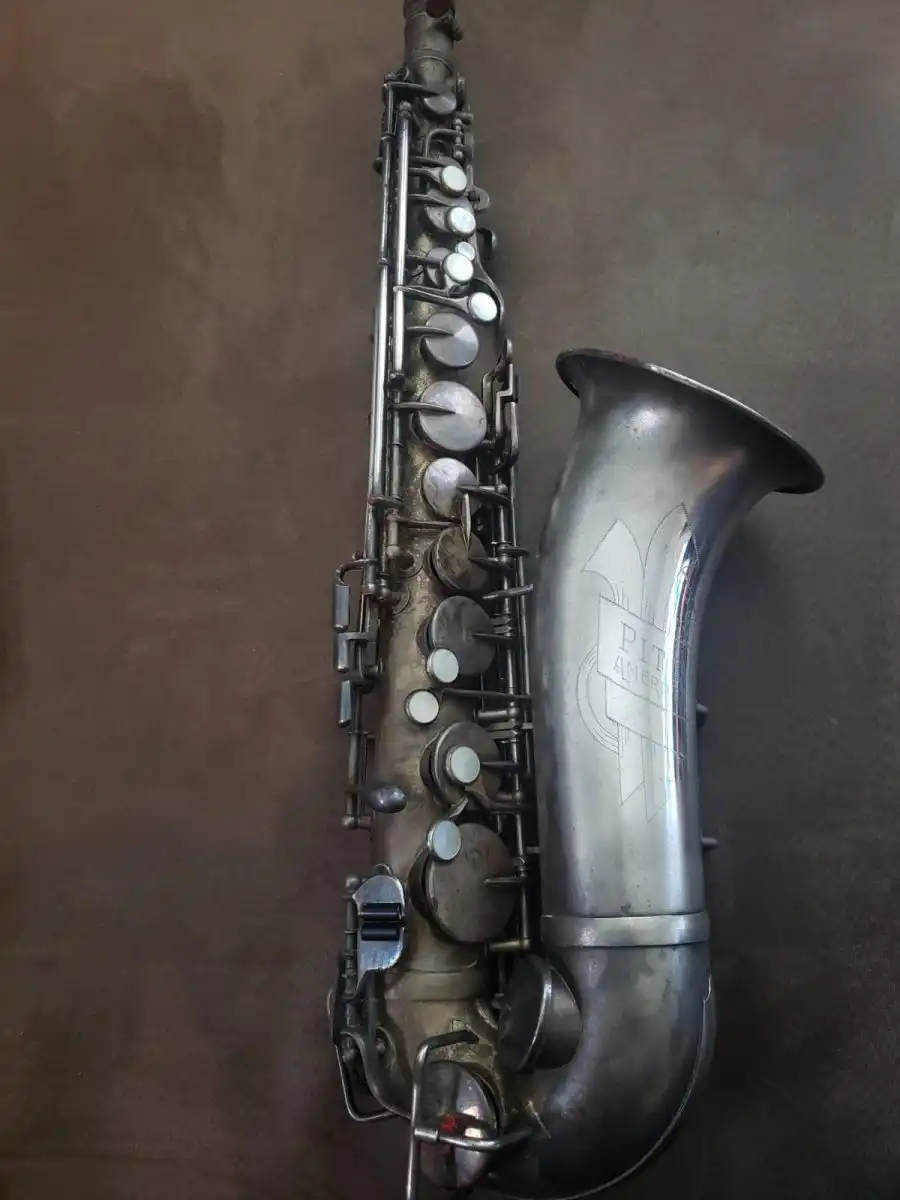
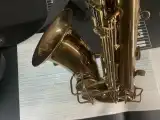
A friend of mine a has bought an old Pitt Tenor Sax (images below). She is keen to learn about the history of make etc. I've had a look online, but can't find anything too useful so wondered if you all have come across this make?
Back to topic.
Seems to be a saxophone that was built by H.N. White, Cleveland, Ohio, USA.
Probably a stencil. A stencil sax was made for an extern client/customer/purchaser. That could be a music shop, music publisher, mail order company, music instrument company that didn't made saxophones (like Gretsch, Olds ....) .... . A second line company was often owned and controlled by the same parent company as did they the the "real thing". H.N, White Company second line saxes were called "American Standard", "Gladiator", "Cleveland". Stencil and second line saxes became important for the instrument manufacturers. The could extend the life cycle of the tools, machines, old inventory ..... . It doesn't matter what you produce, the profit is always in the end of a product cycle.
H.N. White company made "King" saxes (named after a trombonist called Thomas King). "King Zephyr", "King Cleveand", King Zephyr Special", "King Super 20" were all saxes and brandnames owned and made by H.N. White in Cleveland Ohio. But the line between a second line sax and a stencil sax is not clear. Both second line and stencils saxes can be fine instruments.
Your friend's "Pitt American ... " is an interesting sax. I think saxes like old Kings, Martin, Conn, Beuscher, "first line", "second line" or "stencil" should be retained and be kept in an acceptable level based on the player's level/ambition. If you don't play the low tones; seal the low Bb, B and C# tone holes! I helped a friend to make his Amati stencil to sing better. We sealed the Bb, B tone holes and then we drilled small holes in the brass sheet metal that covered the tone holes. The Eb trill key on old saxes can be hard to deal with for a DIY person. It must seal properly. Like Low C#, G# the Eb trill is a closed key. Or is it a Eb vent key to help the sax to sing better?
Is a sax like "PITT American ..." a case for a well reputable saxophone tech or a DIY sax? If it's possible I would say DIY. You don't need soo many tools. I just had some pliers, screwdrivers, shellac, alcohol lamp, corks, felts, pads maybe some extra springs (flat or round) ..... . Of course with help from friends that were also into DIY works. I still mail Ferree's standard pads (4,0 mm or 4,7 mm thickness), cork. felts, springs ... to hobby/amatuer Blues and Rock & Roll saxophonists so they can keep on honking.


 (bottom of page)