Saxophones Vintage Alto Sax

Lazza

Member
Messages
6
Location
Surrey UK
[ADMIN EDIT: changed to alto]

Hey Everyone,
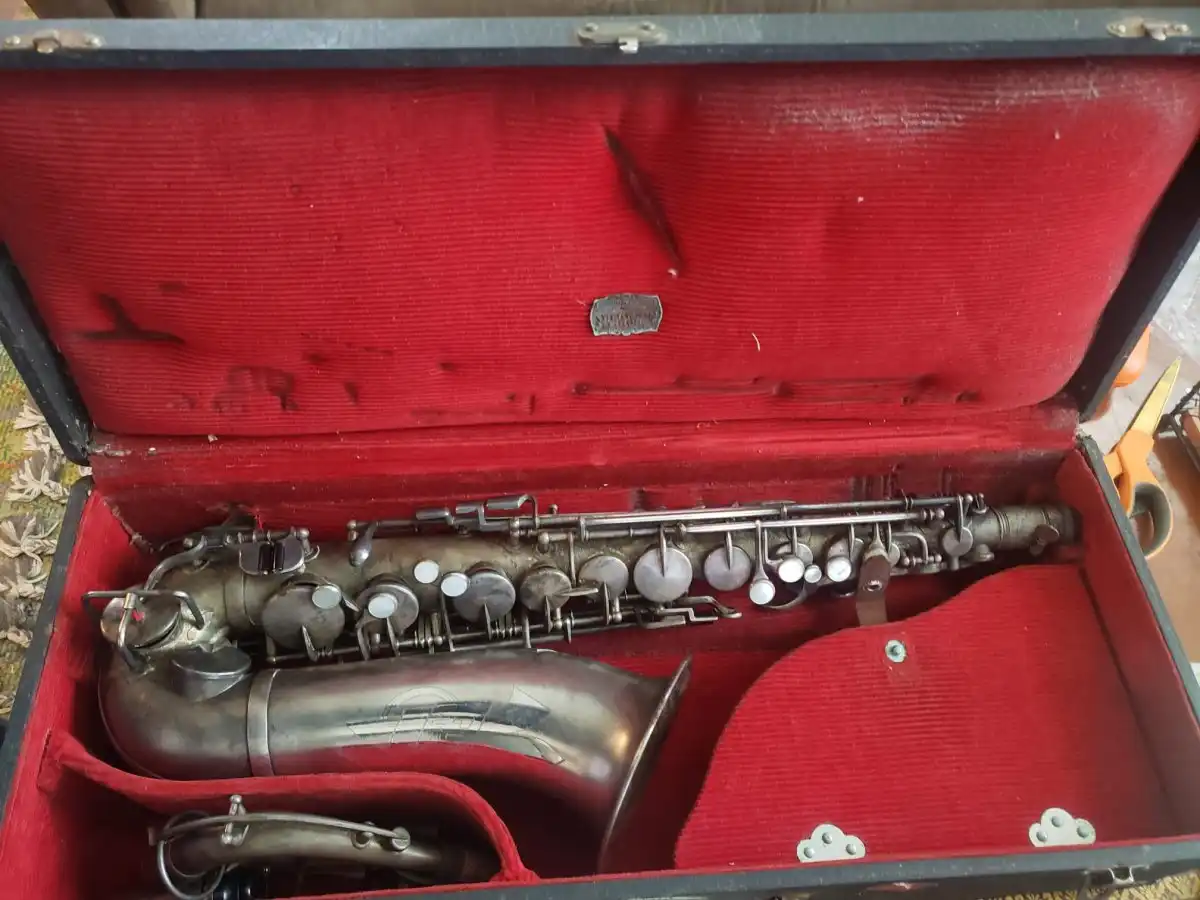
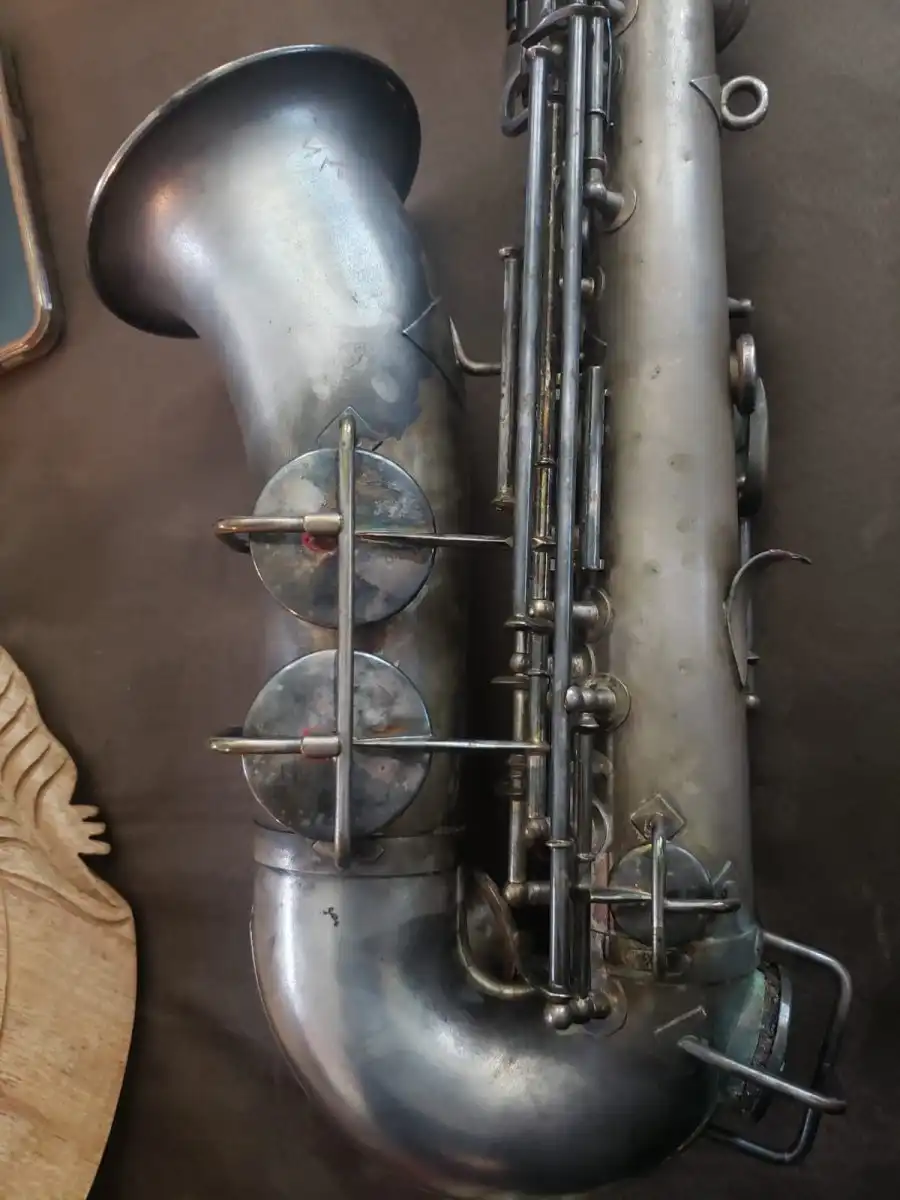
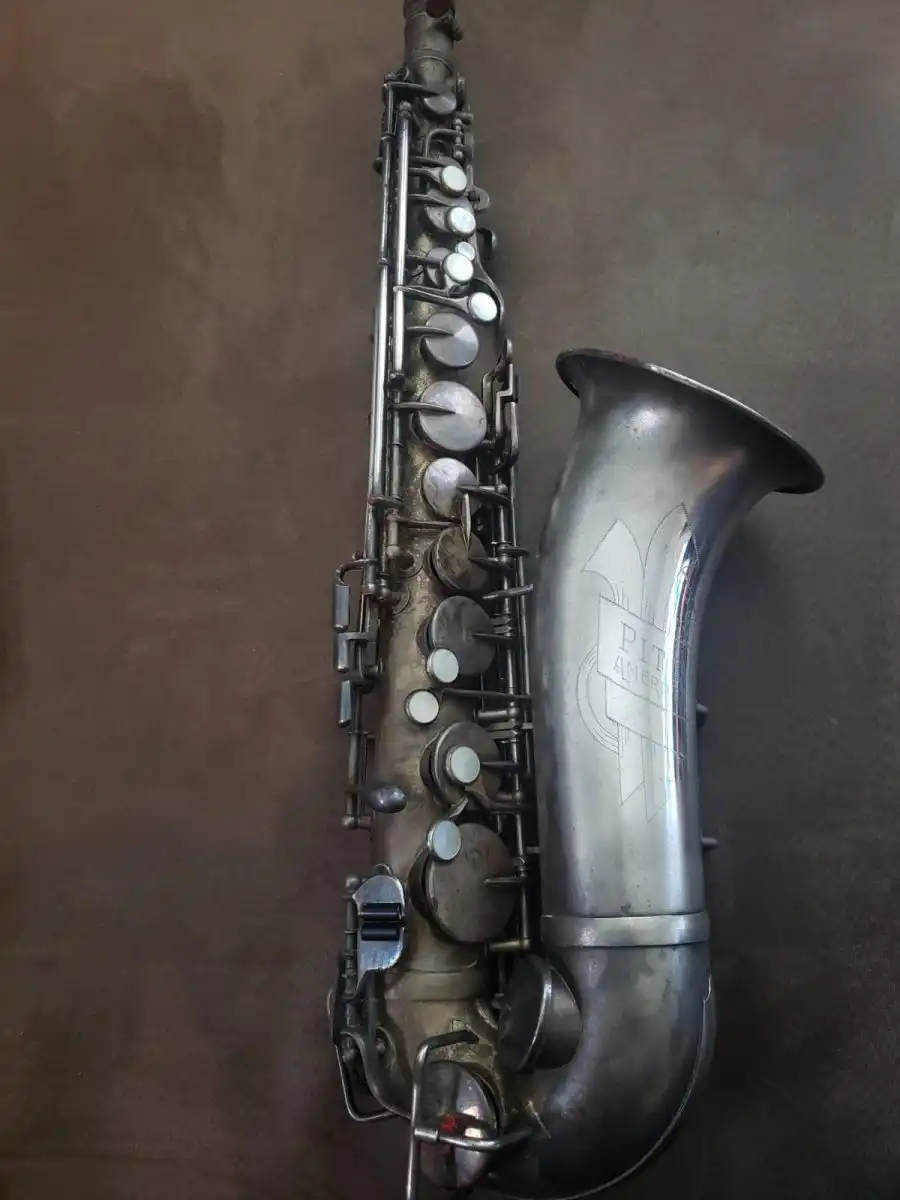
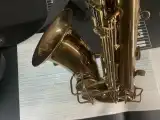
A friend of mine a has bought an old Pitt Alto Sax (images below). She is keen to learn about the history of make etc. I've had a look online, but can't find anything too useful so wondered if you all have come across this make?
Many thanks!
6c7d434f-570a-43f0-bb8a-cea43c437714.jpg
246de705-d730-4771-a5fd-63377a43a647.jpg
a991ae38-3f94-4938-b300-5196e848a0ce.jpg
 
Last edited by a moderator:
A friend of mine a has bought an old Pitt Tenor Sax (images below). She is keen to learn about the history of make etc. I've had a look online, but can't find anything too useful so wondered if you all have come across this make?
Back to topic.

Seems to be a saxophone that was built by H.N. White, Cleveland, Ohio, USA.

Probably a stencil. A stencil sax was made for an extern client/customer/purchaser. That could be a music shop, music publisher, mail order company, music instrument company that didn't made saxophones (like Gretsch, Olds ....) .... . A second line company was often owned and controlled by the same parent company as did they the the "real thing". H.N, White Company second line saxes were called "American Standard", "Gladiator", "Cleveland". Stencil and second line saxes became important for the instrument manufacturers. The could extend the life cycle of the tools, machines, old inventory ..... . It doesn't matter what you produce, the profit is always in the end of a product cycle.

H.N. White company made "King" saxes (named after a trombonist called Thomas King). "King Zephyr", "King Cleveand", King Zephyr Special", "King Super 20" were all saxes and brandnames owned and made by H.N. White in Cleveland Ohio. But the line between a second line sax and a stencil sax is not clear. Both second line and stencils saxes can be fine instruments.

Your friend's "Pitt American ... " is an interesting sax. I think saxes like old Kings, Martin, Conn, Beuscher, "first line", "second line" or "stencil" should be retained and be kept in an acceptable level based on the player's level/ambition. If you don't play the low tones; seal the low Bb, B and C# tone holes! I helped a friend to make his Amati stencil to sing better. We sealed the Bb, B tone holes and then we drilled small holes in the brass sheet metal that covered the tone holes. The Eb trill key on old saxes can be hard to deal with for a DIY person. It must seal properly. Like Low C#, G# the Eb trill is a closed key. Or is it a Eb vent key to help the sax to sing better?

Is a sax like "PITT American ..." a case for a well reputable saxophone tech or a DIY sax? If it's possible I would say DIY. You don't need soo many tools. I just had some pliers, screwdrivers, shellac, alcohol lamp, corks, felts, pads maybe some extra springs (flat or round) ..... . Of course with help from friends that were also into DIY works. I still mail Ferree's standard pads (4,0 mm or 4,7 mm thickness), cork. felts, springs ... to hobby/amatuer Blues and Rock & Roll saxophonists so they can keep on honking.

 
Last edited:
Vote:
Upvote 0
Well that explain why I didn't understand the old King DIY alto I tried to work on.

"...... and G sharp trill key in vogue at the time, the unique “open” G sharp pad. I’ve always considered this system to be a great idea, and have often wondered why it was not adopted by other makers. This system involves using a double set of pads actuated by the G key, one corresponding to the note G, the other to the note G sharp. This has two benefits: the player can leave the right hand keys depressed while using the left hand mechanism (think of a D arpeggio), and the intonation of the problematic note A is vastly improved."
Ahh, I see. That's different than I thought. Can't really tell if this horn has that without seeing the other side. I guess that type of G# would work like this?
 
Vote:
Upvote 0
...If you don't play the low tones; seal the low Bb, B and C# tone holes! I helped a friend to make his Amati stencil to sing better. We sealed the Bb, B tone holes and then we drilled small holes in the brass sheet metal that covered the tone holes....
Say WHAT?

Sounds like an awful long way round to avoid replacing a couple pads.
 
Vote:
Upvote 0
...The Eb trill key on old saxes can be hard to deal with for a DIY person. It must seal properly. Like Low C#, G# the Eb trill is a closed key. Or is it a Eb vent key to help the sax to sing better?
...
It's no more problematic than any other key that's closed remotely via linkage.

It is a normally OPEN key, closed by the middle finger of the RH. Sometimes lazy techs who don't want to fool with regulating it will flip the spring to the other side of the cradle to hold it closed. Which is a lot better than taking it off, throwing away the mechanism, soldering a penny over the tonehole, or even grinding the tone hole off and soldering a patch over it.

Anyone who can't get the fork Eb key regulated has no business messing with saxophones.
 
Vote:
Upvote 0
It is a normally OPEN key, closed by the middle finger of the RH.
Maybe we are not talking about the same key/thing. I mean the little key on Conn, Martin ... . Here is a picture of a Conn curved soprano. The key looks closed to me? You have more expierence, so I stand corrected. I will now preach that that little key should be open.
ebtrillkey.JPG
 
Vote:
Upvote 0
Say WHAT?

Sounds like an awful long way round to avoid replacing a couple pads.
The low Bb,B and C# key didn't work. Damage. So to replace the pads was not a move we even thought about. We were just curious to see if it would change the tone. From rh (lh edit by me) cluster it was just the G# key left.
 
Last edited:
Vote:
Upvote 0
It's no more problematic than any other key that's closed remotely via linkage.

It is a normally OPEN key, closed by the middle finger of the RH. Sometimes lazy techs who don't want to fool with regulating it will flip the spring to the other side of the cradle to hold it closed. Which is a lot better than taking it off, throwing away the mechanism, soldering a penny over the tonehole

Yeah it is..for a DIY fixer.

The trill lever key typically has very short or even non-existent key barrels (just a hole drilled through a key arm). Wear sets in rapidly - at which point it's all but impossible to regulate the mechanism without dialling in a degree of compromise. Either the trill key closes and the low E doesn't - or the E closes and the trill key doesn't.
The seemingly small amount of play in the the trill lever barrels translates into a significant gap at the pad face - and the only way to remove this is to take up the play in the lever key barrel(s). You can generally forget about swedging (because there's little or nothing to swedge), which just leaves peening as an option...and peening the key arms is a short-term bodge. The proper fix is to either fit an oversized rod screw or bush the lever keys barrels/arms. At which point you'll probably also need to deal with the inevitable slop in the stack pillars. And any wear in the trill cup key. And while you're there it's always worth levelling the trill key tonehole...which is often a particularly thankless task.
None of the above is typically an option for the average DIYer...and from what I've seen it's clearly too much effort for many 'professionals', who're quite content to gloss over the obvious leaks and declare the job "A good 'un".

I have no problem setting up the mech for players who want to use it; the problem comes when I tell them how much it's going to cost to make it work properly for a respectable amount of time - at which point most of them decide it's a pretty useless idea that's been badly implemented anyway. And they'd be right.
 
Vote:
Upvote 0
Maybe we are not talking about the same key/thing. I mean the little key on Conn, Martin ... . Here is a picture of a Conn curved soprano. The key looks closed to me? You have more expierence, so I stand corrected. I will now preach that that little key should be open.
View attachment 23053
As Stephen said, yours has been permanently closed, and rendered unusable, which is what most players of these vintage horns do. It’s normally open when left in an operational state. Have you not noticed that the fork Eb fingering on your horn didn’t work?
 
Vote:
Upvote 0
Yeah it is..for a DIY fixer.

The trill lever key typically has very short or even non-existent key barrels (just a hole drilled through a key arm). Wear sets in rapidly - at which point it's all but impossible to regulate the mechanism without dialling in a degree of compromise. Either the trill key closes and the low E doesn't - or the E closes and the trill key doesn't.
The seemingly small amount of play in the the trill lever barrels translates into a significant gap at the pad face - and the only way to remove this is to take up the play in the lever key barrel(s). You can generally forget about swedging (because there's little or nothing to swedge), which just leaves peening as an option...and peening the key arms is a short-term bodge. The proper fix is to either fit an oversized rod screw or bush the lever keys barrels/arms. At which point you'll probably also need to deal with the inevitable slop in the stack pillars. And any wear in the trill cup key. And while you're there it's always worth levelling the trill key tonehole...which is often a particularly thankless task.
None of the above is typically an option for the average DIYer...and from what I've seen it's clearly too much effort for many 'professionals', who're quite content to gloss over the obvious leaks and declare the job "A good 'un".

I have no problem setting up the mech for players who want to use it; the problem comes when I tell them how much it's going to cost to make it work properly for a respectable amount of time - at which point most of them decide it's a pretty useless idea that's been badly implemented anyway. And they'd be right.
Well, I've adjusted this key on a meaningful number of horns (but just my own, so obviously I have nowhere near the experience you do). Maybe 6 or 8 times. I've never had the least issue getting it into regulation.

I'll disagree on "useless" - it's the very best way to go from low C to Eb quickly, as in arpeggios and other patterns. I had to wean myself away from its use on baritone because I found myself trying to use the fingering on horns that didn't have it. For wee horns like alto and soprano it's not as helpful but for baritone and bass it's a finger saver.

I will say that the implementation of the fork Eb on the lower main stack as in Conn and King baritones, some Martin tenors, and a few others I can't think of at the moment, is definitely the superior way to lay out this mechanism. Plus it hides "under the radar" by being on the stack and techs just adjust it without seeing it as something to "fix" by taking off all the mechanics and throwing it away and grinding down the tone hole and soldering a big piece of brass sheet across, as I've seen.
 
Vote:
Upvote 0
I will say that the implementation of the fork Eb on the lower main stack as in Conn and King baritones, some Martin tenors, and a few others I can't think of at the moment, is definitely the superior way to lay out this mechanism. Plus it hides "under the radar" by being on the stack and techs just adjust it without seeing it as something to "fix" by taking off all the mechanics and throwing it away and grinding down the tone hole and soldering a big piece of brass sheet across, as I've seen.
I've come across a few variations that work reasonably well - such as that found on the old Hawkes horns, whereby the Eb pad sits atop the low D. I wouldn't go so far as to say the mechanism was 'slick' but it at least does away with flawed lever key arrangement.

I completely agree, though, that there's never a need to grind or hack parts in order to disable the mech - or to disable it in a way that can't easily be undone.
 
Vote:
Upvote 0
i just found a rebuilt Pitt American ( king stencil alto ) i assume it is about a 1925 HN white king ? hope it plays nice when it get here 🙂
 

Attachments

  • pitt american side view 2back besttt.webp
    pitt american side view 2back besttt.webp
    54.2 KB · : 413
  • pitt american mm 981 left bell brace.webp
    pitt american mm 981 left bell brace.webp
    90.3 KB · : 388
Vote:
Upvote 0
i just found a rebuilt Pitt American ( king stencil alto ) i assume it is about a 1925 HN white king ? hope it plays nice when it get here 🙂
This is a very old thread you just replied to, just fyi.

But your sax is from the 1950's, not 1920's...it is a King Clevelend stencil, Clevelands used a different serial # sequence than King/HNWhite horns had. Enjoy ! These are good saxes.
 
Vote:
Upvote 0
i just found a rebuilt Pitt American ( king stencil alto ) i assume it is about a 1925 HN white king ? hope it plays nice when it get here 🙂
Welcome to the Café. Looks like it was maintained. Hard to tell from minimal pictures. The soft bag / case is terrible for protection in shipping. If the listing says “playing condition” and it doesn’t. It’s likely taken a hit in transit.
With both bell keys on one side it dates after 1930 from that feature alone.
JayeNM knows these well. Go with 1950’s.
 
Vote:
Upvote 0

Social

New! Social Feeds

Look out for the navigation icon:

Follow CafeSaxophone

Latest Song of the Month

Trending

Forum statistics

Topics
32,045
Messages
577,834
Members
8,111
Latest member
Simonob
Back
Top Bottom