


Tech/maintenance Vise Advice

PiccoloPirate

Senior Member
Messages
1,162
Location
South Florida
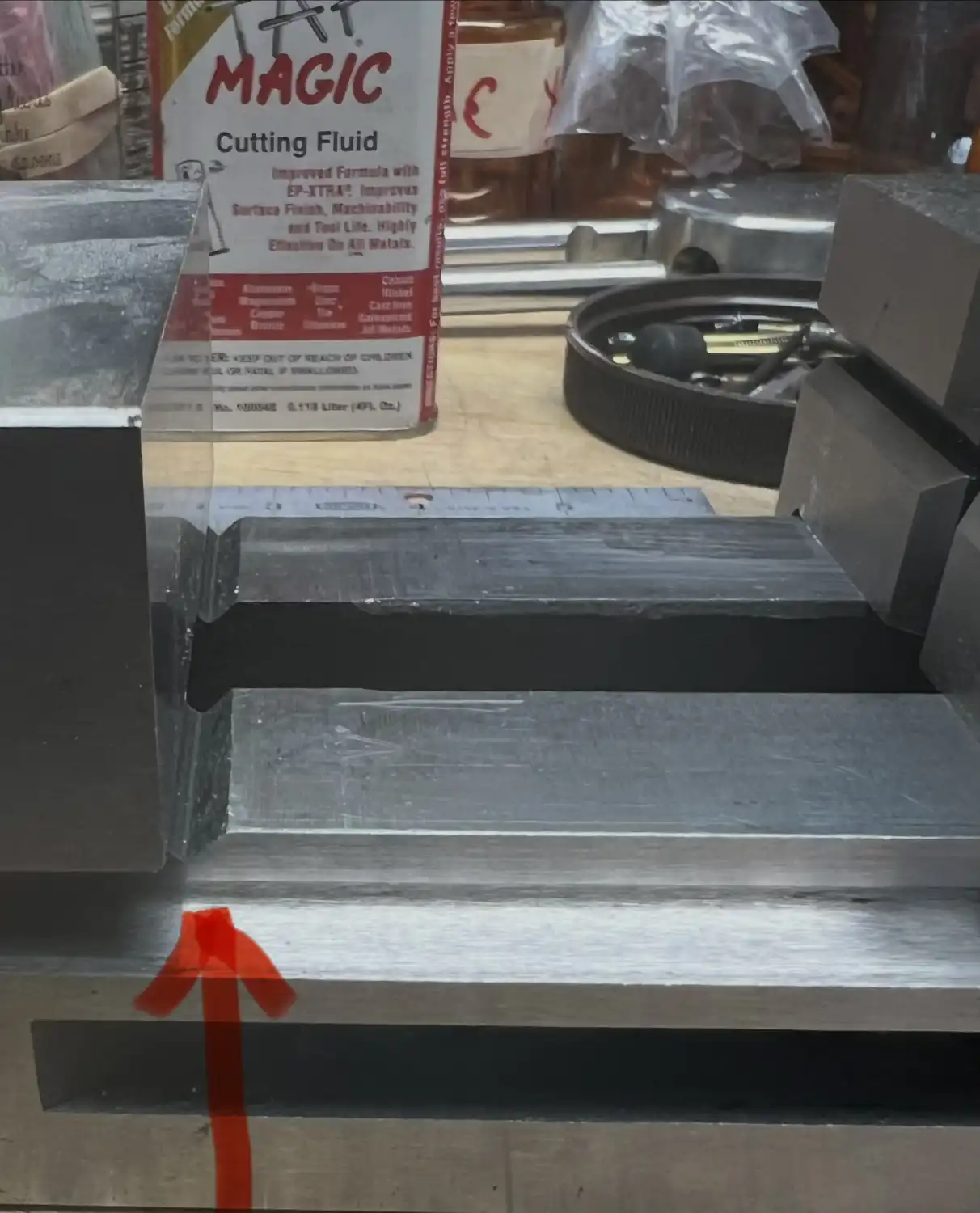
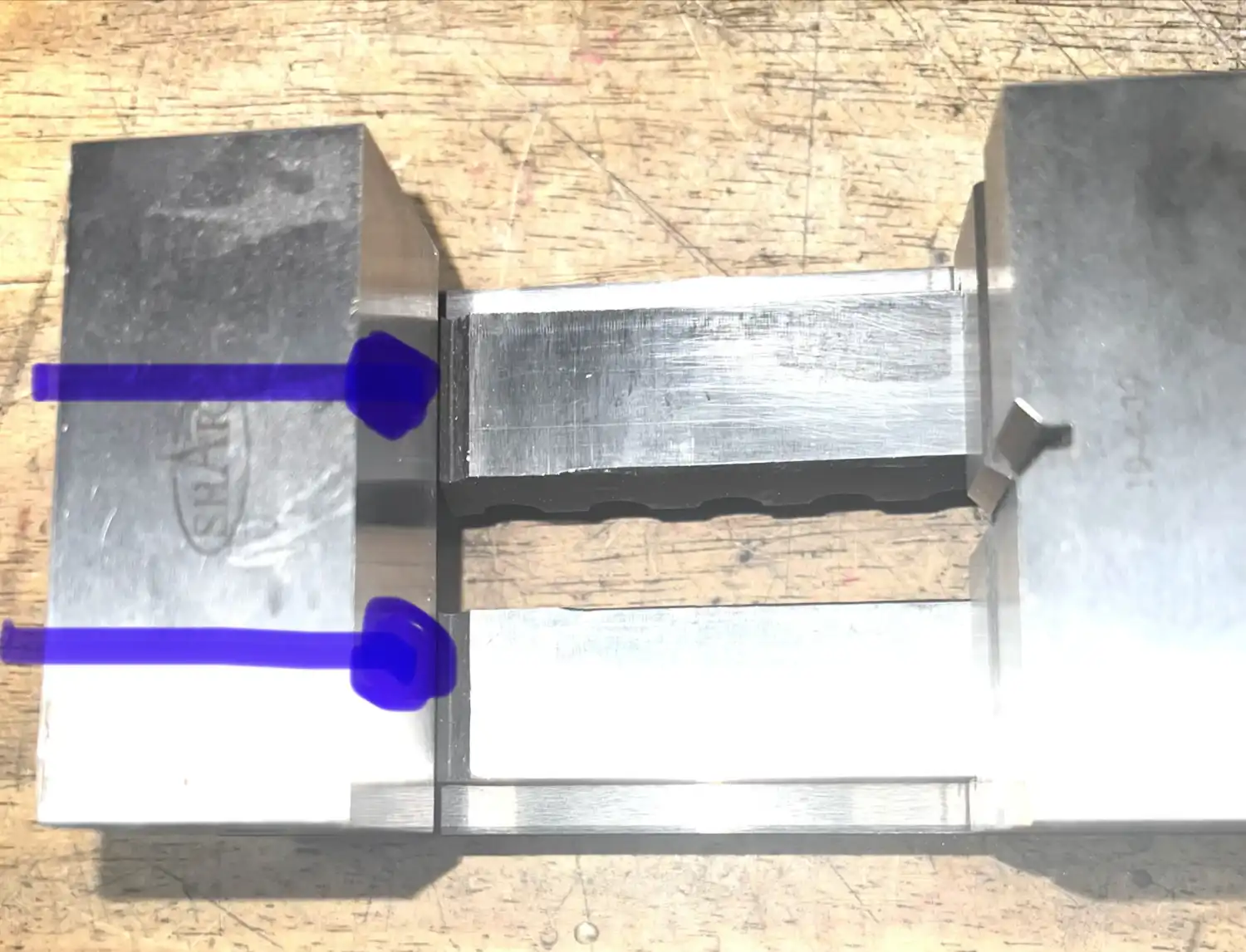
Picture of vise with V notch.
1. Why do some vises have that?
2. Not great for using parallels.

Thoughts for making something to allow use of parallels for milling.
Will be making small mounts for optics and other precision items, like metal bridges for string instruments, motor bike parts/mods, etc etc.

Might drill thru the rear block, from the back, make a metal plate, with counterbores, that is wider than the V notch and bolt it on when necessary.

Thicker parallels are an option, but they are not often used, like a parachute. 🙄

Thx
PP
IMG_7553.webp


FullSizeRender.webp
 
You're not going to like this - but if it were mine and I wanted to do what you want to do, I might clean it up, fill the notch with Milliput (epoxy putty) and file it back smooth with a (very) blunt file. That stuff is hard enough to take the small load your paralell will put on it, and you can knock it out easly if you ever want rid of it.

I filled a load of holes with that stuff in an arc across the table on my pillar drill, as one often finds especially when like mine it has been abused for a long time in a school. I could have taken it off and attempted to braze it; or drilled the holes through, tapped and screwed in plugs, or even made taper plugs - as it is, the surface is still flat a good few years on, and it took 15 mins.
 
...as to what it's there for - my understanding is that the rear jaw is (meant to be) bang-on perpendicular to the bottom of the base; the top of the base would hopefully be paralell to the bottom of the base; but you don't want any funny business in that bottom corner (bits of swarf, for instance) to mess up that 90° when the job goes in there. Hence the cut-away notch. Yeah, yeah, we all keep an old paintbush handy and sweep out all the swarf every time... 😳
 
^^^^
Thanks.
I did fill a groove like that on a different vise.
That allowed me to fit a fixture to hold the work above the vise jaws, and use a router bit with a top or bottom bearing.

Was again looking for a reason for that notch, in the base, and found this:
The notch is cut so that when the base is leveled, the grinding tool can make sure the base is flat along it's entire length, including that corner.

The little vise in the above picture, was made by a tool maker, and when I drilled the counterbore holes, for mounting to the mill, it ate up carbide drills and mills.
He must have hardened it to RC800. 😜
 
It's impossible to have a completely square sharp inside corner in machining. That notch is a machining relief, so that things that have a sharp square outside corner can fit fully flush against the bottom and the jaw. If I had designed that, I'd have tried to put the relief on the jaw, not on the base, for the exact reason noted - thin parallels will fall into the grinding relief notch.

I would be hesitant to fill it in and rely on the flatness of the newly filled-in surface. The real cure is to get thicker parallels, or to set that one parallel out from the jaw with a shim between it and the jaw (the shim doesn't have to be perfectly flat or parallel). The real, real cure was for the manufacturer of the vise to have put the relief on the jaw side so thin parallels won't drop into it.
 

Similar threads... or are they? Maybe not but they could be worth reading anyway 😀

New! Social Feeds

Look out for the navigation icon:

Follow CafeSaxophone

Trending

Latest Song of the Month

Forum statistics

Topics
32,034
Messages
576,708
Members
8,104
Latest member
saximo park
Back
Top Bottom