Playing the saxophone STOP improvising?... so says Jamie...

Suezanna is spot on with her comment about "not a way to show off". From the videos I've seen from Jamie he's of the school that plays "the changes" with cut and paste tired phrases rather than using opportunities to be truly improvising by developing your own melodic voice (spontaneously composing). Like 90%+ of today's jazz players he's out to impress with technique, that could say something, but seldom does. Granted it's better than aimlessly noodling, but his style (IMHO) only appeals to other jazzers striving to be the top technical player at the local open night jam.

The audience for this type of exhibition playing among the public is zip. Entertainment (the name of the game) is about giving to your audience... not just trying to take praise for your technical ability. If you've got nothing to say in your playing who wants to listen?... yea just other jazzers looking to pick up tips on being more technical and ignoring what an audience may respond to.

Jazz teaching like Jamie's (and others) is almost like a religious cloister. Not in touch with the public and just perpetuating a creed based on continuing some romantic idea of past jazz glories.

If you want an audience you've got to be communicating something.

This is today.
Well, I just listened to several of those tracks you just posted, and you yourself use an extremely consistent language (set of patterns, licks, approaches) in what you did on all those tracks.

So your own evidence makes it clear that to make useful solos that are actual music, the soloist develops a vocabulary and then employs it.

Even guys like Eric Dolphy or Albert Ayler had their own vocabulary; it just wasn't the bebop vocabulary.
 
I do think the language analogy is appropriate. It's not an exact analogy. But if you listen to the speech, or read the writing, of people who have a wide working vocabulary (and this isn't just words, it's phraseology, allusions to other material the reader's expected to know about, etc.) you'll find that it's a lot more rich, varied, and interesting than if you read the writing or listen to the speech of someone with an extremely limited working vocabulary in language. Consider - would you rather listen to Winston Churchill, Rowan Atkinson, or Franklin Roosevelt, or to a three year old? Which will be more effective at communicating, EVEN WHEN USING SIMPLE WORDS AND FORMS?

Don't get confused and think that, say, Hemingway when he used simple forms and simple words, was unsophisticated and unable to use more complex language. He made intentional choices to simplify his writing.

If you want to play in pretty much any form of improvised music, you need to learn the working vocabulary specific to that form. Otherwise it'll just sound like aimless noodling.
 
Well, I just listened to several of those tracks you just posted, and you yourself use an extremely consistent language (set of patterns, licks, approaches) in what you did on all those tracks.

So your own evidence makes it clear that to make useful solos that are actual music, the soloist develops a vocabulary and then employs it.

Even guys like Eric Dolphy or Albert Ayler had their own vocabulary; it just wasn't the bebop vocabulary.
Absolutely right! It's my sound though, and not the vocabulary of the 1950/60s! What a wonderful backhand compliment as that's exactly what every player should be striving for. You want to have what you play come from you and not be just copying the style of a single player or a style from some time in the past.

Recognizing a player's sound and vocabulary is what sets them apart. Being trained to have a singular period's copied vocabulary and copy someone else's sound makes you at best a tribute player (but can you play as well as they did!?). If that's what one wants to play, that's OK. Can a player eventually develop their own sound? Yes! However if a player doesn't at some point work on that and instead just plays and reinforces what they were taught, then it's unlikely. You are or become what you play/practice.

That's the reason I've continually promoted the concept of widening what one listens to and plays. Instead of always copying, especially form one period/genre, explore a variety of music. Take on a tune you've never heard... sing what you would play, then see if you can play what you sang. That's then your voice! However if you're very ingrained in a single sound and way to interact, then it may not be your voice, but instead more like "channeling" an admired player or style rather than coming from you. A diet of a single style/genre/period needs to be broadened. If you have wide exposure to a large number of styles/techniques/vocabularies, then you're not trying to force a size 12 foot into a size 6 shoe. You have a huge number of sounds and choices that can reflect more of what YOU want to hear.

My rants have NOT been about "there should be no vocabulary". It's that there isn't just one sax vocabulary, however that's often what's taught, and it's usually (once again) the 1950/60s. Should a sax player be aware of and learn the style of playing from the 1950/60s? Sure! Why not! You can also hang out there forever. However if you wish to become a professional, or at least play in other genres, then you need to broaden your horizons.

Pete Thomas (fearless leader!) has often told his story how he was taught (like many) to strictly play in a jazz style. However when he went out into the world to be a professional player nearly all of his work was not jazz and those who hired him definitely did NOT want players who just spun jazz licks. Ask him (nicely) to retell it as it's worth repeating!
 
Last edited:
I do think the language analogy is appropriate. It's not an exact analogy. But if you listen to the speech, or read the writing, of people who have a wide working vocabulary (and this isn't just words, it's phraseology, allusions to other material the reader's expected to know about, etc.) you'll find that it's a lot more rich, varied, and interesting than if you read the writing or listen to the speech of someone with an extremely limited working vocabulary in language. Consider - would you rather listen to Winston Churchill, Rowan Atkinson, or Franklin Roosevelt, or to a three year old? Which will be more effective at communicating, EVEN WHEN USING SIMPLE WORDS AND FORMS?

Don't get confused and think that, say, Hemingway when he used simple forms and simple words, was unsophisticated and unable to use more complex language. He made intentional choices to simplify his writing.

If you want to play in pretty much any form of improvised music, you need to learn the working vocabulary specific to that form. Otherwise it'll just sound like aimless noodling.
It seems there is an unfortunate misconception in trying to continually make a specific language's "vocabulary" fit an argument regarding music. There are many languages in the same way there are many different genres of music. The sax does not just = jazz. The sax can play in any style of music. There is not not just one vocabulary. An Indian "classical" sax player doesn't learn 1950/60s jazz vocabulary. They have their own Carnatic vocabulary. Same is true for Balkan sax players playing traditional festival/wedding music. These are also improvisational styles that have nothing in common with Jazz. Closer to home we have pop, rock, ballads, metal, country, blue grass, soul, reggae, etc. They each have different styles and requirements that are not well served by a 1950/60s style sax vocabulary.

Those of you who have had any experience in any of those other genres will know that if you wish to join a rock, pop, reggae, or other contemporary style band, you seldom are given a chart. What's expected of players is to join and follow whoever comes up with an song/tune's idea and develop their own part. It's not a "standard" where the head is played then everyone takes turns trying to show off their technical prowess.

You're instead developing your own part in this via composing (usually initially improvisation, but not in a jazz sense) and it's often backing, rhythm and harmonies that are played. How well are players prepared for this if they have only played jazz "standards"? The backing tracks (Abersold and the like, TOTM, etc.) are all about the sax being the soloist. Sorry... that's not reality! Knowing how to come up with backings, harmony, rhythmic phrases, etc. are the stock and trade of most working contemporary music professionals. Are there some solos sometimes? Sure! However how often would a 1950/60s style of improvisation fit in contemporary music?

If you've listened to all of the tracks posted, or gone into the 300 tracks on this site, you'd note that there are many different genres. None of it is about playing standards. This is the real world of music that players can be a part... or not. Once again ask Pete about what's out there in the real world of professional music.
 
Last edited:
Pete Thomas (fearless leader!) has often told his story how he was taught (like many) to strictly play in a jazz style.
While it would have been great to prepare the student for the outside world, in their defence it was a jazz course (and only that).

I was told to **** off by the course leader as I was mainly playing in the classical ensembles (rather than jazz ones). My clarinet prof was great, as were many of the lecturers there, but not all.
I get where you're coming from. Ideally a wide exposure to all sorts of music should not only be tolerated, but a part of anyone's learning experience. I don't think most experienced professional players (like you) are wearing blinkers when it comes to how broad one's exposure can or should be or that a specific instrument can only be played in a single way (vocabulary).
 
Yeah. I did leave college 36 years ago and while it still exists today it has a purpose-built building and hopefully a far more apt curriculum.

The buildings that the college used to reside in are repurposed as a pub and the city museum with re-modelled interiors 😢

And as a “ jobbing musician “ I might add that soloing is last on the list. Reading is high. And as you’ve pointed out previously, situations where there is nothing and you need to fashion a part yourself.

But that’s just my life. Often, it’s also about copying the original solo on a “known” track - though some stars are happy for you to break the mould - so long as they dig it!

I also don’t mind it, as it’s usually in the Rock arena and 90% of the solos are better than I could have come up with.
 
Last edited:
I was raised in a family that valued education highly. It took me 5 years and 3 colleges to figure out that I should have just spent all that time (and money!) in night clubs. Not saying I didn’t learn anything in school, but musically, from a professional standpoint, it was useless. Private study, sure - for flute and improvisation, I had already done enough on clarinet. Classroom not so much. The big band at a couple places was cool though.

Regarding jazz and saxophone, while it’s true that there is a lot of non-jazz music being played on sax, if jazz had never existed I wonder if the saxophone would be as popular as it is today. It probably wouldn’t have made its way into rock and pop (though arguably rock and pop might not exist either). I think jazz and saxophone are inextricably linked by history. But I’m prejudiced - I happen to believe that jazz is the most perfect musical style!
 
Pete Thomas (fearless leader!) has often told his story how he was taught (like many) to strictly play in a jazz style. However when he went out into the world to be a professional player nearly all of his work was not jazz and those who hired him definitely did NOT want players who just spun jazz licks. Ask him (nicely) to retell it as it's worth repeating!
I've heard people say that learning jazz is good for professional career because it's that much more complex, so if you can play jazz you can therefore play, rock or R&B or pop. The truth is very different and it's a bit of a condescending attitude as if the complexity associated means you can therefore play something simpler, as if pop or rock is less clever.

So that story Wade tells comes from me leaving college and "hitting the big time" and getting booked for sessions but then finding my playing was wrong for the genre, too jazzy. I adapted on the spot luckily on one session and the producer went on to hire me for more work.

But I even saw it in this thread when the term diatonic was used in regard to Wade’s playing and I thought at first it came across as if it meant it was somehow less than worthy than music that wasn’t diatonic. But on reflection I don’t think it was actually meant like that.
There IS a sense that if you are up to speed on jazz, you can play rock and pop - a sense that's not actually shared by actual high-end jazz players. But "capable of doing something more complex" does NOT necessarily translate to "capable of doing this other, less complex thing".

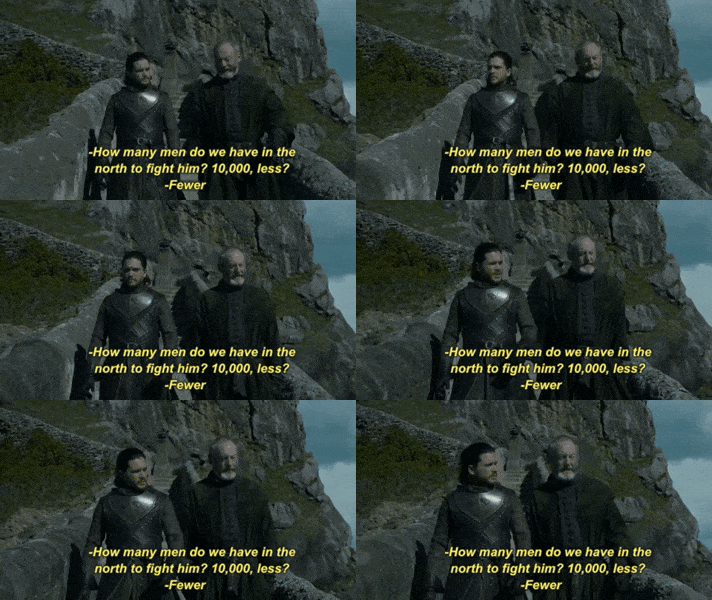
Honestly the whole thing is kind of hard for me to understand; but I grew up with rock and roll, learned several different styles of jazz, took up upright bass and moved into bluegrass and country; and each one of those was its own challenge. When the music calls for me to play a bebop sax solo, I play a bebop sax solo; when it calls for me to play a rock and roll sax solo, that's what I play; when it calls for me to play roots and fifths on a three-chord country western song, that's what I play. Fewer notes doesn't actually make it easier. Sometimes it makes it harder.
 
Fewer notes doesn't actually make it easier
Of course fewer notes are much harder than less notes.🙂

Ser Davos Jon Snow GIF by BuzzFeed
 
But I even saw it in this thread when the term diatonic was used in regard to Wade’s playing and I thought at first it came across as if it meant it was somehow less than worthy than music that wasn’t diatonic. But on reflection I don’t think it was actually meant like that.
I was referring to the patterns and playing I heard being very much from the same diatonic major scale throughout, with very few large intervals, mostly stepwise playing like a nursery rhyhme; nothing pentatonic, nothing bluesy, both of which can be argued to be simpler scales as they have fewer notes, for example. Both of those sounds are very prevalent in pop and rock and so to eschew their language, to me, would be odd.

And whilst there is absolutely nothing wrong with playing diatonically in jazz either, one thing that occurs often in a standard is shifting of key centres. Another player in an online group I' a member of was bemoaning the lack of key signature on sheet music in Charlie Parker's omnibook for standards like Ornithology, as they (in their words) wanted to be able to play diatonically through the tune. In that case the key signature of E (for Eb transpostion) is a red herring; three bars in to the tune you're in E minor, five bars in a shift to D and so on.

To successfully play diatonically through that chart, you can't just play an E major scale, you have to move with those tonal shifts.

It would be more useful if the track you're talking about was referred to so that we're dealing with specifics. If what was played fits, then where's the problem? If it wasn't jazzy or complex the question arises whether that would have been appropriate. The genre designation is assigned by the person who played the template (not me) and is often just stated to be jazz, when it really isn't. Likewise other templates stating "World Music" are equally off. The site just wants something to be stated, but it's not actually relevant. This is also referred to in the 300 tracks with roughly half being inaccurate genre descriptions.

The essence of all of these is to be adding to tracks in a manner that's appropriate for what it sounds like. There is no chart, so changes are heard, not read. It's improvisation by ear. The people who add to these tracks all have their own interpretations with some being very subtle, and others quite blatant and (to my ears) obliterating what's there.

My personal attitude is to be "inside the music" and either spinning melodies (if there isn't any) or making the music sound as good as possible though backing, harmonies, counterpoint, etc. I'm certainly open to feedback or criticism. However an observation like "playing diatonically" without reference to a specific track doesn't say anything. Were there changes that should have been played? Which track is it?
 
Last edited:
Reminds me of when a girlfriend came to one of my gigs. I asked what she thought of the band and she wasn’t too impressed, said it sounded a bit like we were making it up as we went along.

The thing you miss, Wade, is to develop ideas and learn to create new ones, you have to learn to hear and "copy paste" first.

It's why nursery rhymes are the entry point to learning music: they have very easy to understand building blocks to create music.

If you take the analogy of language, you learn tyour first one by copying. It's a fundamental part of how humans learn.

Your advocated approach is to eschew all that and just make it up yourself, here's an example of that approqch when applied to language:

"Church table loop splomonge very and pickle doom jdhfi fixation whisk."

Now you may want to write something esoteric, but if you don't understand the language in the first place, you can't go outside the box effectively. It's just nonsense.

But more so than that, and why it's dull conversing with you, is that this has all been said before. But your agenda for anti bebop/anti jazz means you say the same thing every time without taking anything on board. It's akin to listening to Nicola Sturgeon interview, no matter the topic it would end, rightly or wrongly with "and that's why an independent Scotland is needed!"

What, to me, makes improvising worthwhile for a listener, is if the improvisation can fill a musical meaning that complements the song. If improvising just remains a trick and a stunt to the listener, it has failed its purpose. The good thing, is that that meaning is interpreted differently from listener to listener. Some want technique and equilibristic instrument handling, some want a tonal and chordal expansion, while some want melodic inventiveness and development.

As a performer you can't, and to an extent should not, adapt to the listener's demands and wishes, outspoken or not, but it is important for any improvising musician to be reminded that he/she ultimately improvises for the listener and the listener's experience of the music as a whole. Of course without loosing individuality, personality and integrity, but to disregard the over all musical experience for the listener, often comes out no good and may be why music with much improvisation has lost in popularity.

A personal improvisation that highten and expand a song or a piece, can - IMO - make improvisation a real boost to any music, regardless of how technically brilliant or tonally advanced it is. That skill and understanding is - also IMO - what separates listenable improvisers from tedious shoegazers. The best improvisers I've played with, are those that easily and readily can adapt their improvising to fit, suit, enhance, expand and augment the music they improvise in and from, regardless of what technical level they decide to use in the moment.

So: IMO it's sometimes suitable to play jibberish, sometimes it's suitable to make it sound "made up as I went along", sometimes it's suitable to improvise so it doesn't sound improvised and sometimes it's suitable to always end in a "predetermined" way like Sturgeon (like the fish?), but to get stuck in one specific modus, is to me tone deaf (intended!) and tends to get boring and aloof.
 
Last edited:

Social

New! Social Feeds

Look out for the navigation icon:

Follow CafeSaxophone

Latest Song of the Month

Trending

Forum statistics

Topics
32,063
Messages
578,431
Members
8,130
Latest member
tommyliehe
Back
Top Bottom