jbtsax
R.I.P. in memoriam 1947 - 2023
- Messages
- 8,985
- Location
- Beautiful Springville, Utah USA
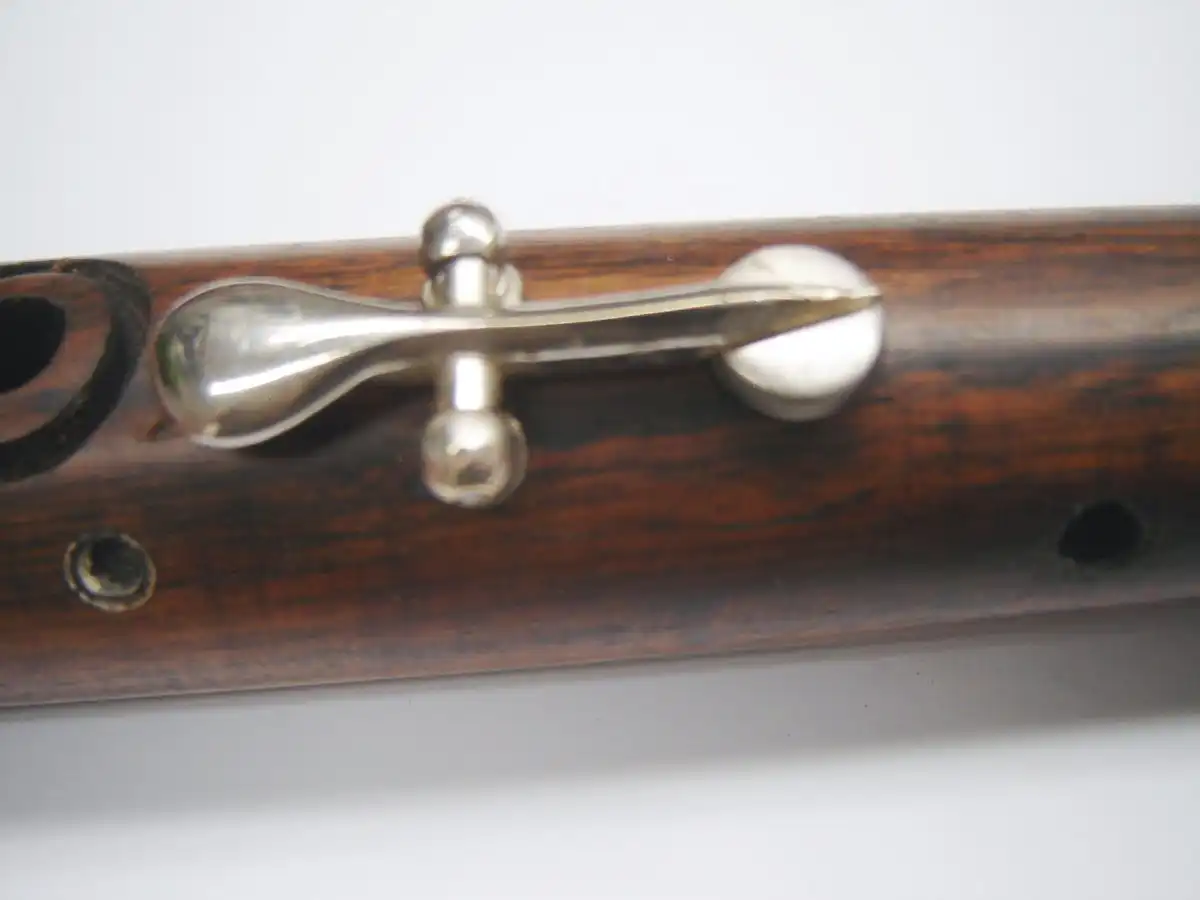
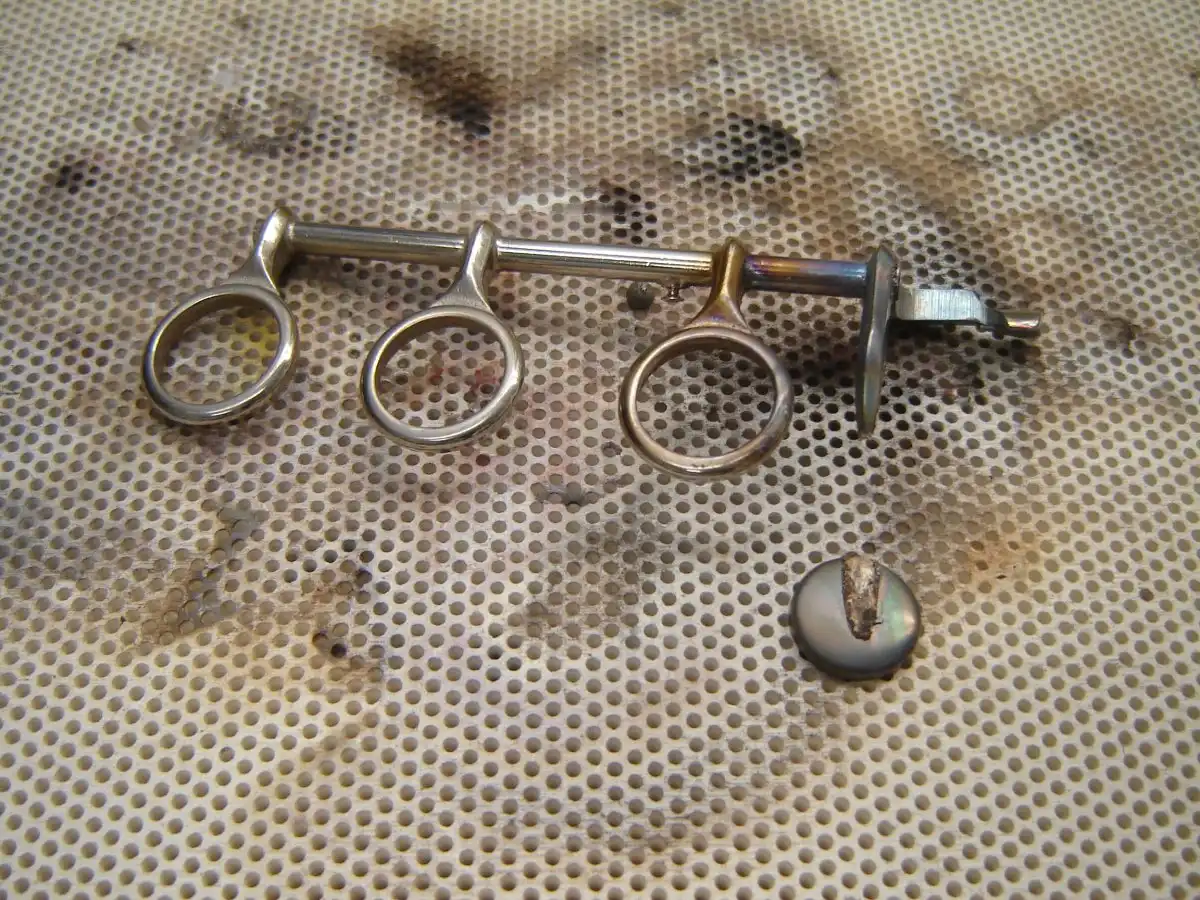
Here are a few more photos showing the key removed from the arm, and the finished key. As you can see, there is quite a bit of "finishing" involved.
I brought this up on the other thread a long time ago. David‘s got it covered. Still a great question.A random thought wandered through my mind as they so frequently do, a sax like this might be dangerous for anyone with a pacemaker.
Any other similar problems less serious, credit card or phone in pocket .....?
So a replacement pad would be a simple magnetic swapA 10mm diameter centre of each key cup would be left to glue the magnet to. This would be better than trying to glue the magnet direct to the 3mm wide key arm. Key touches and any other utilised cup areas would add to the centre 10mm.
In manufacture the key cup would change to "10mm pad base."
These are neodymium strong magnets, each with a 1.2kg pull. A severe jolting of my prototype (I just checked) displaces none of them.
I tried dropping a single test key, on the key cup edge, onto hard ground. Over 3 feet height the pad dislodged.
Dropping a sax over 3ft is likely to cause other issues.
If pads "falling out" is a real concern there is a way of securing them whilst retaining their self-levelling abilities. This would add to the cost so I may wait until someone falls off a stage and complains before adding this as an option.
They would still not need to be locked into place after finding their level against the tone hole.
Bear in mind this is experimental. I may cut away a few keys, decide it won't work, and shelve the idea.
I bought the cheap Windcraft 1 for £40 to mutilate... but I quite like it!
I'll try out on the spare keys Jonf is very kindly donating before killing off any complete horns.

Think of the Keilwerth adjustable palm keys. It is a feature that makes the saxophone more adjustable, but it didn't spread to other brands as it was no game changing feature.Is that a feature folks would like?
I can then glue a 10mm diameter magnet direct to the key arm rather than to the remnant of cup.
If you remove the keycup won't there be little to keep the pad in place?
Doesn't quite seem consistent?A 10mm diameter centre of each key cup would be left to glue the magnet to.
Evolution!Doesn't quite seem consistent?
Revolution... in pad design, and by all the traditionalists and woodwind repairers!Evolution!
I meant evolution in the design process as a consequence of the discussions...Revolution... in pad design, and by all the traditionalists and woodwind repairers!
If it ain't broke...