Theory & Impro Question:How do you play C/E chords?

I would assume we're thinking of a tonic or dominant pedal... Or, was it a reference to our transatlantic cousins having problems doubling the consonant in constructing the present participle of various verbs?
The pre-chorus of Moments Notice immediately came to my mind. I don’t think they’re limited to just tonic and dominant.
 
Playing a pedal tone in the bass, a single note repeated. Usually the root of the chord, but if you have F maj7/A you'd probably play the repeated low A in the bass. Often done on the offbeats for emphasis.
In a standard I IV V 12bar the bass can hang onto that for 8 bars until it goes to the V, working with the drummer to build tension. Quite effective.
 
A pedal can be on any note, but generally tends to be on the tonic or dominant.
I’m still not following. In my example, it is neither. And that seems to be the rule rather than the exception. If it’s a tonic, it ceases to be a pedal point and just becomes the root just like in any other chord. Can you give some examples in jazz that are limited to tonic and dominant?
 
Last edited:
I’m still not following. In my example, it is neither. And that seems to be the rule rather than the exception. If it’s a tonic, it ceases to be a pedal point and just becomes the root just like in any other chord. Can you give some examples in jazz that are limited to tonic and dominant?
I was quoting from general music theory not from jazz specifically. In standard composition theory, a pedal is a note held usually over a number of bars whilst the harmony moves around it. The most common notes to be held are the tonic or the dominant, when it is referred to as a 'tonic pedal' or a 'dominant pedal'. It gets its name 'pedal' because the common use of it was to use a note from the pedal board of a pipe organ, so the organist was put his foot on the given note and it would stay there whilst they played the manuals. Other notes can be used, but certainly in classical music, they are much less common. In orchestral music, it is often the job of the timpanist to play the pedal.
 
I was quoting from general music theory not from jazz specifically. In standard composition theory, a pedal is a note held usually over a number of bars whilst the harmony moves around it. The most common notes to be held are the tonic or the dominant, when it is referred to as a 'tonic pedal' or a 'dominant pedal'. It gets its name 'pedal' because the common use of it was to use a note from the pedal board of a pipe organ, so the organist was put his foot on the given note and it would stay there whilst they played the manuals. Other notes can be used, but certainly in classical music, they are much less common. In orchestral music, it is often the job of the timpanist to play the pedal.
Thanks, that’s helpful. It’s the tonic or dominant of the whole tune, i.e. the key signature, not of the harmony that’s moving around it. That makes more sense.
 
Hi
As a soloist like us good saxophone players I'm often presented with a chord thats over another chord. Im looking at a chord sequence that has a bar with FM7/A and C/E.

But what am I thinking? Am I thinking FM7 followed by C... or A followed by E.

And backup theory would also be helpful!

Many thanks
You can think both or either. I'm not sure of the setting to these chords and the key of the tune but depending on those variables, it would affect if I use a Bb or B while improvising over that measure.
 
Then surely it would be written as C7/E.
I opened my Omnibook to a random page and saw the following played on a C chord - maj 7, dom 7, 6, #5, #11, 11, 9, #9, b9. Then I played those phrases myself against a C chord, and they all sounded great. So I don't think the changes necessarily have to reflect every possible extension/alteration that a soloist might play. It's all about context.

In any case, we've already established that slash chords are simply a way for the composer to specify a particular bass line. It's of very little use to an improvisor unless he/she wants to mirror the bass line.
 
Last edited:
...slash chords are simply a way for the composer to specify a particular bass line. It's of very little use to an improvisor unless he/she wants to mirror the bass line.
Which can be helpful at times - for example, use the bass note under the slash as a center for what you're playing. This can work really well (but not constantly) for those places where you've got a steadily descending bass line.
 
A V chord doesn't have to have the b7 in it always........
No but I'd say any style of music that has harmony sophisticated enough to have major 7s, then the dominant would never be a plain triad. In other words, you may get a just a triad in some very simple pop or folk music, but in that case you wouldn't have a major 7 - either played or shown in c hord symbols.


Thanks, that’s helpful. It’s the tonic or dominant of the whole tune, i.e. the key signature, not of the harmony that’s moving around it. That makes more sense.
Yes. A pedal applies to several chords, and when you refer to a pedal as dominant or tonic (which probably are the most common pedals) then that refers to the key of the tune or the current key center if the tune has more than one.

Generally the point of a pedal is that it starts being a chord tone (either tonic or an inversion) and stays throughout some chord changes - some of which may not have that as a chord tone hence are dissonant. But the repetition of the bass note allows it to make sense in that in spite of the non chord note it serves a harmonic function of building and then ultimately releasing tension.

BUT...all intersting stuff but the thread has digressed a bit from slash chords to general harmony.
 
No but I'd say any style of music that has harmony sophisticated enough to have major 7s, then the dominant would never be a plain triad. In other words, you may get a just a triad in some very simple pop or folk music, but in that case you wouldn't have a major 7 - either played or shown in c hord symbols.

Yes, that is probably true. I didn't think about that. Thanks.
 
Oh never mind. I decided to stop piling on.
Thanks. I am now convinced that it is something that one will never encounter.
MmExamples1.webp
 
Now that we've got that sorted, how about these lower and upper case Roman numerals. Just kidding. Please don't 😉
I think you may have missed the last 3 centuries, Colin.


I think you may have missed the last 3 centuries, Colin.
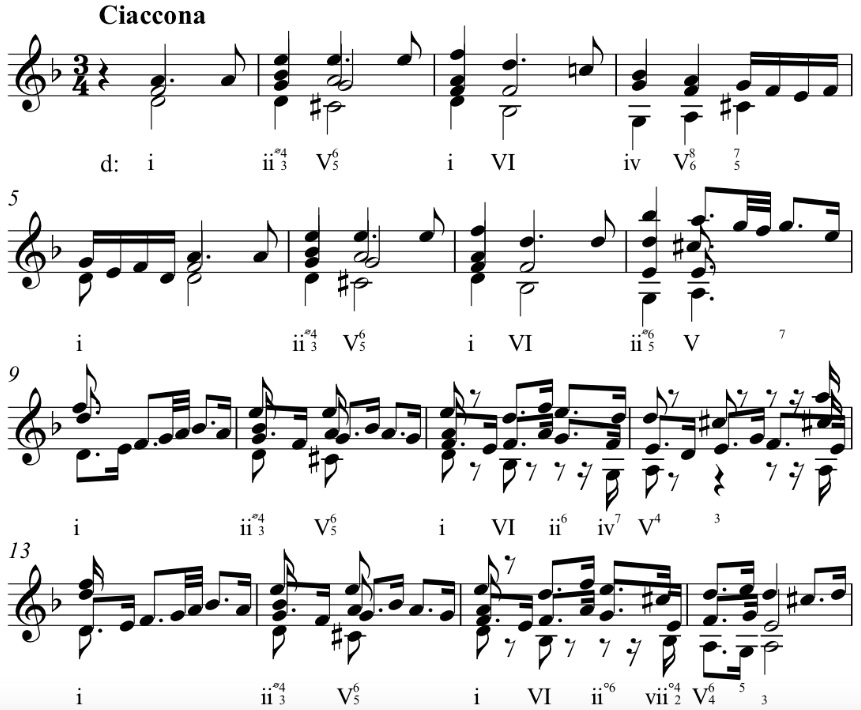
Historically: It would seem that Bach didn't (couldn't have) used Roman numerals...

Wiki says
The earliest usage of Roman numerals may be found in the first volume of Johann Kirnberger's Die Kunst des reinen Satzes in 1774
And
The Partita in D minor for solo violin (BWV 1004) by Johann Sebastian Bach was written between 1717 and 1720
Figured base, however...
 
Last edited:
Thanks. I am now convinced that it is something that one will never encounter.
View attachment 19256
Yes, Major 7th chords using capital M, as you've underlined in those lead sheets, are seen freaking everywhere. We all know that! What neither I nor any actual performing musicians who've commented here have ever seen, in the real world, are any of those weird symbols like

CMM7, sometimes C7M)
CMm7
Cmm7
 

Social

New! Social Feeds

Look out for the navigation icon:

Follow CafeSaxophone

Latest Song of the Month

Trending

Forum statistics

Topics
32,079
Messages
578,727
Members
8,136
Latest member
peterdehelegrote
Back
Top Bottom