
• Maintenance

    We apologise for the closure today. We are now back online however it was necessary to roll back the database to an earlier time so some of today's posts have been lost. This may or may not be temporary but we'll keep you informed of our progrsss in resolving this.


    Please don't panic - just take deeep breaths or go and practice.

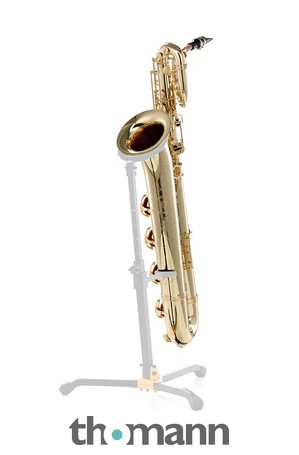
Saxophones Low Bb vs low A baritones.

I do everything you just described, as I have been since I went into biz in 2003... although I give more cred to fellow players opinions than you seem to.

How one can minimize the impressions of actual owners and players who are often likely better players than you or I, is curious to me. I do agree most players have little clue about build precision and quality, nor would they be able to recognize things that are wanting in those categories. But they can certainly give valid feedback on tonality, intonation, ergos, key response and blowing response.

Those aspects are worth 'giving some heed', imho...

But everything you wrote fails to address this question - what if you have never had the model cross your bench ? Then what do you go on ? All one CAN go on are the experiences of those players who have tried the brand. Yes, it's loose, but it's something.
That 'something' begins to become 'more something' if the feedback comes back two or three years into owning and playing the model. Because now additional info, germane info, is being added.
How's it holding up ? How many visits to tech have you had to make in that time span ? Etc.

Now back to the thread subject of baritones...I DO note that Thomann's cheapest low A is significantly cheaper than their cheapest Low Bb. Might this suggest two different factories ? Which might suggest the Low Bb may not share some of the reported qualities of their low A or their other budgety-priced house brand horns?
We can speculate that might be so.

But sans reviews, both player and tech, of that actual current offering...and I literally mean THAT model, THAT voice of horn...it would be a bit of a leap of faith to say their Low Bb sits on the terra firma of Eastman's or Keilwerth's, imho.
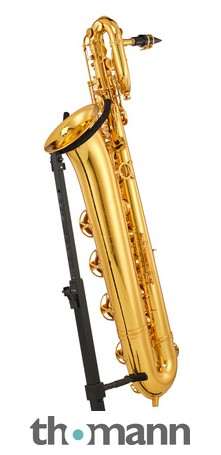
Just for the record: The Thomann TBS 150 (1900€ - China) is a complete different instrument compared to the Thoman BariPro (3700€ - Taiwan):

Different factory, country of origin etc. Thomann is a trader with several lines, not a builder.
Their LowJazz Model to low Bb (also 3700€) should be comparable to the BariPro in built quality. But the TBS 150 and and the LowJazz are potatoes and oranges.
I played the cheap Thomann Model and it's not bad for the money I would think if you expect an ok chinese saxophone. I also playtested a Buffet 400 which is said to be the same instrument as the Thomann BariPro - completely different and much better. To judge the complete Thomann line from testing one of their instruments is rather pointless I think.

PS: I wonder why nobody quoted or linked this review here 🙂
 
I have a tough time justifying buying a Baritone these days but! I just missed a Jupiter JBS893 pristine for $1,500.00 to fill out my set of SAT. Only 500 made one will show up eventually.

"The JBS-893 Generation (Early 2000s): This was the definitive "Artist Series" baritone. It was highly distinct because it paired a solid sterling silver neck with a silver-plated brass body and gold-lacquered keys. It included a low A key, metal tone boosters, and fully articulated key work. It was produced in smaller quantities because silver-plated, sterling-necked baritones represent a highly niche, expensive slice of the market."

Few SBA's so they go for large collector type money.
Not sure how many Bass saxophones are made but fewer than SBA's were built. .

This is from Reverb = "An original silver-plated Low Bb Selmer Super Balanced Action (SBA) baritone is an exceptionally rare collector's instrument, typically commanding between $12,500 USD and $16,000+ USD (approx. $17,300 to $22,200+ CAD) if it features its original plating."
My "Dreaming" price?

Production SBA = "500 each for baritones and sopranos. Now the baritones introduced their very first Low A baritones in the Super Action. There were only 180 Low A baritones"

So only 320 Low,Bb's SBA Baritones made and few were Silver plate.
 
Last edited:
The low Bb baritone had a huge impact in Rock & Roll and R&B back in 50's and 60's. The bari made the sound bigger. Maybe a low A bari could do that as well? Listen to Litlle Richard, Fats, Lary Williams ....... the collaboration of a tenor and baritone made the sound bigger.. Sometimes with an electric guitar as well.

"Bony Moronie". Larry Williams. Plas Johnson ts, Jewel Grant bs and Rene Hall gtr.
View: https://youtu.be/QUFH4GcznmI?si=OolzX9Q80oivIBQu


"So Long Baby. Goodbye". The Blasters with Lee Allen ts and and Steve Berlin bs. From the 80's!
View: https://youtu.be/6y4EjAB_0FI?si=o_gndFZjeIz2nU57
 
Listening to the Blasters discography. I had never heard them or of them before. Interesting blend I wasn't born yet when they were doing their thing. That bari is working hard.
Thanks for the insight. 👍
 
Well, the reason the low Bb baritone was played so much in early rock and roll is that low A horns were rare and expensive. Most early rock and roll players were not wealthy, so they played used instruments, and used low A baritones weren't around when rock and roll got started in the early 50s.

Today's rock and roll baritone players almost always play the low A, as do the vast majority of professional baritone sax players in all styles of music.

(I play only the low Bb baritone, same horn since 1984, and have not found the lack of the low A note to be a meaningful hindrance, but I'm reporting what the real world is like out there.)
 
Very Interested in knowing how current players can justify buying a Baritone saxophone these days. 🤫
I'm a tenor player primarily who has always loved playing bari. But my local scene is saturated with good bari players. In spite of that I finally bought a used Kessler about 6 years ago. Since then I've worked my way in to 3 bands, on and off. While it took years of gig money to pay off that horn, I just love playing it. So it was totally justified in my mind. There's nothing like playing a great bari part in a big band.
 
Seeing a lot of love for baritones down to only Bb, but quite frankly if you're advising someone young who is going to play written parts with an ensemble.... they'd best be served with one going down to low A.
Yep.

And the importance of budget on early rock and roll is not to be underestimated.

Most of those early rock and roll sax players were Black, most from the South, most from working class families. They weren't plunking down the big bucks on a new Selmer low A. They were finding used horns in pawnshops, which were Conns and Kings and Bueschers and suchlike.

If you think that they would have turned their noses up at a new low-A Selmer if they could have afforded it, I think you're imposing 2026 attitudes on people living in 1955.

And for that matter, if these guys were playing saxophone in rock and roll bands in 1955, they probably started playing by 1950 or earlier. Most of those early Black rock and rollers started out in the jump blues genre and they were grown adult professional musicians by the time the relatively small changes in style that created early rock and roll came around.

Dave Woodford was born in 1948. He was a toddler when Jackie Brenston recorded "Rocket 88"; he wasn't even in first grade when Elvis recorded his first records. He was in first grade when Bill Haley hit; second and third grade when Little Richard hit. He most certainly was NOT an "early rock and roller". In that video he points out that his low Bb Mark 6 is "the last Mark 6 baritone" so it would have been made in, what, 1973/4?

So Woodford chose, as an adult, long after the development of rock and roll sax playing, to use a low Bb rather than a low A. That's great, he's a great player, but it says nothing about why guys who were taking up baritone in 1950 in Jackson Mississippi or Little Rock Arkansas, and then still playing baritone in 1955 as their bands transitioned from "jump and jive dance bands" to "rock and roll bands" - chose low Bb horns. I suppose a FEW of them actually explicitly tried out both and chose the low Bb. I bet a WHOLE LOT MORE of them bought the horn they could find and afford, and they played it till they felt the need for a new one, years and years down the line.
 
The other thing is, when on occasion I get the chance to mess around with a low A horn, I just don't hear this supposed huge difference in tone quality. Maybe, yeah, the low Bb and B of a low A horn are different. I'd have to do some careful A to B comparison - but up higher? I don't hear it.

I think the fact that I'm usually comparing my Conn 12M to whatever modern low A is in front of me, would be a lot bigger difference.
 
Very nice of you to rent out your Bari Sax to players you know. I rent my bass Sax out to players I know as well. Pays for Sax upkeep and general maintenance like yours Tonehole.

I'm primarily an Alto and Tenor player. I dabble on my other Saxophone voices.

I am always amazed that people can rent their horns out. Especially the bigger ones. My bass especially would NEVER get used by anyone other than myself.

I have on occasion let very good pros I work with use one or the other of my horns for a recording project, or for a pit job that I wasn't playing in, but that's b/c I have worked with them for years, and now how they look after their own pro model horns.

But as a rule, if you want to use my horn, I come with it. That's how I make my $$. 😉
Whoa! I am interested in how you have a Bass Sax! That has gotta take up a lot of floor space.
What is a set up on a horn like that cost?

Not sure what you mean by "set up"? They usually come set up--unless they are in need of an overhaul. If that's the case you are looking at north of 2K US+ (depending on what kind of dent & other work might be required).
I reckon that's a bit optimistic.
£250 over here will get you a decent set of tenor pads - so I'd be surprised if a bass set came in at less than £400. Like you say, those big pads get very pricey.

Even in good nick a bass tends to require a great deal more....coaxing. The sheer size of the keywork means there's a lot more flex to take into account - though this tends to be offset somewhat by the very forgiving nature of a bass.
Perhaps the biggest issue is swinging the thing around the bench. I have a separate bench that's much lower than my usual one (which I stand at) which enables me to walk around a larger horn rather than have to swing it over the bench.

A bass in poor condition gets expensive real fast.

I don't do them anymore, simply because I always end up with a sore lower back. I had to turn down an Eppelsheim contrabass job once....just wouldn't have been able to lift it 🙁

I always give my tech a heads up, and he clears room on his bench when I bring mine in. He keeps it for as little a time as possible--often I'll hang out for a day. I also bring my stand so it can be stood up in between.

Since I worked for my tech, and we're also friends, if the horn just needs minor adjustments, sometimes he comes over and I feed him lunch. He brings his tools and he adjusts both my bass and main bari (Black Gold low A Couf). He prefers this since there is no chance of them getting scratched or damaged in the shop.

IMG_2952-2.webp


IMG_2953.webp


.....

Dave Woodford was born in 1948. He was a toddler when Jackie Brenston recorded "Rocket 88"; he wasn't even in first grade when Elvis recorded his first records. He was in first grade when Bill Haley hit; second and third grade when Little Richard hit. He most certainly was NOT an "early rock and roller". In that video he points out that his low Bb Mark 6 is "the last Mark 6 baritone" so it would have been made in, what, 1973/4?

So Woodford chose, as an adult, long after the development of rock and roll sax playing, to use a low Bb rather than a low A. That's great, he's a great player, but it says nothing about why guys who were taking up baritone in 1950 in Jackson Mississippi or Little Rock Arkansas, and then still playing baritone in 1955 as their bands transitioned from "jump and jive dance bands" to "rock and roll bands" - chose low Bb horns. I suppose a FEW of them actually explicitly tried out both and chose the low Bb. I bet a WHOLE LOT MORE of them bought the horn they could find and afford, and they played it till they felt the need for a new one, years and years down the line.

Fun fact about Woodford, he reached out to me about 20 years ago. He made the low A extension that I have had on my site--and that I linked to in this thread.

He had been getting a lot of work that required a low A horn, but he didn't want to part with his beloved low Bb Mark VI. He made the pipe extension & it played perfectly in tune and is what he used in his session work.
 

Similar threads... or are they? Maybe not but they could be worth reading anyway 😀

Social

New! Social Feeds

Look out for the navigation icon:

Follow CafeSaxophone

Trending

Forum statistics

Topics
32,030
Messages
577,351
Members
8,110
Latest member
beaah
Back
Top Bottom