I must say I have to agree totally with Aldevis. I came to this conclusion when I was asked to teach jazz theory at university for a few years. The professor I took over from told me, "it's very easy just tell them a minor 7 chord is a dorian mode and a dominant 7 chord is mixolydian."
OK so we looked at some standards, one of which was All the Things You Are
Fm7 Bbm7 Eb7 Ab maj7
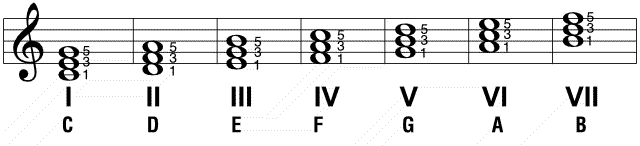
These are all chords that are in the key of Ab major, they are chord VI, II,V and I
We get an immediate problem because the first chord, if we make it a dorian mode, has a D natural, which is not in the key of Ab major. (Also remember my example above, if in a minor key, the mixolydain mode for a dominant V7 is full of wrong notes)
So immediately we are being a bit illogical, because it makes most sense for beginners to stick initially to diatonic notes before they start using notes out of the key.
How do we solve this problem using this method?
We bring in another greek mode, the aeolian.
So I asked students to pick some standards and analyze them in this way to determine what scales to use for impro, and we ended up with phrygians, lydians, locrians etc. all over the place. I think this is too much for beginners to get their heads round, apart from being a bit pointless when one major or minor scale can cover four chords anyway
This started to do my head in because I just cannot think "locrian" - it just seems much more intuitive to think of the scale that goes with the key.
Of course with many standards, they do go through different keys, although the main key signature remains the same. We call these key centres and are usually easy to spot when we see a dominat type chord that isn't in our main key.
So I now adopt the approach of suggesting first to identify what key you are in (the key centre) and use that as a scale from which to form your impro. Ideally you don't just play scales up and down (though that may be how you start), but instead you use the scale asa "pool" of notes to choose from to make your phrases of the impro.
Yes, some notes of a scale don't fit as well as others when they are emphasised due to them being on a strong beat. This is why we need to actually know what the basic chord tones are of any chord.
If you don't know the chord tones, then you are going to be a bit lost either way whether you use this approach or the modal approach.
Summary:
Presuming you should know all the chord tones (and at the very least the root of each chord) what is simpler to play over the first four bars of
All the Things You Are?
- Ab major scale
- F aeolian - Bb dorian - Eb mixolydian - Ab ionian





 (bottom of page)