Tech/maintenance Holton C Melody Restoration

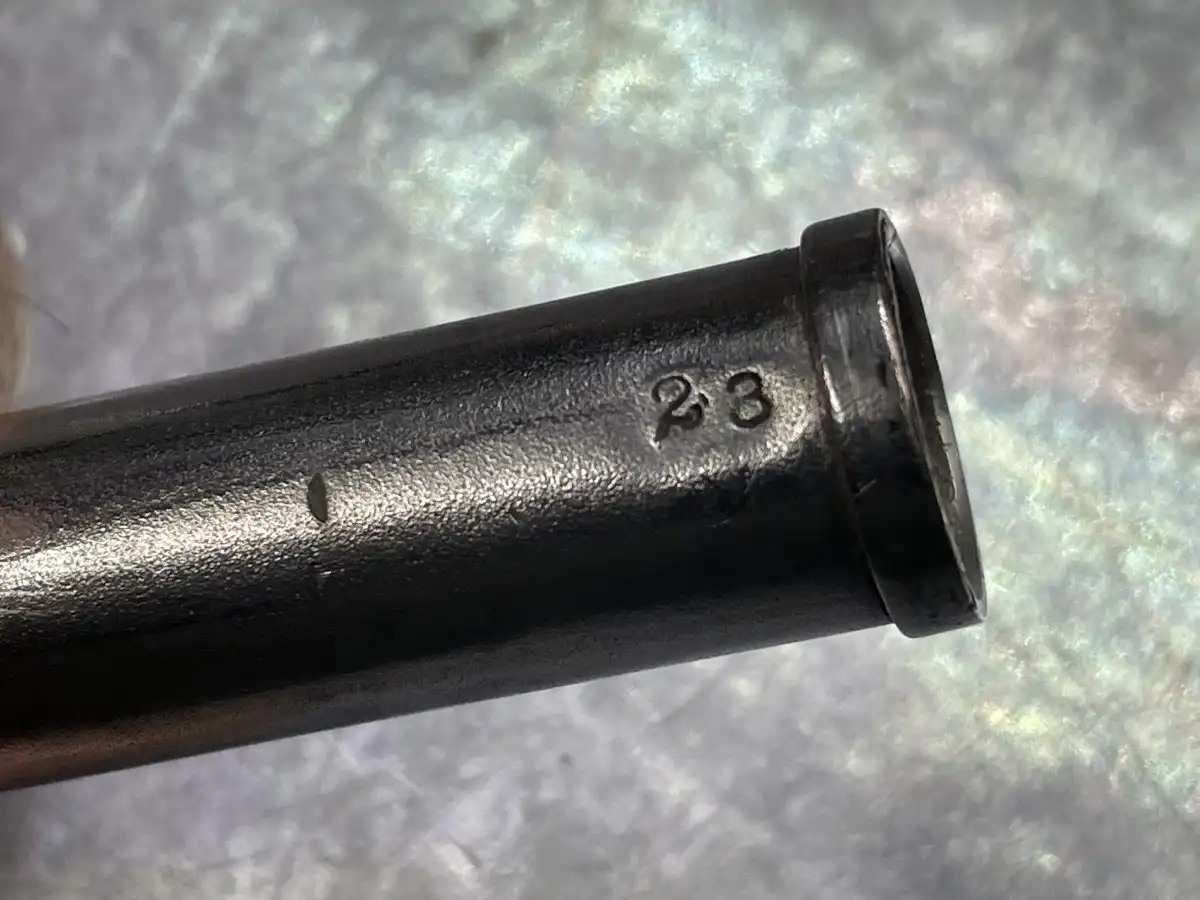
Time to cork the neck. Even the neck has a SN# stamp.
1698691790437.webp


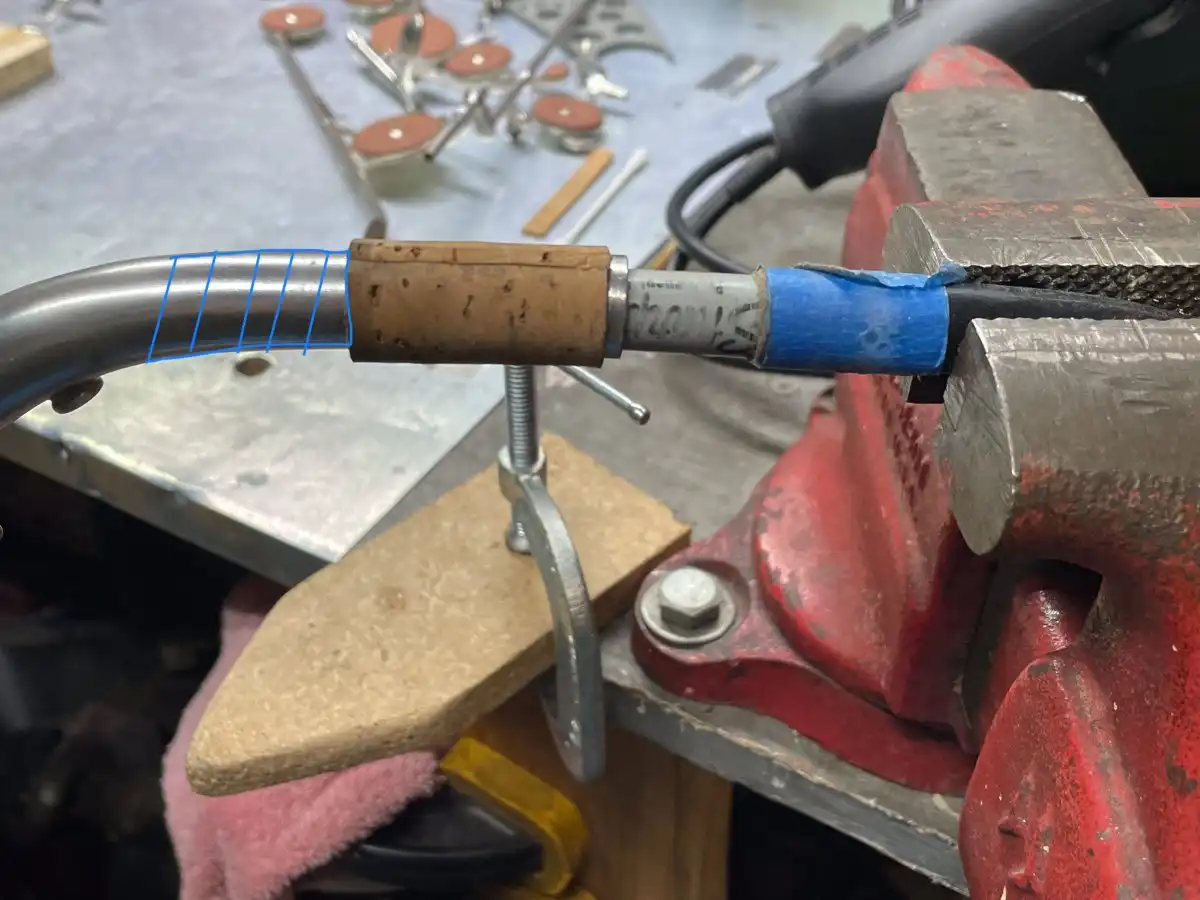
Lots of sources on how to install neck cork online. Not much on bench pegs. Make one or improvise. This old sharpie I’ve used for a couple years. Just don’t squeeze too hard in the vise. Tape the finished area off with a few layers of masking tape. One slip of the sandpaper and you’ll own a scratch.
1698691730697.webp


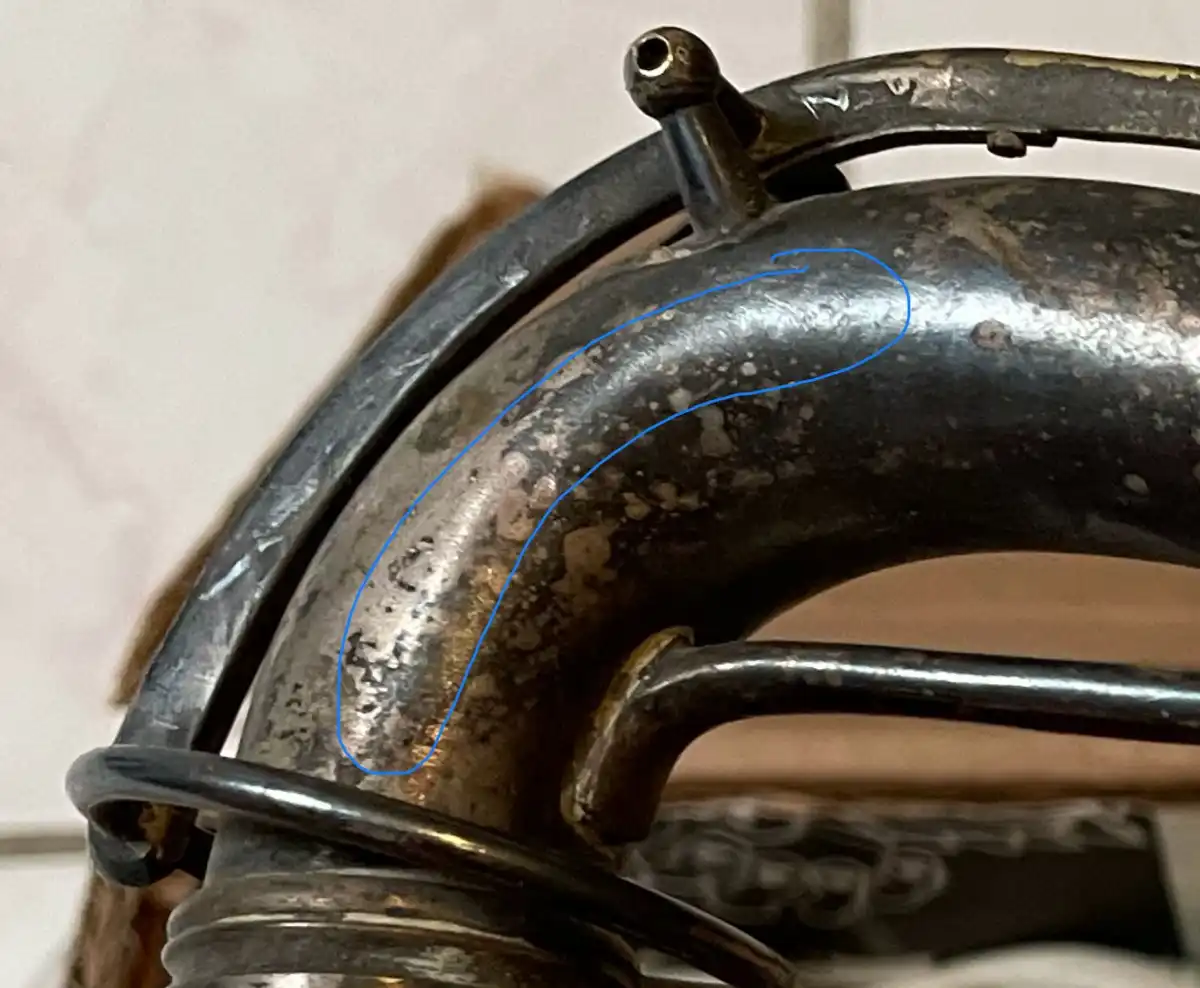
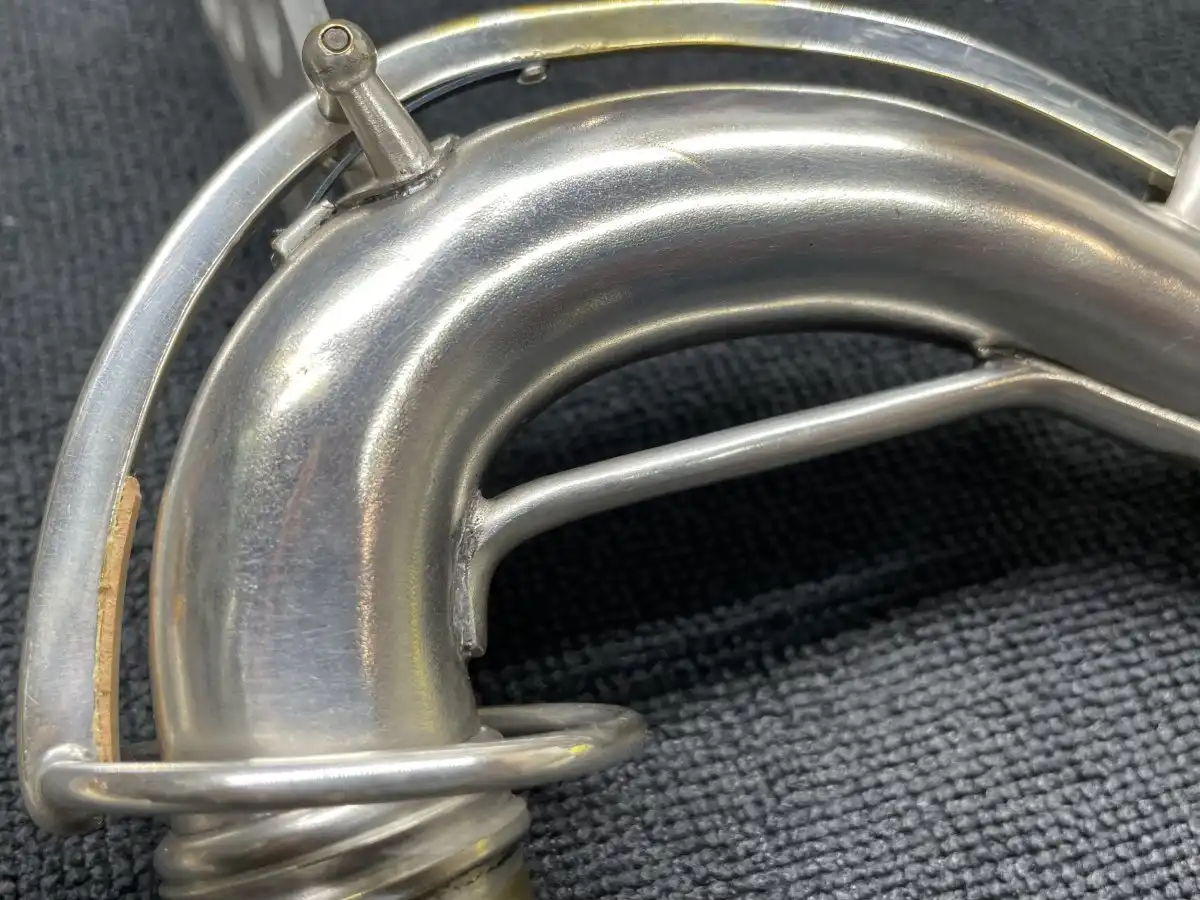
Overall I’m happy with the neck. It had a big crease in the left side from pull down.
1698693659282.webp

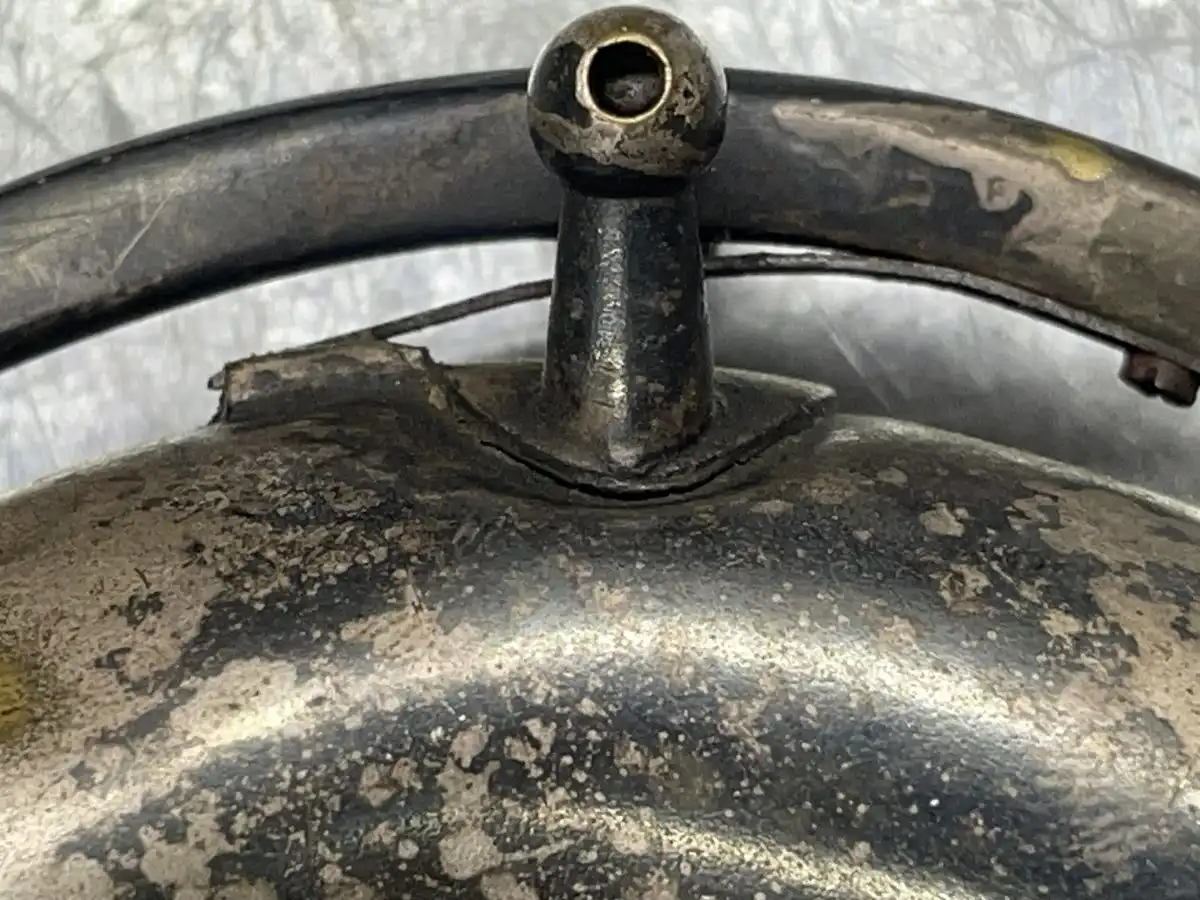
The key mount was also pushed in some and partly dislodged.
1698693882435.webp

Not 100% removed but good-n-nuff. I didn’t care to entirely remove the plate. Some cleaning underneath and flowed some solder in.
1698694121757.webp
 
Never can tell what surprises you will find under tape.
1698694410227.jpeg


Luckily there was not much in the way of scratches. I was able to install 1-1/2” of cork and cover everything. I prefer a little less on these old ones. Reduces the chance of pull down on another day.
1698694479962.jpeg
1698694510756.jpeg


I did leave this crack repair alone. It didn’t fail fitting the key to the octave PIP or fitting the halo to the octave lever.
1698694572920.jpeg
 
This old C melody is done. Patients has paid off. It’s playing nice and bright. Good as any of the best C mel. All in tune too. Not a stuffy chamber music horn. Tuning corrections done over a few weeks. Multiple C melody mouthpieces used. #3 Eastman Venuto tenor reed, #3 Rico Orange. I was tempted to try and alto mouthpiece as the C mouthpiece was pushed in a long ways. No surprise with huge key heights. To bad the neck cork was to fat to fit a alto MPC.
Never mind the mouthpiece tuning part. It was the changes in humidity. I noticed the biggest tuning differences at 65% humidity. It played flat. At 15% humidity it played sharp. The difference was about 20¢.
1698953040090.webp
1698952979078.webp
1698953094219.webp

1698953153683.webp
1698953510830.webp

1698953824090.webp
 
Bench notes on tuning.
1698956898888.jpeg

Typical key heights on Holton were not very open. I don’t care for the 20’s wet sock sound. Although screaming bright is way off the orginal sound too. I try for retaining orginal sound just not stuffy. I shy away from reflectors.
1698957295901.jpeg

1698957595411.jpeg

In tune the LH key touches were not really level. Doesn’t bother me. Just a quirk of antique horns. Like the huge distance between B & Bb pearls.
1698958077612.jpeg


Another two samples show variation too.
1698958266487.jpg


Temporary spacing I used to achieve the best of playing / tuning. The tape is .005 and so little I didn’t total it in the measurement.
1698958680890.jpeg
 
Last edited:
Wool felt worked out along with the benefits of noise reduction. Measurements taken as fully compressed.
That’s MM on left, inch on right. That’s felt from fabric store. Instrument supply felt is a lot more dense / hard and thicker.
1698959065764.jpeg

1698959146910.jpeg


This adjustment above also cured the forked E clanking issue.
1698959253850.jpeg


Adjusting bumper felt with a new razor blade can still leave fuzzies behind. A lighting fast pass with torch will burn those off. To slow and you’ll have a cooked sheep smell forever.
1698959624858.jpeg


Gently brush off to clean.
1698959706415.jpeg


No lost Motion the RH stack is nice and even.
1698960851028.jpeg
 
Last edited:
Funny thing about the mouthpiece being pushed in and the tuning. Looks like Frankie did the same thing. Frankie Trumbauer was a lifetime player on his Holton C melody.
1699064926540.jpeg


Here Dick Stabile is halfway on the cork. He’s also playing a Rudy Wiedoeft model.
1699065213617.jpeg
 
Last edited:
The mouthpiece this Holton came with is on the far left. Slightly different than some of the others. These are all C mouthpieces. The only duplicate is the one facing the wrong way to the others.
Not necessarily in order ; Buescher, Conn. Couturier, Holton, King, Lyon & Healy, Martin, Selmer, Planet C and Caravan.
1699066022629.webp
 
Took a hour and cleaned up the mouthpiece, ligature and cap.
Find a old crusty broken one to learn on. I use masking tape to protect the table and rails.
1699252311197.webp
A good article if you’ve never done this before. I use variations depending on condition.
On this I’ll use white scotchbrigh - 600,1000,2000 grit wet sandpaper. White / fine polishing compound and carnauba wax. Nothing is food grade and I don’t care. I’ll wash it before use.
1699252827966.webp


Sand with each grit wet. Change stroke direction each pass to knock down surface.
1699253559325.webp

Rinse the part and paper often.
1699253835079.webp


Enough sanding with the 2000 grit paper and you will see some gloss returning. Time to try polishing compound. If it doesn’t give you a good result go back to sandpaper.
1699254191051.webp

A good result from polish so I’m moving on to waxing. This picture below is after polishing and before waxing.
1699254913487.webp
 

Similar threads... or are they? Maybe not but they could be worth reading anyway 😀

Social

New! Social Feeds

Look out for the navigation icon:

Follow CafeSaxophone

Latest Song of the Month

Trending

Forum statistics

Topics
32,051
Messages
577,987
Members
8,120
Latest member
lundalux
Back
Top Bottom