Introduction Hi from London

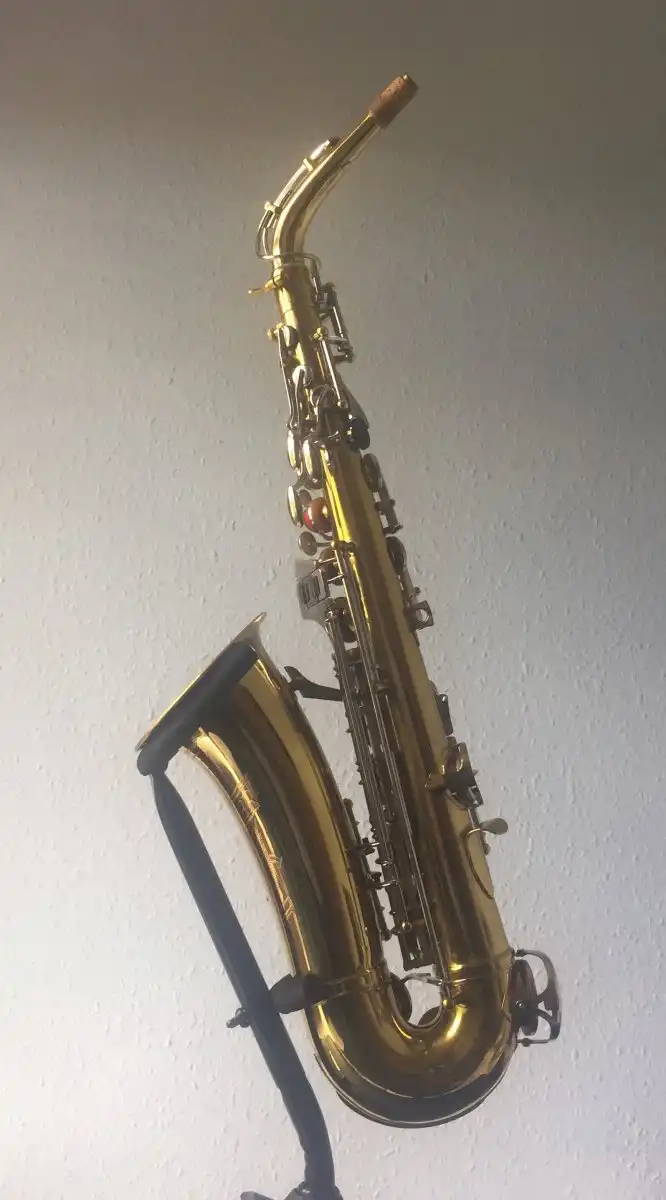
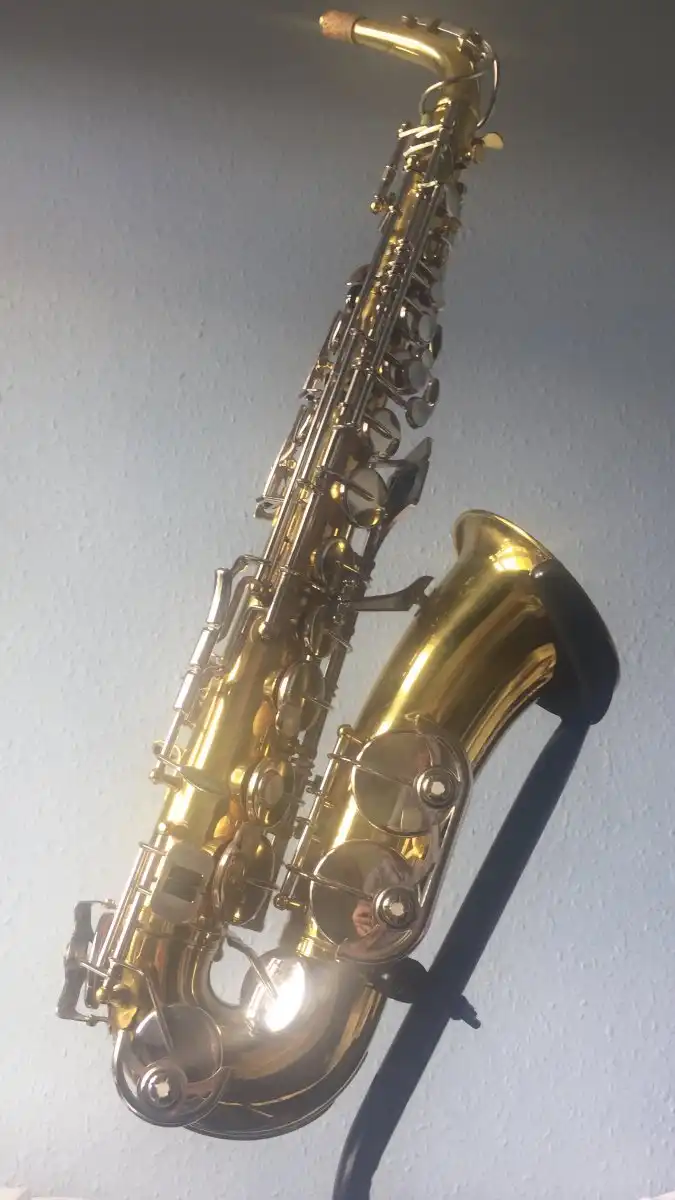
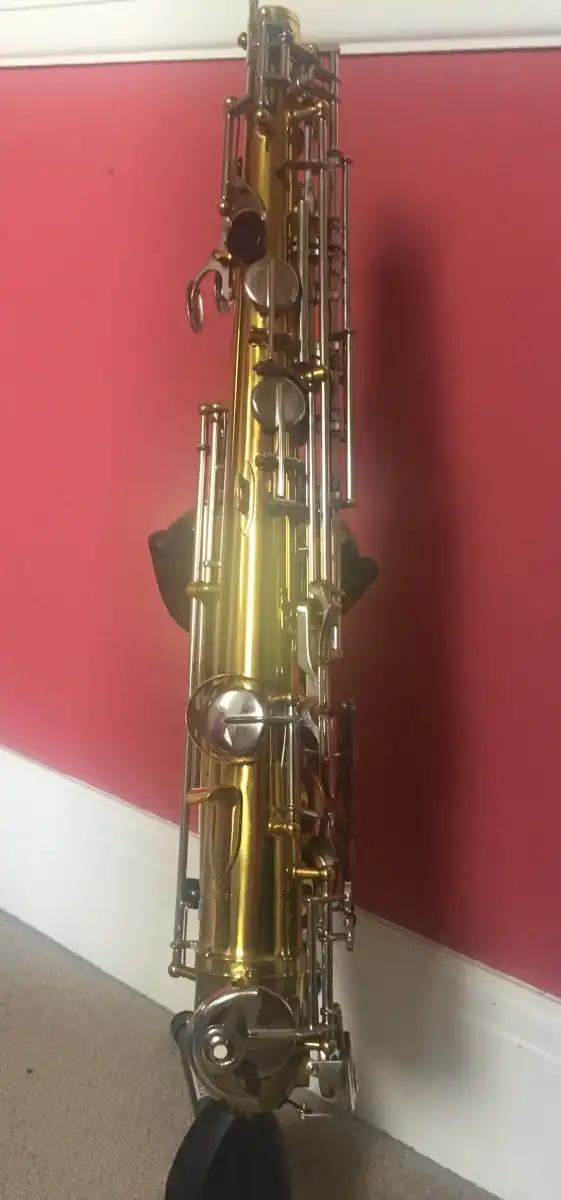
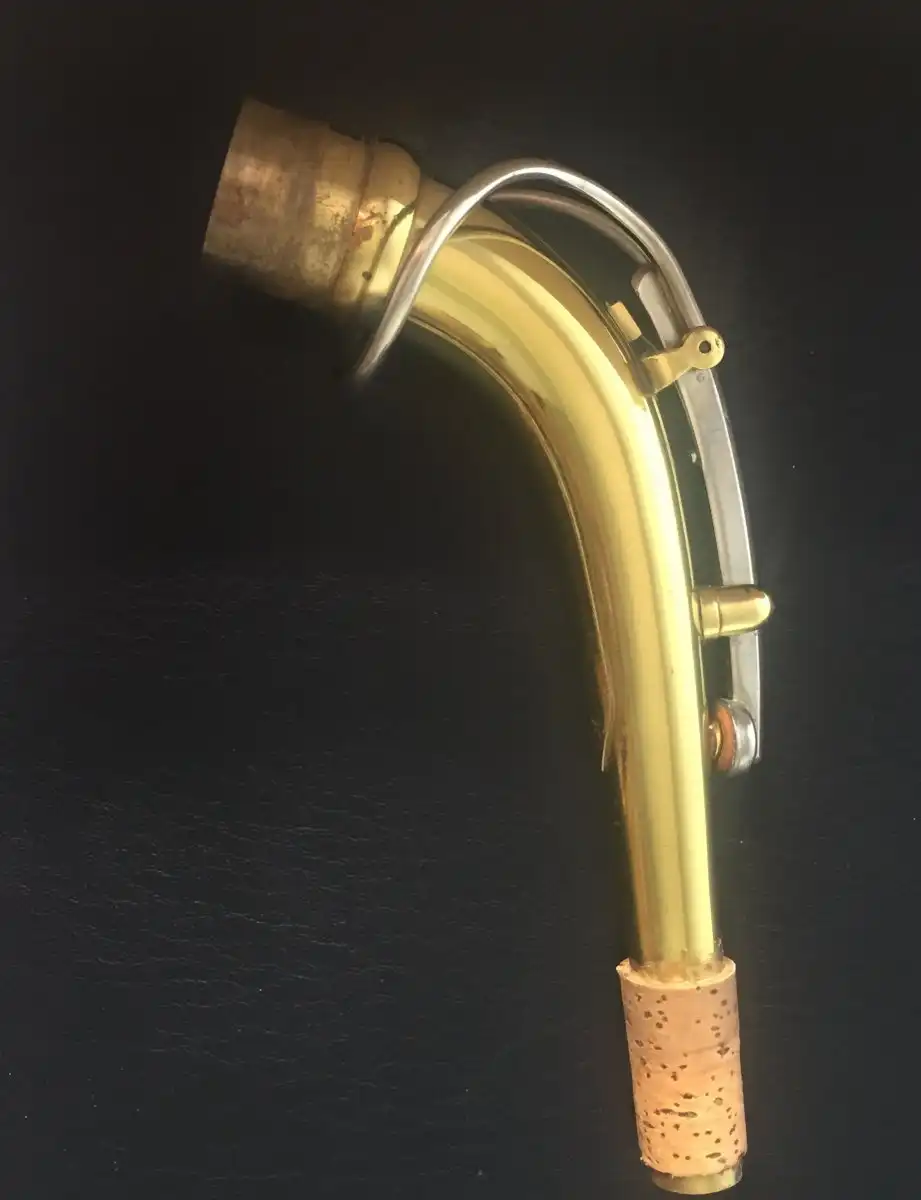
Here goes. My photography skills are definitely lacking!
IMG_8054.webp
IMG_8055.webp
IMG_8059.webp
IMG_8060.webp
 
Yep it's a lateish Weltklang. Fairly easy guess as all the makers in the GDR were nationalised into one company after WWII. The easiest distinguishing feature is the bell brace. Lots more info on basic sax web site if you're interested. @helen, the owner, may well be interested in having these photos for posting if you're willing.
 
Thank you kevgermany, That's very interesting.

I have to admit my lack of knowledge - what is a bell brace?
In terms of Weltklang, what is lateish - late 1980s?
Is Weltklang a good/bad/indifferent make?
Why is it called 'Meister'?
How did it end up in East London in 2018?
Does it have any distinguishing features apart from the bell brace?
Is there a Weltklang/Meister database where serial numbers are stored?

Sorry for so many questions - you've spiked my interest.

My photos are certainly freely available to @helen - I'll let her know.

Thanks again
rita (reetpetite)
 
Bell brace is the bracket between the bell and body tube. Earlier Weltklang had a straight brass rod, but spindle turned, a little like a chair leg.

Not sure when this was made, after GDR merged with West Germany the company was privatised, becoming B&S. And after that the Weltklang (which means World Sound) name was dropped. Mister is German for master. Many sax makers made saxes for other people, music shops, other instrument makers who didn't make saxes, also as a way of increasing sales by selling the saxes under different names giving the impression of more makes. The connotation here is more like the modern trend of calling consumer models pro or professional.

Are they good? Depends who you talk to. Pre war saxes from this area were top quality and as good as any in the world. Post war they suffered from nationalisation, communist management, material shortages and lack of investment/development. Sound pretty much remained in the prewar era, something I prefer to the more modern sound. Perhaps the biggest criticisms were weight and prewar keywork, which the west did a lot to improve upon. This one's got apparently later keywork, judging from the C/Eb keys. But the B/Bb/C#/G# don't look improved.

 
Thanks for all that information. The B/Bb/C#/G# keys look very 70s (for some reason they remind me of an old car of mine!). They are very clunky and heavy, especially as I'm used to playing the more delicate keywork on the oboe. But all in all it's not difficult to play and is in tune with itself (mostly).
 

Social

New! Social Feeds

Look out for the navigation icon:

Follow CafeSaxophone

Latest Song of the Month

Trending

Forum statistics

Topics
32,081
Messages
578,793
Members
8,137
Latest member
AdrianoHoma
Back
Top Bottom