Saxophones Do you buy saxes/gear without trying first. How did it work for you?

Do you buy without trying first


  • Total voters
    34
Nice to reflect and ponder coulda shouldas.

Sopranino - bought the only used Selmer Series II + I have ever seen and the only sopranino I have ever played. Play tested at a Dealer who could not sell it. Crazy price so they could clear inventory.

The following instruments I bought untested '+' identifies as a positive "-" a negative experince.
Sopranos - 880 Yani Elmoa + sold, Couff Superba II - sold, YSS61 +, YSS62 Purpel label +, Borgani Jubilee +.

Altos - bought my SB + played for 20 years before selling. 2 Mark VIs, okay but sold both and just recently bought a untested Cannonball +.

C Melody - bought new online from China, No name. +

Tenor - Bought new my trusty Selmer Series III + from Switzerland over 25 years ago & a used Ref 36 + three years ago. S20 - and a MK VI + both sold.

Bari- YBS 62 + new ordered with out playing one, Selmer SBA Bb silver plate +. The SBA given to me by the owners widow when he passed. He wanted me to have it. I have enjoyed both for over 24 year

Bb Clarinet - Leblanc Concerto+ new, Ridenour RCP 576 used hard rubber +.

C Clarinet - Alibaba new hard rubber+

Bass Clarinet - Selmer Series 9 +

I bought a B45 clarinet piece and a rubber 7* Link tenor play tested new in a store as a teen.
All my other mouthpieces were bought online and were all used, open box or old stock.

As to cost I try to buy low and attempt to sell higher when I move on from a mouthpiece or instrument.
I insure my equipment pays for itself. If I don't play it I sell it!
I also never sell a mouthpiece that has been a main playing piece, those I cherish.
 
I actually get quite a few such asking which PPT they should buy. I just tell them not to buy one yet. I’d be a terrible sales manager.
I looked at your PPT mouthpieces and reviews I could readily locate. I have a rough idea of what model I would select. About the only thing lacking that may be helpful is technical data: the tip gap, facing length and chamber size and shape description. Although there is more on how all this works together, at least it gives one an idea to help hone in a selection.

Being on the outside and even remote to any Café tech or professional gigging member (closest is @JayeNM - 6 hour commute by car), I have not much else to go on. It would be nice to call you on the tele, mention I'll be at Heathrow mid afternoon such-and-such day, hop on my private jet charter out of Roswell, NM. Arrival in a limo, treat you and the Mrs. to a meal then talk sax. I pass you some quid, you hand me a brown paper sack with PPT mouthpiece inside, I drop you both at your house, then go my merry way. Those would make for nice lyrics on a country-western ballad. I say this in jest. (Financially I have two cases of Ramen and a large bag of rice in my cupboard.... But truth is I am now considering purchase, probably alto because I have a 1952 Model 37 Beaugnier Vito that's begging to be "opened up".)

Also what would help is although it is stated that these mouthpieces were intended to fill gaps for mouthpieces suited for vintage saxes, will they also work with certain modern saxes with examples?

Including additional sincere compliments from appreciative users are helpful especially if year, type, make and model of sax is mentioned. A compliment is "merited praise", a truthful statement earned by the positive results the user has experienced.

Thus adding more factual details and other truthful elements would be complimentary, not simply "sales talk", plus also help others to discover the benefits of improving their musicianship by using PPT mouthpieces.

[If this comment should be moved to a more appropriate place, please do so.]
 
Last edited:
I voted 'no never'
But then I realised that I had bought a PPT mouthpiece without trying it. Just based on reputation and description.
It was an interesting step in my evolution as a saxophonist, it was my first hand finished piece. I had my Otto link refaced after that.
All others I have checked out before buying.
I had to travel to Scotland for my Bari and to the Netherlands for my curved sop, both second handed. Still, it was a good excuse for an outing....
 
Also what would help is although it is stated that these mouthpieces were intended to fill gaps for mouthpieces suited for vintage saxes, will they also work with certain modern saxes with examples?
Yes they work fine on most horns. When I get time all edit that in.
About the only thing lacking that may be helpful is technical data: the tip gap, facing length and chamber size and shape description
It's funny, most of the returns are from people wanting a larger size, they bought the one they did because of the stated tip opening. Sometimes I think it's counter productive as most peopple don't think beyond tip opening. Giving too much info may not always work, for example if I state a chamber diameter of 14mm (just an example not a real diameter) I'll get people thinking "14mm is too large/small for me." when in fact the real mouthpiece magic comes from the total combination of tip opening, facing length, type of curve, chamber dimension and shape.
 
His words were "OK, very nice mpc, can you blow it?" Had a lesson and he said stick with it."
I think honestly for a beginner-beginner/intermediate player, that is the # 1 test. Regardless of the mouthpiece's reputation, if it is easy to blow (and you like the tonality it is giving), then worth keeping. If it immediately seems "I sorta like it but am having to work a bit harder on it than others", then return it; or if the refund $ not important to you, just put it in a drawer for a year and maybe revisit it then....

When you are more advanced, that'd be the time to make a more advanced distinction that 'this mouthpiece is worth woodshedding on for a while in order for me to acclimate to it". As a beginner-intermediate, you have other priorities to focus one, IMHO.
 
It's funny, most of the returns are from people wanting a larger size, they bought the one they did because of the stated tip opening. Sometimes I think it's counter productive as most peopple don't think beyond tip opening. Giving too much info may not always work, for example if I state a chamber diameter of 14mm (just an example not a real diameter) I'll get people thinking "14mm is too large/small for me." when in fact the real mouthpiece magic comes from the total combination of tip opening, facing length, type of curve, chamber dimension and shape.
I think the three typical parameters most purchasers would use is: Tip opening (numerical measurement), Chamber size (relative, I mean I doubt actually giving a chamber dimension is gonna be meaningful to anyone, but "Large/Med/small" would be)...and then presence of baffle (hi, low, non-existent). Then maybe a sound sample (not quite as useful as it may seem, but it makes folks comfortable and gives them some sorta info as to whether it's more towards a paint-peeler or an old-school darkish).

Beyond those things, non-advanced-players will not utilize any bandwidth to discern further for an online purchase....
 
Although I would always advise "don't buy it unless you try it" I thought about it and I've done it quite a few times.

C soprano - bought sight unseen from a high-reputation vendor, no issues.
Bb soprano - bought on basis of only a few pictures. Needed complete repad, so impossible to play test it.
Backup alto - bought from a friend who said "it plays fine". It did.
Backup tenor - bought from a friend after just checking it out for visible damage, needed complete repad, so impossible to play test it.
Alto flute - I had play tested one of the same model, but not the exact flute.
I've bought a few mouthpieces mail-order which inherently makes it certain you're not going to play test it first.

So, do as I say, not as I do.
 
I just bought a used Le Blanc (KHS Jupiter) 7133 alto sax on EBay, no way to try until it arrives shared in:
In my explanation I give a little buying logic. Instead of taking a chance with generic budget unknown sax that may be of dubious quality, follows along the advice of @JayeNM , @PigSquealer and a few others. Buy a used brand name or reputable stencil in reasonable shape, then have it professionally serviced for about the same cost. Then one is assured a solid player.
 
I voted ‘Yes’ because I would try someone’s gear and like it then buy it untested online only to be disappointed by how it turns out. Meyer metal jazz Mpcs are in that category as well as a Selmer SA80 tenor that I flipped very quickly before I got my current squeeze, same make but tested in person. I try to buy only after testing in shop but even then it’s 50:50, sounds different at home or I go off it after a few weeks.
Every sax I’ve bought online in the past 10 years needed work at the tech on receipt.
 
The poll may be slightly flawed in that many people use eBay, where obviously you cannot try first but as long as you know values, the risk is minimised by either returning if not as described or else selling on without hopefully losing too much.
 
The poll may be slightly flawed in that many people use eBay, where obviously you cannot try first but as long as you know values, the risk is minimised by either returning if not as described or else selling on without hopefully losing too much.
Buying online on Internet auctions where the seller can be anyone is a bit of the "Wild, Wild West". I've had both wonderful and bummer experiences.

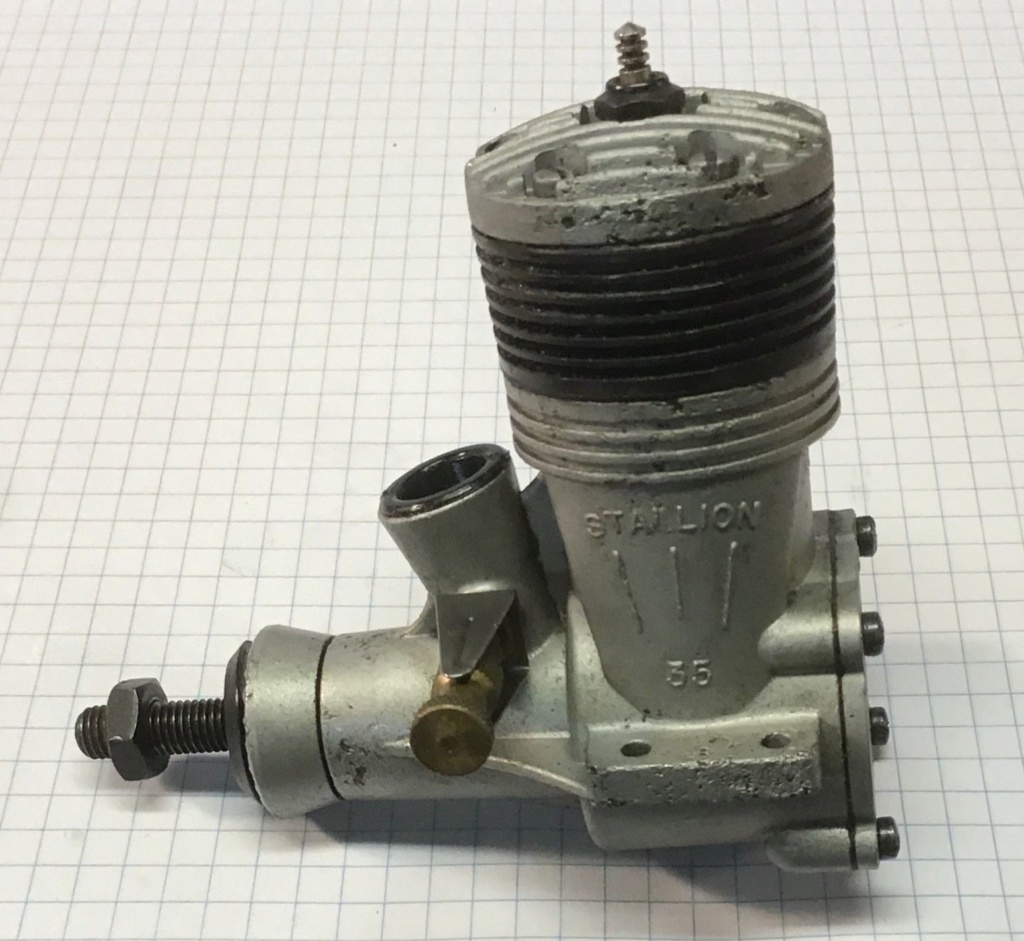
One was not musical instruments nor accessories but a model aircraft engine. Photos looked good, it was used, oddly I was the only bidder, got it for a song. When I arrived, looked it quickly over then stuck it in a drawer. 6 months later, I decided to clean it up. Found the seller misrepresented the truth. His description of "surface occlusions" (tiny gas bubbles in the molten aluminium during the casting process) was by water corrosion pitting. It was not a product of the 1950's as stated. Later research I discovered it was the last in the series manufactured around 1974.

He had carefully sand blasted on the outside to hide its hideous past in a damp environment, perhaps a field find of a long lost crashed plane. Fortunately I was able to restore it to running condition, thread in:

To protect myself I look over the seller's rating. If less than 99% and low number of sales below say 50, I check negative and neutral comments. This determines if the seller was downgraded because of a spurious unwarranted comment (which happens some times). I carefully read the item description, closely look over all photos, sometimes download a photo to get a closer look in a photo viewer. On those with high level of sales, I reject a seller especially if negative comments indicates a problem seller.

Unusually high shipping costs is another reason I reject a listing. This means the seller "low balled" the sale price to make up for it in shipping, an indicator of dishonesty.

Inadequate photos on used woodwinds are a good indicator for me to reject the listing. Sometimes a spurious seller may purposely not show all to hide a defect or blemish. If description is insufficient or insincere is another reason for me to reject if photos do not make up for the lack thereof.

If there is an error in the listing does not necessarily deter me depending on the seller's knowledge of the item. From a 2nd hand used botique shop for general items, I bought a name brand clarinet for far less than had it been sold by a music dealer. Thus one can also benefit if patient and carefully scan the listings. Example:
 
I buy without trying. I don’t recommend doing that as a “beginner”. You cannot make good choices if you don’t yet know what is going to work for you. Of course, if money is no object and buying is the sport, that is an entirely different game.

There are too many variables for this poll to provide any useful information. The good news is that it didn’t cost me anything and I knew its worth from the start.
 
I bought many horn, but many horn without trying for many reason,

The extremely rarity : i paid without trying my c soprano Adolphe sax only 2/4 was ever made, impossible to try another, you take the risk and it's very Nice horn and piece of history, museum condition,

I paid conn F mezzo soprano, extremely rare, couesnon monopole conservatoire with low A high G extremely rare not possibility to try one if you buy immediately when you've got one opportunity to have one for sale.

I paid buescher straight alto same thing, it's extremely rare, i paid buescher tipped bell and perfect curved lyons and healy or saxello King without trying because it's so hard and rare to find one, same thing for my curved sopranino, for my Dolnet buffet crampon apogee system, or sopranino modele 26, baritone modele 22, c melody Selmer modele 28 pre SSS, or couesnon prototype sopranino or octavin, or another extremely rare.

The second possibility is globally when you're very good offert to have one, for exemple i paid my soprillo by eppelsheim for 4600€ against 6200€, I paid without hesitation.

The third possibility it's when they're special and rarity thing, for exemple one special thing like that my raymond dubois stencils halari with double tenon neck, and very strange octave system key

After for me, i'm collector and i want extend my collection with New item, i paid bass sax buffet crampons for not many money, just because i haven't basse sax in my collection,

For me, i'am not casual or traditional buyer, it's different, and i think really different, for me never mind if i try before buying if it's special or rarity horn, i paid to have rarity and exploited the potential of the rarity horn in my playing and my writing.
 
Buying online on Internet auctions where the seller can be anyone is a bit of the "Wild, Wild West". I've had both wonderful and bummer experiences.

One was not musical instruments nor accessories but a model aircraft engine. Photos looked good, it was used, oddly I was the only bidder, got it for a song. When I arrived, looked it quickly over then stuck it in a drawer. 6 months later, I decided to clean it up. Found the seller misrepresented the truth. His description of "surface occlusions" (tiny gas bubbles in the molten aluminium during the casting process) was by water corrosion pitting. It was not a product of the 1950's as stated. Later research I discovered it was the last in the series manufactured around 1974.

He had carefully sand blasted on the outside to hide its hideous past in a damp environment, perhaps a field find of a long lost crashed plane. Fortunately I was able to restore it to running condition, thread in:

To protect myself I look over the seller's rating. If less than 99% and low number of sales below say 50, I check negative and neutral comments. This determines if the seller was downgraded because of a spurious unwarranted comment (which happens some times). I carefully read the item description, closely look over all photos, sometimes download a photo to get a closer look in a photo viewer. On those with high level of sales, I reject a seller especially if negative comments indicates a problem seller.

Unusually high shipping costs is another reason I reject a listing. This means the seller "low balled" the sale price to make up for it in shipping, an indicator of dishonesty.

Inadequate photos on used woodwinds are a good indicator for me to reject the listing. Sometimes a spurious seller may purposely not show all to hide a defect or blemish. If description is insufficient or insincere is another reason for me to reject if photos do not make up for the lack thereof.

If there is an error in the listing does not necessarily deter me depending on the seller's knowledge of the item. From a 2nd hand used botique shop for general items, I bought a name brand clarinet for far less than had it been sold by a music dealer. Thus one can also benefit if patient and carefully scan the listings. Example:
Pratically i pay only on sax Shop online like that saxquest, Boston Sax Shop, pm woodwind, saxmachine... Etc.

Or maybe sometime, i pay on Website direct y by bank wire when i have confiance with the seller, i contact, i talk about horn, or history about this own horn, i test the knowledge and the seriously of the seller and after that, i can or not buy,

By this method, i bought one selmer baritone modèle 22 extremely rare, my couesnon alto low A and High G extremely rare too, my curved sopranino too, my two piccolo Ab clarinet,

My only error in buying, i bought one soprano curved winchester not good condition to play, i think firstly to have sopranino curved because it was writed soprano in Eb and it was shorter than soprano curved.

Morality it was only curved soprano without low Bb and stopped at high Eb made in czechoslovakia (lol)

But i keep this little baby and i wil restorate later, by curiosity to try him.

But definitively not good offert ≈800€ for that,
 

Similar threads... or are they? Maybe not but they could be worth reading anyway 😀

Social

New! Social Feeds

Look out for the navigation icon:

Follow CafeSaxophone

Latest Song of the Month

Trending

Forum statistics

Topics
32,047
Messages
577,918
Members
8,115
Latest member
Viljams
Back
Top Bottom