Intonation Device for playing in tune?

To clarify.
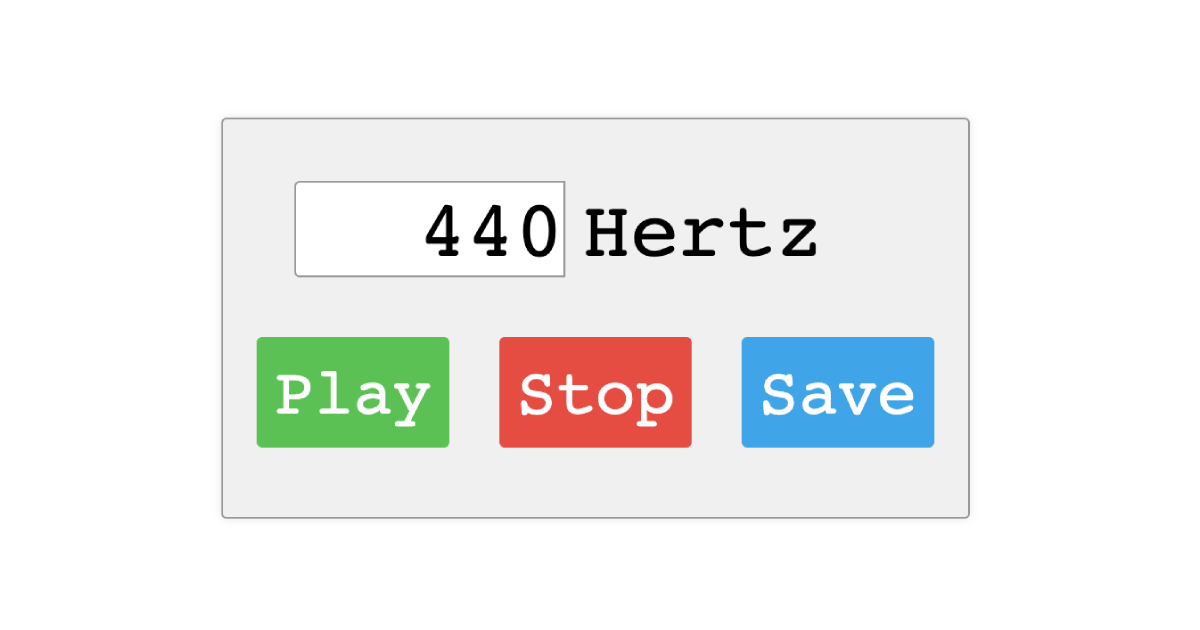
The old one is like this.
I guess they mean you start at 50Hz of separation.
50Hz
30Hz
20Hz
10Hz
5Hz
3Hz
1Hz
Is the second tone higher or lower than the first.
You have to get three correct to move on to the next level.

Newer test..... have fun
I have no idea what this refers to
 
Since no-one else has mentioned this I'm going to chip in.

IMHO, all you need is a 'tuning app' on your mobile. I've used a couple of apps and I currently use 'Saxophone Tuner' (Android and IOS). What I really like about 'Saxophone Tuner' is that it gives you accurate feedback on any note(s) that you play. So for example (in my case), depending on the position of my mpc on the neck and my embouchure, the app may show most 'lower register notes' as 'within acceptable boundaries' while it may show some of my 'higher register notes' as being slightly flat or sharp. So I can both long-term as well as the current rehearsal adjust to this feedack.

In all cases, the app enables you to:
- 'tune' your sax (via your mpc) with other band member or a backing track
- learn more about (and improve) your 'intonation' across the sax range

FWIW, this post is purely intended as a 'shared personal experience'. I have absolutely no connection or commercial or other interest in 'Saxophone Tuner'. So this post is in no way intended as a 'promo'!
At least three things are all getting conflated here.

First: where shall I place my mouthpiece so that today, with the embochure, voicing, body, reed, mouthpiece I have, the horn will be at a good average in-tune with the universe, or with the group I'm playing with? Nowadays with many/most players having a digital tuner, the average pitch of a group will be pretty darn close to A=440 if the physical instruments are all warmed up. So basically all I do when I put the horn together is to slide the MP up to the line I marked on the cork some years ago and then just check to see if my middle G is in tune. Unless a pad has fallen out or someone's sneaked into my house and readjusted the positions of all my tone holes, the horn will be as in tune as it was the last time.

Of course if I've misestimated the temp or I've got a cold, or the reed's just about to die, I'll possibly need to shift the MP a bit from the line.

Second: Here I have a new horn. How can I tell whether it's going to play well in tune with my equipment? For this, you use a tuner and go all the way up and down, identify wonky notes. Maybe there's just a minor pad height to adjust. Maybe that's the way the thing is.

Third: Am I biting, or too slack? For this you want to match long and short tube note pitches by moving the mouthpiece in and out till the pitch of (for example) long C# and all-open C# match - then turn on the tuner and see if the thing's sharp or flat. If flat, you should tighten up, if sharp you should slacken up. This is NOT - repeat NOT - something you do on the day of the gig and then try to lip everything down that day. This is information for you to use in practicing. Shifts in your "input pitch" require you to reprogram your ears, muscles, airstream, etc., and that takes time. To get the horn better in tune with itself by playing flatter and pushing in might well take a year to move the mouthpiece position a quarter inch.

If you are not trying to alter your embouchure and voicing, and if your horn is known to be reasonably in tune with itself at A=440, then "tuning" only applies to compensating for today's weather patterns and your personal condition, so once you use a middle range note to set your average tuning the same as the rest of the group, all subsequent assessment and adjustment is done by ear with no little LED needles to look at.

For string instruments it's good practice to recheck at a couple point in a session.

 
For string instruments it's good practice to recheck at a couple point in a session.

Which makes sense, right, because the string length can change during the course of a session due to loose machine heads, temperature, sweat, the natural deterioration of the string and what not.

Whereas with the saxophone your embouchure and jaw control the fine tuning of the pitch.

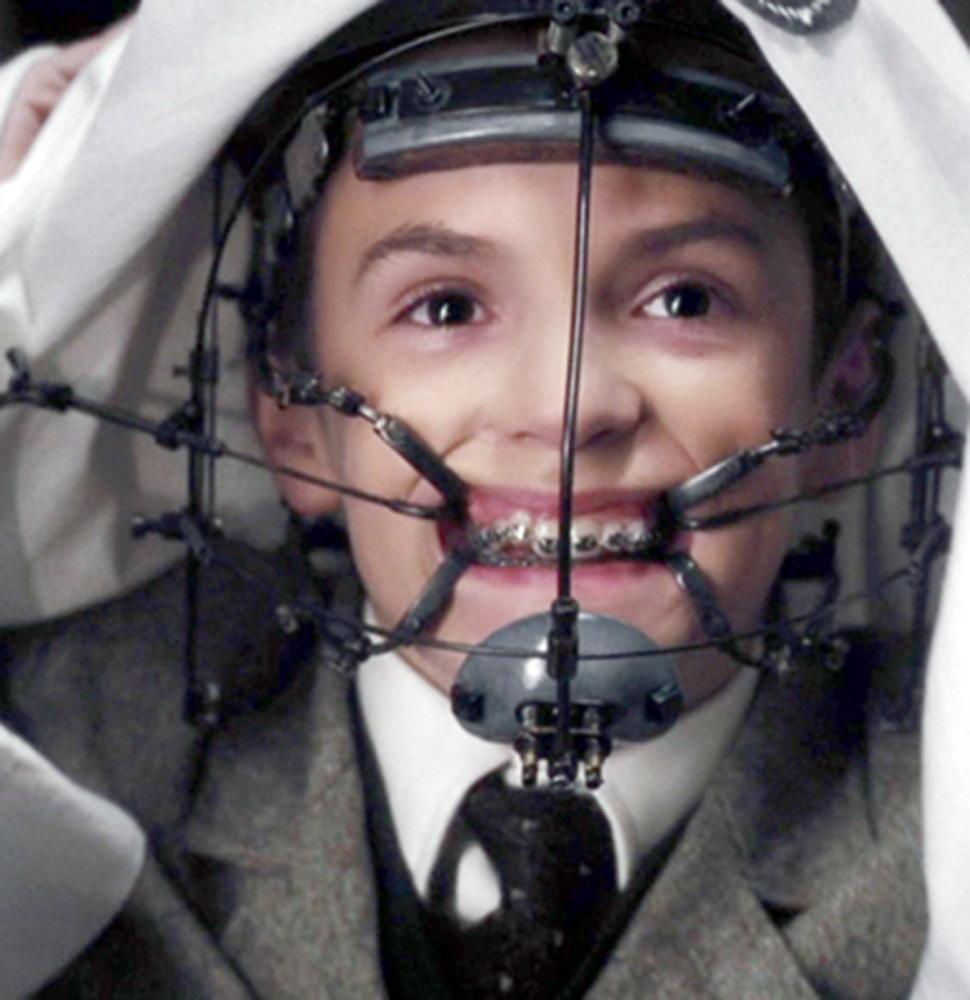
Perhaps someone needs to invent some device that attaches to your jaw and controls the pressure.....

tumblr_okcn6vw7un1w43ny6o7_1280.jpg
 
As a cellist, viol player, and an electric bass player... strings are more complex than that.

Cellos and basses have similar issues, mostly related to changes in temperature. The tuning of my cello and of my basses is pretty stable except when there's a change in temperature. Because the strings are metal, if the temperature drops, they shorten slightly and go sharp, and they go flat if it's warmer.

Viol string are either plain gut or wire wound with a gut core. They are a nightmare. Gut is a natural material (sheep's intestine....) and it will change the mass of the string by absorbing or releasing water vapour as the humidity changes. The changes are much more significant than the tuning shift caused by metal strings changing environment, partly because the strings are inherently more elastic. It takes several hours for strings to reach equilibrium with their environment and for the tuning to stabilise.

If you ever see a viol consort or lutenist playing live, you will notice that they have to check tuning frequently as the audience will have added significantly to the humidity even if the instruments had acclimatised to the room.

Lutes can use nylgut strings, which are man-made and don't have this issue. Unfortunately, there is no suitable alternative for viol strings.
 
Which makes sense, right, because the string length can change during the course of a session due to loose machine heads, temperature, sweat, the natural deterioration of the string and what not.

Whereas with the saxophone your embouchure and jaw control the fine tuning of the pitch.

Perhaps someone needs to invent some device that attaches to your jaw and controls the pressure.....

tumblr_okcn6vw7un1w43ny6o7_1280.jpg
One pill makes you smaller ...

Did you mean tension? Like in natural gut tennis rackets?
 
I have no idea what this refers to
A WAG would be,
First tone is A440Hz, but it could be any tone.
Second can be 490Hz or 390Hz
Then it descends all the way to,
First 440, second 443 or 437.
Final, if you get there,
440 then 441 or 439

These might be useful.
Just found the second one.
Easier to to sweep, but both fun.
Go from 440 to a nervous German at 445.
Years ago I heard the Berlin was up there. 😵‍💫
 
Get a new set of strings on a guitar and watch a tuner that displays the fundamental and the overtones.
Do the same thing with strings that have been worn by the frets.
Interesting, when the tuner's visual is shown, how many students can now hear the tone quality and when they look at the strings, "hey, I need a new set."
Always fun working with college music majors.
Modern apps are affordable.
 
A WAG would be,
First tone is A440Hz, but it could be any tone.
Second can be 490Hz or 390Hz
Then it descends all the way to,
First 440, second 443 or 437.
Final, if you get there,
440 then 441 or 439

This might be useful.
Ah, you’re talking about a change to the frequency of X hz at a time, I see.
 

Social

New! Social Feeds

Look out for the navigation icon:

Follow CafeSaxophone

Latest Song of the Month

Trending

Forum statistics

Topics
32,035
Messages
577,535
Members
8,112
Latest member
gzeigler
Back
Top Bottom