Playing the saxophone Between the Notes - quarter tones

Zaxophone

Genie in a Sax
Messages
50
Location
Cologne
Its funny that when I asked the guy at the music shop about quarter tones in saxophone, he got shocked and tried to explain to me that I was talking about quarters in a Beat .. which I wasnt 🙂


Quarter Tone Fingering Chart for Saxohpone:

First Octave First Octave - Quarter Tone Fingering Chart for Saxophone - The Woodwind Fingering Guide
Second Octave Second Octave - Quarter Tone Fingering Chart for Saxophone - The Woodwind Fingering Guide

Well I've seen some videos where musicians play microtonal stuff, which I couldnt understand as music yet :confused2:, therefor Id like to introduce some examples of Quarter notes in middle eastern scales (maqam) :

Maqam Rast on Do: Do / Re / Mi (half-Flat) / Fa / Sol / La / Si (H-F) / Do.
or on Re for Bb : Re / Mi / Fa# (half-Sharp) / Sol / La / Si / Do# (H-S) / Re.


All the other known oriental scales are explained with examples on diffirent tunings on this website maqamworld.com ( for anyone who is further interested).


From the traditional to the modern, here are some songs for your listening pleasure :


Enjoy :sax:
 
Last edited:
Thought I'd add this.

I've been learning Ana Fintizarak on Nay and was searching for good renditions. I came across this talented individual... But at 3m52s a sax takes a solo! (after an accordion, which I can skip). It's based in Hijaz - but still requires some 20¢ shifts, apparently. I don't really have the ears... Still, interesting and some nice improvisation.

View: https://youtu.be/tLIp57en43w?t=3m52s
 
Last edited:
he got shocked and tried to explain to me that I was talking about quarters in a Beat .. which I wasnt
That’s understandable that people ambiguate tone and note.

In fact the title of the thread includes the word note rather than tone. (I originally thought it was going to be about staccato)]

Plus, quarter notes (as in crotchets) are a lot more common that quarter tones (as in notes between semitones)
 
Last edited:
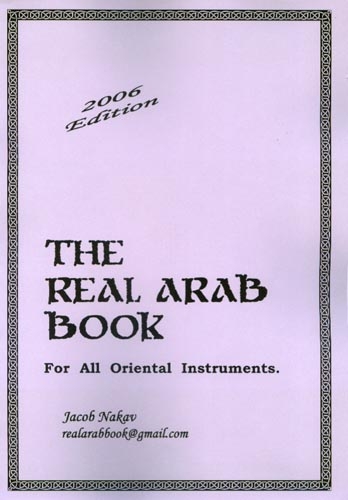
Although there's not much interest in this, I thought I'd post this that I came across because it made me laugh, given how folks complain about the (Great American) Fake/Real Book!

And, on the off chance, it's interesting for someone.
 
Last edited:
Well, my copy of the above arrived. Here's the first bar, page 1... Something different by way of key signature...

IMG_20220425_145622.jpg


That is jins Hijaz, with a 1½ tone step.
 
Last edited:
Well, my copy of the above arrived. Here's the first bar, page 1... Something different by way of key signature...
Well it's obvious what it means. You could also use that for any minor key for a song with #7 (harmonic minor).

Conventionally of course we would just have the two ♭ and add an accident for the F#. Doing this way does work, but may show you a bit at first if you are used to the conventional way.

In this case it is the same notes as the G harmonic minor but with a different tonic (D)
 
In this case it is the same notes as the G harmonic minor but with a different tonic (D)
Well, yes indeed; it has the character of playing a melody on harmonic minor.

Seems to me the development of adapting western notation for maqam is littered with such fun. I thought folks would be interested. Interesting to explore.
 
And it probably does make sense in a genre where (in this key) all the Fs are F#, whereas with G minor you may well find the majority are natural.
 
I can see why that's been done, but it assumes you always sharpen the 7th. Our way of writing minor key signatures only settled around 1700 ish. Prior to then it was common to have one fewer flat in a minor key signature than we have now, so Cmin would have just two. This was because ascending, the 6th would be sharpened anyway to A and the descending Ab would be put in as an accidental...
 
Sure. But there is no major vs. minor keys in maqam. I think it's capturing that this ½ step, 1½ step, ½ step from a tonic in D, as the base tetrachord.

.... Or

"Phrygian dominant scale is the fifth mode of the harmonic minor scale, the fifth being the dominant. Also called the altered Phrygian scale, dominant flat 2 flat 6 (in jazz), the Freygish scale
 
Last edited:
Had the pleasure to dogsbody for a gig by the Inger Hannisdal Ensemble last night. Norwegen/Middle Eastern folk fusion:

View: https://youtu.be/NdSzpFJYpQs


The sax player was Khalid Laaouam, my new saxophone besty. He spent some time explaining his special fingerings and invited me to Olso to chat more... I think, given my broken french, his broken English and our common broken Norwegian ....

Anyway, here's him improvising / takasiming.

View: https://youtu.be/djX4aiTcLkk
 
Last edited:
Had the pleasure to dogsbody for a gig by the Inger Hannisdal Ensemble last night. Norwegen/Middle Eastern folk fusion:

The sax player was Khalid Laaouam, my new saxophone besty. He spent some time explaining his special fingerings and invited me to Olso to chat more... I think, given my broken french, his broken English and our common broken Norwegian ....

Speaking of languages... What does "dogsbody" mean?
 
Just thought I'd park this here

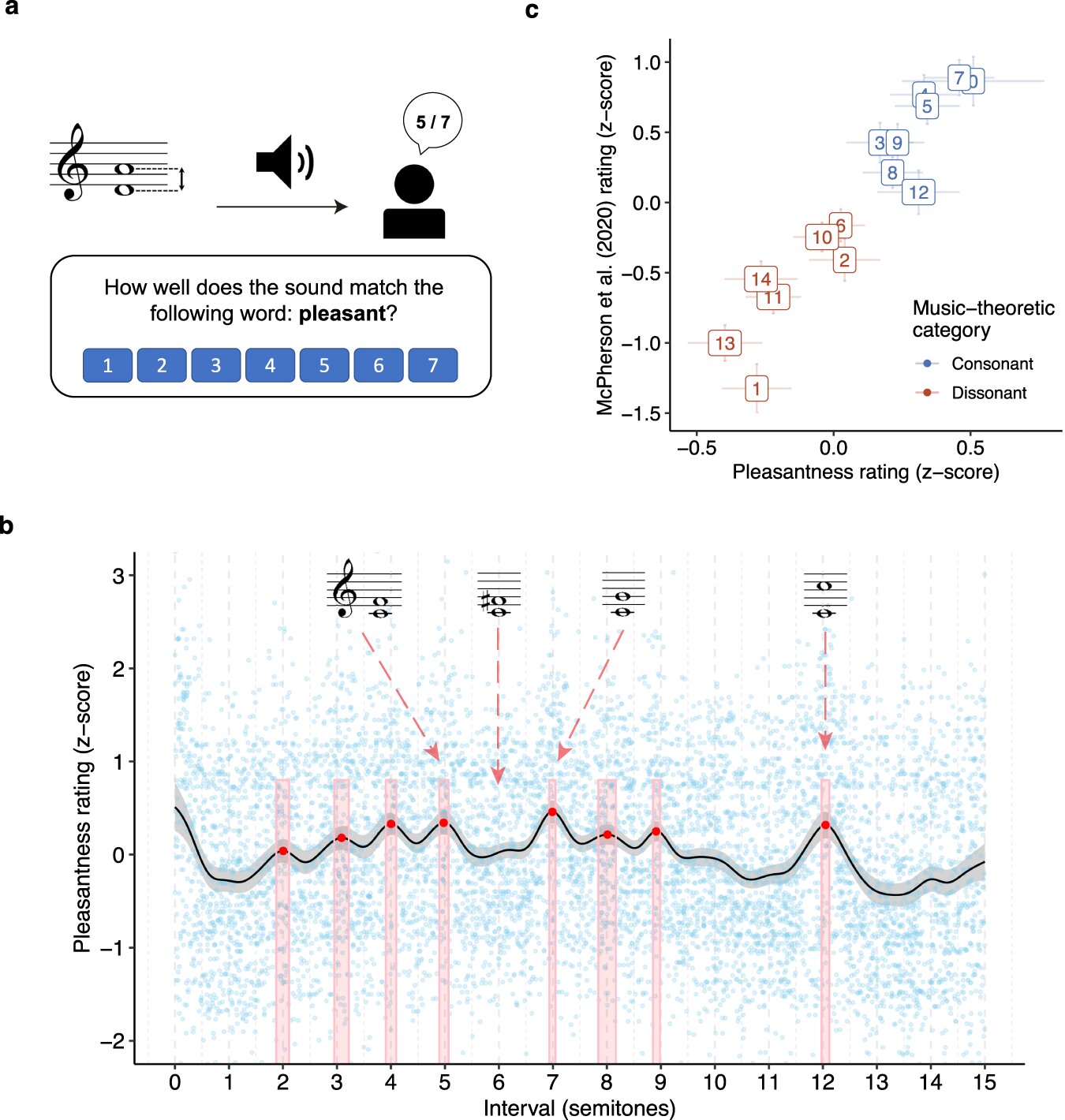
Pythagoras was wrong: There are no universal musical harmonies, study finds

 
Just thought I'd park this here

Pythagoras was wrong: There are no universal musical harmonies, study finds

Playing the triangle will never be the same again.
 

Similar threads... or are they? Maybe not but they could be worth reading anyway 😀

Social

New! Social Feeds

Look out for the navigation icon:

Follow CafeSaxophone

Latest Song of the Month

Trending

Forum statistics

Topics
32,063
Messages
578,430
Members
8,130
Latest member
tommyliehe
Back
Top Bottom