Saxophones Another Beaugnier

Removing the old padding from the model 37 Baldwin alto I got the impression that the last two techs who worked on this saxophone were both drunk.

The instrument was made in 1952 for the American market. Somehow it entered the Netherlands and someone , lets cal him tech 1, thought that it was a good idea to use pads slightly too thick for most of the saxophone. For the left hand main stack he used pads that where way too thick, so you couldn't close the right hand stack properly. It was played for a long time in this state. Than tech 2, lets call him plumber 1, scorched the pads with fire and proclaimed that the instrument couldn't be repaired as the screws where rusted.

It took some German röstloser and a bit of heat to take it apart. No problem.

Regarding the bore of the model 37 in comparison to a YamaVito model 7140:

internal diameter neck mpc side 37: 11,6 mm 7140: 12.3 mm
internal diameter neck tenon side 37: 22.7 mm 7140: 22,3 mm

Equal length and curvature neck when held side by side.

The Bell of the 7140 was slightly wider:
the internal diameter at the bottom of the last tone hole of the 7140 was 64 mm
This 64 mm internal diameter of the bell was reached at the top of the last tone hole for the model 37.
Measured by sticking a 64 mm diameter cilinder into the bell.

Max outer diameter of the bell 37: 126 mm 7140: 116 mm

They are not identical but the differences are not that big. Sound is also dependant on venting, key height, reflectors and other things.
 
The instrument was made in 1952 for the American market. Somehow it entered the Netherlands and someone , lets cal him tech 1, thought that it was a good idea to use pads slightly too thick for most of the saxophone. For the left hand main stack he used pads that where way too thick, so you couldn't close the right hand stack properly. It was played for a long time in this state.
@PigSquealer gave a good explanation in another thread. The sax is taken to a high volume shop that does instruments in bulk, say does instruments for schools that have loaners for the children. At the end of the school year, they get a large quantity, shuffle them out the door. They stock pads used by most saxes.

In comes a sax that has a different need. They may reject the vintage sax, saying it needs to be done by a specialist with that brand. Or, a tech there simply tries to make what is on hand work. This of course is less than optimal. Instead of ordering the right pad kit, the sax gets treated like all the others, out the door it goes with the wrong pads.

Seems that is what happened with yours.

Want to add, my recent acquisition, the Beaugnier Vito 37 alto came with 2 mouthpieces, a used beginners plastic and a fairly new Yamaha 4C.
 
I think the test will be @Woodpad 's photos. The Duke version came after, with bell pads on the more modern traditional right side and a different left pinky key pad than the 37's.

In 2012, I made a PDF printout of a discussion on SOTW, the PDF copy I saved truncated the URL in the footer and a search did not give me the page, shown here:
Code:
http://forum.saxontheweb.net/showthread.php?173771-VITO...
I saved these Duke Baritone Sax photos as JPG's, here is one of the left pinky key pad:

View attachment 30110
SOTW photo.

Since these were intended as beginner level instruments, it is possible that if a warehouse of parts was left over, to make the best of cost effectiveness for sales profits, that an earlier model could be sold as new at a later date.

I say this of course by conjecture. For example, I give my 1990 Dodge D150 long bed pickup truck that I purchased from the Albuquerque Auto Auction sponsored by the General Services Administration (GSA) doing their used fleet vehicle sales.

The government negotiated a cost for bulk purchase of these trucks for all federal government agencies. The Chrysler Corp. kept their bid competitive, by using up all excess parts left over from their previous year model.

My truck came with the 1989 year plastic radiator front grill, 1989 brake assemblies and various other parts. Bought with 60,000 miles on the odometer, after a couple years I needed to replace worn parts. The auto parts jobbers found a match with the previous year, because the 1990 year parts would not fit.

I think that THIS may be the page on SOTW which you saved as a PDF.

Rhys
 
@PigSquealer gave a good explanation in another thread. The sax is taken to a high volume shop that does instruments in bulk, say does instruments for schools that have loaners for the children. At the end of the school year, they get a large quantity, shuffle them out the door. They stock pads used by most saxes.
I found the level of the repad below the level of bad profesionals in the Netherlands. Materials and methods looked more like the work of bad amateurs. Stock pads of 4.2 mm thick would give a reasonable result. 3.0 mm pads are too thin. The 5 keys measured suggest an optimal thickness 0f 3.8 mm, which is not a standard size.

I bought the instrument cheap and I am happy to save it from being a walhanger. The left pinky table is identical to your model 38.
 
I found the level of the repad below the level of bad profesionals in the Netherlands. Materials and methods looked more like the work of bad amateurs. Stock pads of 4.2 mm thick would give a reasonable result. 3.0 mm pads are too thin. The 5 keys measured suggest an optimal thickness 0f 3.8 mm, which is not a standard size.
About the only thing one can do is scratch their heads. Perhaps it was done by an individual with no tech knowledge? At this point at least you are getting it straightened out with the correct pads. Should play beautifully when done.
I bought the instrument cheap and I am happy to save it from being a walhanger. The left pinky table is identical to your model 38.
Actually mine is a Model 37. It surprises me that it is in such good condition. I don't know what the cut-off date was for the last Model 37 to leave the factory. It seems there may have been production in Kenosha, Wisconsin, US with this model.
 
I found the level of the repad below the level of bad profesionals in the Netherlands.
No worries, if they immigrate here, we can "fix" that. Our edcuation is excelant. 😉

I tried out the Beaugnier Vito 37 today. It plays, but there is a bad right hand F pad, leather is hardened and split, leaks like a sieve. I don't think it needs a complete overhaul, replace a couple pads, fix cork bumpers, adjust.

I'll drop it off to Tarpley Music for service. I also learned something new. The sax does not fit in my Antigua Winds pro sax case. The bell is about 25 mm wider. I discovered this when I sat the 37 in my Antigua alto case, it doesn't fit. :doh:

Also the neck has a larger diameter tenon at least 2 mm greater. The sax has a bigger bore. Perhaps that accounts for its beautiful timbre?

Not pointing fingers to any particular individual (else I'll ask @LostCircuits to sic his Maine Coon cat 🐱 on you!) 😉 I am using BORE, a term to mean a cavity, a hole. Both saxophones and clarinets have a bore. Bore doesn't mean tubular and one must specify "conical" for saxes. 🙂
 
Last edited:
Actually mine is a Model 37. It surprises me that it is in such good condition. I don't know what the cut-off date was for the last Model 37 to leave the factory. It seems there may have been production in Kenosha, Wisconsin, US with this model.
My mistake, it is a model 37 as mentioned in my earlier posts with a serial number app. 1000 before yours. Visual it is not as good, but everything is tight, which is surprising for a 73 year old student instrument.
Also the neck has a larger diameter tenon at least 2 mm greater. The sax has a bigger bore. Perhaps that accounts for its beautiful timbre?
The neck and reflectors often have a lot of influence on the timbre. In the first part of the neck the bore increases pretty fast, Which is comparable with the Pierret, another beautiful sounding French saxophone.
How are the reflectors on your model 37? Mine didn't have any. I threw away all of the pads except the one on the neck, it is made of cork and still reliable. Next step is cleaning.
 
How are the reflectors on your model 37? Mine didn't have any. I threw away all of the pads except the one on the neck, it is made of cork and still reliable. Next step is cleaning.
Mine has plastic resonators. It is missing the neck plug protector for the octave pin, so I'm going to find a replacement.
 
Mine has plastic resonators. It is missing the neck plug protector for the octave pin, so I'm going to find a replacement.
Find something to celebrate, and open a bottle of champagne. The cork is a perfect fit. That’s what my Model 37 Vito came with. (I replaced it with a nice wooden one from an Etsy store. I think it cost $20…)
 
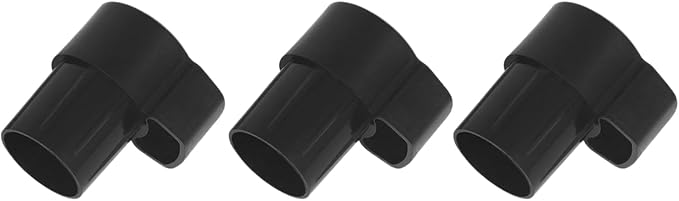
I found the right size on Amazon:

41cYIzZy1xL._AC_SX679_.jpg


It's tenon diameter is 26 mm / 1.02 in. and only $7 for 3.
 
I found the right size on Amazon:

41cYIzZy1xL._AC_SX679_.jpg


It's tenon diameter is 26 mm / 1.02 in. and only $7 for 3.
Well, that’s worth celebrating!!!! You can use the cork for key feet 😎
 
Champagne doesn’t keep very well. Invite some friends over, throw a party maybe have a jam session! Life is good, you now have enough end caps to buy 2 more dodgy saxes from ShopGoodwill !!!!!

Congrats on the Beaugnier, I love my 2 Beaugnier altos.
 
I never counted my end caps, but you can always store them for future saxophones, including champagne corks. However I did measure the space in my new old Beaugnier for all pads. Here are the results, in mm, for the height between the tone holes and key cup when all tone holes are closed parallel to the key cups.

left palm keys: F 3.4, Eb 3.4, D 3.4
Right hand palm keys: E 3.5 C 3.4, Bb 3.5.

For palm keys it is rare that this measure is equal for all three top keys. The obvious choice is 4.2 mm for leather pads, but this will result in a deep ring in the pad of 0.8 mm, or an indenture that is deep on the side of the key axis and less on the opposite side. Both choices have disadvantages, but the last one is the most popular. The ideal leather pad solution is the non existing 3.7 mm height. The resulting 0.3 indenture is a good compromise between life span and functionality. This can also be reached by using 3.0 mm pads with full shims.

left hand main stack: C# 3.7, B 3.2, Bb 3.0, A>Bb 3.6, A 3.4
right hand main stack: G# 4.1, F# 3.7, F 4.3, E3.8, D 4.0

The keys become larger and so does the differences between heights. 4.2 mm pads is still the obvious choice, except for the G#, F and D pads. 4.6 mm is possible but 4.2 mm with full shims is probably slightly better.

The pinkie keys vary only between 3.4 an 3.8 mm, which is quite good. When you measure these heights on another model 37 they would be different. Still it looks as if this saxophone was designed for 4.2 mm pads.
Now 4.2 mm pads can vary between 4.0 and 4.4 mm and if you have this range available this will improve the padding compared to using sets. The variation in measured height is not bad compared to measurements on other saxophones. It is in the top five.
 
Dropped off my Vito 23 & Antigua Winds altos at Tarpley Music yesterday for repair. Bought a Gator Andante ABS hard case for it, half price at $78 from Amazon. From photos I think the 23 will fit.
 

Similar threads... or are they? Maybe not but they could be worth reading anyway 😀

Social

New! Social Feeds

Look out for the navigation icon:

Follow CafeSaxophone

Latest Song of the Month

Trending

Forum statistics

Topics
32,035
Messages
577,533
Members
8,112
Latest member
gzeigler
Back
Top Bottom