



Saxophones Amati Kraslice “Big Beat” Lignatone Tenor.

Naltimar

New Member
Messages
1
Location
Glenmont, NY
I recently found this horn on Facebook Marketplace for $75. I’ve gone the AI route and loaded as much info into the googlebot to see what came up.

This is a NOS 1960s Amati Kraslice Lignatone Stencil Tenor Saxophone - stenciled “Big Beat” with matching neck/body serials. It has so few marks indicating use I could probably count them. It is absolutely pristine inside and out.

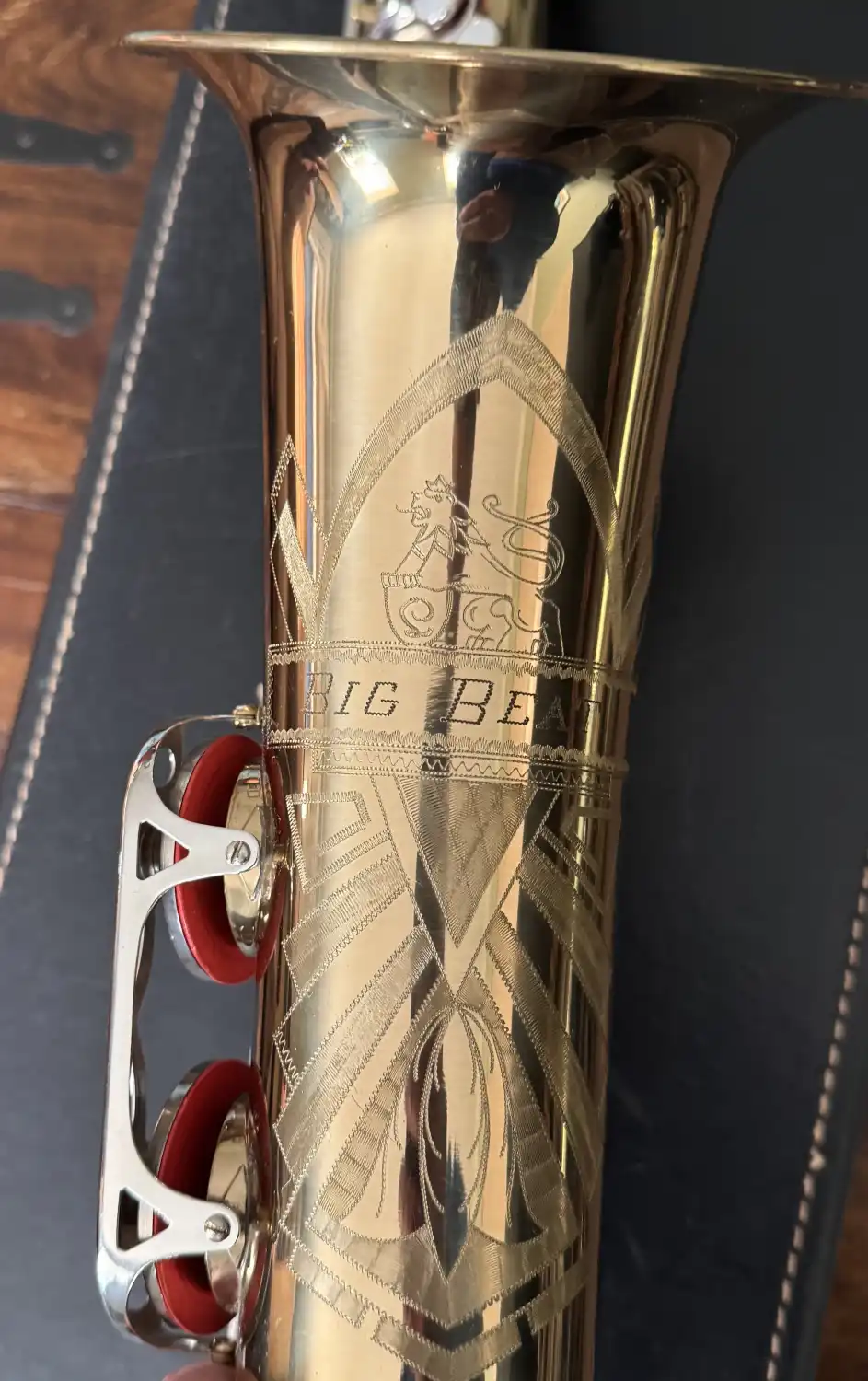
According to the robot overlords, the bright red pads are indicative of the era of horn from Amati. The “Big Beat” and Lignatone name and crowned double tailed lion logo are indicative of a line marketed in the 60s toward European and American players interested in the rock music movement.

I’m not joking when I say there are few signs of use. One small blemish on the back of the bell is the only thing that stands out.

Serial number is 51296 on the body and 296 on the neck, both of which have the “Made In Chechoslovakia” etching.

No rust. No tarnish. No lacquer degradation. The nickel silver keywork is just as bright and clean as the body.

In the teal velvet-lined case (original?) there were three mouthpieces: a white plastic stock mouthpiece with no markings (probably original provided stock piece), a black rubber mouthpiece with no markings, but the classic steel ring to prevent cracking, and a NOS, unused Santy Runyon “Red Pepper” Model custom 5 mouthpiece with original bright gold lig and original manufacturer’s box.

I’ve tried playing it but there are definitely leaks. I’d bet it was bought, played 2 or 3 times in the 60s, and then the player gave up and packed it away.

Anyone have any additional information on this horn?
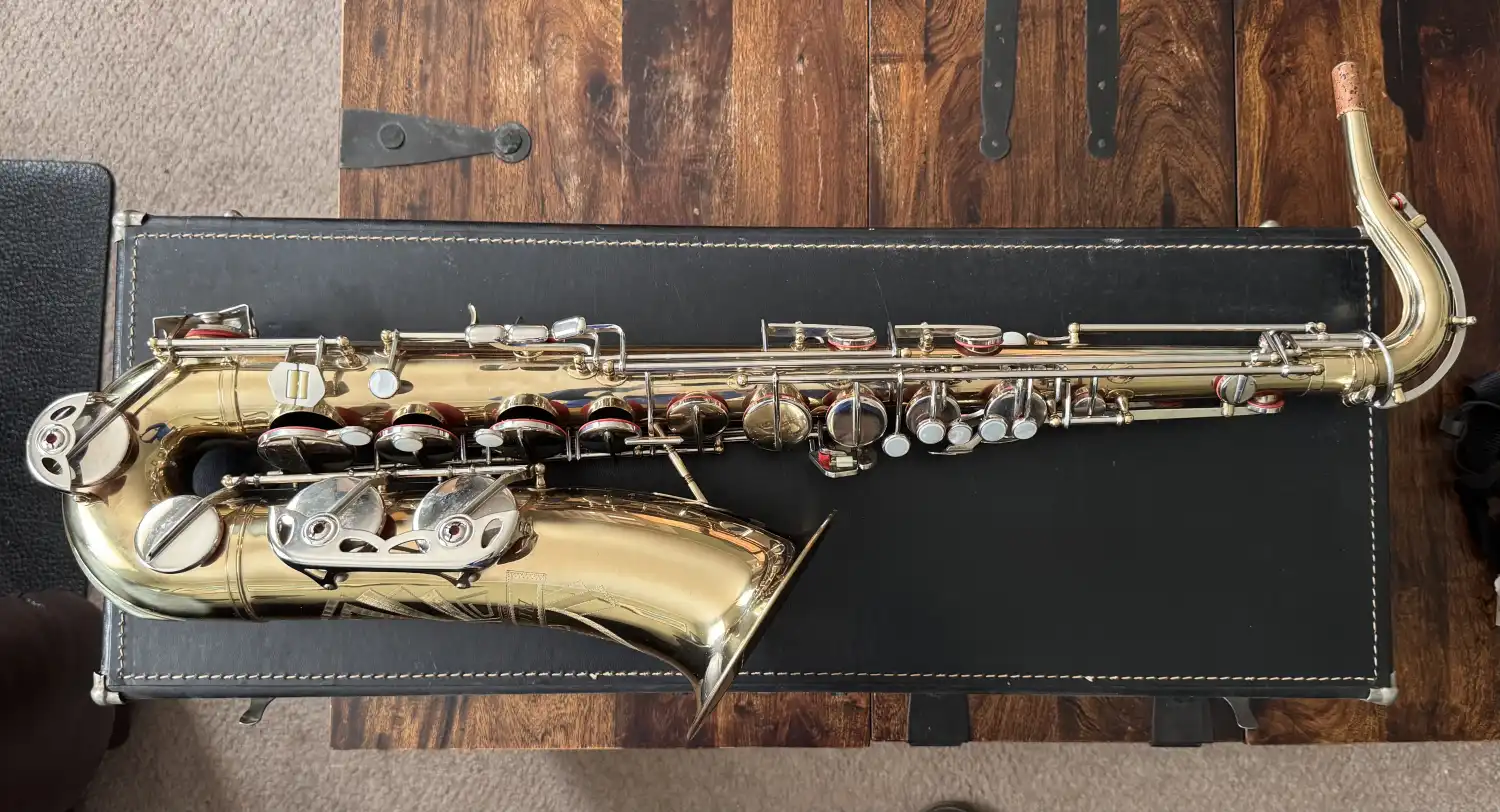
IMG_5330.webp

IMG_5336.webp


I can only upload 2 photos but if anyone is interested in looking at the rest HERE

Would love to know if it has any value. Google told me in its NOS condition might make it worth something…
 
I recently found this horn on Facebook Marketplace for $75. I’ve gone the AI route and loaded as much info into the googlebot to see what came up.

This is a NOS 1960s Amati Kraslice Lignatone Stencil Tenor Saxophone - stenciled “Big Beat” with matching neck/body serials. It has so few marks indicating use I could probably count them. It is absolutely pristine inside and out.

According to the robot overlords, the bright red pads are indicative of the era of horn from Amati. The “Big Beat” and Lignatone name and crowned double tailed lion logo are indicative of a line marketed in the 60s toward European and American players interested in the rock music movement.

I’m not joking when I say there are few signs of use. One small blemish on the back of the bell is the only thing that stands out.

Serial number is 51296 on the body and 296 on the neck, both of which have the “Made In Chechoslovakia” etching.

No rust. No tarnish. No lacquer degradation. The nickel silver keywork is just as bright and clean as the body.

In the teal velvet-lined case (original?) there were three mouthpieces: a white plastic stock mouthpiece with no markings (probably original provided stock piece), a black rubber mouthpiece with no markings, but the classic steel ring to prevent cracking, and a NOS, unused Santy Runyon “Red Pepper” Model custom 5 mouthpiece with original bright gold lig and original manufacturer’s box.

I’ve tried playing it but there are definitely leaks. I’d bet it was bought, played 2 or 3 times in the 60s, and then the player gave up and packed it away.

Anyone have any additional information on this horn?
View attachment 38322
View attachment 38323

I can only upload 2 photos but if anyone is interested in looking at the rest HERE

Would love to know if it has any value. Google told me in its NOS condition might make it worth something…
Welcome to the Café. Nice find and beautiful closet queen. Do you play ? I’m curious how the assorted mouthpieces play ? Values on any Amati are all over the place. The brand has kind of a cult following. I suggest and Fleabay search of sold closed listings. Compare similar models / years and condition. Then add what you think is the value added for better that usual cosmetic condition.
Mechanical condition, sitting so long the value could be very low. Less that a decent cosmetic condition in great playing condition. Why ? The pads may not seal or be completely dried out ( leaks everywhere). Would need a full repad to make playable. Cost, $600-$900. If the pads are decent the next fail would be regulation materials. The cork & felts. Cork can dry out and crumble, felt is wool. Look for moth damage. Regardless it still needs an oil change. A full disassembly (COA,clean,oil,adjust) clean the hinges, rods & pivots. New lubricants and reassembled.
This will cost a few hundred dollars. And is 1000% necessary. This is also a dynamic of value condition.
Don’t play it now other than the testing you’ve done. Accelerated ware from running on 66 year old oil gets expensive to fix.

So would a $75 sax be worth $500 ? No if it needs work.
 
Amati Classic model started around 1955 (c #37000) and ended around 1972 (c #100 000). A #51XXX sax can be made around 1967-1968? Amati made sopranos, altos, tenors and baritones. The model before "Classic" was called "Toneking" and the model after is called "Super Classic" and "Classic Deluxe".

The name "Lignatone" was used for the export market. Later on Amati export instruments was also branded with "Musica" and "Musica Steyr". Steyer" is a village in Austria close to the CZ border and Musica had an office/warehouse in Steyer. Conn before (UMI) and UMI had some connection to Musica Steyer as well.

I have never seen red pads on a Lignatone/Amati before. Old Dolnet Bel-Air amber dots saxes used to have reddish pads and Grassi had greenish pads on some models (Jade?).

The pads looks ok like the rest of the sax.

I like Amati saxes. On the darker side when we compare to modern saxes. They didn't copy the Selmer tone/sound that swiped over the world in the 60's/70's.

I don't think "Big Beat" was engraved in CZ.

I got most of the info above from an article in "Sonic - magazin für Holz- und Blechblasinstrumentarium" written by Uwe Ladwig.
Great information on a maker that very little is available on.
At this timeline above were any Keilwerth family members involved at Amati ? I forget where everyone ended up after all the lawsuits. The battles over the brand names and logos.
 
At this timeline above were any Keilwerth family members involved at Amati ?
I don't know. Richard Keilwerth stayed in Marknuekirchen (DDR/GDR) and continued to make/design windinstruments? "East and West" was not completly closed. I think there were some cooperation/collaboration.
 

Similar threads... or are they? Maybe not but they could be worth reading anyway 😀

Social

New! Social Feeds

Look out for the navigation icon:

Follow CafeSaxophone

Trending

Forum statistics

Topics
32,026
Messages
577,104
Members
8,110
Latest member
beaah
Back
Top Bottom