



 (bottom of page)

CafeSaxophone Forum
Tech/maintenance Math Geek Acoustics Anyone?
This post is to discuss specific information contained in "The Saxophone Is My Voice" by Ernest Ferron. Although the book contains several errors and some dated information nevertheless it is an excellent entry level text to learn more about saxophone acoustics.
On page 104 Ferron writes:
The basic question is why did Ferron divide by 3? What is his rationale for doing so once the distance to the antinode of the note a half step away is found by dividing (or multiplying) by 1.05946. The ramifications of this question are important since Ferron represents the "sensitive harmonic sites" in an alto neck in the illustration below copied from his book on p. 19. Note that he shows 3 octaves.
A Mark VI alto neck including the tenon measures 195 mm. Going from the antinode length of G which is 362.81 mm according to Ferron's figures and the antinode of G an octave higher 362.81 / 2 = 181.405 would indicate that the difference of 181.405 would encompass nearly the entire 195 mm length of the neck. This would indicate that there are not 3 octaves of antinode positions, but only one.
My thinking is that the illustrations of "the sensitive harmonic sites" in alto and tenor necks in Ferron's book that have been widely distributed on the internet are incorrect because of the division by 3 which does not make any sense to me. Am I missing something here? Opposing thoughts and opinions are welcome.
44 Replies
·
8739 views

Introduction Hello!
I would like to introduce myself. My handle is Viljams (IYKYK). I am a trained woodwinds player (clarinet major). The sax became my focus in college (university for all you European folks), but the clarinet paid my bills! I have been a classroom music teacher, a fulltime private instructor, and played in all kind of ensembles/bands. I even had the privilege of joining the Chicago Musicians Union so I could play one gig. But hey that was the '70's in Chicago! I haven't played much in recent years due to my career and a lot of travel. I am hoping to restart things soon. I already did that once in my life and found that the restart resulted in me playing better than ever. Looking forward to following the various threads and journeys that others are on.
2 Replies
·
35 views

I'm wondering if anyone's noticed a change in the consistency of Vandoren Java Red reeds recently? My last two boxes have been noticeably substandard, with the last box not having a single, decent reed in it. Resistance has increased noticeably and the sound is much less bright. I swapped in an old Red and it was great.
It feels like they've changed how they gauge the Reds, or changed the design slightly. Is it just me or has anyone had this recently?
It feels like they've changed how they gauge the Reds, or changed the design slightly. Is it just me or has anyone had this recently?
19 Replies
·
385 views
Miscellaneous Your Favourite Picture Of You Playing
We spend so much time ripping apart our playing, dissecting all of our flaws and generally not celebrating our successes that I thought a thread where we share our favourites images of ourselves playing would make a nice change.
I'll get the ball rolling with this image taken by my other half at a ska gig. It was my first ever experience of stepping in at the last moment (48 hours earlier I'd never even heard most of the 30 or 40 songs, never mind played them). Actually, thinking about it, it was the first time I'd ever played ska music. It was also my first gig with my Keilwerth. Musically it was a bit of a disaster - the band wasn't well rehearsed (to say the least) and the singer kept changing the arrangements as he sang. The first 45-50 minute set was over in under 30! But other than my G# sticking on one song, that I couldn't hear because I was stood next to the PA speaker with no monitoring at all, I think I pulled off my parts without embarrassing myself. At least not too badly. 😉
It was definitely a fun gig but I'd be lying if I said I'm not also glad that there are no recordings from the night or that my name was never mentioned. 😉 Normally I prefer action shots but there's just something atmospheric about this picture that I really like.

I'll get the ball rolling with this image taken by my other half at a ska gig. It was my first ever experience of stepping in at the last moment (48 hours earlier I'd never even heard most of the 30 or 40 songs, never mind played them). Actually, thinking about it, it was the first time I'd ever played ska music. It was also my first gig with my Keilwerth. Musically it was a bit of a disaster - the band wasn't well rehearsed (to say the least) and the singer kept changing the arrangements as he sang. The first 45-50 minute set was over in under 30! But other than my G# sticking on one song, that I couldn't hear because I was stood next to the PA speaker with no monitoring at all, I think I pulled off my parts without embarrassing myself. At least not too badly. 😉
It was definitely a fun gig but I'd be lying if I said I'm not also glad that there are no recordings from the night or that my name was never mentioned. 😉 Normally I prefer action shots but there's just something atmospheric about this picture that I really like.
479 Replies
·
35421 views

Cafe Moderator
Theory & Impro Using patterns in jazz impro
There are many approaches you can take to improvising from just playing what comes into your head to assessing chord tone and associated scales or melodic phrases based on "vocabulary." The great thing about using patterns though is that so often you needn't bother too much about wrong notes because the mere fact that a short motif may be moving in a pseudo mathematically patterned way, often it (the pattern) let's you "get away" with notes that in a more melodic or random setting might sound wrong. The more cynical among us might say if you play anything fast enough you get away with wrong notes.
You could find for example the first two bars of this could work well on a C7 or D7, it doesn't need to be an augmented or any other kind of alteration. Likewise it be OK on A minor. What I'm saying is the brain is taken somewhere else by the patternistic nature and provided you come out of it with some kind of neat resolution then you are fine.

You could find for example the first two bars of this could work well on a C7 or D7, it doesn't need to be an augmented or any other kind of alteration. Likewise it be OK on A minor. What I'm saying is the brain is taken somewhere else by the patternistic nature and provided you come out of it with some kind of neat resolution then you are fine.
0 Replies
·
21 views
Saxophones Alto for warm tone
Me again!
I'm curious to know - what alto do you think produces the warmest, most mellow tone?
No particular reason for asking just pure curiosity........
I'm curious to know - what alto do you think produces the warmest, most mellow tone?
No particular reason for asking just pure curiosity........
37 Replies
·
634 views

Tech/maintenance Super glued pads - a cry for help
Hello, folks. Many of you may know me from that other site.
A while back, I bought a nice, shiny purple logo Yts-32 from a guy in Japan. It arrived unplayable due to leaks. No prob, I think. I'll fix 'er right up. Wrong again.
The pads are glued in with ca glue. Lots of it, filling the cups. It is very hard and thick. I have scraped out a couple of pad cups. It was a long, tedious drudge. Acetone barely softens the surface.
Is there a better way?
37 Replies
·
586 views
Miscellaneous Old Saxophone Advertisements or Case Emblems ?
Anyone have vintage catalogs, advertising or case emblem pictures / copies to share ?
Store emblems make for some fascinating historical research.
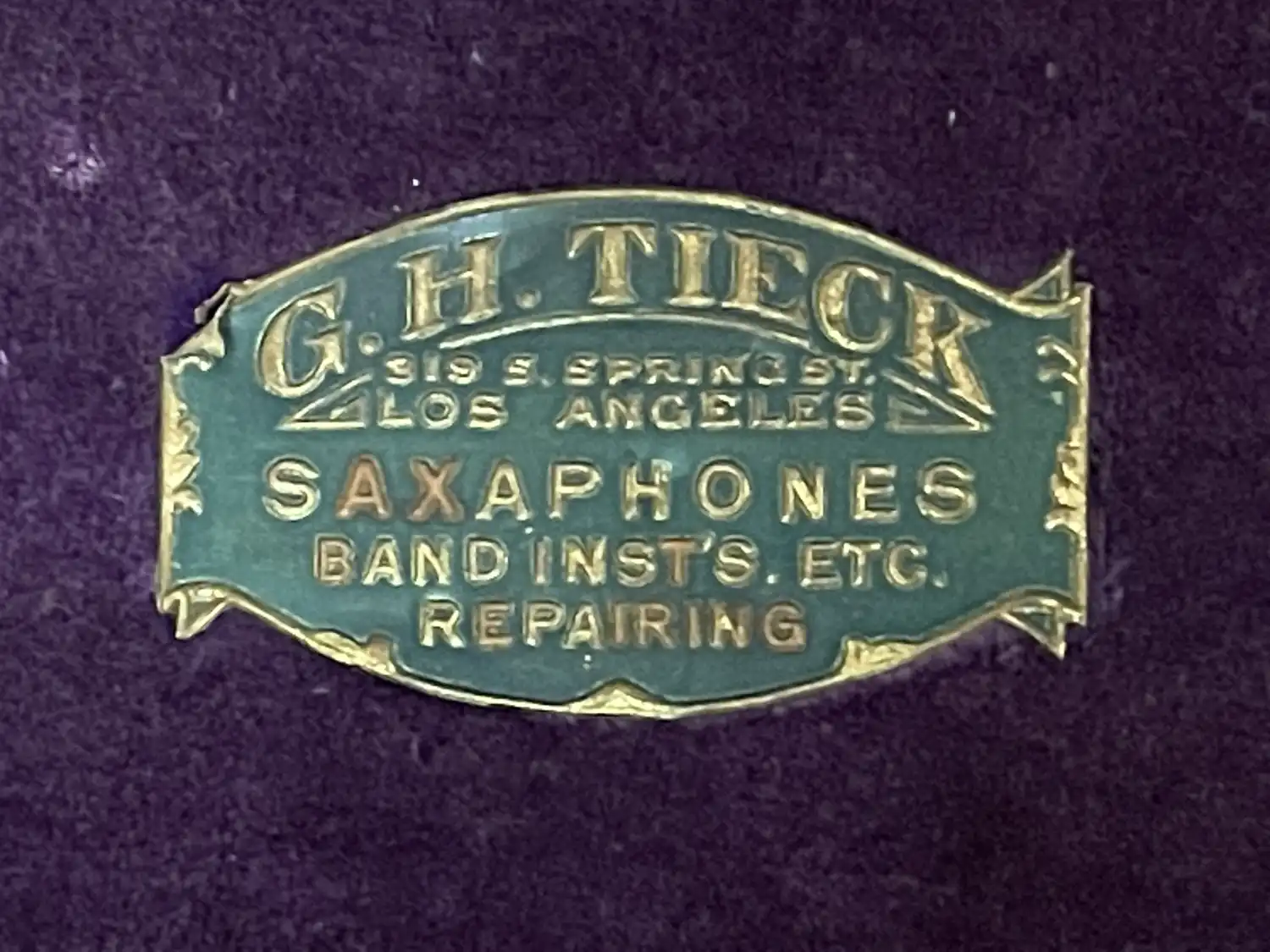


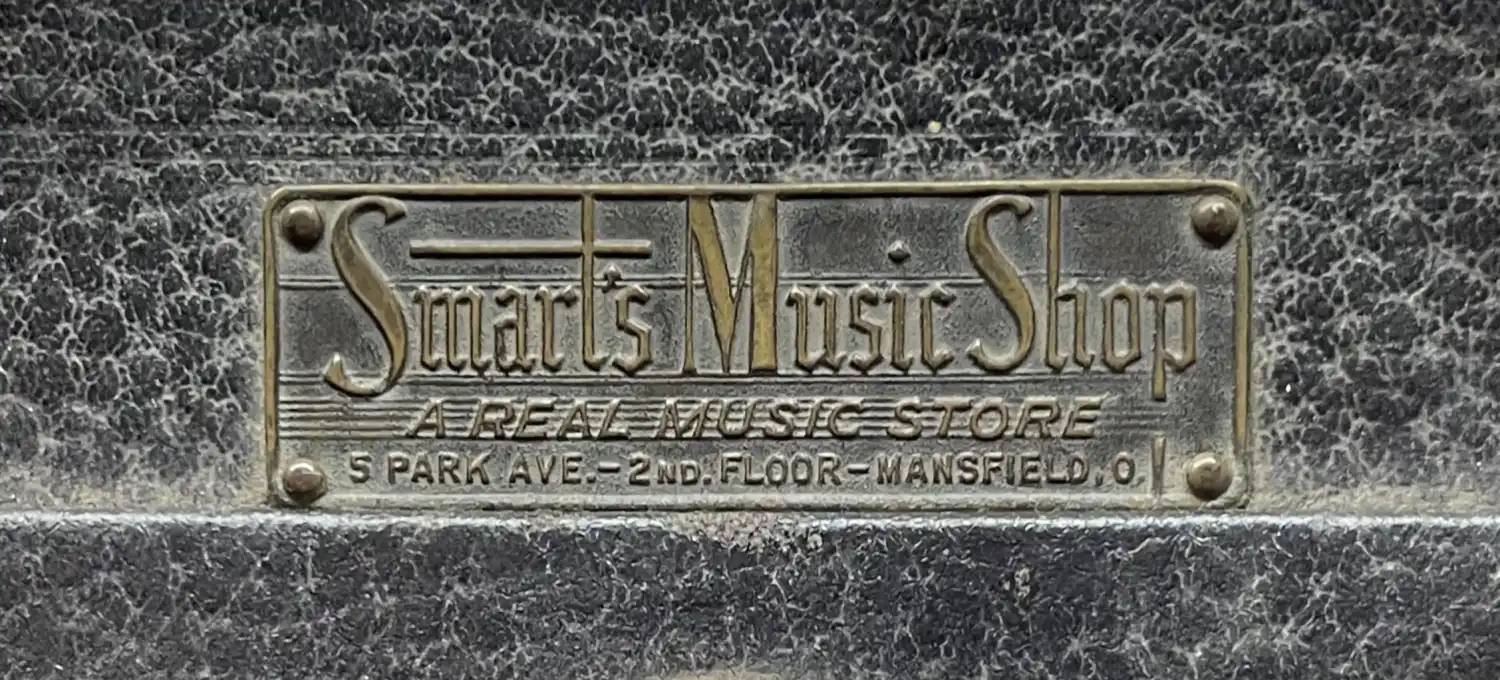

This sax below came from Smarts Music Shop. Could it be the one in display case ?

Store emblems make for some fascinating historical research.
This sax below came from Smarts Music Shop. Could it be the one in display case ?
71 Replies
·
1820 views
Hello everyone
my turn to be SOTM host again, I've chosen 'Footprints' by Wayne Shorter.
I've added lead sheets and backing tracks HERE
Lead sheets - there is one for Eb instruments, and Bb has a high version, for people with leaky low notes, and a low version for people who don't like palm keys. There are some adventurous looking tuplets, but if you're struggling with them have a listen along to the original (below) and it makes a lot more sense. Structurally, think of it as a Cm (concert pitch) blues, with a more harmonically exciting turnaround at the end.
Backing tracks - I had a look on ireal pro but none of the backing tracks really captured the feel/rhythm correctly, so the backing track uploaded is me bashing away at a piano and a drum module in Reaper. It's more natural sounding than the iReal stuff, but still not great so if you've got a better one feel free to use that! There are two versions of my homemade one, both with a four bar intro - one that repeats 6x, and one that's just 3x, although you could argue both versions are....SHORTER 😉
Here's the original:
View: https://www.youtube.com/watch?v=LgaIUqH0w6c&list=RDLgaIUqH0w6c&start_radio=1
Looking forward to hearing your recordings.
my turn to be SOTM host again, I've chosen 'Footprints' by Wayne Shorter.
I've added lead sheets and backing tracks HERE
Lead sheets - there is one for Eb instruments, and Bb has a high version, for people with leaky low notes, and a low version for people who don't like palm keys. There are some adventurous looking tuplets, but if you're struggling with them have a listen along to the original (below) and it makes a lot more sense. Structurally, think of it as a Cm (concert pitch) blues, with a more harmonically exciting turnaround at the end.
Backing tracks - I had a look on ireal pro but none of the backing tracks really captured the feel/rhythm correctly, so the backing track uploaded is me bashing away at a piano and a drum module in Reaper. It's more natural sounding than the iReal stuff, but still not great so if you've got a better one feel free to use that! There are two versions of my homemade one, both with a four bar intro - one that repeats 6x, and one that's just 3x, although you could argue both versions are....SHORTER 😉
Here's the original:
Looking forward to hearing your recordings.
9 Replies
·
516 views
Saxophones The Alphabet of Tone
The Alphabet of Tone
words often encountered when one discusses or expresses an instruments tone....
Bright
Warm
Rich
Dark
Lush
Centered / Focused
Spread
what else have YOU heard?
words often encountered when one discusses or expresses an instruments tone....
Bright
Warm
Rich
Dark
Lush
Centered / Focused
Spread
what else have YOU heard?
8 Replies
·
137 views
Saxophones Trying to date my Amati Kraslice Tenor
Hi everyone!
A coworker's grandma passed away and her family passed her Amati Kraslice Tenor on to me.
It looks quite old (for example: the whole thing is silber, but the inside of the bell is gold), but me and my friends didn't have any luck finding something with the serial number.
The serial number is: 43826
I've added some photos, maybe this will help 🙂
Thanks already!!
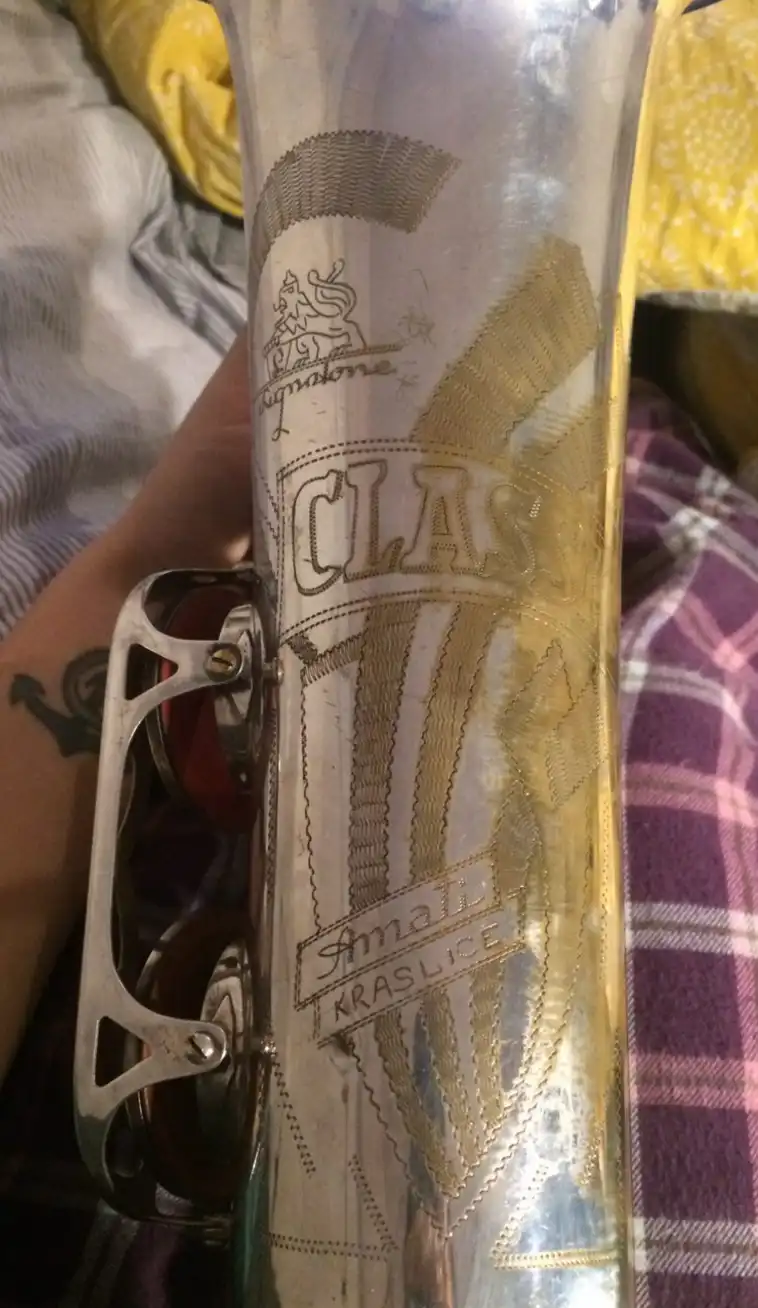
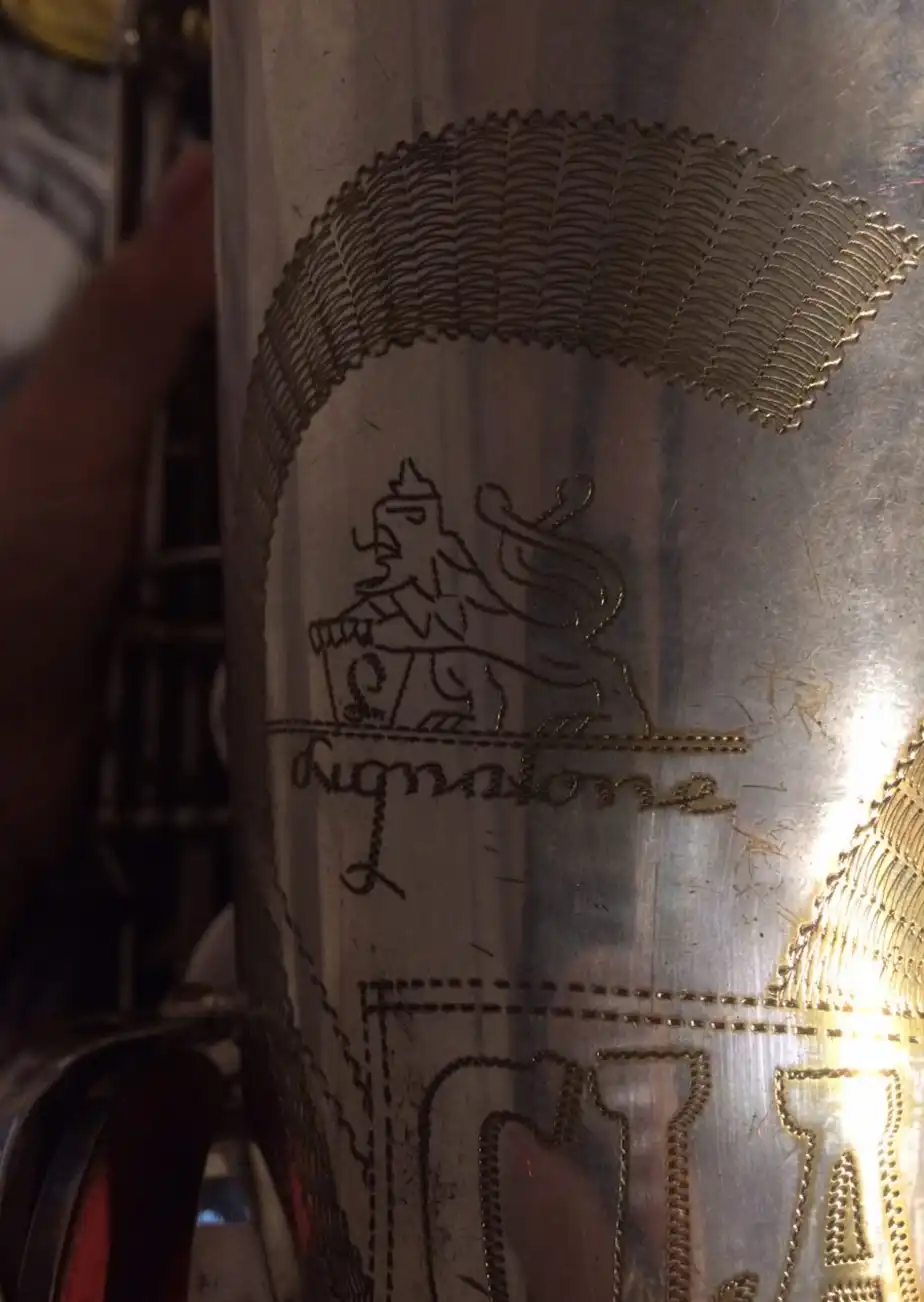
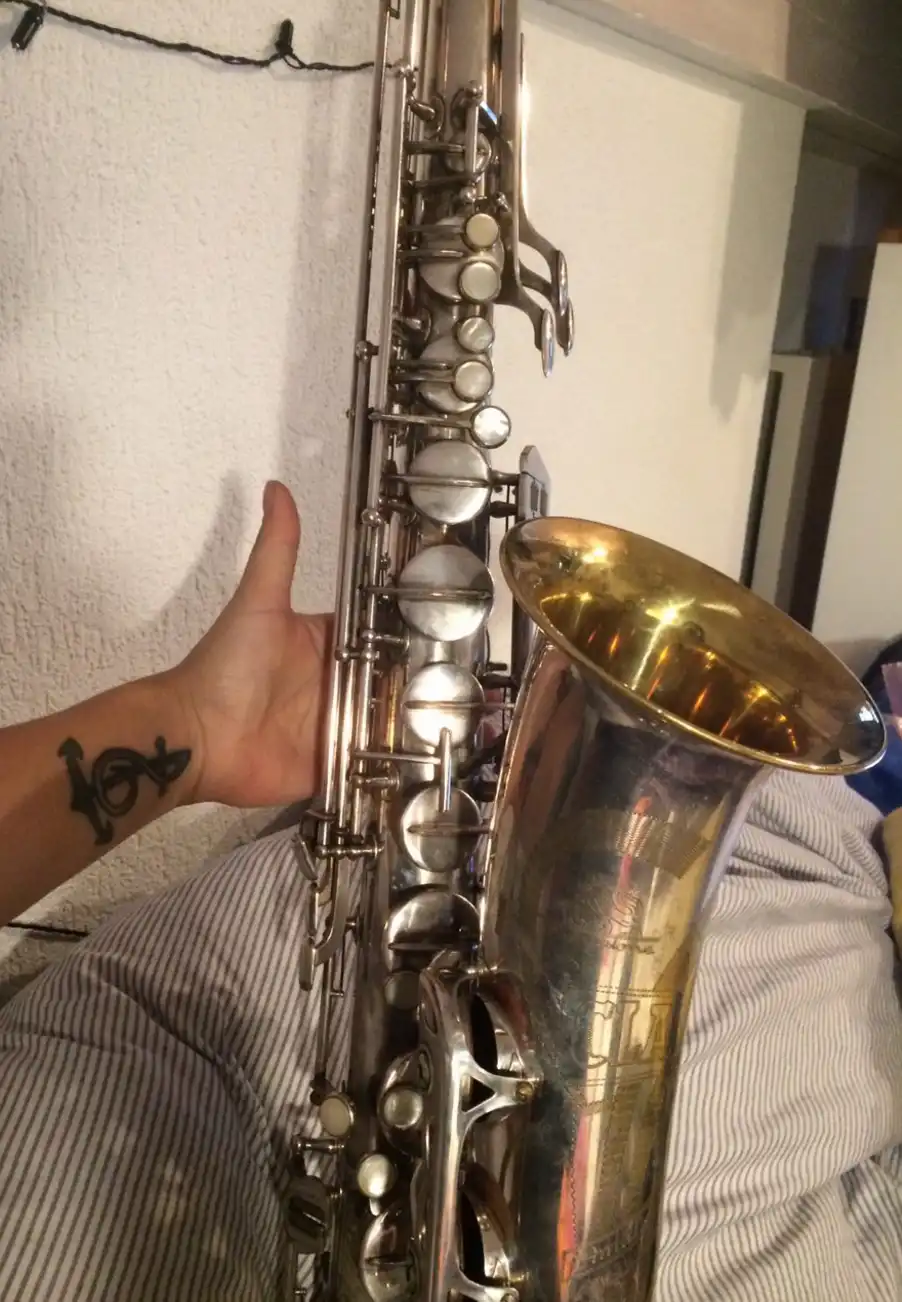
A coworker's grandma passed away and her family passed her Amati Kraslice Tenor on to me.
It looks quite old (for example: the whole thing is silber, but the inside of the bell is gold), but me and my friends didn't have any luck finding something with the serial number.
The serial number is: 43826
I've added some photos, maybe this will help 🙂
Thanks already!!
17 Replies
·
9977 views

I found this ancient Otto Langey Saxophone Fingering Chart, circa 1890, inside the case of a 1921 C Melody sax. The condition is poor, but it's still a cool find. I gather it's a fingering chart for those transitioning from the "older" 12-key saxophone to the "newer" 15-key layout. I don't see a date on this anywhere, so the 1890 guess came from the PC.
14 Replies
·
312 views


Miscellaneous Photography - all aspects
Following various recent posts, I thought I would create a thread specifically for photography. Somewhere to talk about equipment, experiences, processing...
To start off, I was a Nikon user for over 40 years, but had to 'down size' as handling full-frame cameras and lenses was getting to be too much like hard work and giving me shoulder issues. My current digital camera is a mirrorless Fuji X-T5.
For film cameras, I have a Pentax MX, Mamiya RB67, and a Sinar F2.
426 Replies
·
16528 views

Cafe Moderator
Café Supporter
Miscellaneous Daily Check In
Good morning,
We thought it might be good to have a thread where you can just come and say hi, tell us what you are doing today, have a moan, share an idea that you wouldn't necessarily start a thread for ( we can always create a new thread from posts here if it became a substantial discussion).
It doesn't have to be sax related🙂
Basically an easy way to connect on a daily basis.
So to kick us off, I am writing this whilst prepping a casserole for the slo cooker as I am playing sax today with café sax and need a quick easy tea when I get home.
I am still suffering with a cough which will impact my playing today and I am worried as we are playing our first care home gig next Sunday!!
Have a lovely Sunday
Jx
2987 Replies
·
96240 views

Cafe Moderator
Cafe Announcements 📣 Testing new feature: Social Feed
As some of you have noticed we are testing a new forum feature that may or may not be made permanent. It is still under development so any critique, bug reports are welcome.
This is a different way of viewing recent posts, in a social media type view. This is never going to replace the existing traditional forum / subforum and new posts view, rather it's an alternative if you like that kind of view. So we don't need need an opinion on the feature itself. In fact I don't really like it myself. The reason is to make the forum more familiar and hopefully less perplexing for new users who may be used to this type of view but not the traditional forum format.
Currently the access to Social Feed is a sub menu item of New (along with the various different New views). You can also switch back and forth between the SF view and trad view via a link at the top of each thread. Social Feeds shows the latest started or replied to threads showing the first post and latest two or three replies. The Load More Replies link opens up each thread to show all replies (but we may reduce that to 10 or so at a time)
If you reply to a post in SF format it will show as "nested" but when viewing the same post in traditional view it will have the post it is replying to as a quote. (or rather, it should do with any luck)
Please supply any comments in this thread, so not interrupt normal threads with comments about the Social Feeds system.
Again: this is totally optional and will not replace any current view so we won't be taking a poll on whether you like/want it or not.
What will be most useful is if those of you who are used to this kind of feed with social media can comment in this thread which may be sticky for a while
Do you use the social feed?
10 votes total
31 Replies
·
2111 views
Social

Latest Song of the Month
-
 SOTM November 26 SOTM - Footprints - Wayne Shorter
- Started by sax panther
- Replies: 9
-
-
 SOTM SotM September 2026 - Autumn Leaves
- Started by mrblackbat
- Replies: 27
-

-

-
 SOTM SOTM June 2026 "And You Just Smile" (from ear to ear- training)
- Started by LostCircuits
- Replies: 11
-
 SOTM SOTM May 2026 - Always Remember Us This Way
- Started by MikeMorrell
- Replies: 39
-
 SOTM SOTM April 2026 - Freedom Jazz Dance
- Started by rhysonsax
- Replies: 14
-
SOTM SOTM and PETE (Play by Ear Training Exercise)
- Started by Wade Cornell
- Replies: 16
-
SOTM SOTM Feb 2026 - On Green Dolphin Street
- Started by mrblackbat
- Replies: 44
-
 SOTM SOTM January 2026: Our Love Is Here to Stay
- Started by GCinCT
- Replies: 46
-
SOTM SOTM December 2025: Wexford Carol
- Started by MikeMorrell
- Replies: 37
Member Blogs (currently active)
-
 Saxophones Pork Tales: Saxophone Repair DIY Adventures.
- Started by PigSquealer
- Replies: 1K
-

-
Trending


Popular Discussions
-
 Great Players Who sparked your love of Sax music
- Started by jools
- Replies: 625
-
 Playing the saxophone The Cafe Trio grown to Octet down to Sextet
- Started by trimmy
- Replies: 846
-
 Theory & Impro Do we really need theory?
- Started by jbtsax
- Replies: 507
-
 Saxophones C Melody Saxophones
- Started by Andy Hornblower
- Replies: 706
-
 Saxophones Carrying a tenor on a (motor)bike?
- Started by Jay
- Replies: 779
-
 Saxophones How will Tariffs affect Sax Prices?
- Started by Ivan
- Replies: 465
-

-
 Playing the saxophone Learn to play by ear or by reading music
- Started by Taz
- Replies: 1K
-
 Tech/maintenance My new "DIY" pads...
- Started by DavidUK
- Replies: 393
-
Misc Reviews Yamaha YDS-150 Wind Synth
- Started by Acc6441
- Replies: 301