Saxophones Vintage Alto Sax

Lazza

Member
Messages
6
Location
Surrey UK
[ADMIN EDIT: changed to alto]

Hey Everyone,
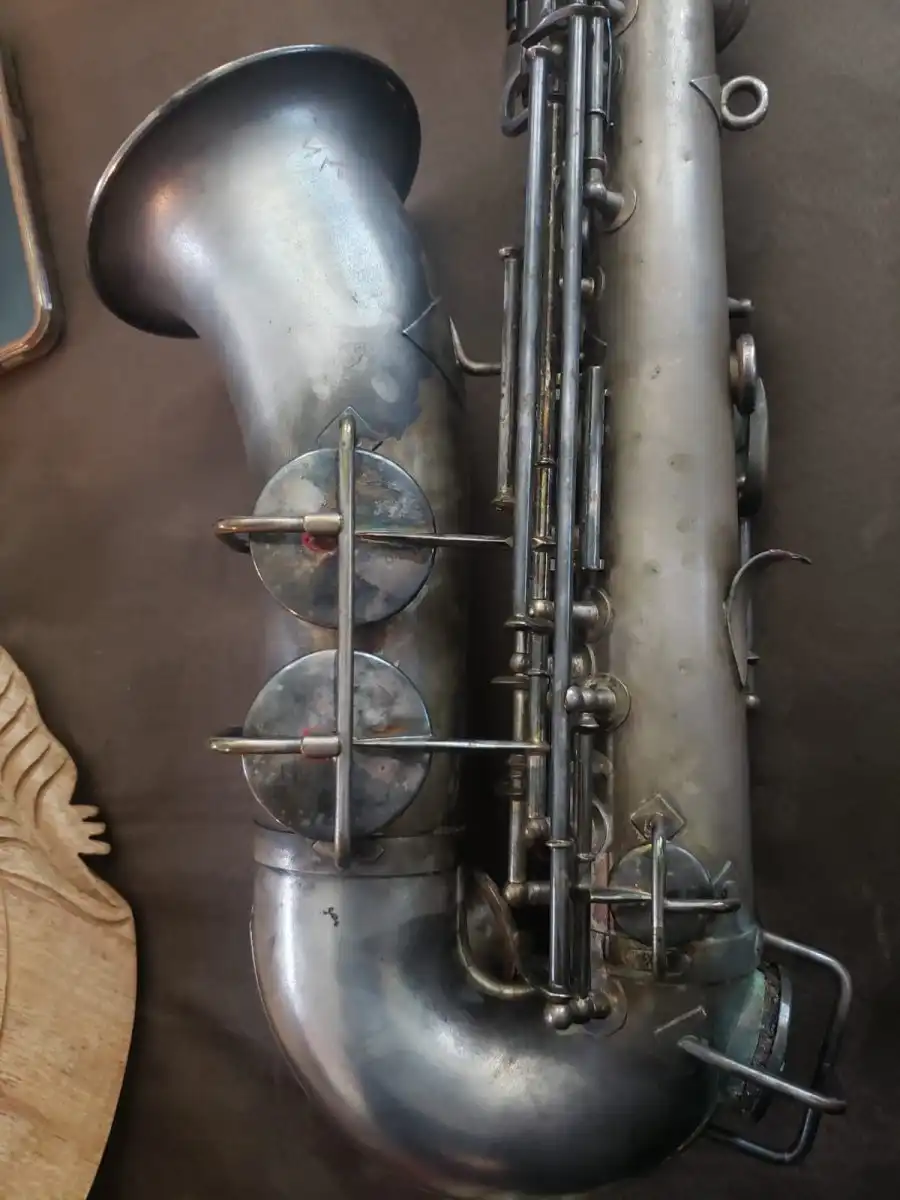
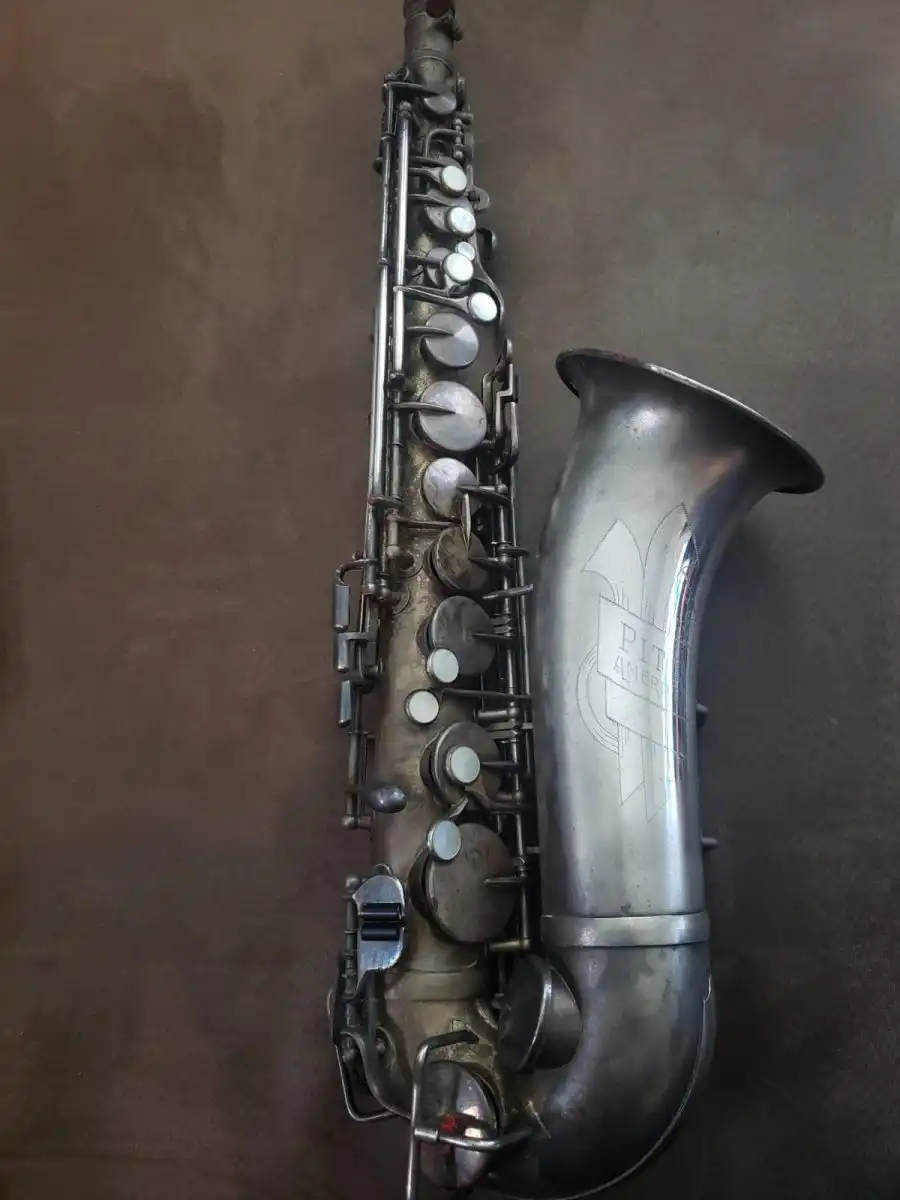
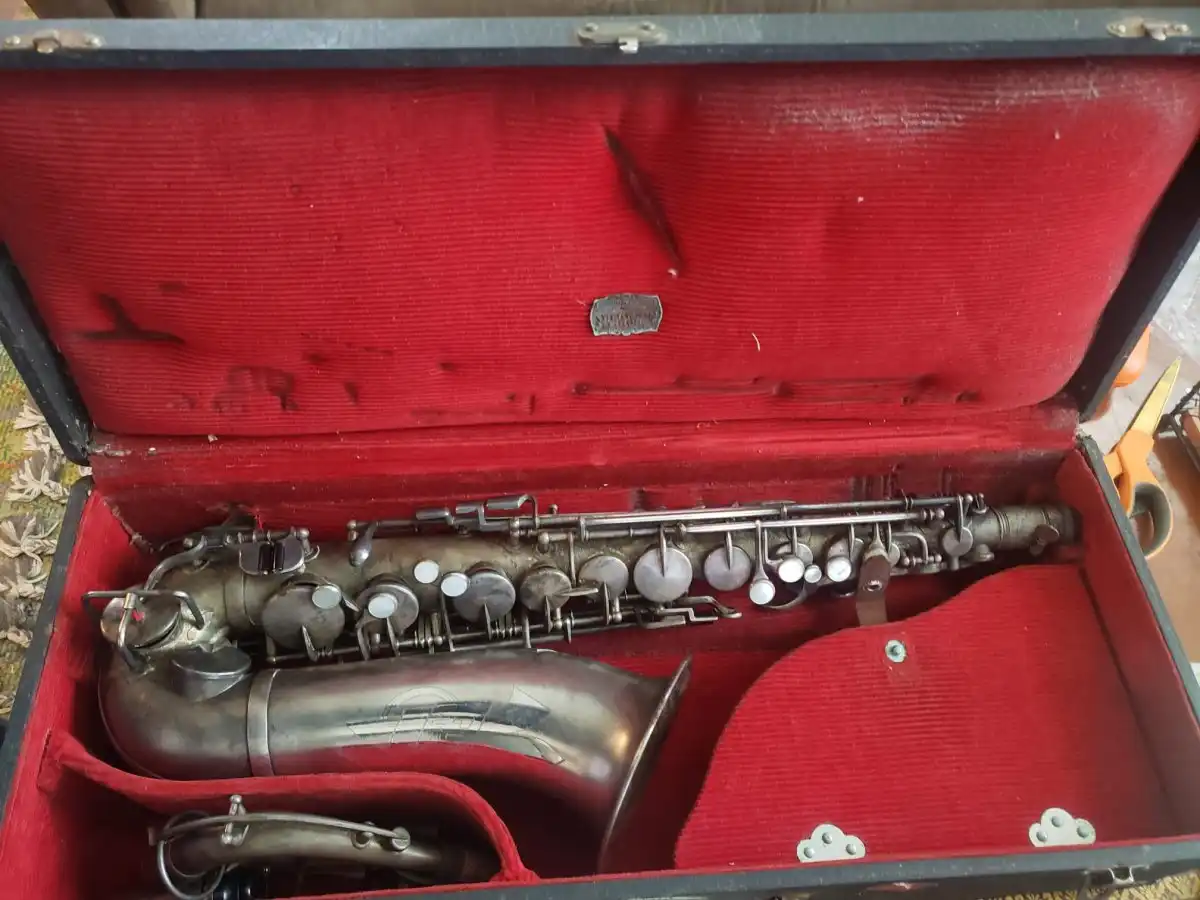
A friend of mine a has bought an old Pitt Alto Sax (images below). She is keen to learn about the history of make etc. I've had a look online, but can't find anything too useful so wondered if you all have come across this make?
Many thanks!
6c7d434f-570a-43f0-bb8a-cea43c437714.jpg
246de705-d730-4771-a5fd-63377a43a647.jpg
a991ae38-3f94-4938-b300-5196e848a0ce.jpg
 
Last edited by a moderator:
Google is your friend...

The first link below expands from mouthpieces to horns.


And...


Does she plan to make it playable again? I'd say it's going to be uneconomical to repair.

Being a rare model isn't necessarily good. It means it's not going to be sought after by many which in turn means it has a low value.

From its overall appearance, and the one pad I can just see, it's going to need a full overhaul at £400-600-ish. Then it might be worth £100-200 but will still take a while to find someone who wants one.
 
Last edited:
Vote:
Upvote 0
Looks like a King "American Standard" stencil :
 
Vote:
Upvote 0
Fully keyed, with fork Eb, an in excellent structural shape it seems....would be a nice player when refurbished but the question (as noted by others) is whether it is worth it to spend for an overhaul on a horn which, on a good market day, would be worth $500usd (400 quid) tops it tip-top shape.

If you can find a repairer to do it for that amount/equivalent....go for it.

This would make a nice vintage sax for a beginner, it'd cause no problems.

If the repair estimates come back significantly over, say, $600 (475 quid)....your friend can sell it for around 100, perhaps...or keep it as a nice piece of curio.
 
Vote:
Upvote 0
No offense, but someone who doesn’t know the difference between alto and tenor perhaps shouldn’t dabble in the vintage horn market until they gain a little more expertise.

Contrary to Jaye, I wouldn’t pay more than $50 for that horn if I were inclined to do a full overhaul myself.
 
Vote:
Upvote 0
Double G keys on this one? The open G# key. It was possible to have the right hand fingers down and play G#. I was told that the A came out better with this system.I bought an old King with this system but too hard for me to fix/set-up.
 
Vote:
Upvote 0
Double G keys on this one? The open G# key. It was possible to have the right hand fingers down and play G#. I was told that the A came out better with this system.I bought an old King with this system but too hard for me to fix/set-up.
That's not how the G# trill key in the right hand works. If you put down the right hand keys, the G# will close via the linkage on the top F# cup. So, no you can't play G# with your right hand fingers down. I don't know of any saxes that work that way.

To operate the G# trill key, finger G# normally (LH 123 pinky), then the G# trill fingered with RH 2 will close the G#, giving you a G natural. I guess the idea is that you can move your middle finger faster than your pinky. Personally, on vintage horns like this, I pretend all those extra keys don't exist. Otherwise, I'll make mistakes when I pick up a modern horn that doesn't have them.
 
Vote:
Upvote 0
Well that explain why I didn't understand the old King DIY alto I tried to work on.

"...... and G sharp trill key in vogue at the time, the unique “open” G sharp pad. I’ve always considered this system to be a great idea, and have often wondered why it was not adopted by other makers. This system involves using a double set of pads actuated by the G key, one corresponding to the note G, the other to the note G sharp. This has two benefits: the player can leave the right hand keys depressed while using the left hand mechanism (think of a D arpeggio), and the intonation of the problematic note A is vastly improved."
 
Vote:
Upvote 0

Social

New! Social Feeds

Look out for the navigation icon:

Follow CafeSaxophone

Latest Song of the Month

Trending

Forum statistics

Topics
32,045
Messages
577,834
Members
8,111
Latest member
Simonob
Back
Top Bottom