Saxophones Yanagisawa a4 without original neck

Murillogf

Member
Messages
13
Location
Brazil
Hi,

I currently have an unknown saxophone from the 20s but I find that I have to work quite a lot to play in tune. I really love the vintage sound and I decided to step up and buy a vintage saxophone from Yanagisawa, but since there are not many where I live I bough online an used Yanagisawa A4 for around 1050 euros including shipping.

I just realized that the saxophone I bought doesn't have the original neck from Yanagisawa (after I had already paid it). It looks to be in good condition but now I think I m starting to regret my choice. Is it still worth the purchase? Does the neck from a vintage saxophone would affect too much the sound and tuning? Or should I maybe ask the seller to revert the purchase? I feel like it's a lot of money to only having a body from Yanagisawa in case it's indeed not original. Thanks
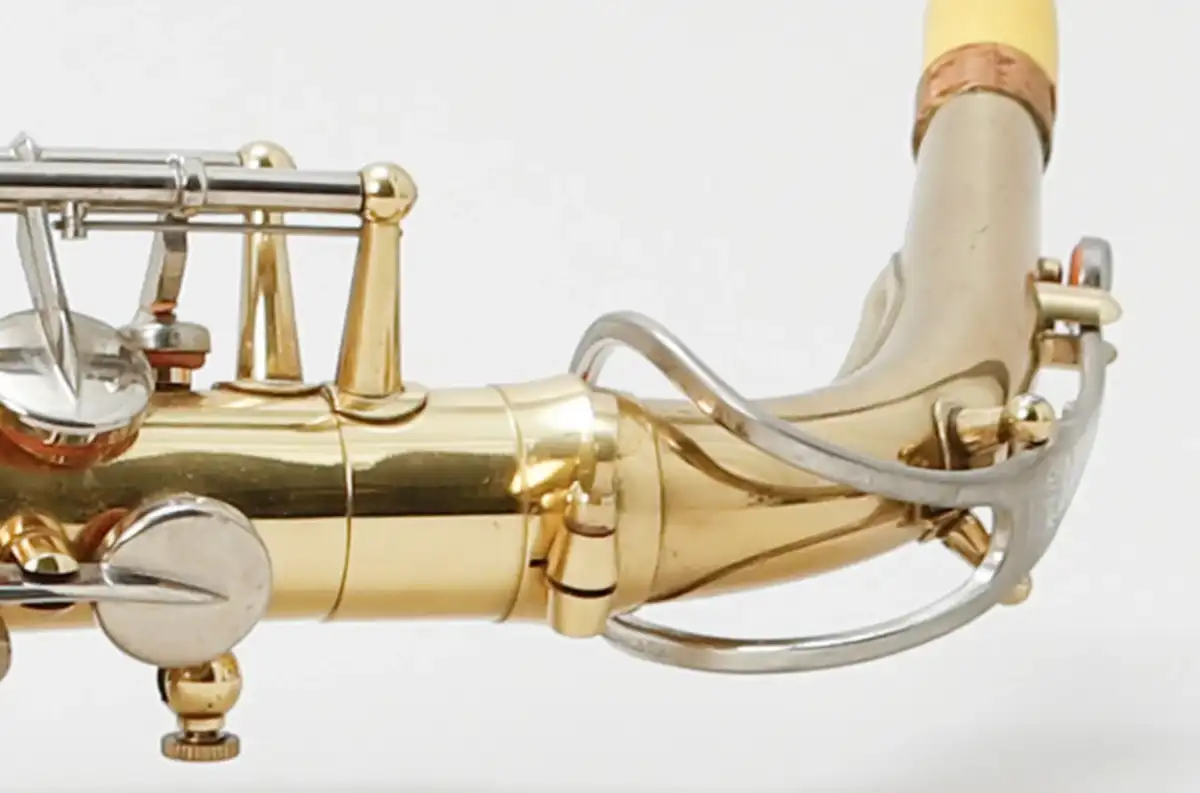
1737885091705.webp
 
If there is a compatible neck that fits then it might play well and in tune. But it won't be worth as much as an A4 with its original neck in the same condition.

I don't know how much of the 1050 Euros is for shipping, but that total figure is already quite high for an A4 with original neck - I would perhaps pay 600 - 800 Euros for an original one in good playing order. I would guess maybe deduct 150 Euros for you to buy a good neck and perhaps 300 Euros for a compatible Yanagisawa neck.

The prices for used saxophones (except for a few in demand makes and models) seems depressed now, at least here in the UK, but things might be different where you are.

The A4 was a really good saxophone for its time and is still a nice instrument if it's in good condition.

Good luck

Rhys
 
Thank you for your answer! I asked for clarification from the seller if the neck is indeed a Yanagisawa (which doesn't look like it) and in case it's not I'm returning the instrument.
 
I have a Yanagisawa A4, also without original neck - it was sold to me without a neck. I added a later Yanagisawa neck, and it plays great, perfectly in tune.

Retail price of Yanagisawa necks is very high, but you can sometimes find them for a much reduced price. There's one on UK eBay at the moment for £90
That’s good to hear. Do you still have the link for the neck?
 
Well, if the neck that's with the horn plays fine and the tuning's good I'd just keep it and move on to practicing.

I do feel you should understand that even though this may be a horn from the early 70s, it will not have the characteristic "vintage sound" of a horn from the 20s. It's going to be a lot more similar to the Selmer/Yamaha modern tone concept.

From the standpoint of how they play, the 50 year old Yani and the 100 year old Conn or whatever are FAR more different than the 50 year old Yani and a current production horn, despite the fact that both pairs are separated by 50 years.
 
If the sax will be retained as-is, and as @turf3 states plays fine, the non-original neck should suffice especially if one intends not in selling it soon.

Regarding vintage "darker" versus later "brighter" sound, isn't it unless perhaps in a recording studio environment where an absolute vintage sound is an absolute requirement absolutely, IMO in most venues, the later saxes will work?

And, doesn't the audio engineer have a few tweaks they can do to settings, to help an individual sax recorded better settle in? (Within limits, of course.)

Besides, in my experience, most listeners don't really care. They hear a nice sounding saxophone choir, a soloist playing using a vintage jazz style, is pleasing to the ear. Besides, as @Targa alluded, after the audience has had a couple shots of Aadvocat and the sound system has been cranked up a couple decibels, they won't care whether a sax sounds vintage or not. :cheers:

I oft think that the performing artist may at times be their worst critic, just saying.
 
Thank you all for your answers. Turns out that the neck was indeed not original, and besides that the sax needed an overhaul, so I returned it (and lost about 70€ in shipping) but I think it's worth it. I got an YAS 32 instead for cheaper and even though it's not a professional horn from what I've read, I'm impressed how easy it is to play compared to my vintage horn. The only thing I need to do is to fix the YAS 32 neck.
 
It sounds like the YAS-32 is an intermediate grade sax, a step up for a beginner and can be used by advanced and pro as an alternate horn.

50 years ago when I was playing for pay in an active military band, we were issued a pro grade instrument for concert work (say, Selmer Mark VI or equivalent) and a beginner grade instrument (say, Bundy or Vito, etc.) for use outdoors in say, inclimate weather and venues where the pro instrument could be damaged somewhere outdoors, like playing in the bleacher seats of a stadium event. (Accidents do happen.)

The beginner instrument was also the alternate for practise and even performance when say, the pro instrument was sent to a shop for repairs. (Although we could go to our supply sergeant and temporarily check out an instrument.) The bandmaster really didn't care which instrument we brought to rehearsal or even an event, as long as we were able to perform.

My Selmer Bundy II alto sax that I purchased used 2 decades ago performs, it just has more key click noise to it by its less expensive keywork. It plays reasonably in tune and can be made to play well with a good mouthpiece. The only downside to it is I have had a few pads pop loose playing in very cold weather. (In one case I went back to my car, got a roll of black plastic electrical tape, made a loop small enough to fit in the pad cup and reattached it, so I could continue to play. The modern adhesives are more tolerant to temperature.)

Congratulations on your YAS-32 acquisition. :thumb:
 
The Yamaha YAS32 is a great sax, and don't be bothered about whether it's a 'professional' horn, whatever that means. Tha YAS32 is essentially the same as an earlier YAS62, a very well regarded sax, good enough for any use. The YAS32 has less decoration and a simpler finish but is the same body and keywork as the more expensive sax. Generally a very sound buy. Enjoy it.
 
(In one case I went back to my car, got a roll of black plastic electrical tape, made a loop small enough to fit in the pad cup and reattached it, so I could continue to play. The modern adhesives are more tolerant to temperature.)
I've done that as well, on my old 1970s Buescher Aristocrat (pretty much the same sax). I have also used tape as an emergency ligature. Nobody noticed.
 
The Yamaha YAS32 is a great sax, and don't be bothered about whether it's a 'professional' horn, whatever that means. Tha YAS32 is essentially the same as an earlier YAS62, a very well regarded sax, good enough for any use. The YAS32 has less decoration and a simpler finish but is the same body and keywork as the more expensive sax. Generally a very sound buy. Enjoy it.
It has been pointed out elsewhere in this forum that a "professional" sax is more or less with heavier duty keywork, so it retains its adjustments and as long as properly lubricated and treated, stands up better to continuous use that a pro musician would subject it to. But, I have also observed there are some exceptions.

I did find it interesting that Tom Levitt author of The Leak Light Speaks: Saxophone Purchase, Assessment, Set up, Repair, Overhaul, Customization and Reflections (2017) mentions that in general, nearly all "beginner" saxophones manufactured before 1967 were of at least intermediate grade. My early 1950's Beaugnier Vito plays as well as a "pro" instrument.

Back in the 1980's as a member of the 300th Army Band (Reserve) in east Los Angeles area, I checked out an old King low Bb bari sax that looked halfway decent but needed a few repairs to play (hence why it sat in a back corner of the instrument room untouched) and the band's instrument repair large tool box.

Not fully familiar with the US King manufactured line of saxes (Internet was still in its infancy, one either checked out books from the library, stopped by a music store and spoke with the staff, sometimes information was available on text Bulletin Board forums - by dial up with a slow modem, if outside one's calling area there were long distance phone charges), AFAIK it was stamped as made in the US, perhaps from the 1950's? Similar to the YAS-32 it was devoid of engraving.

After replacing a few bad pads, installing missing corks, a little key straightening, etc., it actually played, I was elated. It played very well in tune, gave that characteristic fat bari sound in its low register. Comments from active duty band members, (we sometimes combined bands together during rehearsals), they were surprised how well such a "rustic" looking instrument performed. I used it for 2 years until the band leadership traded it in for a newer used Martin from an active band. So, I surmise your statement, "whether it's a 'professional' horn, whatever that means" holds truth.

As stated by others here, one plays more or less what they can afford. Musicianship is lesser depended upon the level of instrument and more by the player's abilities. Also, sometimes a simple change of mouthpieces and reed for a struggling beginner can make their "beginner" instrument, (if in good reasonable repair and of reasonable quality), all of a sudden make that beginner sound like a winner.

Anyway, my tuppence, for what it's worth.
 

Social

New! Social Feeds

Look out for the navigation icon:

Follow CafeSaxophone

Latest Song of the Month

Trending

Forum statistics

Topics
32,064
Messages
578,464
Members
8,130
Latest member
tommyliehe
Back
Top Bottom