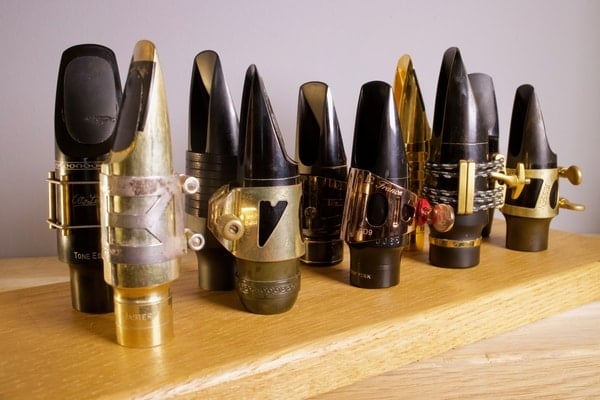
Ligatures Type of ligature makes no difference to the sound

I find there's a bit of a difference between the Rovner dark style lig (which tends too calm things down/deaden them a bit), and a plain two screw. If I'm using my Morgan Excalibur EL7 or Dukoff D7 I generally use a Rovner to help keep the "edge" under control, but not if I'm using the Morgan Vintage 7 or 3c, both of which require no damping. That's on tenor - on alto my ancient Berg seems to prefer a two screw. It's horses for courses.
 
Last edited by a moderator:
I do think that the argument gets stuck, however, with more active players/musicians (in bands etc.) saying there is not a sound difference (in a band setting there is unlikely to be any major difference - the main issue seems to be whether you can be heard, particularly above the bass player), and those, like myself that mainly play in a home or similar environment, without competing sounds. Similarly a trombone will not be heard if it plays mellow in a band/horn section, but could easily sound raucous in an orchestra if the same amount of "welly" is provided. Hence shallower mouthpieces are used (pea shooters) in a band setting with a more forward sound that can "cut through".

Kind regards
Tom😎

That's very pertinent - if you're playing in a loud environment with a big "bottom end" all that dark lushness will probably at best get lost, and at worst contribute to general muddiness if the sound guy doesn't "roll off" the low end. Time to reach for the bright mouthpiece/reed/lig combination.
 
I do think that the argument gets stuck, however, with more active players/musicians (in bands etc.) saying there is not a sound difference (in a band setting there is unlikely to be any major difference - the main issue seems to be whether you can be heard, particularly above the bass player), and those, like myself that mainly play in a home or similar environment, without competing sounds. Similarly a trombone will not be heard if it plays mellow in a band/horn section, but could easily sound raucous in an orchestra if the same amount of "welly" is provided. Hence shallower mouthpieces are used (pea shooters) in a band setting with a more forward sound that can "cut through".

Kind regards
Tom😎

Absolutely pertinent point Tom. I play a nice mellow, middle-of-the-road STM 6 (with a standard Selmer lig) for practice or any sort of ensemble stuff, but any time I am around the drums, bass, keys, guitar, 4 vocalists and 3 other horn players in the band, the only defence is my Brancher B31 which has the edge and power to carve through the competition. The Link is lost in that setting - similarly the Brancher at home has the paint blistering off the doors and the dog phoning the RSPCA.......... What the Brancher lacks in subtlety, it makes up for in volume; it comes with its own distinctive lig and I've never even thought of trying anything else - why would I? Only to make it even louder 🙂))
 
Ok here's my 2 cents...I've been using a 2 screw standard with an otto link on my yam tenor for over a year. Yesterday I got a Rovner Dark and in 5 minutes I realized that the sound had changed. Need more time to see if I like it but it's louder than my standard and easier to toung my swing notes. I know what you all said above so this is just IMO.
frank
yamaha 875ex tenor Van 2.0 java otto link tone edge
 
Its always an interesting question!
I do think that the argument gets stuck, however, with more active players/musicians (in bands etc.) saying there is not a sound difference (in a band setting there is unlikely to be any major difference - the main issue seems to be whether you can be heard, particularly above the bass player), and those, like myself that mainly play in a home or similar environment, without competing sounds. Similarly a trombone will not be heard if it plays mellow in a band/horn section, but could easily sound raucous in an orchestra if the same amount of "welly" is provided. Hence shallower mouthpieces are used (pea shooters) in a band setting with a more forward sound that can "cut through".
Tom😎

I probably count as a "more active" player. I play in loud bands, but I also practise at home in a quiet, unforgiving (soundwise) environment. I'm not quite sure what you're getting at with your comment about "pea shooters", but anyway I can't hear or feel any difference in ligs whether I'm playing loud rock on my Guardala pea shooter or Mozart on my Selmer soloist. If it holds the reed in place then it's good.
 
A quick reread should indicate that a "peashooter" is a common description of a shallow trombone (and trumpet) mouthpiece which produces a brighter, sharper sound :w00t:, particularly used to enhance the playing of high notes. My apology if it was slightly unclear.

Kind regards
Tom😎
 
Adding my tuppence to this year-old thread:

The problem I have with the whole ligature thing is that I don't think any manufacturer (or anyone else for that matter) offers an explanation as to how ligatures make a difference. This means that they open themselves up to accusations of being snake oil purveyors or, at the very least, manufacturers of different sounding ligatures that they created "by chance". Publishing an investigation into how ligatures work would increase their credibility by a ton. I suspect though that, if ligatures do make a difference to the sound, at the moment it really is a case of lucky guesswork which these companies can't afford to admit. It's not a good position to be in, though snake oil does sell...

All I'm interested in is a ligature which holds the reed securely in place. The ligatures on my metal alto and tenor Yanis do this perfectly. The Rovner EVO5 E-2R doesn't do this well on my PPT, even though it has been recommended as a good fit: I get lots of squeaks up high and the reed tip can still move laterally when the ligature is tight.
 
I absolutely refuse to accept that a ligature can make any difference to a sax sound. How can it? It doesn't move it doesn't vibrate it just sits there

I believe there is a difference, and hate to even admit that.
All be it a very very negligible difference that is so far down the list in terms of affecting your sound that its not worth too much investigation but none the less a difference.

As for it just sitting there and not vibrating, what if you wedge a cleaning sponge in the bell of a sax does it muffle the sound?
Any material against the reed will surely do a similar thing (become more resonant or dull) and amplify its effect all the way to the final sound.
But just to reiterate....IMO its really not worth the words I've just written.
Don't know why I bothered :w00t:
 
Hi Chaps,

a while ago I accidently stood on my ligature! I needed another one urgently the next night but could not find one in the local shop that fitted, so I ended up using a cheap hose clip. The only problem was the reed would move around a bit which caused a squeak but otherwise the sound was no different. After making a slight adjustment with a bit of packing material, squeeking gone and all good. The reason some ligatures sound better than others is simply down to compatibility with the mouthpiece and reed, so all you need to is find a ligature which holds the reed to the mouthpiece securely without needing to be too tight. If you can do that for five dollars like I did then why spends a fortune on something that will make no difference?

I now have a PPT8 and the only reason I use the EVO5-2R is it is the only one that fits correctly and it looks a bit better than my trusty hose clip which I still keep for my original mouthpiece! I did not even think about the sound it just works!
 
do ligatures really make a difference... I have tried to find out but seemed it split around 50/50! some say they do other say they don't... to try and simplified it a little, I tried a two screw metal ligature with my cannon mouthpiece and a bari synth/reed. then I tried a leather one screw type and to be truthful I could not tell a difference... came down to me liking using a one screw ligature over a two screw ligature.... gets even more confusing when you get ligatures around £300 and are the really so much better than a £50 ligature...
 
I had just this week watched this video from bettersax.com. It is very enlightening and follows in agreement with what Randulo states here. I keep hearing the words from another video I watched once that said "It's not about the gear!" This may help you.

 
For those that are new to the forum with time on their hands.


Jx
 
do ligatures really make a difference...

Yes.

Without a ligature, the reed tends to fall off.

But a ligature is anything that holds the reed efficiently against the mouthpiece table. As long as it does that, then the type, brand, material or whatever is irrelevant.

If the table is not flat then different ones might respond differently. If the ligature is not working properly then it won't be as good asa one that is.


View: https://www.youtube.com/watch?v=nWGLMyCg04s&feature=emb_logo
 
I had just this week watched this video from bettersax.com. It is very enlightening and follows in agreement with what Randulo states here. I keep hearing the words from another video I watched once that said "It's not about the gear!" This may help you.


It's good to see that some people are just honest about this!

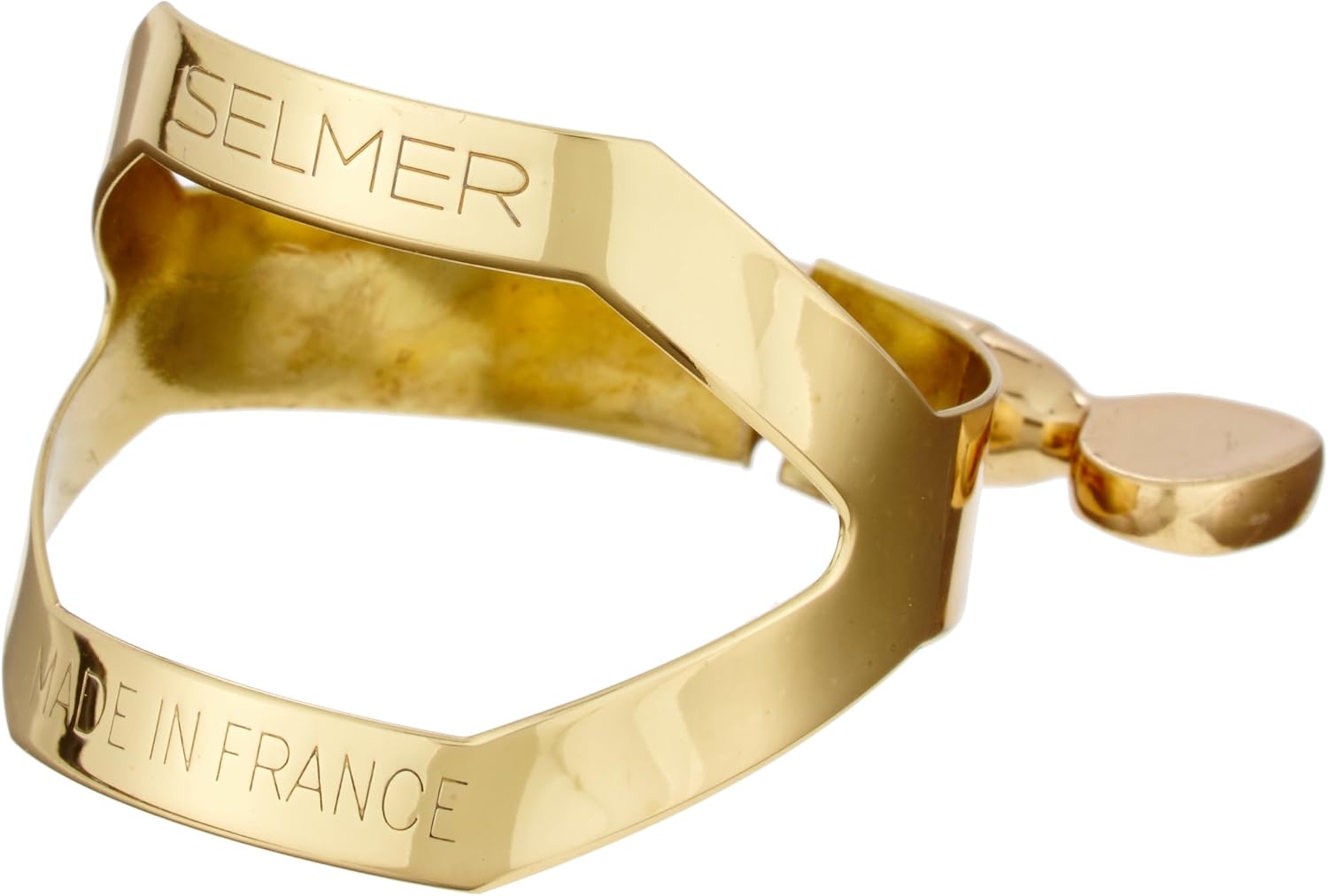
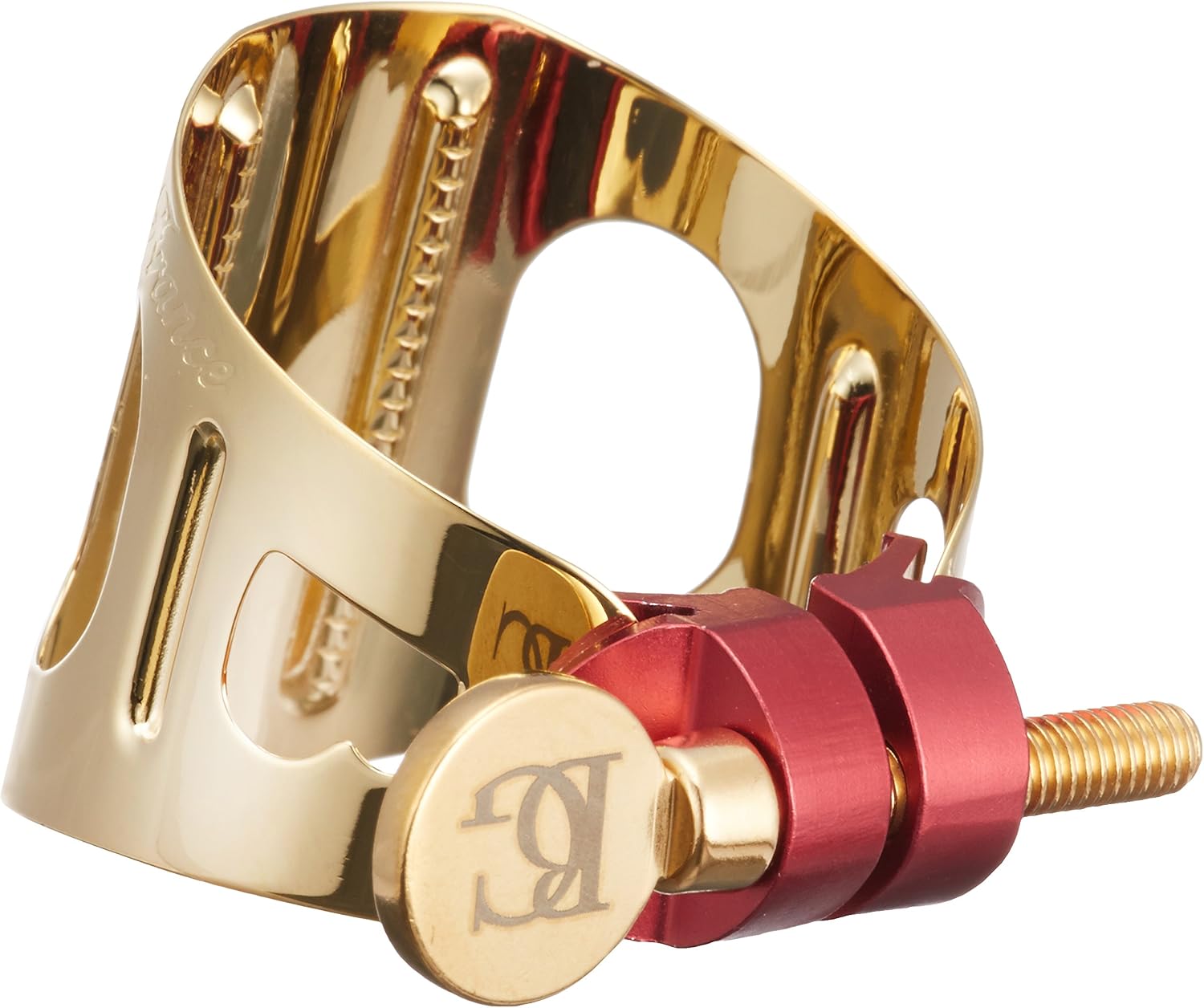
I like the way the BG Duo looks, but it's rather pricey. It's not very different in concept than that Selmer ligature that cost a fraction of it. I never used that BG model.

71-wo5%2Bcr6L._AC_SL1500_.jpg


But it may be capable of adapting to more mouthpieces as it looks like having a longer screw thread. That's based on my sole experience of the Selmer version...

81Iz318YllL._AC_SL1500_.jpg
 
That is one beautiful lig! Makes me want to go out and buy one. Maybe that is part of it--if a player feels better playing because of some part of his horn, he will invest more time in it.
But I was wondering, are there standards or ratings for ligs like there are for mpc's (4c, 5c*, etc.), reeds (2 1/2, 4, etc)
or even in a loose sense, saxophones (beginner, intermediate, professional)? I've not seen any, but that may be because I've barely scratched the surface of musical knowledge.
 
Yes, they most definitely make a difference but here's the catch........in different ways for different players.

1. Simply put, some ligs are made very well, some are a heaping pile of that brown stuff. I think we'd all agree on that.
2. Some ligs designs hold/grasp the reed very well and permit the player to move the mouthpiece without dislodging the reed. Personally, that's not a huge deal to me as I honestly don't constantly move my mouthpiece around AND the mouthpieces on my various horns (saxes and clarinets) are fit well to the cork(s) so I don't need a wrench to adjust the damn mouthpiece!
3. Here's where it gets "controversial". - I feel the timbre of my sound does change slightly with different brands/makes/designs of ligs. At least on MY end of the horn it certainly does. Now does that mean there's a huge audible difference to a listener? Probably not, but I definitely notice it from "behind the horn".
4. Again, this is probably more of the players prospective than the listeners..... (Again, for me) some ligs are more restrictive and some definitely more free-blowing than others. Definitely makes a difference to me.

So to recap, the differences in ligs to me (the player) are noticeable. Are those differences always noticeable to the listener? Of course not, but I've experimented with this quite a few times and have done "ligature playing tests" with fellow saxophonists. Sometimes we have both heard differences, sometimes not but to me it doesn't have to be an audible difference. If I truly feel the reed responds in a more positive nature and is more free blowing (something I prefer) then heck yeah, the lig most definitely makes a difference.
I love the Vandoren M/O ligatures and use them on clarinet, alto and sop. I like the single screw, they hold the reed well and also have the qualities I mentioned above. On tenor, I play a Selmer 404 (2 screw) lig on my Dukoff Stubby. I've experimented/tried dozens of ligs on tenor over the years and there's just something about the 404 that always makes it come out on top.
Of course, your mileage may vary.... ;-)

 
Yes, they most definitely make a difference but here's the catch........in different ways for different players.

1. Simply put, some ligs are made very well, some are a heaping pile of that brown stuff. I think we'd all agree on that.
2. Some ligs designs hold/grasp the reed very well and permit the player to move the mouthpiece without dislodging the reed. Personally, that's not a huge deal to me as I honestly don't constantly move my mouthpiece around AND the mouthpieces on my various horns (saxes and clarinets) are fit well to the cork(s) so I don't need a wrench to adjust the damn mouthpiece!
3. Here's where it gets "controversial". - I feel the timbre of my sound does change slightly with different brands/makes/designs of ligs. At least on MY end of the horn it certainly does. Now does that mean there's a huge audible difference to a listener? Probably not, but I definitely notice it from "behind the horn".
4. Again, this is probably more of the players prospective than the listeners..... (Again, for me) some ligs are more restrictive and some definitely more free-blowing than others. Definitely makes a difference to me.

So to recap, the differences in ligs to me (the player) are noticeable. Are those differences always noticeable to the listener? Of course not, but I've experimented with this quite a few times and have done "ligature playing tests" with fellow saxophonists. Sometimes we have both heard differences, sometimes not but to me it doesn't have to be an audible difference. If I truly feel the reed responds in a more positive nature and is more free blowing (something I prefer) then heck yeah, the lig most definitely makes a difference.
I love the Vandoren M/O ligatures and use them on clarinet, alto and sop. I like the single screw, they hold the reed well and also have the qualities I mentioned above. On tenor, I play a Selmer 404 (2 screw) lig on my Dukoff Stubby. I've experimented/tried dozens of ligs on tenor over the years and there's just something about the 404 that always makes it come out on top.
Of course, your mileage may vary.... ;-)

I'm curious: you never move or loosen your mouthpiece? So you're OK playing flat until you warm up your horn? You don't care that you've kept the cork compressed so that if you change mouthpiece (sounds like you have several) that the one that you put on may not fit well if it needs to be further out on the cork? And we're not even talking about cleaning/swabbing either the neck or the mouthpiece?

Suggestion to OP (who is also a new member) : You'll get all kinds of information here, some accurate, and, well...others.
Did I say I never move or "loosen" (whatever that is) my mouthpiece? No. What I did say is that my neck corks on my saxophones and my neck cork on my clarinets are all sized so that I can move/adjust my mouthpieces with relative ease. No, they're not loose or wobbly but just right.
I don't play flat until my horn "warms up". I'm a professional player and after about 40 years of "searching for the perfect mouthpieces", I now play on one mouthpiece on each horn and while I do have multiple mouthpieces for each horn, they're the same make/brand and fit literally exactly alike. Even so, if a neck cork is done properly by a tech, pretty much all mouthpieces SHOULD fit with not too much difference and be able to be adjusted without too much difficulty.
I'm not sure what cleaning/swabbing the mouthpiece or neck has to do with any of this.
As for your last snipe of information here being "accurate and well........others", I'll gladly put my knowledge and experience up against yours ANY day of the week. You might want to reconsider throwing rocks while living in a glass house.
My apologies. I reread your post and had decided to edit it out. Somehow it did not work and wound up being posted. I had read it initially as that you never took your mouthpiece off, which doesn't seem to be the case. If it were I wouldn't trust any other information that was coming our way. Once again my apologies as I tend to re-read but posted first then reread and wanted it removed.

As aside I've been playing since 1958...also quite a while.
 
Mouthpieces are imperfect. Reeds are variable. Different ligatures accomodate these imperfections and variables with differing levels of success.
The whole point of a ligature is to hold still and together that which needs to be still and together so that that which needs to move can do so in a controlled way.
The player provides the magic. Genes provide the physiognomy. All the rest is just plumbing.
 

Similar threads... or are they? Maybe not but they could be worth reading anyway 😀

Social

New! Social Feeds

Look out for the navigation icon:

Follow CafeSaxophone

Latest Song of the Month

Trending

Forum statistics

Topics
32,083
Messages
578,859
Members
8,140
Latest member
AnnaR
Back
Top Bottom