Playing the saxophone silly question of the day; majors and minors tonally

From what I remember eb424, you do know about tones and semitones? Do the chart on this page may help with understanding the basis difference between major and minor


Of course it’s only a visual guide, you must also play to hear the difference.
Thanks @Pete Thomas...i knw the pathway is probably on this site...
 
Again. A couple of piano lessons would be very useful.
Thanks @Colin the Bear ...the issue is the reading no teacher just seems to want to jump onto explaining intervals and majors and minors...to some degree playing from scores isn't important to me but understanding their etiology if that's the right word is..... I think I read somewhere that you have not had lessons how did you find your path??? I'd be really interested to know..
 
I think to be playing for 5 years and not know the basics is a failure of your teachers, its the same in all hobbies and professions, you don't become a surgeon without first going through med school and your don't become a footballer without first learning to kick a ball, you need to go back to basics to move forward, the need to know the difference between majors and minors should have been brought in by your teachers from day one, I know you want to play for fun, but my old music teacher would say to his students that you have to do some serious learning to be able to play for fun and this really applied to all his students.
You do need to get into basic theory and reading music the right way and I know there are some great players that can't read but most of them probably had or have some other natural ability to aid them to move forward.
Your musical journey is in your own hands but you will get so much more out of it if you put in and learn with some positive structure.
 
For someone in your position though, with an obvious passion for music and the instrument but who is really struggling to make even pretty basic progress - you really will need to find some consistency in your approach if you’re ever actually going to figure these things out and move forward.

Like the other posters have said - you need to find a teacher (I appreciate this can be easier said than done) who’s going to help you grind through these things and help source music at the appropriate level that you can enjoy playing but will also not be too painful and get you tied up in the endless knots you seem to find yourself in.
Thanks @SaxBySW.....I think the issue is finding someone who will accept the way I do things...I will never be a pro musician and play whole songs, from backing tracks. I always buy the score and transpose as I use it as a learning tool, note recognition, key sigs etc...this is where problems arise or did at the beginning of this thread... I seem to be stuck on the same circle with tutors counting and reading...I appreciate these are all important things to learn and I will learn them at my leisure but focusing on these is stopping me moving on with things that I think are important in playing..i.e. how to play 7 bs on the trot all sounding different and techniques....I think the way I do things has its advantages and definate dis-advantages...it means I can play harder tunes and focus on the playing side whilst learning the theory and playing from scores... I completelyagree with what you say @SaxBySW and if there are any teachers out there please PM me...
 
You probably need to specifically have lessons which are just about music theory and not about practical. The usual pathway through say the ABRSM grades is you do a theory grade whilst also doing a practical grade. The two are designed to parallel each other: you learn the theory that's relevant for your level of playing. I want to get my G8 theory, but I've been a bit lax about it. I need to do G7 first and for that I was having half of my regular sax lesson devoted purely to the needs of the G7 exam.

If your teacher wasn't aware that you want to do the theory, they may have avoided it as a lot of adults don't want to do it (and then realise it's important...)
 
Thanks @SaxBySW.....I think the issue is finding someone who will accept the way I do things...I will never be a pro musician and play whole songs, from backing tracks. I always buy the score and transpose as I use it as a learning tool, note recognition, key sigs etc...this is where problems arise or did at the beginning of this thread... I seem to be stuck on the same circle with tutors counting and reading...I appreciate these are all important things to learn and I will learn them at my leisure but focusing on these is stopping me moving on with things that I think are important in playing..i.e. how to play 7 bs on the trot all sounding different and techniques....I think the way I do things has its advantages and definate dis-advantages...it means I can play harder tunes and focus on the playing side whilst learning the theory and playing from scores... I completelyagree with what you say @SaxBySW and if there are any teachers out there please PM me...
I think you need to stop and have a really serious think about this. Assuming your teachers have the right experience and qualifications and relevant pedagogic techniques, they will know and understand the most efficient way for you to make progress. There's a reason why some things are done first. Sure, you can modify that a bit... but if you're trying to go too far outside of that route, it's not very likely to help you.
 
I think to be playing for 5 years and not know the basics is a failure of your teachers, its the same in all hobbies and professions, you don't become a surgeon without first going through med school and your don't become a footballer without first learning to kick a ball, you need to go back to basics to move forward, the need to know the difference between majors and minors should have been brought in by your teachers from day one, I know you want to play for fun, but my old music teacher would say to his students that you have to do some serious learning to be able to play for fun and this really applied to all his students.
You do need to get into basic theory and reading music the right way and I know there are some great players that can't read but most of them probably had or have some other natural ability to aid them to move forward.
Your musical journey is in your own hands but you will get so much more out of it if you put in and learn with some positive structure.
Hi @jazzdoh its that structure that I miss i done it with the gas and it is a much harder path...I agree whole heartedly with the sentiment of your post and i think it may be a failling of me rather than the tutors. I go for a while and five lessons later I am just playing from scores with someone counting rhythm...I need more than that for the money charged so don't go back.....I knew there was major and minor keys and that the difference is happy and sad very simplistically i wasn't sure if the relative sounded the same and with regards to hit the road jack...The issue was (aside from its much to quick for me) that the original key had a low A so should I take it up an octave or instead of taking it up 2 steps to transpose take it up 3.....having a look at the song in c minor i.e. 3 steps it was quite tricky lots of bottom Bbs from D#s...I had the backing track from karaoke version so can change the key but but wondered if it would sound the same ( or similar) if I used the relevant major i.e. Eb major....The backing track is quite high so I assume they have moved it up an octave...leads to the question is there anything in music which tells you what octave it is in? I find trying to pair up the score which is in the key of A to the backing track which is in Ab tricky..If I transpose the score to B it still sounds wrong need the track in A...
 
I don't know if a teacher is the solution for you? Maybe, if you find the right one. I just had one saxophone teacher over the years. I knew what kind of music I wanted to play and I could read that music as well. I wanted a teacher to help me with my tone. I wanted a "bigger" tone and I thought the teacher could help me with that (tips and excercises ...). But he started to talk me into other stuff. I think it's called "jazz". So just one thing to do; say farewell to the teacher.

If you can find a teacher that can help I think you should go for it. But be clear what you want out of your lessons. If you want to play "Hit the Road Jack" in concert Abm (Cb) I think you should do it. It's so hard for me to read flats so I think in sharps insted. I played in C# and F# major early because lots of the music I listened to were in the key of E. Did I play good/well. Of course not, but I was happy to play something in the style as .... . This turned me on. The teacher turned me off. To play the saxophone should be fun. When I talked with the folks that used to come to listen me/us (very, very few) they prefer songs when they could hear and see that we were having fun. And when we were having fun, they were also having a good time. And that is important to me.

"Well, we busted out of class
Had to get away from those fools
We learned more from a three-minute record, baby
Than we ever learned in school"

(some lines from "No Surrender", Bruce Springsteen)

 
You probably need to specifically have lessons which are just about music theory and not about practical. The usual pathway through say the ABRSM grades is you do a theory grade whilst also doing a practical grade. The two are designed to parallel each other: you learn the theory that's relevant for your level of playing. I want to get my G8 theory, but I've been a bit lax about it. I need to do G7 first and for that I was having half of my regular sax lesson devoted purely to the needs of the G7 exam.

If your teacher wasn't aware that you want to do the theory, they may have avoided it as a lot of adults don't want to do it (and then realise it's important...)
Lol thats me..sudden realisation....good idea re just theory hadn't thought of that....I'm sure you will get round to G8...its on going huh....
 
I don't know if a teacher is the solution for you? Maybe, if you find the right one. I just had one saxophone teacher over the years. I knew what kind of music I wanted to play and I could read that music as well. I wanted a teacher to help me with my tone. I wanted a "bigger" tone and I thought the teacher could help me with that (tips and excercises ...). But he started to talk me into other stuff. I think it's called "jazz". So just one thing to do; say farewell to the teacher.

If you can find a teacher that can help I think you should go for it. But be clear what you want out of your lessons. If you want to play "Hit the Road Jack" in concert Abm (Cb) I think you should do it. It's so hard for me to read flats so I think in sharps insted. I played in C# and F# major early because lots of the music I listened to were in the key of E. Did I play good/well. Of course not, but I was happy to play something in the style as .... . This turned me on. The teacher turned me off. To play the saxophone should be fun. When I talked with the folks that used to come to listen me/us (very, very few) they prefer songs when they could hear and see that we were having fun. And when we were having fun, they were also having a good time. And that is important to me.

"Well, we busted out of class
Had to get away from those fools
We learned more from a three-minute record, baby
Than we ever learned in school"

(some lines from "No Surrender", Bruce Springsteen)

Lol I wish I had the clarity to know what I want from them...I think it's because the teachers that I have had have mainly come from a Jazz background that you have to learn the same path...trouble is it has taken them 5 years plus at full time learning to get there i am not sure I have that long...love what you said about #s and bs thought it was just me never a Eb always a D#..I agree it has to be fun but can't help agreeing with @mizmar to it is about hard work and dedication....it'sjust no good working hard if it's not relevant...it is easier with a teacher counting but my note recognition isn't quick enough at the mo to have counting and reading going on....also love no surrender....
 
can I ask in real terms

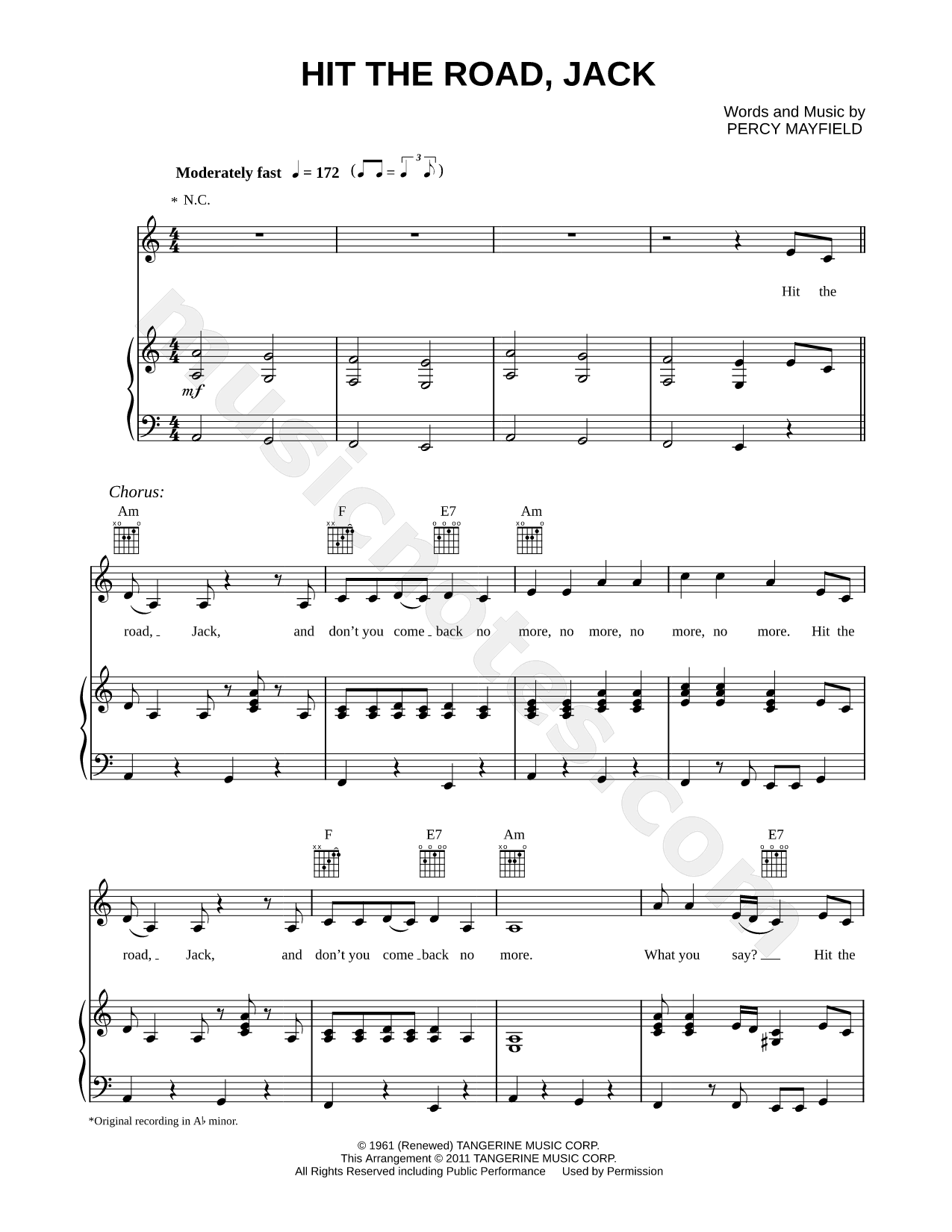
this is the score original in A minor


this is the original score i will transpose it to B by hand as it's good practice for me...


what is the best thing to do with it....transpose to b and play an octave higher and change the song to A.. will they match...
 
From what I can see just having a brief look at both the backing track and the sheet music, both of these can be customised so why not change the key of your sheet music to suit you and then change the backing track to suit.
All the work will be done for you, although sometimes doing some transposing yourself will have positive benefits.
any reccommendations on a key...should it be kept minor
 
can I ask in real terms

this is the score original in A minor


this is the original score i will transpose it to B by hand as it's good practice for me...


what is the best thing to do with it....transpose to b and play an octave higher and change the song to A.. will they match...
The backing track states that it is in Ab minor, not A minor. I think this is the key that Ray Charles sang it in. So transposing the notes to B minor for tenor sax will not work - it should be Bb minor. And in any case that is uncomfortably low to play on the saxophone in my opinion.

Both the backing track and the notes have a transposition function, so my advice is to transpose both to a key that works OK for you rather than one that suited Ray Charles’ voice. For example:
1. Get a version of the backing track in C minor at a speed that you can play.
2. Get a version of the notes in D minor (assuming that you want to play it on tenor sax).

I think you will be wasting your time transposing the notes yourself, since you don’t have the basic music knowledge to do this accurately.
 
can I ask in real terms

this is the score original in A minor


this is the original score i will transpose it to B by hand as it's good practice for me...


what is the best thing to do with it....transpose to b and play an octave higher and change the song to A.. will they match...
Concert A minor (C) you play in B minor (D) soprano/tenor and E minor (G) alto/baritone.

Concert Ab major you play in Bb major (A#) soprano/tenor and F major alto/baritone.

Concert A major you play in B major soprano/tenor and F# (Gb) major alto/baritone.

Concert B major you play in C# major (Db) soprano/tenor and G# (Ab) major alto/baritone, but that is not what you meant?

Concert A minor and concert C major contains the same notes.
 
The backing track states that it is in Ab minor, not A minor. I think this is the key that Ray Charles sang it in. So transposing the notes to B minor for tenor sax will not work - it should be Bb minor. And in any case that is uncomfortably low to play on the saxophone in my opinion.

Both the backing track and the notes have a transposition function, so my advice is to transpose both to a key that works OK for you rather than one that suited Ray Charles’ voice. For example:
1. Get a version of the backing track in C minor at a speed that you can play.
2. Get a version of the notes in D minor (assuming that you want to play it on tenor sax).

I think you will be wasting your time transposing the notes yourself, since you don’t have the basic music knowledge to do this accurately.
Lol flaming cheek i manage most of them just finished jeleous guy and little sister both play fine any errors i put right when playing them through...few Gs on little sister sound better as As...I'll get there....
 
Concert A minor (C) you play in B minor (D) soprano/tenor and E minor (G) alto/baritone.

Concert Ab major you play in Bb major (A#) soprano/tenor and F major alto/baritone.

Concert A major you play in B major soprano/tenor and F# (Gb) major alto/baritone.

Concert B major you play in C# major (Db) soprano/tenor and G# (Ab) major alto/baritone, but that is not what you meant?

Concert A minor and concert C major contains the same notes.
is that aside from a D @thomsax.....just wondered what a good key for the song is even playing a C minor to keep close to the original is to difficult loads of bottom Cs from D#s difficult at speed...
 
The backing track states that it is in Ab minor, not A minor. I think this is the key that Ray Charles sang it in. So transposing the notes to B minor for tenor sax will not work - it should be Bb minor. And in any case that is uncomfortably low to play on the saxophone in my opinion.

Both the backing track and the notes have a transposition function, so my advice is to transpose both to a key that works OK for you rather than one that suited Ray Charles’ voice. For example:
1. Get a version of the backing track in C minor at a speed that you can play.
2. Get a version of the notes in D minor (assuming that you want to play it on tenor sax).

I think you will be wasting your time transposing the notes yourself, since you don’t have the basic music knowledge to do this accurately.
sorry last question.... am i better of keeping songs as close to the original key as possible and raising it an octave...The backing track sounds a different octave than the notes on the score..Does this make a difference i.e. is the designated key the best one for the song. Or take it up to a comfortable level i.e e minor although the song only goes up to C so I guess D would be all I could do...
 
sorry last question.... am i better of keeping songs as close to the original key as possible and raising it an octave...The backing track sounds a different octave than the notes on the score..Does this make a difference i.e. is the designated key the best one for the song. Or take it up to a comfortable level i.e e minor although the song only goes up to C so I guess D would be all I could do...
Play it in whatever key is best for you. That's what singers do.
 

Similar threads... or are they? Maybe not but they could be worth reading anyway 😀

Social

New! Social Feeds

Look out for the navigation icon:

Follow CafeSaxophone

Latest Song of the Month

Trending

Forum statistics

Topics
32,081
Messages
578,808
Members
8,139
Latest member
Gary Boudreau2
Back
Top Bottom