



 acebook
 (bottom of page)

bernard_o_reilly
Member
- Messages
- 10
Hi Djangette,
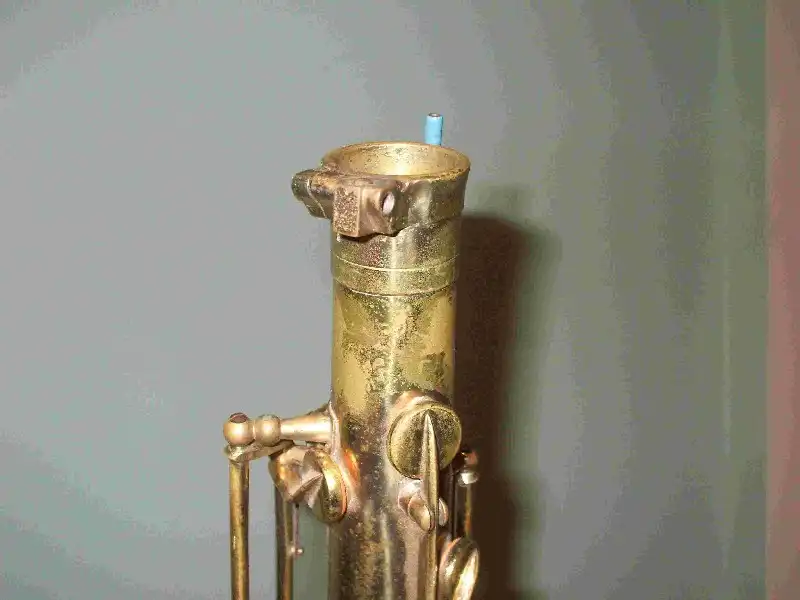
I'm pretty confident that the age and look is genuine (that is achieved through time and plenty of use). The neck in particular just in front of the cork has that speckled sort of patina that I imagine only age can produce and overall it has the sort of little nicks and scratches which occur when something has been picked up and put down a lot. What I have found interesting since I've started checking the web, and quite a few music shops, is that the instrument appears to have (copied/taken from) features of quite a few different models. The bell brace ring for example is identical to a Mark V1 alto (held them side by side in a shop), the top bell key post (where the left hand spatula comes off is I think similar to a Mark V1 alto (four rods off one post) as is the arrangement of the rod which holds the 'G' key and the other upper keys (one on top of the other). I'm an amateur here so you will have to excuse the descriptions. The small ribs which hold the two palm keys directly below the octave key on the other hand are more like a SBA. Whatever the case the search is fun and I appreciate the interest being shown.
Regards,
Bernie.
I'm pretty confident that the age and look is genuine (that is achieved through time and plenty of use). The neck in particular just in front of the cork has that speckled sort of patina that I imagine only age can produce and overall it has the sort of little nicks and scratches which occur when something has been picked up and put down a lot. What I have found interesting since I've started checking the web, and quite a few music shops, is that the instrument appears to have (copied/taken from) features of quite a few different models. The bell brace ring for example is identical to a Mark V1 alto (held them side by side in a shop), the top bell key post (where the left hand spatula comes off is I think similar to a Mark V1 alto (four rods off one post) as is the arrangement of the rod which holds the 'G' key and the other upper keys (one on top of the other). I'm an amateur here so you will have to excuse the descriptions. The small ribs which hold the two palm keys directly below the octave key on the other hand are more like a SBA. Whatever the case the search is fun and I appreciate the interest being shown.
Regards,
Bernie.


