Tech/maintenance How would this affect the lacquer?

Pete Thomas

Admin
Cafe Moderator
Messages
23,644
Location
London
Level
Retired professional

Screenshot 2021-02-04 at 18.56.39.webp
 
Last edited:
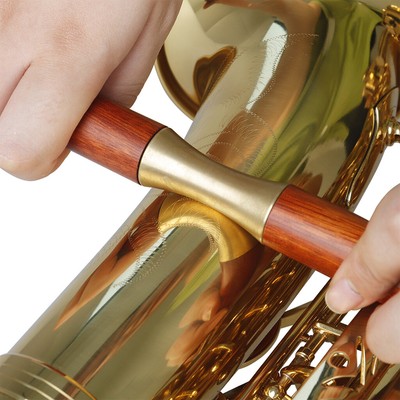
It shouldn't affect it 'too much'. Simply put anything that touches the lacquer is going to affect it - and that includes a cloth (polishing is really just degrees of abrasion).
It helps that it's a roller, as this tends to lower the friction - but at the end of the day the lacquer over a dent can only take so much pushing and pulling.
It's most definitely not a tool for amateurs.
 
A couple of techniques used in the shop where I trained when "rolling out" dents in brass bells was to first spray the area with Pledge furniture polish or to cover the area with thin teflon tape. This especially helps the finish when "burnishing" which means to rub the brass with a very smooth tool as it rests on a specially shaped "mandrel".
 
A couple of techniques used in the shop where I trained when "rolling out" dents in brass bells was to first spray the area with Pledge furniture polish or to cover the area with thin teflon tape. This especially helps the finish when "burnishing" which means to rub the brass with a very smooth tool as it rests on a specially shaped "mandrel".
Would I be correct in saying that without a close fitting shaped mandrel behind the area worked the roller would push the centre of any "bump" through the brass leaving a sunken ring around it on the outside? And then how/why would a DIY'er have such a device? From what I've seen in tech's workshops there are a myriad of different mandrels which fit onto a heavy base. Pricey.

I have watched a car "dent man" invisibly remove a ding in a door by inserting a lever on a long rod down by the window. He did one little twist and it was completely gone! Mind you, he'd previously been a panel beater at the Jag for 20+ years. Such skill is real magic.

It's not often I see protruding bumps on horns, mainly dents and dings for which this roller would seem useless unless someone has tried to remove a dent and overdone it, causing such a bump to occur.
 
I used great restraint not posting use conversation. The OP inquired about the effects on the finish not the technique or execution of using the tool. But yes I agree. It’s hard to dent a saxophone from the inside out. How you would use this on a trombone without a mandrel is beyond me.
 
Any finished surfaces with this type of contact I cover with clear mylar.
If the surfaces are kept clean the tool should work reasonably. Anytime you work a surface there is cosmetic risk.
Where do you buy your "clear mylar" sheets? I typically use a laminating sleeve run through the machine without paper inbetween to protect the surface when I am doing dent work with magnets and steel balls.
 

Similar threads... or are they? Maybe not but they could be worth reading anyway 😀

Social

New! Social Feeds

Look out for the navigation icon:

Follow CafeSaxophone

Latest Song of the Month

Trending

Forum statistics

Topics
32,081
Messages
578,817
Members
8,139
Latest member
Gary Boudreau2
Back
Top Bottom