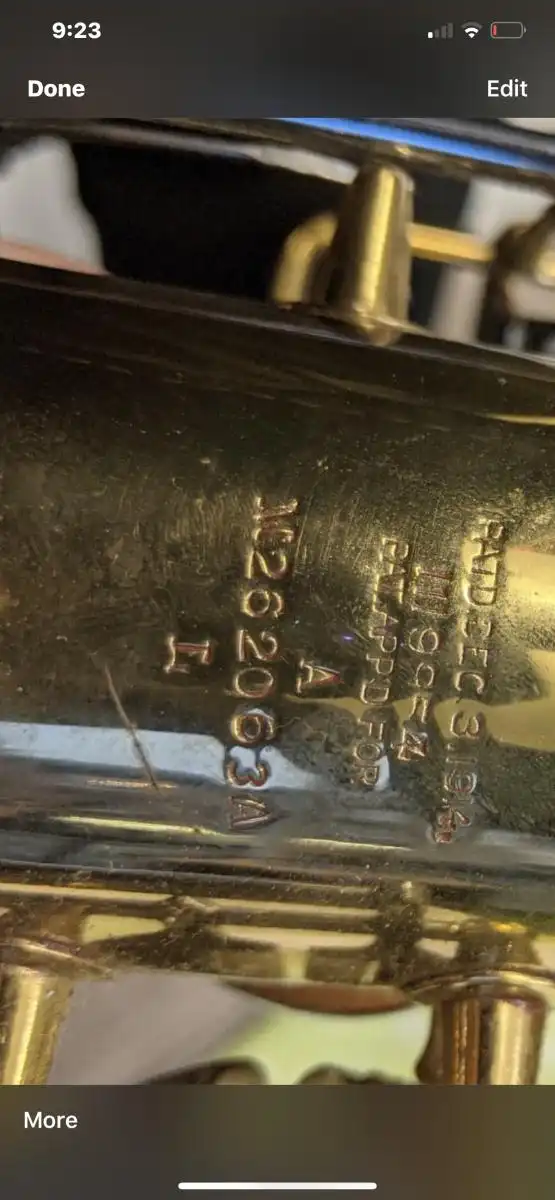
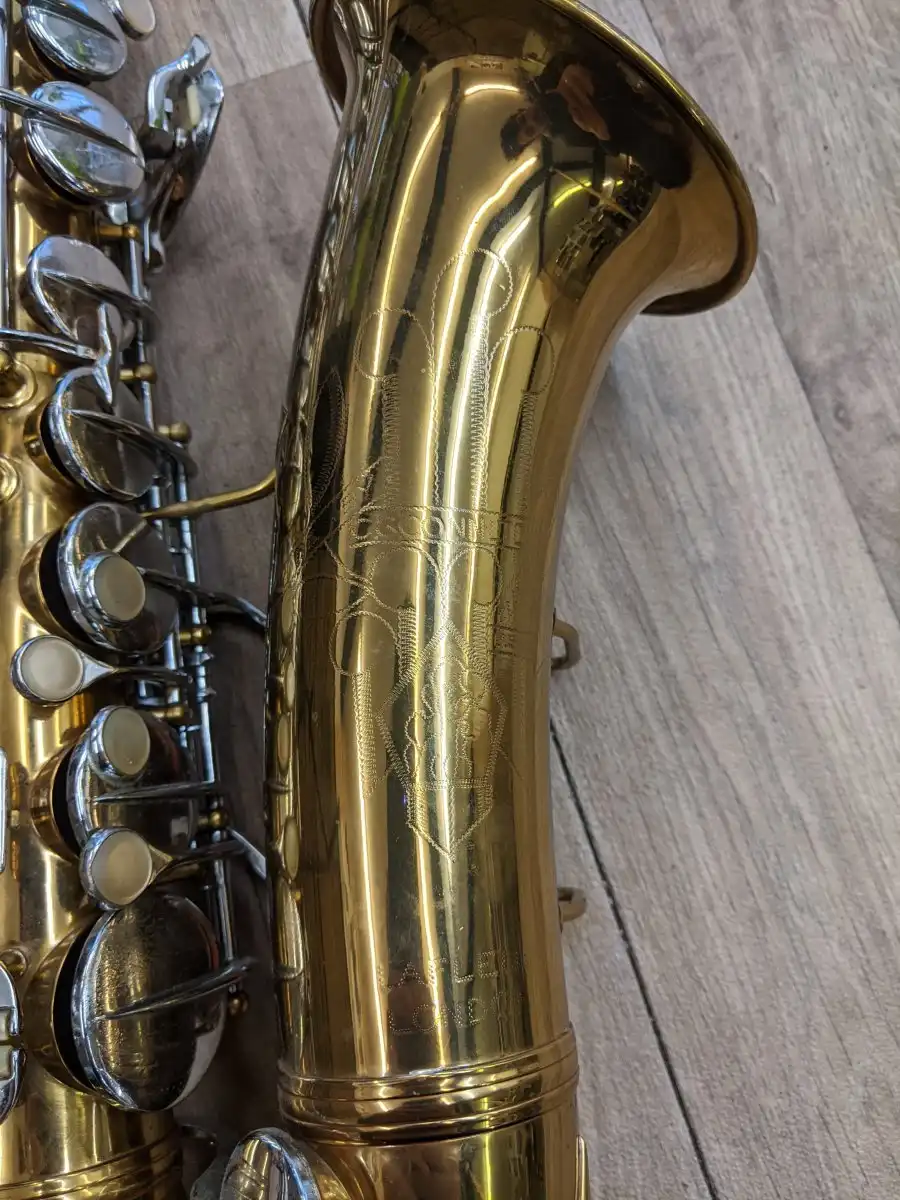
Awesome -- good to see some more pics. I wonder if the neck is original. Probably it is, some necks of that style were also produced later, I think. I can't remember right now. The later ones may have been single socket, though.
It's an authentic Conn with a "stencil" added, and probably it was refinished as far as nickel plated or even some other unexpected finish for the keywork. A closer photo of the left hand table would make this clearer to draw a conclusion about. The tables for this period are sharper at the edges of the touches than later tables, so if the edges look rounded off that is likely from machine buffing.
Should be a very nice alto, freeblowing, resonant, wide/warm/powerful core.
It will play best when the double-socket is closely and properly fitted. How that is done: 1) fit the body (male) tenon to the outer socket first, then 2) snug up the inner socket to the inside of the body tenon. It won't work in the opposite order, and just snugging up the outer socket will not produce the result that can be produced when you properly fit the inner socket to the inside of body tenon.
The double-socket was a cool design, because it plays better than single socket when the fit isn't very good, but it's a real pain in terms of upkeep for best performance, which you'll come to appreciate if you do get it fitted closely, because that fit will inevitably gradually deteriorate, and you have to disassemble (unless you have a very good assistant) to touch it back up.
You may find, when the neck is leaking, that the horn still plays well and feels good but your octaves are out of tune with each other.




 acebook
 (bottom of page)