



 acebook
 (bottom of page)

alistaircandlin
New Member
- Messages
- 3
- Location
- South Korea
Hi,
I was checking my Yanagisawa Tenor for leaks recently and noticed something about the mechanism. There's a connection between the G and the B flat keys which means that if you press the G touchpiece by itself, the Bis B flat key also partially closes, as well as the G key. This doesn't exist on my Martin tenor, or on a Yamaha alto I have.
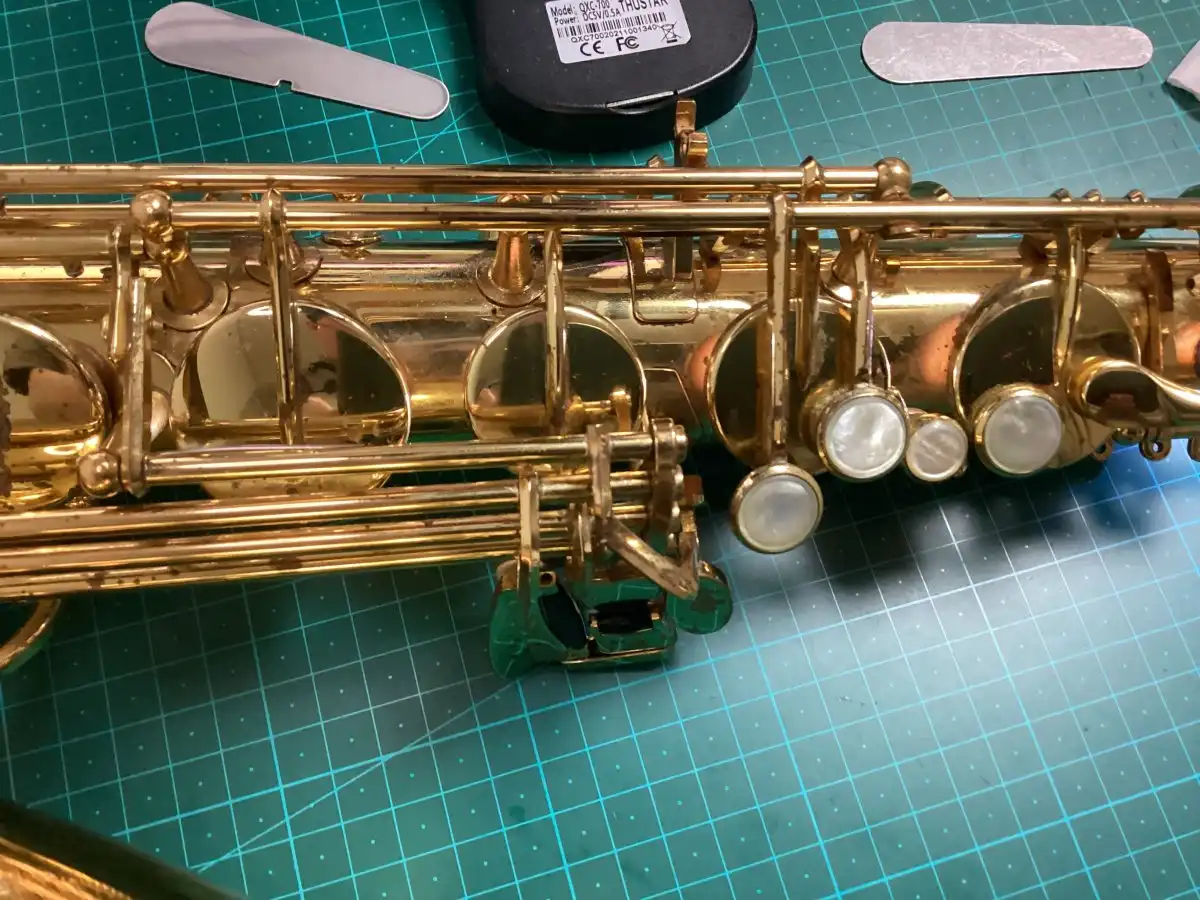
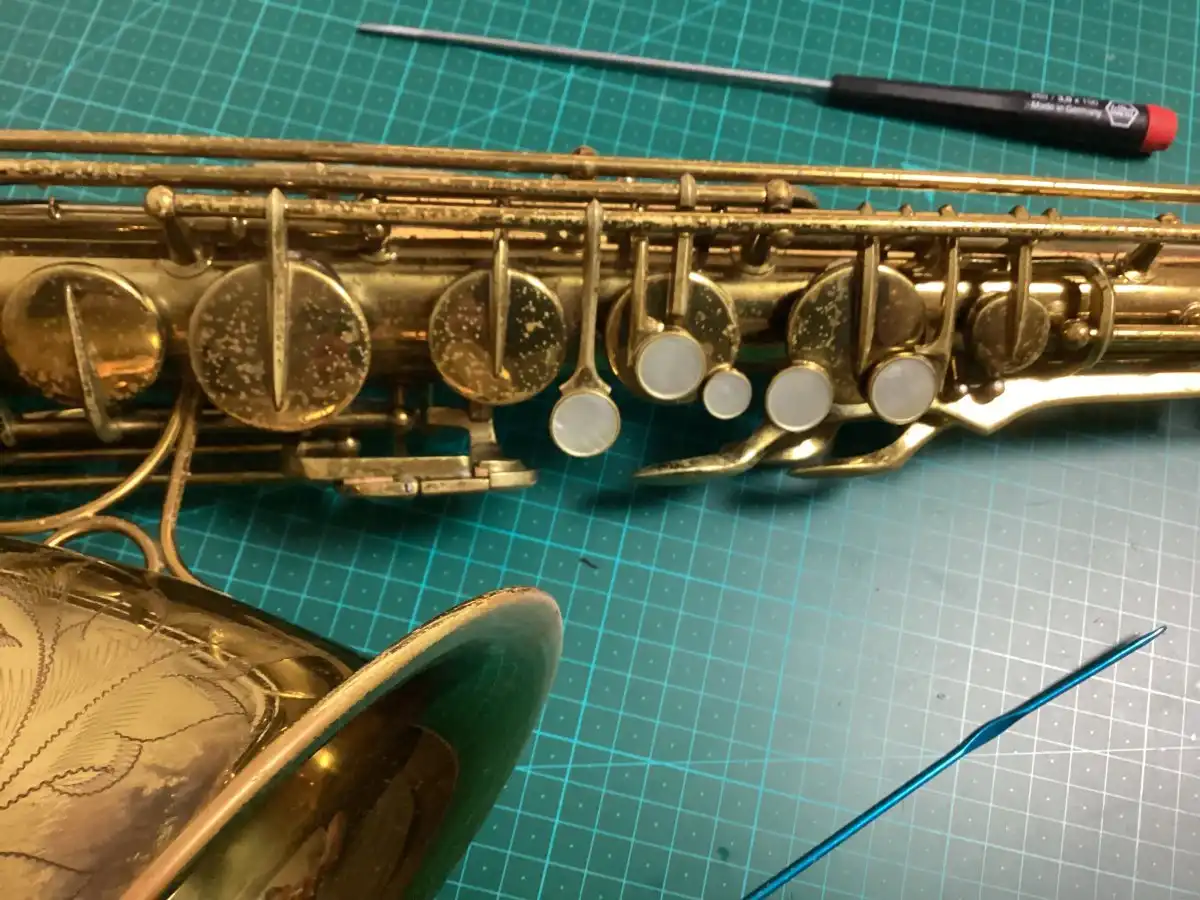
If you have Steve Howard's saxophone manual, you can see the same thing on the picture of the Bauhaus tenor, on page 24. But I've attached a picture of my horn, below, with a picture of my Martin beneath that, for comparison.
There's some cork under the arm of the G touch piece, that partially closes the Bis key. This partial closing seems by design - a thicker cork would fully close the key.
My question is: what's this for? It seems redundant, because if you play a G, you'd have to close all the keys above it anyway. So what's the point in a connection that partly closes the Bis Flat when you play the G touchpiece by itself? I can only think that it might be used to flatten the pitch of some altissimo notes that need a special fingering.
Hope my description is clear, and thanks for reading. Any ideas?
Yanagisawa T901:
Martin Committee 3:
I was checking my Yanagisawa Tenor for leaks recently and noticed something about the mechanism. There's a connection between the G and the B flat keys which means that if you press the G touchpiece by itself, the Bis B flat key also partially closes, as well as the G key. This doesn't exist on my Martin tenor, or on a Yamaha alto I have.
If you have Steve Howard's saxophone manual, you can see the same thing on the picture of the Bauhaus tenor, on page 24. But I've attached a picture of my horn, below, with a picture of my Martin beneath that, for comparison.
There's some cork under the arm of the G touch piece, that partially closes the Bis key. This partial closing seems by design - a thicker cork would fully close the key.
My question is: what's this for? It seems redundant, because if you play a G, you'd have to close all the keys above it anyway. So what's the point in a connection that partly closes the Bis Flat when you play the G touchpiece by itself? I can only think that it might be used to flatten the pitch of some altissimo notes that need a special fingering.
Hope my description is clear, and thanks for reading. Any ideas?
Yanagisawa T901:
Martin Committee 3:


