Beginner Saxes Does my brand new Sax have a fault?

Hypnoswan

Member
Messages
20
Location
Netherlands
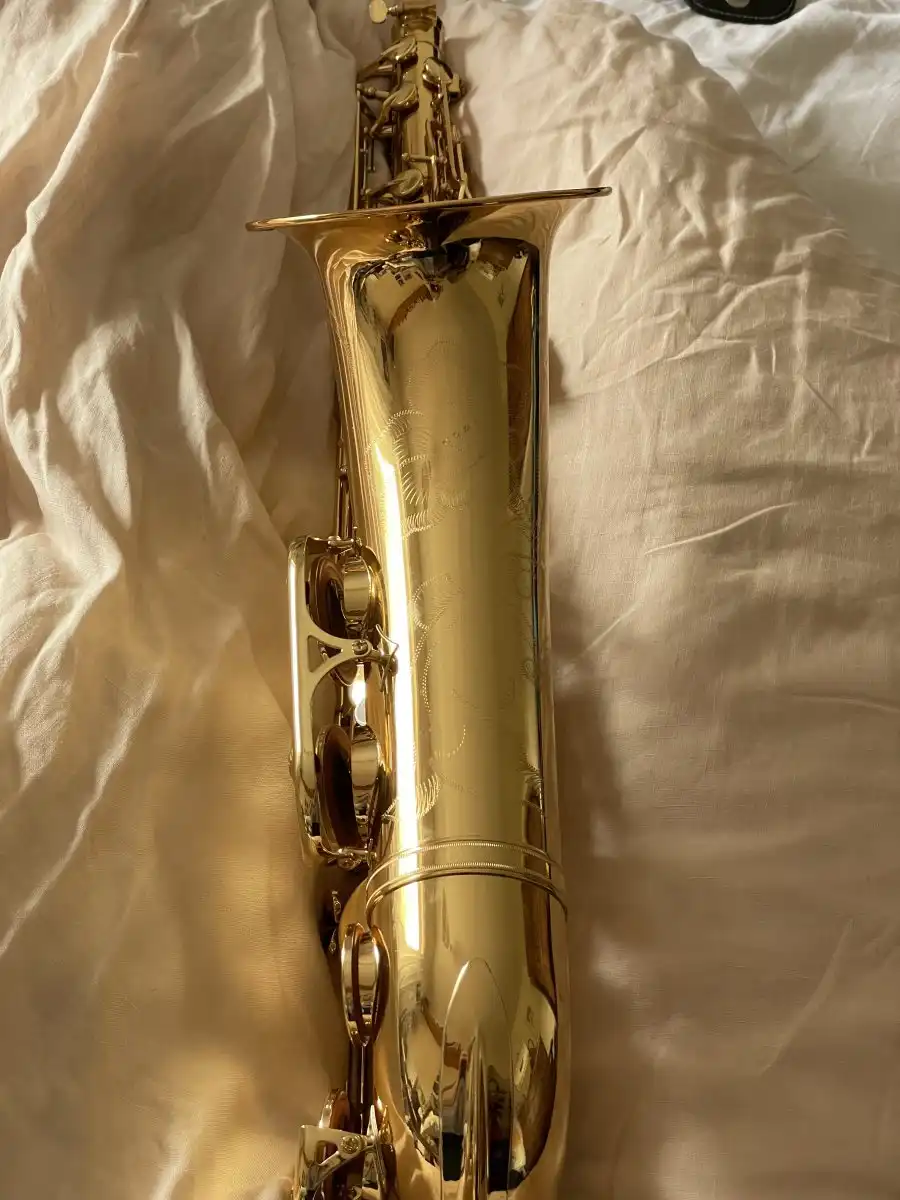
Having started on the Yamaha 280 tenor I just bought a YTS 62.

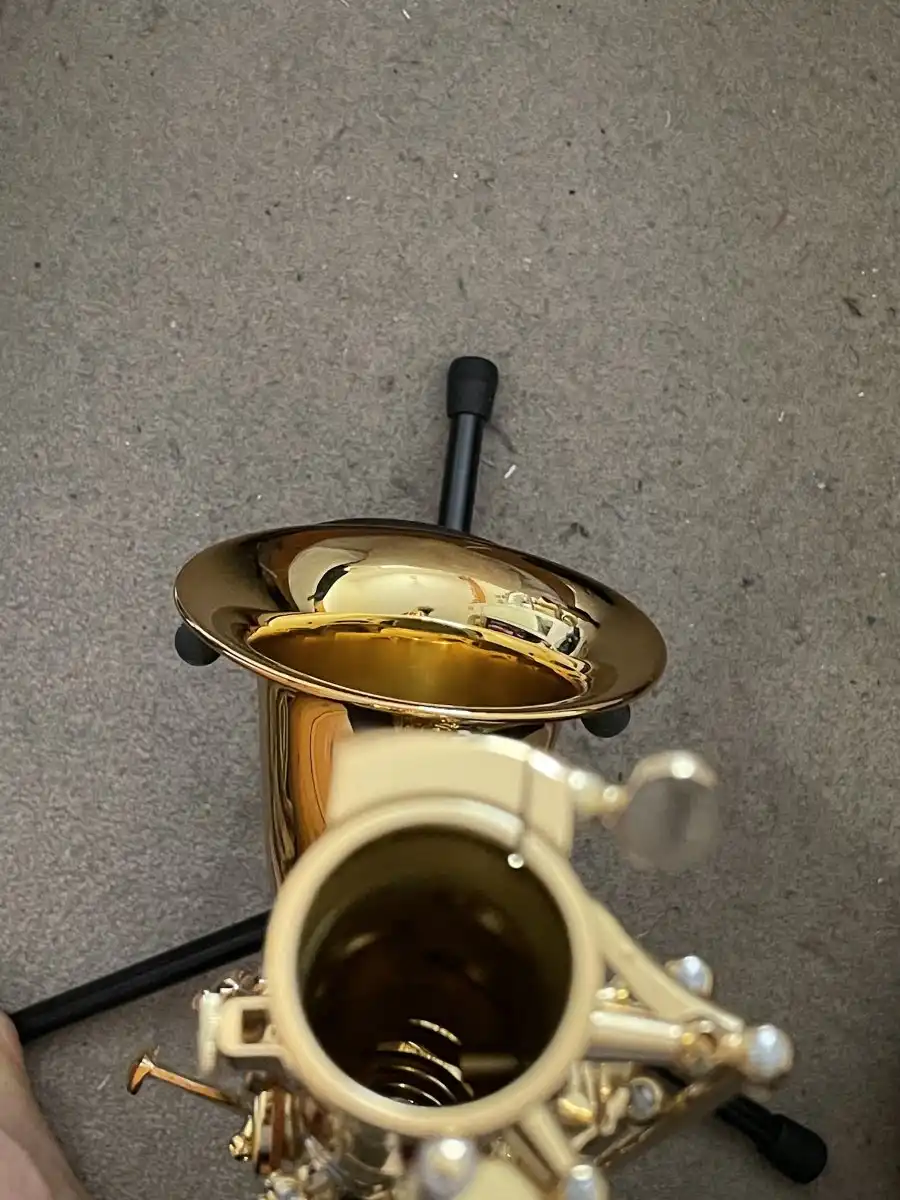
However I’m still very much a beginner and have concerns about this Sax that perhaps someone can help with: I noticed the bell does not seem square and also some of the pads (the ones that are closed in resting position) make a sound like when you open your mouth, I.e. they sound sticky.

Is this normal?

It sounds ok when playing to my very inexperience ear but are these points mentioned indicators of potential problems later?

thanks
8080AA46-CA01-4DC5-A4A7-A1CE67763A31.webp
0AE257EC-3425-4610-B774-C11DAB6CB3F8.webp
 
Hello!

The pads in closed resting position making a sticky noise is normal, and has very easy fixes. They usually make this noise because they’re closed and cannot vent out condensation from playing. First, swabbing your horn can really help improve this problem. If you’re already doing that and the stickiness of the keys still bothers you, there are products to help.

I use this swab from keyleaves to swab out my closed pads every so often. I also use other products from keyleaves like the vent vine and keyleaves. They’ve really helped me with my sticky pad issue.

As for the bell. I’m not an expert on Yamahas (I haven’t had the chance to even play one yet!) but if you got it brand new and it plays well then I see no problem. Maybe it’s something Yamaha has done to accommodate more to how people play, that’s what it seems like to me. Bells on saxophones can be changable, so I wouldn’t be surprised at all if Yamaha added a bit of a curve on the bell to add comfort/direct the sound differently. I could be talking out of my butt about this, we would need a Yamaha expert to confirm, but that is my guess.

Very beautiful horn nonetheless.
 
Vote:
Upvote 0
Hello!

The pads in closed resting position making a sticky noise is normal, and has very easy fixes. They usually make this noise because they’re closed and cannot vent out condensation from playing. First, swabbing your horn can really help improve this problem. If you’re already doing that and the stickiness of the keys still bothers you, there are products to help.

I use this swab from keyleaves to swab out my closed pads every so often. I also use other products from keyleaves like the vent vine and keyleaves. They’ve really helped me with my sticky pad issue.

As for the bell. I’m not an expert on Yamahas (I haven’t had the chance to even play one yet!) but if you got it brand new and it plays well then I see no problem. Maybe it’s something Yamaha has done to accommodate more to how people play, that’s what it seems like to me. Bells on saxophones can be changable, so I wouldn’t be surprised at all if Yamaha added a bit of a curve on the bell to add comfort/direct the sound differently. I could be talking out of my butt about this, we would need a Yamaha expert to confirm, but that is my guess.

Very beautiful horn nonetheless.
Thank you for your advice. The keys made that sounds as soon as I received it, I noticed it first on the crook ( is that what it’s called, the part you put your mouthpiece onto) so I checked the rest. I was only concerned because in another life I was an engineer and am aware that rubber and similar compounds decay with age and typically get sticky so not being sure what to expect got to worrying!
 
Vote:
Upvote 0
If the bell wasn't square, you'd have issues with the low keys not closing and misaligned. It looks normal to me.

As for the noise and possible stickyness you should have some cloth (like the BG A65S Pad Cleaner) to clean those keys. The G# often gets sticky, although not so much on my YTS62!
 
Vote:
Upvote 0
I noticed the bell does not seem square
Some chatter here about offset bells, although Yam is not specifically mentioned:
 
Vote:
Upvote 0
If the bell wasn't square, you'd have issues with the low keys not closing and misaligned. It looks normal to me.

As for the noise and possible stickyness you should have some cloth (like the BG A65S Pad Cleaner) to clean those keys. The G# often gets sticky, although not so much on my YTS62!
Ok thanks. I should have mentioned that the keys were like this before I first played it
 
Vote:
Upvote 0
Some chatter here about offset bells, although Yam is not specifically mentioned:
Ah yes, ok, thanks
 
Vote:
Upvote 0
the keys were like this before I first played it
I am not being funny when I say that it may be possible someone played it to test all the notes and they had a rum or other sweet drink right before. It sounds like a joke, but I can tell you as a lover of rum, it is NOT a joke. It's a longshot, though, and cleaning the pads yourself once will show whether it's an issue or a temporary film or moisture. I sometimes gently pull a piece of absorbant paper or cloth between the pad and chimney before putting it away.
 
Last edited by a moderator:
Vote:
Upvote 0
I alm not being funny when I say that it may be possible someone played it to test all the notes and they had a rum or other sweet drink right before. It sounds like a joke, but I can tell you as a lover of rum, it is NOT a joke. It's a longshot, though, and cleaning the pads yourself once will show whether it's an issue or a temporary film or moisture. I sometimes gently pull a piece of absorbant paper or cloth between the pad and chimney before putting it away.
Ok thanks. Yes I guess it is possible. I’ll phone them tomorrow but wanted to make sure I had some ideas before doing so
 
Vote:
Upvote 0
One way to diagnose if the bell has been "bumped" and tilted to one side (which is common) is to observe how the bell keys close when you finger low Bb. Using a leak light works best, but it can also be done by looking into the bell to see where light is coming in rather than escaping. On modern horns if the pads are touching first in the front and leaking at the back, the bell is tilted to the right from the player's perspective. If the pads are touching first in the back and leaking at the front the bell is tilted to the left. The repair technique I was taught was to give the bell an "equal bump" in the opposite direction as the one that created the tilt in the first place.
 
Vote:
Upvote 0
Thank you for your advice. The keys made that sounds as soon as I received it, I noticed it first on the crook ( is that what it’s called, the part you put your mouthpiece onto) so I checked the rest. I was only concerned because in another life I was an engineer and am aware that rubber and similar compounds decay with age and typically get sticky so not being sure what to expect got to worrying!
The part you put your mouthpiece on is know as the cork.

sometimes when pads are new they can also have a bit of a stickyness to them. What I would do is after a practice session, take either a pad wiper or any cloth really and wipe away at the closed keys. The condensation can help wipe away whatever is making them sticky. This happened on my soprano when it newly came. Someone could’ve play tested it or the pads were just a bit sticky. Played it, wiped away at the pads, and she was good.
 
Vote:
Upvote 0
New pads are sometimes a little sticky. Clean them with a cotton bud and some naptha or lighter fluid. Clean also the tops of the tone hole chimneys where they seat.
The part you put the mouthpiece on is indeed called the crook or neck. It has cork on the end to fascilitate an airtight seal.
Ah okay! I saw him say crook and thought he meant cork.

Never heard the neck be referred to as a crook, you learn something new everyday on here.
 
Vote:
Upvote 0
Vote:
Upvote 0

Social

New! Social Feeds

Look out for the navigation icon:

Follow CafeSaxophone

Latest Song of the Month

Trending

Forum statistics

Topics
32,081
Messages
578,806
Members
8,139
Latest member
Gary Boudreau2
Back
Top Bottom