Tech/maintenance Alto Flute Overhaul/Repair

PiccoloPirate

Senior Member
Messages
1,207
Location
South Florida
Not sure of the technical name for the
key hinge tube with pivot, on the lower end of the upper stack, on my old Armstrong Alto Flute.
It, along with the upper pivot, of the lower stack tube and the pivot on the lower end of the G# key tube, all sit into one post.
There is a bit of wobble in all three.

Haven't decided how to fix this yet, but I'm doing a repad, cork and other normal necessary things.
Thought of using a metal epoxy like JB Weld and make the holes in the post fit the pivots tighter.
RenWax as a releasing agent on the pivots and surrounding areas, and a wee bit of the epoxy inserted into the hole, then put the pivot/tube in place until it cures.
Do each one individually, G# first, but be careful as the hole for the two stacks are inline. I can put a thicker wax in the lower stack pivot hole, let it harden, so the epoxy is confined to the upper stack hole.
Same in reverse.

Or, make an insert of metal to put in the hole that is opposite the one getting epoxied, and use a mold release so it comes apart without issue.

Flute plays nice, records nice, from the '60s with a silver head and spent its youth in the Vegas pits, but time to repad etc.

Will take a close look at the interior of the holes as adding material and filing the pivots is another option.
Buying a Kingma, not this week.
This one showed up over a decade ago and the Kingmas were about half the current price.

Thanks for any thoughts/ideas for this project.

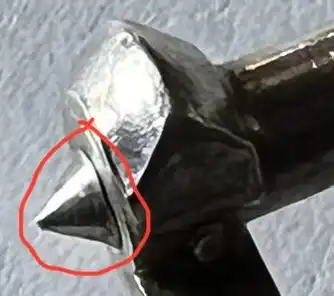
Pic of pivot area.
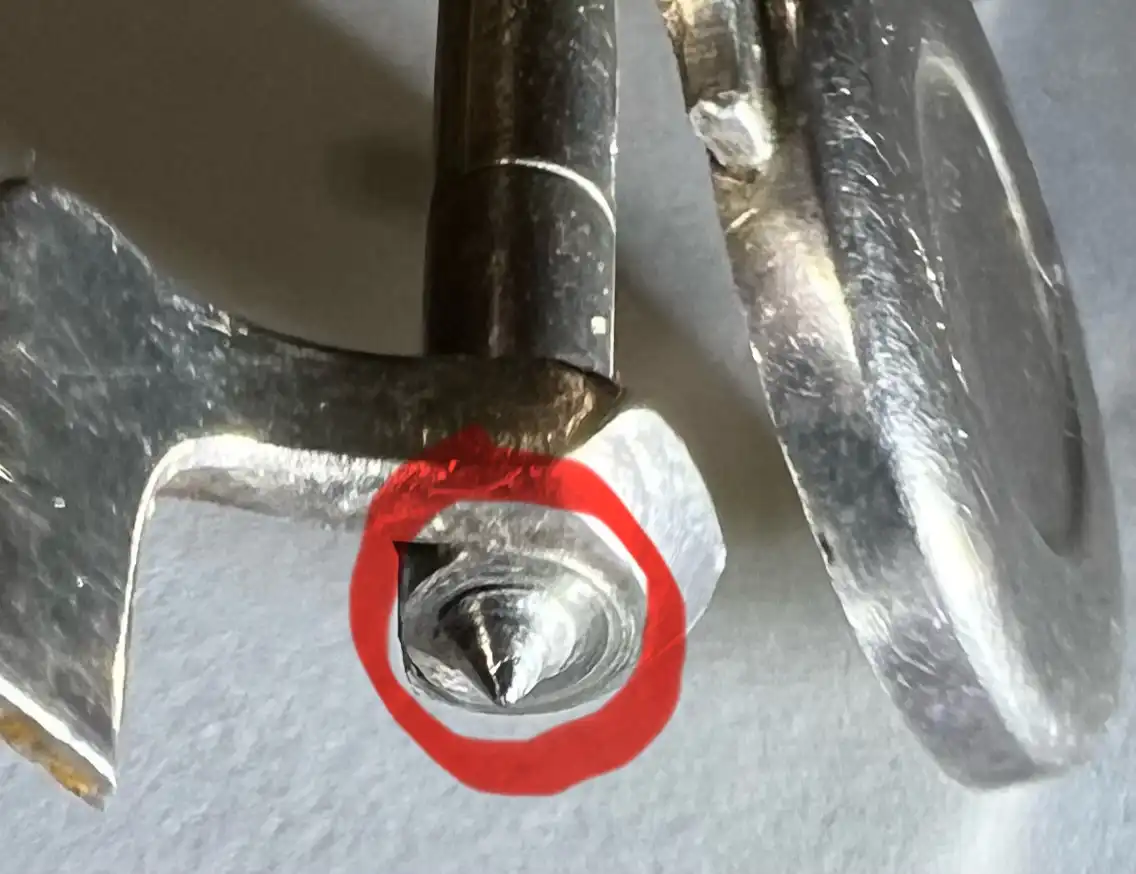
IMG_3048.jpeg

IMG_3051.jpeg
 
Last edited:
Two ways to fix this. Make new pivot rods (doable but very fiddly). Insert a bush into the 'king' pillar (the pillar into which the upper and lower stack pivot rods fit) to take up the play. How well that'll work will depend on the state of the pivot rod points - which look to be pretty worn. Best practice when fitting a bush is to ream the pillar out slightly to allow for a decent wall thickness on the bush.
A more bodgey solution is to fill the pillar with soft solder to create a lead bearing. Works for a while, then needs re-doing. JB-Weld would probably work OK - and if not you can always remove it.
 
But he is an actual flute repairer. Or at least he was last time I looked.
that's what I meant. Not randoms on the internet.

There are any number of qualified flute techs, of whom Stephen Howard is one.

The other point that we don't want to talk about, but it's stilll out there, is that people who work in a trade/handicraft develop manual skills by practice, and you don't just waltz in and exhibit the same skills. You don't learn manual skills by reading about them. All this stuff about fine fettling of flutes, saxophones, etc. - the internet leads people to believe that even though they've never done anything more complicated than turning on a faucet, they can watch a video and instantly have the skill of someone who's spent a lifetime learning by direct experience the way the materials and components behave and respond. Well, it doesn't work that way.
FWIW, I took that to be the meaning/intention - though Pete will undoubtedly have picked up on the 'British' meaning of 'mouthful' which tends to mean something rather less complimentary.

As it happens I stopped working on high-end flutes a few years ago. I've reached a stage in my career where I can afford to pick and choose what work I take on - and the first genre to get binned was double-reed instruments (barring the Rothphone, of course). Next up was 'stupid saxes' (Graftons, Conn 26Ms etc) closely followed by crappy saxes (I'll leave you guessing on that one....but no, not cheap Chinese horns - which are still good fun to fettle) - and then high end flutes.
Bass clarinets are next in the firing line. I'd like to get shot of bass saxes (for the sake of my back)...but I just can't resist 'em...( got a Pan Am in at the mo, all the way from Oz. Big, daft old things. )

I feel that after all these years I've more than paid my dues. The skills are still there, but the willingness is not - and as I say to my clients "For every flautist that comes knocking on my door there are five or more sax players pulling up in the driveway". It's an easy choice...

As for 'internet-gleaned' skills, every time I see a pad-setting etc. article/video I think "Yep, knock yerself out" - 'cos after almost 50 years at the workbench even I can still be caught out.
But hey, you gotta start somewhere...
 
I'm an old guy, with tons of academic training, and also with a lifetime of having a wrench in my hand (or the wheel of a Bridgeport, or a torch). Academic training is useful in understanding "why" but it doesn't teach you the feel and underlying knowledge of how materials actually behave in real life.
 
I'm an old guy, with tons of academic training, and also with a lifetime of having a wrench in my hand (or the wheel of a Bridgeport, or a torch). Academic training is useful in understanding "why" but it doesn't teach you the feel and underlying knowledge of how materials actually behave in real life.
As a Bridgeport man I reckon you'll undoubtedly understand that there's only so far you can get by doing it by-the-book with a 'Speeds and Feed' chart. Sooner or later you learn that you can get better results with the 'Sounds and Feel' chart in your head, derived from decades of experience with various materials, tools and setups.
 
I've known sax techs who stayed away from flutes and piccs.
Patience was not their virtue.
Playing Classical literature is demanding on both player and tech.
These are the problem areas in addition to the king pillar.
G# to port.
Will most likely use the JB SteelStick to make the pivot holes work with the pivots.
50 plus years of playing, even when not abused, stuff wears a bit.
Says my bones etc etc. :old:
Will post more but have house/garden chores now.
Thx to all.

I know a young Marine Gunnery Sergeant/Machinist, who only teaches code after his students learn the feel of using the tools manually.
Met him 8 years ago, so he's probably a General now.
Our kids and his family are friends.
The women are veterinary surgeons, great hand skills.
Talented young man. 👍👍
IMG_3106.jpeg

IMG_3107.jpeg
 
Last edited:

Similar threads... or are they? Maybe not but they could be worth reading anyway 😀

Social

New! Social Feeds

Look out for the navigation icon:

Follow CafeSaxophone

Latest Song of the Month

Trending

Forum statistics

Topics
32,069
Messages
578,501
Members
8,131
Latest member
Jef B
Back
Top Bottom