Intonation 2 degrees and horn very flat

Messages
1,218
Location
Undy Monmouthshire U.K.
Yesterday evening I was asked to provide a Xmas music for a local hospice charity at a late night shopping event in the village square. At its coldest the temperature was around 2 degrees, my G4M tenor was very, very flat, I struggled to get in tune despite copious amounts of cork grease the MP wouldn’t travel any further onto the neck having hit an internal block. I did manage about 2 hours but decided discretion was the better part of valour, I was freezing as well despite being well wrapped up. Fingerless gloves are not much protection with cold key touches.
This morning I picked up the horn and everything was normal! I wonder if anyone else here has had similar experiences.
 
Logic would say cold would physically shorten, therefore sharpen the instrument. Therefore there must be some correlation between acoustic behaviour and temperature but I’m damned if I can figure it out, even with google!
 
Thanks for sharing that, Mizmar.

That calculation does not include the influence of the player, that is supplying a relatively constant supply of air at fixed temperature which then mixes with ambient air in the instrument. Those calculations, then, provide a lower bound on the resultant frequency.
 
someone once espoused that the direct effect of a constant airflow relative to the flux of an abnormal rise or fall of refrigerant dictated temperature when matched to the relative mismatched exhalation from an average one drone bagpipe was both inconsequential and against the laws of physics. … I believe it may have been one Freddie Starr but I may have been mistaken
A Insteine

That’s great for bagpipe players - not applicable to saxophones with thinner walls made of a material with much different heat conduction tendencies.
 
No. Also it doesn't discuss the change in sound as the wave, generated in the tube at one temperature, encounters air at a lower temperature through witch it propagates.

But it clearly explains the direction of travel
The instrument heats up and the pitch of the note rises.​
Cools down, goes flat.

And UCCMA said no amount of influence of the player could overcome the tyranny of physics.
 
Last edited:

Just used one of the calculators on the page. At 2 degrees -54 cents flat!!
 
Indeed. Here's a rough, "rule of thumb" thought on "cold so shorten".
An octave is 1200 cents and 50% of length. So 12 cents is 0.5% of length.
To get ≈60 cents is ≈2.5% change in the length of the sax. Shifting holes, keys, key caps, mettle work etc. by 2.5% would, most likely, cause any number of leaks. Things tend to change unevenly.
And, having heated a key cap up for pad adjustment - several 10s of °C - with no perceptible change in size...
IMHO, air temperature has it.
 
Last edited:
Indeed. Here's a rough, "rule of thumb" thought on "cold so shorten".
An octave is 1200 cents and 50% of length. So 12 cents is 0.5% of length.
To get ≈60 cents is ≈2.5% change in the length of the sax. Shifting holes, keys, key caps, mettle work etc. by 2.5% would, most likely, cause any number of leaks. Things tend to change unevenly.
And, having heated a key cap up for pad adjustment - several 10s of °C - with no perceptible change in size...
IMHO, air temperature has it.
Thank you so much for that link you provided. A portion of Nederveen's book acoustical aspects of woodwind instruments I often cite states that to effect a 10 cent change of pitch requires a 1% change in distance to the (acoustical) top of the instrument, a 10% hole diameter change, or a 20% hole-length change. I interpret the acoustical top of a saxophone to include the length of the "missing cone" and the hole-length to mean the height of the tonehole.

Your rough "rule of thumb" indicates that to effect a 10 cent change would require 2.5% change divided by 6 or .41% change in the length of the sax. This is less than half of Nederveen's estimate of 1%. Since you are much more knowledgeable in this area, do you have any thoughts on why the two estimates are so far apart? Is it perhaps due to the fact that on a saxophone the wavelength of a pitch is 2 times the "physical" length of the instrument because each complete wave travels down and back?
 
I've struggled hot and cold. An "O"level Physics qualification was making me think about the metal. So hot should be flat and cold should be sharp.
I learned on here the opposite is true. I understood the explanation to be more about the air temp/density.
I didn't understand it well enough to explain it to anyone else.
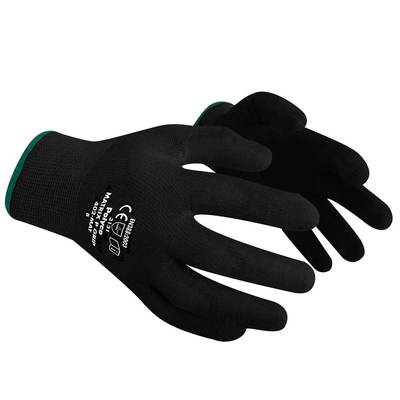
The best gloves I've found for playing when it's cold are polyco matrix work gloves.
Thick enough to help with the cold yet thin enough to feel through. Also there is a rubber/silicone coating on the palms and finger tips which helps with moisture and grip.
 
Since you are much more knowledgeable in this area
I am not! That's just an half arsed attempt at sarcasm

My "rule of thumb" was just an idle thought and I agree...
is 2 times the "physical" length
I'm probably off by various factors. Hmmm the fundamental in a sax is 4 x the physical length, no? And I've no doubt hole diamanter, height etc. All fold in.

I was just headed for an "order of magnitude" ... Around a percent looks good.
 
Last edited:
So, and bear in mind I'm asking this question from a complete thicko perspective, is this why I blow (silently, just to warm it up) down the sax before I play? I've always done it when I can (gig dependent), would it have an effect on pitch (would rather have an answer here than try it at a gig 🙂 )
 

Social

New! Social Feeds

Look out for the navigation icon:

Follow CafeSaxophone

Latest Song of the Month

Trending

Forum statistics

Topics
32,053
Messages
578,123
Members
8,123
Latest member
The rugby fan
Back
Top Bottom