I just replied to a similar thread over on the Mean Forum....
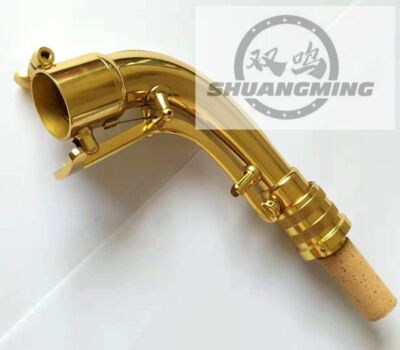
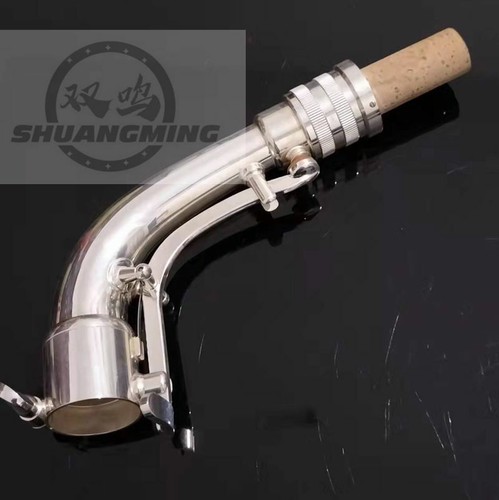
I have bought one of these, a 10M underslung as a replacement on a '60's 10M.
My take:
The good: it was a faithful reproduction (except for the key being lacq brass when in the 60's they were all nickel-keyed 10M's).
It fit...pretty well. I needed to do some expanding of the double-socket receiver (attached to the horn) and also some abrading in between the thumb-screw eyelets (the 'slot') to get the neck to tighten nicely.
It blew and intoned quite nicely.
It wasn't a 'cheesy' replica...IOW the tube metal was not flimsy or thin, and the precision of the octave key and saddle and pip was quite decent.
The bad: While doing a tweak-tightening to the neck as noted above, one eyelet broke off of the exterior socket wall. A weak/bad silver-solder job. I had it resoldered on by a tech who is an expert silver solderer.
Now you might ask....didn't I do BOTH eyelets ?
No.
Should I have ?
Yup.
Because when I got it back and again was again tweaking the area (which required repeated tightening and loosening of the neck screw with neck off and on) the OTHER eyelet snapped off.
It wasn't like I was cranking the heck out of them, either.
So...that'd be my warning. The seller is a nice person, very agreeable, good communication.
But the silver-solders on those joints were weak..so if some tweaking of the double-socket is required, be prepared for the eyelets to need resoldering.
Would it possibly fail ...IF the neck had already fit perfectly and it was just the 'usual' thumbscfrew pressure applied by the player ?
It might fail in that scenario, IMHO. It wasn't a robust solder job there (although elsewhere the solder jobs were quite acceptable - but those were the soft-solder joints).
I would suggest anyone who buy one....discuss the weak silver-solder joint issue with them first...get an assurance beforehand.
Or, just expect that once received, there's a fair chance you are gonna have to have some work done on your end.
Would I buy another one ?
Yes, if needed I would.
Once the issue was addressed and corrected, it sounded great and really, the precision of the rest of the neck was pretty good.
(FWIW, let's not confuse these with other Chinese after-market necks modeled for horns like the Eastern Power necks. Those were made by other mfr's than these folks, and they were not made to be 'replicas', but rather as a type which could be used on various horns successfully).
These are specifically 6M and 10M and 12M necks, alto and tenor double socket necks, baritone standard socket. (Nobody has ever offered these double-socket replicas, pre-made, before now).




 acebook
 (bottom of page)