
 (bottom of page)




Guys,
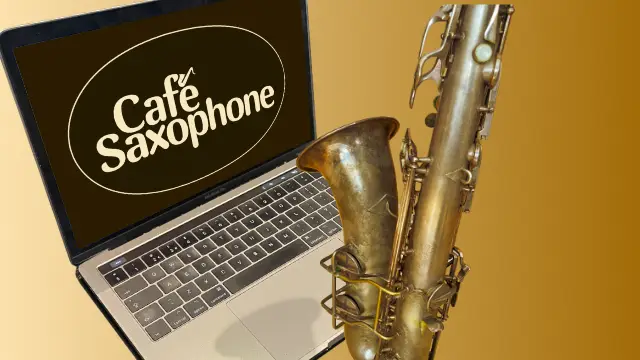
just wanted to say that my new tenor sax arrived today, and it sounds great! All of the afore-mentioned issues with the 8ve key, it simply doesn't exist here.
( I still will have that beginner alto sax looked at. I'm still curious why the high E doesn't work properly.
I have found a Japanese instructor too. He doesn't speak a lick of english, but we are able to communicate with my limited Japanese speaking.
After playing a few scales for him, he showed me a few exercises to work on until next time:
one is a G- Bb - D - Bb. This seems like a good finger workout, to get used to the transition with the octave key and the Bb key.
the other is A - A# - B- C to use the side key.
Is there any preference for which way one would play the A#/Bb ? Why would one use one method of the other. The tones of the two methods don't sound that different from one another.
d
just wanted to say that my new tenor sax arrived today, and it sounds great! All of the afore-mentioned issues with the 8ve key, it simply doesn't exist here.
( I still will have that beginner alto sax looked at. I'm still curious why the high E doesn't work properly.
I have found a Japanese instructor too. He doesn't speak a lick of english, but we are able to communicate with my limited Japanese speaking.
After playing a few scales for him, he showed me a few exercises to work on until next time:
one is a G- Bb - D - Bb. This seems like a good finger workout, to get used to the transition with the octave key and the Bb key.
the other is A - A# - B- C to use the side key.
Is there any preference for which way one would play the A#/Bb ? Why would one use one method of the other. The tones of the two methods don't sound that different from one another.
d


